Iran war Day 166: Blockade clashes and rising fuel costs 2026
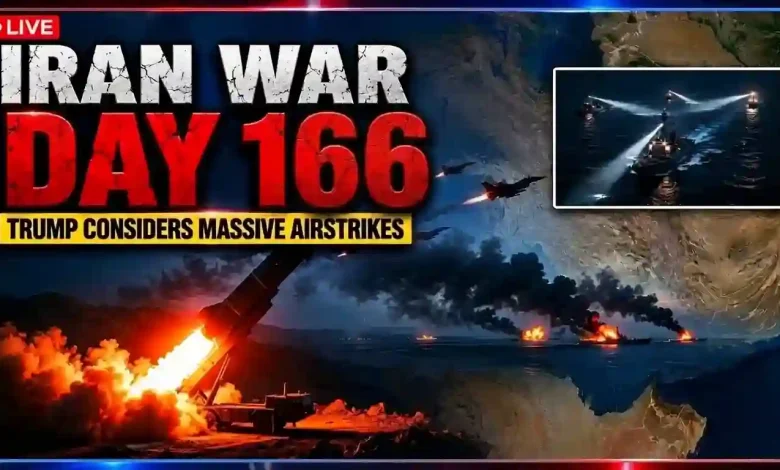
Table of Contents
The Anatomy of a High-Stakes Middle East Conflict
Iran war hostilities have reached a crucial juncture on Day 166 of the active, multi-front military confrontation that has reshaped geopolitical alignments across the Middle East. Since the initial outbreak of conflict on February 28, 2026, the military operations, economic embargoes, and heavy kinetic strikes have continued to spiral. The war has gone through several phases, transitioning from sudden, devastating airstrikes on key leadership assets to a grinding war of attrition on land, air, and sea. In recent developments, the focus of the conflict has increasingly pivoted to the control of major trade waterways, with the United States and Israel attempting to throttle Iranian port infrastructure while Iran and its regional affiliates leverage their own tactical positions to restrict transit and exhaust Western arsenals. As the war enters its 166th day, both sides remain entrenched, claiming tactical successes while preparing for a long-term, high-intensity struggle.
Maritime Blockades and Kinetic Confrontations on Day 166
Maritime security has emerged as the most volatile theater of the war, as naval operations have evolved from sporadic missile defense to active blockade enforcement. The focus of the current maritime campaign is the enforceability of the US blockade on Iran, which has become a central pivot in Western efforts to dry up the financial and logistical pipelines of the Iranian government. By shutting down the flow of both oil and critical military components to and from Iranian ports, Coalition forces aim to diminish the capabilities of the Islamic Revolutionary Guard Corps (IRGC). However, enforcing this embargo has resulted in violent clashes with third-party merchant vessels trying to navigate the blockade corridors to sustain commerce or exploit highly lucrative freight premiums.
The Interception of M/V Vela Nova
A stark reminder of the kinetic realities of this maritime embargo occurred on Tuesday of this week, marking a severe escalation in blockade enforcement. A U.S. Navy MH-60 helicopter, operating under United States Central Command (CENTCOM), fired multiple Hellfire missiles directly into the engine room of the M/V Vela Nova, a Panama-flagged cargo ship. According to military briefers, the vessel had attempted to run the blockade and was bound for an Iranian port in violation of the current shipping restrictions. CENTCOM stated that the ship’s civilian crew repeatedly ignored verbal and visual warnings before the helicopter opened fire. The strike successfully disabled the vessel’s propulsion, and military authorities confirmed that the ship is no longer transiting toward its destination. This engagement marks the third time since mid-July that U.S. forces have forcibly disabled a merchant vessel to prevent blockade violations, illustrating a zero-tolerance policy on maritime trade with the Islamic Republic.
Reinstating the Ports Blockade
This aggressive enforcement follows the formal reinstatement of the ports blockade on July 14, 2026, after a brief pause in major naval maneuvers. Prior to the pause, U.S. and partner forces had established a dense naval screen that successfully redirected or intercepted scores of commercial vessels. According to official CENTCOM data, Coalition forces have redirected at least 55 ships attempting to trade with Iran and have boarded two others in the past month alone. An earlier phase of the blockade, spanning from April to June, resulted in the redirection of more than 140 vessels and the disabling of nine ships. This relentless surveillance has significantly strangled the throughput of Iran’s commercial ports, creating severe economic blockages within the domestic economy of the targeted country. Yet, these maneuvers come at a high cost, with commercial crews increasingly trapped in the crossfire of a military conflict they have no part in.
The Strait of Hormuz: A Closed Choke Point and Sovereign Dispute
Running parallel to the blockade of Iranian ports is the ongoing dispute over the absolute control of the Strait of Hormuz, which remains a frozen chokepoint for the global economy. Before the outbreak of hostilities on February 28, approximately twenty percent of the world’s petroleum exports transited through this narrow waterway. Today, the Strait is functionally closed to international shipping, with both Washington and Tehran claiming sovereign authority over the waters while trading threats of destruction for any vessel attempting unauthorized passage.
Trump’s Territory Declaration vs. Iran’s Command
The rhetorical battle reached a fever pitch following recent political remarks from the White House, shaping President Trump’s strategy against Iran in the media. President Trump asserted that the United States has achieved “total control” over the Strait of Hormuz and indicated that his administration is considering declaring the strategic channel as a U.S. territory “pretty soon” to legally justify long-term policing. This claim was immediately and forcefully rejected by Iranian officials. Deputy Foreign Minister Kazem Gharibabadi stated on social media that “the Strait of Hormuz cannot be seized by a tweet or an aircraft carrier,” adding that the channel will open and close solely under Tehran’s command. Gharibabadi warned that until the United States accepts the reality of its strategic failure, withdraws its forces, and lifts its port blockade, the Strait will remain entirely impassable to international tankers.
Depressed Shipping Traffic and Global Energy Vulnerability
This territorial deadlock has had a devastating impact on commercial maritime traffic, which has plunged to historic lows. Data from global shipping trackers shows that the average daily traffic through the Strait has dropped to just thirteen vessels, representing a near three-month low. As a result, the risks associated with navigating the Strait of Hormuz are at an all-time high, forcing shipping companies to utilize alternative, high-risk routes. Many vessels have shifted to the Southern Omani corridor, but this alternative has proven dangerous, accounting for the vast majority of projectile and missile strikes reported by the United Kingdom Maritime Trade Operations (UKMTO). The sustained disruption has sent shockwaves through the global energy market, pushing oil prices higher and leaving consumers worldwide to grapple with elevated fuel costs at the pump.
The Logistics of Attrition: Interceptor Depletion and War Expenditures
Behind the dramatic maritime clashes lies a silent but equally critical battle of logistics and supply chain capacity. The high-volume air defenses required to protect coalition bases and naval fleets have put unprecedented pressure on Western military manufacturing. In particular, the extensive use of advanced defensive systems has raised serious questions about the long-term sustainability of the current military posture.
Patriot Missile Interceptor Shortages
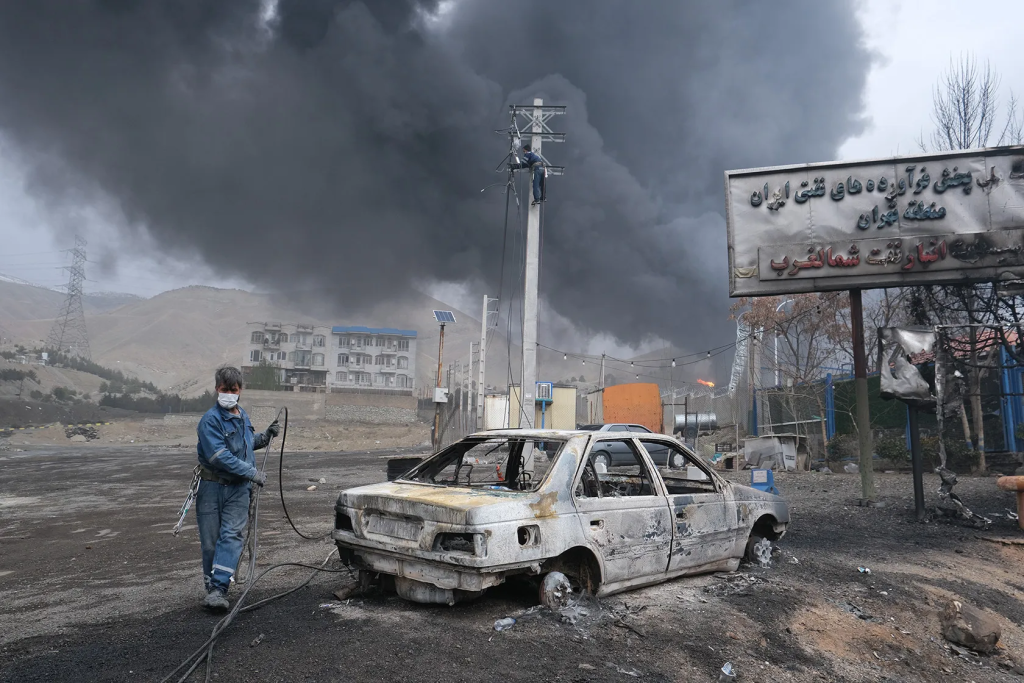
A recent intelligence brief highlighted by the New York Times revealed that the Pentagon is facing a critical bottleneck in its missile defense capabilities. According to military sources, the United States has fewer than 1,700 Patriot interceptors remaining in its active global stockpile. This decline is a direct consequence of expending more than 1,500 interceptors since the war began, as U.S. forces have had to defend against a relentless stream of ballistic missiles and advanced drones, relying heavily on Iran’s ballistic missile systems to assert pressure on regional coalition facilities. Given that the United States produced only approximately 600 of these interceptors during the entirety of 2025, the gap between consumption and replenishment poses a major strategic challenge, forcing commanders to carefully ration their air defense assets.
The Astronomical Financial Cost to Taxpayers
In addition to ammunition depletion, the costs of the war with Iran have sparked heated domestic political debates. Analytical reports from the Center for Strategic and International Studies (CSIS) and the Congressional Budget Office (CBO) confirm that the conflict has cost U.S. taxpayers over $113.3 billion. This rapid expenditure has occurred without the passage of a formal war appropriations bill by Congress, prompting sharp criticism from fiscal conservatives and anti-war advocates. The economic pressure has extended beyond government balance sheets to the public, with President Trump recently urging Americans to tolerate slightly higher fuel prices as a necessary sacrifice to prevent a nuclear-armed Iran.
Secondary Theaters: Regional Spillovers and Collateral Damage
The geographical boundaries of the war have steadily expanded, dragging neighboring states and proxy forces into the conflict. From the Levant to the Arabian Peninsula, secondary theaters are burning with intense kinetic exchanges that threaten to spark a wider, regional conflagration.
Israeli Strikes in Southern Lebanon
In Lebanon, the conflict has resulted in significant loss of life and heavy infrastructural damage. Over the weekend, Israeli airstrikes targeted several locations in southern Lebanon, killing at least nine people. Seven civilians were killed when a strike demolished a house in the village of Ansar, while two others lost their lives in a separate attack on Deir El Zahrani. These strikes come amidst growing warnings from the United Nations that the humanitarian situation in the Palestinian territories and the border regions of Lebanon is reaching a breaking point, with agricultural lands and civilian areas bearing the brunt of the kinetic operations.
The Saudi-Led Defense Coalition and Houthi Actions
Further south, the conflict has triggered significant diplomatic and military rearrangements, which was highlighted around iran war day 163 when several strategic changes occurred. In response to persistent threats, Riyadh signed a landmark defense pact, spurring Riyadh to strengthen ties and coordinate military response strategies with regional actors including Pakistan, Turkey, and Saudi Arabia. This new alliance was immediately tested when Iran-aligned Houthi forces launched a massive drone and missile attack on Saudi Arabia’s Jazan oil refinery, setting facilities ablaze and causing multiple casualties. The attack demonstrates the Houthis’ capacity to strike deep into neighboring territories, explicitly targeting alternative energy routes to keep pressure on the global oil supply chain.
Stalled Diplomacy and the Road Ahead
As the conflict grinds onward, diplomatic avenues toward a ceasefire remain completely frozen. Intermediaries from Oman and other regional nations have attempted to establish a framework for negotiations, but the fundamental demands of both primary belligerents remain irreconcilable. The United States continues to demand that Iran completely dismantle its nuclear infrastructure, stop its regional proxy operations, and pay compensation for decades of military casualties. Conversely, Tehran insists on the immediate lifting of all economic sanctions, the withdrawal of Coalition naval fleets, and the payment of damages incurred during the war. With neither side willing to compromise, the military option remains the primary driver of events on the ground, pointing toward an extended, highly volatile conflict with global economic and political consequences.
Day 166 Conflict Metrics Table
| Conflict Metric | Day 166 Operational Status | Global & Strategic Impact |
|---|---|---|
| US Port Blockade | MH-60 helicopter disabled Panama-flagged M/V Vela Nova; 55 vessels redirected since July 14. | Severely restricts Iranian commercial imports and exports; raises maritime shipping risks. |
| Strait of Hormuz Transit | Average traffic dropped to 13 vessels per day; channel remains closed to international transit. | Sustained disruption of 20% of global crude supply; drives high domestic fuel prices. |
| Air Defense Logistics | US Patriot interceptor stockpiles fell below 1,700 after 1,500+ combat launches. | Exposes critical supply chain gaps; risks leaving Middle East bases vulnerable to missile strikes. |
| Financial Expenditures | U.S. direct taxpayer costs have surpassed $113.3 billion without a formal war bill. | Triggers fierce domestic political debates and inflationary pressures. |
| Regional Escalation | Israeli strikes kill 9 in Lebanon; Houthis hit Saudi Aramco refinery in Jazan. | Broadens the geographical scope of the war; draws in regional powers. |