Iran war live: Ships Attacked Off UAE, Drones Hit Near Riyadh 2026
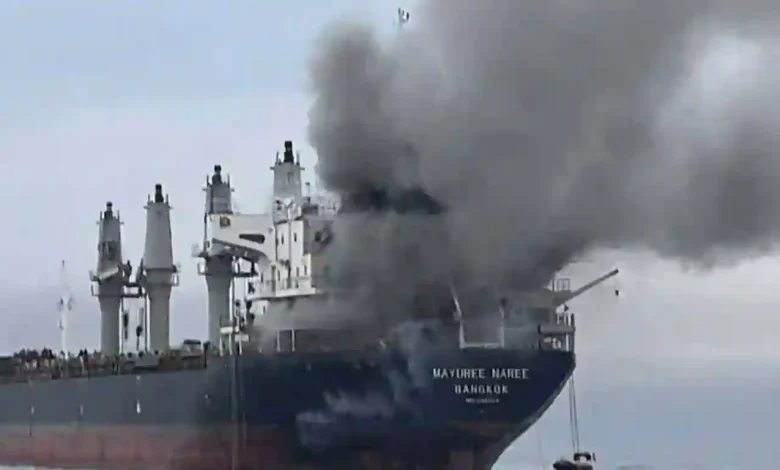
Table of Contents
Iran war live updates reveal a dramatic regional escalation as coordinated asymmetric operations target critical maritime choke points and inland defense perimeters across the Arabian Peninsula. Early morning operational dispatches confirm that commercial vessels transiting both the Gulf of Oman off the coast of the United Arab Emirates and the southern littoral waters of Yemen sustained direct hits from unmanned surface vessels (USVs) and anti-ship cruise missiles. Simultaneously, royal air defense battalions in Saudi Arabia engaged multiple long-range kamikaze drones maneuvering toward high-value installations on the southern perimeter of Riyadh. These simultaneous engagements represent an expanding theater of conflict, combining coastal denial tactics with deep inland strategic strikes to stretch Coalition air defense networks to their operational limits.
Maritime Escalations Off UAE and Yemen Coasts
The simultaneous targeting of commercial freight lanes outside the Persian Gulf and inside the Red Sea demonstrates an operational posture aimed at neutralizing major maritime corridors. While the Strait of Hormuz maritime blockade remains a flashpoint of contention, kinetic strikes have now migrated outward toward the open waters of the Gulf of Oman and the approaches to the Arabian Sea. Naval monitoring authorities reported automated distress beacons transmitting from two separate commercial hulls, followed by emergency communications indicating propulsion failures and hull breaches caused by explosive-laden remote craft.
Commercial Tanker Strikes in the Gulf of Oman
Off the eastern coast of Fujairah, a crude carrier sailing under a Panamanian flag sustained significant damage above the waterline after being struck by an autonomous low-profile explosive boat. Local salvage tugs and maritime safety authorities responded to control a contained flash fire within the auxiliary engine space. Almost simultaneously, a bulk container vessel transiting sixty nautical miles offshore reported near-simultaneous detonations from aerial loitering munitions. Naval analysts confirm that these strikes circumvented regional littoral patrols by launching from dispersed staging sites along regional coastal inlets, directly threatening energy transport nodes that bypass internal gulf waterways.
Red Sea Chokepoint Pressures Near Bab-el-Mandeb
Hundreds of miles to the southwest, the maritime choke points connecting the Red Sea to the Gulf of Aden experienced renewed ballistic volleys. Commercial shipping through the critical Bab-el-Mandeb gateway shipping security perimeter was thrown into complete disarray after coastal launch units fired anti-ship cruise missiles at international cargo freighters. Defensive electronic warfare systems aboard nearby coalition warships managed to decoy one inbound missile, yet secondary projectile fragments peppered the deck structure of a commercial grain carrier. These strikes directly mirror incidents occurring as the Houthis seize Mocha along the Red Sea, establishing continuous fire corridors that deter conventional commercial merchant transit.
Drone Incursions Over Saudi Airspace
Beyond maritime disruptions, regional stability deteriorated further as hostile unmanned aerial platforms penetrated sovereign Saudi airspace from deep desert launch trajectories. Multi-tiered early warning radar systems tracked a swarm of delta-wing loitering drones cruising at low altitudes to evade line-of-sight radar detection, navigating through natural valley terrain toward metropolitan districts of Riyadh.
Interceptions Near Riyadh Diplomatic Quarters
Loud acoustic detonations echoed across the southern and eastern districts of Riyadh as Royal Saudi Air Defense Forces fired MIM-104 Patriot surface-to-air interceptors. Ground sensors confirmed the terminal-phase destruction of at least three attack drones carrying shaped-charge explosive payloads. Shrapnel and falling debris damaged several industrial storage facilities near the city’s peripheral transport belt, although civil defense officials reported no direct civilian casualties. The intercepted drones demonstrated autonomous waypoint correction algorithms, indicating an upgraded guidance package designed to withstand aggressive signal jamming across wide frequency bands.
Air Defense Responses Across the Arabian Peninsula
The aerial engagement in central Saudi Arabia coincided with elevated readiness postures throughout neighboring Gulf nations. Integrated air shields, bolstered by UAE air defense missile interception networks utilizing THAAD and Patriot PAC-3 batteries, tracked overlapping radar contacts over open waters. The synchronized timing of the drone runs alongside maritime operations points toward a centralized command authority executing saturation doctrines, intended to consume high-value defensive interceptors against inexpensive autonomous drones.
Geopolitical Incident Matrix and Operational Status
The following incident matrix highlights the core engagements recorded across the theater within the last operational cycle, detailing targeted sectors, defensive countermeasures deployed, and collateral outcomes.
| Location / Sector | Asset Involved | Threat Vector | Defensive Response | Current Operational Status |
|---|---|---|---|---|
| Gulf of Oman (Off Fujairah) | Commercial Crude Tanker | Explosive-Laden USV | Internal Damage Control, Coast Guard Tugs | Vessel stabilized; auxiliary propulsion lost |
| Southern Red Sea (Bab-el-Mandeb) | Bulk Container Carrier | Anti-Ship Cruise Missile | Shipboard Chaff & Electronic Jamming | Superstructure shrapnel; escort secured |
| Southern Riyadh Periphery | Metropolitan Infrastructure | Low-Altitude Loitering Drones | MIM-104 Patriot PAC-3 Interception | Threats destroyed; debris collected |
| Western Yemen Coastline | Merchant Sea Lanes | Shore-to-Sea Ballistic Rockets | Coalition Kinetic Air Patrol Interdictions | Active combat zone; commercial detours ordered |
| Eastern Arabian Gulf Patrols | Multinational Task Force | Reconnaissance Drone Swarms | Directed Energy / Electronic Warfare | Airspace cleared; tracking continuing |
Regional Proxy Deployments and Asymmetric Strategies
The synchronicity between inland aerial sorties and offshore vessel strikes exposes the deeply integrated nature of the proxy ecosystem operating across the southern Arabian theater. Rather than engaging in symmetric fleet actions, opposition forces are leveraging distributed offensive cells that utilize modular launch rails mounted on civilian flatbed trucks or disguised coastal dhows. This multi-front posture accelerates the broader ongoing Middle East war developments, transforming commercial transport conduits into tactical battlegrounds.
Houthi Coastal Operations and Anti-Ship Missiles
In western Yemen, insurgent coastal batteries have refined shore-to-sea targeting by combining land-based optical reconnaissance with signals intelligence shared via covert command nodes. By avoiding active radar emissions until terminal flight stages, coastal missile units reduce their exposure to counter-battery suppression from coalition aircraft. These tactics force cargo fleets to reconsider maritime insurance coverage, with leading maritime risk underwriters declaring wider sectors of the southern Arabian Sea as high-risk transit exclusion zones.
Deterrence Posture of Gulf Cooperation Council Members
Diplomatic channels remain strained across the region, especially as Tehran warns Saudi Arabia and other regional actors against permitting foreign aerial platforms from staging sorties from peninsula runways. The Gulf Cooperation Council (GCC) defense leadership held emergency consultative sessions to align their radar coverage and streamline intelligence sharing protocols. Gulf leaders are walking a perilous diplomatic line, attempting to maintain sufficient national defense deterrence without provoking a general escalation that could directly target critical desalination plants, refineries, and petrochemical terminals.
Global Energy Markets and Supply Chain Ramifications
International commodities trading reacted swiftly to the reports of simultaneous strikes near Fujairah and Riyadh. The immediate market response was driven by fears that sustained maritime interdictions outside the Gulf could shut off vital oil pipelines designed specifically to bypass internal regional bottlenecks. Energy futures registered sharp upward adjustments, reflecting fears of sustained interdictions:
- Bunkering costs and war-risk premiums for maritime carriers increased by upwards of 40% within hours of verified hull impacts.
- Traders reacted immediately to the threat of crude flow disruptions, resulting in spiking Brent crude oil prices on world commodity exchanges.
- Global freight operators diverted container fleets around the Cape of Good Hope, adding ten to fourteen transit days to maritime trade moving between Asia and European ports.
- Natural gas transport capacity dropped precipitously as LNG tankers paused scheduled voyages pending security reassessments.
Global supply networks, already under intense pressure from raw material logistics friction, now face prolonged transit delays that threaten downstream manufacturing schedules in Europe and East Asia.
International Naval Missions and Coalition Maneuvers
To re-establish navigational integrity along these volatile waterways, coalition commanders initiated an emergency realignment of forward-deployed naval assets. The rapid deployment of the USS Abraham Lincoln and accompanied strike group destroyers signals an aggressive push to establish multi-layered protective envelopes over commercial shipping routes. Armed naval escorts have begun organizing merchant convoys at designated assembly points off the coast of Oman, guiding commercial tankers through maritime transit corridors under constant airborne surveillance.
Despite these international naval counter-measures, the low manufacturing costs and rapid deployment cycles of autonomous drones and anti-ship systems present an enduring asymmetric challenge. Naval forces are forced to expend multi-million-dollar interceptors to neutralize munitions that cost opposing forces a fraction of that amount to construct. As defense ministries assess the day’s strikes, military planners warn that without decisive interdiction of coastal launch sites and coastal weapons storage sites, asymmetric assaults on Gulf transport infrastructure will remain an enduring feature of the regional security landscape.