Qatar Denies Capturing and Detaining Downed Iranian Pilots 2026
Table of Contents
Qatar has officially rejected statements from Tehran claiming that Doha is holding three downed Iranian military pilots in secret detention, labeling the allegations as highly misleading and counterproductive to regional diplomatic initiatives. The high-profile dispute, which erupted on Saturday, August 15, 2026, has injected fresh diplomatic friction into an already escalating regional conflict. Qatari Foreign Ministry spokesperson Majed Al-Ansari expressed surprise at the timing of the accusations, which coincide with delicate, ongoing talks designed to foster stability across the Middle East. While Iranian military officials assert that their personnel are being held captive, Doha maintains that the pilots crashed after ignoring radio warnings and that exhaustive search and rescue operations yielded only deceased remains, which were subsequently prepared for repatriation. The diplomatic spat represents the first known instance in the current war where Iran has openly accused a neighboring Gulf Arab state of capturing and detaining its military personnel. According to Doha, the roots of the incident date back to early March, when Qatari air defenses intercepted and downed two Iranian Sukhoi Su-24 tactical bombers. The Qatari government maintains that these fighter jets directly violated sovereign airspace and showed clear indications of a hostile targeting trajectory, leaving national defense forces with no choice but to engage the aircraft.
Qatar Categorically Rejects Iranian Claims of Captivity
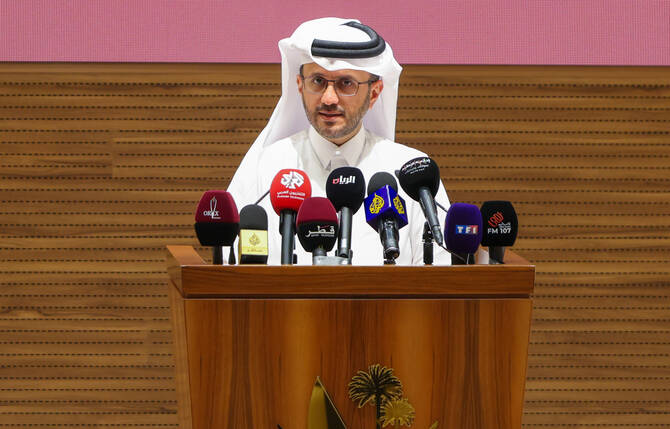
The official statement from Doha came in direct response to letters and public declarations issued by Brig. Gen. Mohammad Bagherzadeh, the commander of the Search Committee for the Missing of the General Staff of the Armed Forces of Iran. Gen. Bagherzadeh alleged that three pilots—identified as Javad Salehi, Abdolmajid Dashtian, and Omran Behraveshian—had ejected from their failing aircraft and were captured alive by Qatari security forces. He claimed that the pilots had been held in Doha for nearly six months in total isolation, with no permitted contact with their families or Iranian consular representatives. In response, Majed Al-Ansari used the social media platform X to categorically deny these assertions. He emphasized that Qatar’s ongoing mediation efforts are aimed at establishing trust, and that spreading inaccurate information undermines these delicate political bridges. Doha’s defense establishment has reiterated that no live Iranian pilots are currently in custody, nor have any been detained since the airspace intrusion occurred. The Qatari government expressed frustration that such claims are being publicized now, especially when Doha has consistently utilized official channels to keep Tehran informed of the aftermath of the crash.
The Core Contradiction Between Doha and Tehran
The disparity between the two narratives highlights the deep distrust that continues to plague the Persian Gulf. While Tehran portrays the pilots as prisoners of war whose humanitarian rights are being violated, Doha describes the situation as a standard, rule-of-law defense of national sovereignty. The Qatari military has emphasized that when foreign military aircraft enter national airspace without clearance, standard operational protocols must be followed to prevent catastrophic security breaches, especially given the context of maritime security and tensions that have disrupted global trade routes. According to military analysts, the Su-24 is a twin-engine tactical bomber designed for low-altitude, all-weather strike missions. The presence of such heavy combat aircraft near sensitive sovereign borders naturally triggers immediate defense reactions. The Qatari Emiri Air Force, equipped with modern interception platforms, operated under strict rules of engagement when they detected the incoming bombers, which were reportedly flying a profile that threatened national installations.
International Humanitarian Law and POW Standards
Under international law, particularly the Third Geneva Convention, the detention of military personnel during times of armed conflict is subject to strict protocols. This includes immediate notification to the International Committee of the Red Cross (ICRC), regular communication with family members, and visits by neutral observers. Tehran’s direct appeal to the ICRC indicates an attempt to frame this incident within the formal context of international warfare. However, Doha’s counter-argument rests on the fact that no state of war exists between Qatar and Iran. By treating the airspace intrusion as a violation of sovereignty rather than an act of war, Qatar places the incident under national jurisdiction and sovereign defense laws, which limits the applicability of standard POW frameworks.
Breaking Down the Incidents of March 2026
To fully understand the current standoff, one must look back to the aerial engagement of early March 2026. During this period, Iranian forces were engaged in broader Iranian military operations throughout the region. Qatari radar systems flagged two Su-24 fighter bombers approaching Qatari sovereign airspace at a high velocity. Qatari authorities attempted to establish radio contact with the cockpits of both aircraft using international emergency frequencies. The air crews, however, failed to respond to multiple verbal warnings. When the trajectory of the targeting was verified as pointing toward critical military infrastructure, Qatari F-15 fighter jets were scrambled to intercept the intruders. Under the established rules of engagement, the Qatari pilots engaged the targets, resulting in the downing of both Iranian bombers over Qatari waters.
The Interception and the Downed Su-24 Jets
According to leaks from defense sources briefed on the March interception, the Qatari pilots made several attempts to steer the Iranian jets away before resorting to lethal force. The complete silence from the Su-24 cockpits raised immediate red flags, forcing command personnel to treat the flight as an active, hostile threat. The downing of these aircraft over the Gulf marked a dramatic escalation, particularly since Qatar has historically maintained a balanced diplomatic posture, avoiding direct kinetic engagement with Iranian forces. This incident showcased that despite its diplomatic flexibility, Doha is fully prepared to employ military force to defend its territorial integrity.
The Strategic Importance of Al Udeid Air Base
The location of the downing is highly strategic. Qatar hosts the Al Udeid Air Base, which is not only the headquarters of the Qatari Emiri Air Force but also serves as the forward headquarters of the United States Central Command (CENTCOM). Over the years, Al Udeid has acted as a critical hub for coalition operations across the region. Iran has frequently accused the United States and its allies of using bases in the Gulf to launch intelligence and strike missions against Iranian assets. During the escalations in March, Tehran claimed that its Su-24 missions were designed to monitor and deter hostile activities originating from these installations. Doha’s rapid interception of the bombers was therefore seen as a necessity, not only to defend Qatari soil but also to secure one of the most vital joint military installations in the world.
Diplomatic Implications Amid De-escalation Efforts
The timing of Tehran’s public accusation is viewed by regional experts as a calculated political maneuver. Iran is currently facing severe economic and political pressures as a result of international sanctions and active combat operations. By accusing Qatar of holding its pilots hostage, some analysts suggest that Tehran is attempting to exert leverage over Doha, perhaps seeking a secret bilateral agreement or hoping to pressure Qatar into distancing itself from Western defense partnerships.
| Key Dimension | The Iranian Account (Tehran) | The Qatari Account (Doha) |
|---|---|---|
| Pilot Captivity Status | Claims three pilots (Javad Salehi, Abdolmajid Dashtian, Omran Behraveshian) are being held alive in secret detention. | Categorically denies holding any pilots; asserts that no live pilots are in custody. |
| Nature of the Jet Crash | Two Su-24 tactical bombers were shot down while conducting combat missions against a military base. | The fighter jets violated Qatari sovereign airspace and failed to respond to radio communications. |
| Search & Rescue Actions | Demands that the International Committee of the Red Cross intervene to verify the status and locate the pilots. | Conducted extensive search and rescue; recovered the remains of one pilot and invited Iranian experts to inspect findings. |
| Diplomatic Communication | Accuses Qatar of holding prisoners without external communication and requests Red Cross assistance. | Clarified the situation through official channels in March and invited Iranian teams to inspect details in April (no response received). |
Misleading Timing and Regional Repercussions
The Qatari Foreign Ministry noted that the timing of these allegations is “surprising” because it coincides with intensive efforts to de-escalate the broader regional crisis. Over the past several months, Doha has positioned itself as an indispensable neutral venue for indirect negotiations. The sudden escalation of rhetoric from Tehran threatens to derail these fragile diplomatic channels. Furthermore, the accusations could complicate Qatar’s relations with other regional powers. A rift between Doha and Tehran could lead to a polarization of the Gulf, forcing smaller states to take definitive sides in an ongoing regional struggle that has already disrupted international energy markets and shipping corridors.
The Shared Natural Gas Field Complexity
Beyond military and political dynamics, the economic relationship between Qatar and Iran is deeply intertwined. The two nations share the world’s largest gas condensate field—known as the South Pars Field in Iran and the North Dome in Qatar. This shared geological asset necessitates a level of technical and economic cooperation that survives even the most intense regional conflicts. Both nations have spent decades coordinating the extraction of natural gas to ensure stable domestic revenues and supply global energy markets. A prolonged diplomatic or military dispute over the downed pilots could threaten this delicate energy partnership, raising concern among global energy consumers who rely heavily on liquefied natural gas (LNG) shipments from the Gulf.
The Search and Rescue Operation Details
In his statement on X, Majed Al-Ansari highlighted the professionalism of Qatar’s specialized search and rescue units. These teams, which boast world-class training and advanced maritime retrieval equipment, performed exhaustive sweeps of the crash zones immediately following the downing of the aircraft in March. During these operations, the teams recovered the remains of one of the pilots, later identified as Majid Kazemi. Qatari authorities immediately initiated contact with their counterparts in Tehran to coordinate the dignified handover of the deceased pilot’s remains, in full compliance with international humanitarian law. However, despite thorough underwater and coastal searches, no other bodies or survivors were located.
Disputed Fates and the International Red Cross
Iran’s military leadership has refused to accept Qatar’s explanation that only one pilot was found. Gen. Bagherzadeh’s letter to the International Committee of the Red Cross (ICRC) requested immediate intervention to investigate the fate of the remaining three crew members. Iran insists that their telemetry and ejector-seat tracking data indicate that all three pilots successfully ejected over territory controlled by Qatari forces and were subsequently detained. To demonstrate transparency, the Qatari Foreign Ministry revealed that it had formally invited an Iranian technical military team to visit Doha in April 2026. The objective of this proposed visit was to allow Iranian experts to review the comprehensive search logs, sensor data, and physical evidence collected by Qatari recovery teams. Surprisingly, the Qatari spokesperson noted that Tehran has completely ignored this invitation and has yet to send a delegation to examine the evidence.
Regional Geopolitical Alignments and Future Outlook
This dispute unfolds against the backdrop of an intensive military campaign that has redefined alliances in the Middle East. With major powers conducting military strikes to protect commercial shipping and strategic maritime lanes, the risk of miscalculation is higher than ever. Incidents involving local airspace violations can quickly spiral into larger international crises. As Doha continues to push back against Tehran’s narrative, the international community is closely monitoring how this diplomatic friction will impact the security of the region. If Iran continues to escalate its rhetoric, it could lead to further hostilities in the Gulf, potentially disrupting transit routes and raising the stakes for Western forces operating in the area. Ultimately, resolving the mystery of the missing pilots will require transparent communication and bilateral cooperation. Whether Tehran will finally accept Qatar’s long-standing invitation to review the search and rescue data remains to be seen, but for now, Doha remains firm in its stance: no live pilots are being held, and sovereign borders must be respected. The path forward depends heavily on whether both nations prioritize diplomatic resolution over political grandstanding in their broader diplomatic strategies in the Middle East.