Iran War Day 165: Strait of Hormuz Blockade and Ceasefire Crisis
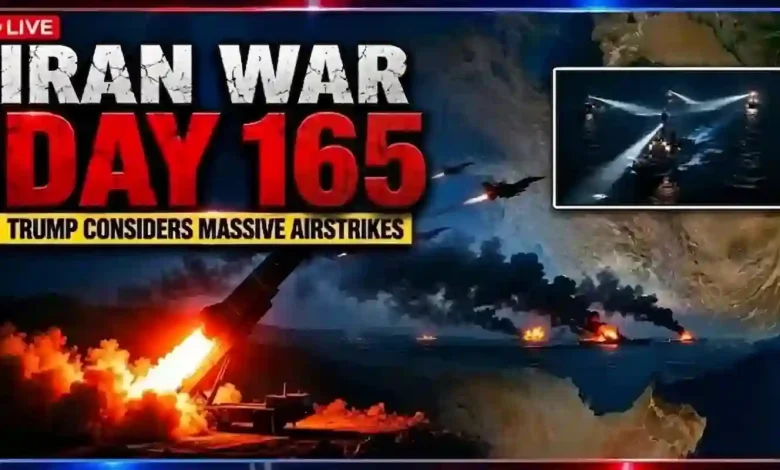
Table of Contents
Iran war developments have entered a critical and highly unpredictable phase as the conflict marks approximately its 165th day. What began as a series of lightning strikes and high-intensity aerial bombardments has transformed into a protracted war of attrition. Both Washington and Tehran are balancing military posturing against deteriorating domestic and economic conditions. Over the past several months, the international community has witnessed an expansion of regional combat operations, with targeted drone strikes, naval blockades, and a collapsing diplomatic architecture. This comprehensive report unpacks the multifaceted dynamics driving the war on Day 165, assessing tactical military activities, the battle over global energy chokepoints, and the grueling backchannel efforts to secure a durable peace framework.
Transitioning Phases of the Conflict
The conflict has evolved considerably since its inception. In the opening weeks, Western coalitions initiated coordinated operations aimed at decimating Iranian command infrastructure, while Tehran responded with swarm drone tactics and widespread missile barrages. Over the course of five distinct phases, the fighting has shifted from active multi-front skirmishes to localized naval confrontations and heavy logistical standoffs. Observers tracking the tactical progression noted a significant shift around Iran war Day 163, as direct aerial attacks paused, giving way to asymmetric maritime skirmishes and intense cyberwarfare campaigns.
From Operation Epic Fury to Day 165
Initially, allied air campaigns sought a rapid decapitation strategy to neutralize military command centers. Despite severe leadership losses within the Islamic Revolutionary Guard Corps (IRGC) and the transition of political power in Tehran, the Iranian regime’s defense structure remained highly resilient. Under the consolidated leadership of Mojtaba Khamenei, Iran shifted its doctrine toward asymmetric defense. Instead of matching allied conventional airpower, Iran relied on decentralized rocket batteries, deep underground missile silos, and proxy mobilization in neighboring theaters, changing the conflict from a quick military campaign into a highly unstable war of survival.
Strait of Hormuz: The Ultimate Geopolitical Chokepoint
The geographic focus of the current phase remains the volatile maritime corridor of the Strait of Hormuz. Through this narrow body of water flows nearly one-fifth of the world’s petroleum consumption, making it the most critical energy bottleneck on the globe. Over the past week, shipping activity through the channel has plummeted far below seasonal averages. This drop is the direct result of competing claims of sovereignty and strict naval blockades enforced by opposing forces. While commercial vessels try to navigate the high-risk waters, insurance premiums have surged to unprecedented levels, threatening the flow of global commerce.
US Naval Blockade and the Shipping Toll Contention
Tensions reached a boiling point on Day 165 when U.S. naval forces fired warning shots at a Panama-flagged commercial vessel that allegedly attempted to run the blockade. The Trump administration has maintained that its naval blockade is absolute and can be sustained indefinitely. In direct response, Iranian authorities announced that they will only permit transition to vessels that respect their regional authority. They have proposed a controversial “transit fee” or shipping toll for any commercial vessels traversing the northern sectors of the strait. This proposed tariff has been rejected by the international community as an illegal challenge to the historical freedom of navigation in international maritime choke points.
Military Realities and Tactical Operations
Tactical military operations are currently characterized by targeted strikes on specialized military facilities. Despite a relative lull in large-scale strategic bombings, localized engagements continue to rage. Allied operations remain heavily focused on eliminating Iranian drone assembly plants, coastal radar installations, and anti-ship missile batteries along the Persian Gulf coast. On the other hand, the IRGC has leveraged its remaining arsenal of low-altitude cruise missiles to target coalition logistics bases in neighboring states. The continuous exchange of low-key tactical strikes demonstrates an aggressive military posture from both sides, as each faction seeks to establish strategic leverage before any major diplomatic negotiations resume.
The Dual Track of Economic Warfare and Stockpile Constraints
As the military campaign reaches a temporary stalemate, economic attrition has become the primary weapon of choice. The United States has combined its naval blockade with extensive financial sanctions designed to completely isolate Tehran’s financial system from international markets. This strategy of maximum pressure has severely impacted the livelihoods of ordinary citizens, driving domestic food inflation in Iran above 70% and triggering severe shortages of medical supplies and raw industrial materials. However, this strategy is not without its domestic challenges for the allied coalition, as domestic political debates intensify over the long-term sustainability of the operation.
The Pinch of Munitions Shortages
One of the most surprising constraints limiting a broader military campaign is the depletion of advanced weapon stockpiles. Western defense departments have privately raised concerns regarding severe munitions shortages, particularly involving precision-guided missiles and air defense interceptors. Having consumed significant stockpiles over 160 days of continuous operations, the Pentagon has put immense pressure on domestic defense contractors to rapidly scale up assembly lines. This critical supply-chain bottleneck has forced coalition leaders to pivot heavily toward economic warfare strategies rather than launching further high-intensity aerial campaigns.
Diplomatic Friction: Ceasefire Hurdles and Negotiations
Despite the highly aggressive rhetoric, diplomatic channels have not been completely severed. Under the mediation of regional partners like Pakistan and Oman, representatives from both sides have engaged in indirect backchannel discussions. The immediate focus of these talks is the preservation of the fragile 60-day ceasefire framework originally established under the Islamabad Memorandum of Understanding on June 17. With the initial agreement set to expire on August 17, diplomatic negotiators are working around the clock to secure an extension, even as physical skirmishes threaten to disrupt the delicate talks.
The Stalled Islamabad Memorandum of Understanding
While reports indicate that both Washington and Tehran have agreed in principle to extend the ceasefire, finalizing the duration and terms of the extension remains highly contentious. Disagreements over the security parameters of the Strait of Hormuz and the release of seized maritime tankers have stalled progress. Furthermore, diplomatic friction has escalated with Tehran refuting Washington‘s claims of total operational dominance over the Persian Gulf. The Iranian delegation maintains that any long-term stability must include a lifting of the unilateral economic blockade and a recognition of Iran’s regional security interests.
Global Ramifications and Regional Impact
The geopolitical shockwaves of the war are being felt far beyond the Middle East. Global logistics networks have been forced to undergo massive restructuring. For instance, international air traffic has increasingly diverted away from traditional regional transit hubs, leading to unexpected growth in distant aviation corridors. The severe disruption to commercial sea lanes has also triggered an economic fallout in Oman and other neutral Persian Gulf states, which depend heavily on stable trade corridors. These escalating maritime disruptions are widely viewed as a violation of international standards, especially those established under the United Nations Convention on the Law of the Sea.
Strategic Dimensions of the War on Day 165
To better understand the current landscape of the conflict, the following table summarizes the primary areas of contention and their broader international implications:
| Strategic Dimension | Key Developments (Day 165) | Primary Actors | Potential Global Impact |
|---|---|---|---|
| Maritime Control | U.S. Navy enforces strict blockade; Iran proposes transit tolls. | U.S. Fifth Fleet, IRGC Navy | Disruption of global energy supplies, rising oil and gas prices. |
| Military Logistics | Lull in major strategic airstrikes; ongoing tactical drone engagements. | U.S. Air Force, Allied Coalitions, IRGC | Depletion of global munitions stockpiles, defense industry strain. |
| Diplomatic Status | Delicate talks to extend the Islamabad Memorandum ceasefire. | Mediators from Pakistan, Oman, UN | Determines the potential transition to a structured peace process. |
| Economic Attrition | Maximum pressure sanctions leading to severe inflation in Iran. | U.S. Treasury, Iranian Central Bank | Severe domestic humanitarian crises, volatile global stock markets. |
Future Outlook: What Lies Ahead?
The war stands at a historic crossroads on Day 165. While neither the allied coalition nor the Iranian leadership desires a total ground war that would devastate the region, the continuous cycle of retaliatory actions makes miscalculation highly likely. The next few days will be critical as the August 17 ceasefire deadline fast approaches. If mediators fail to secure a structured extension of the Islamabad Memorandum, the region could quickly slide back into an unrestricted aerial and maritime campaign. For now, the international community remains on high alert, closely monitoring the precarious balance of power in the Middle East.