Planned attacks on Iran canceled by Trump as deal looms 2026

Table of Contents
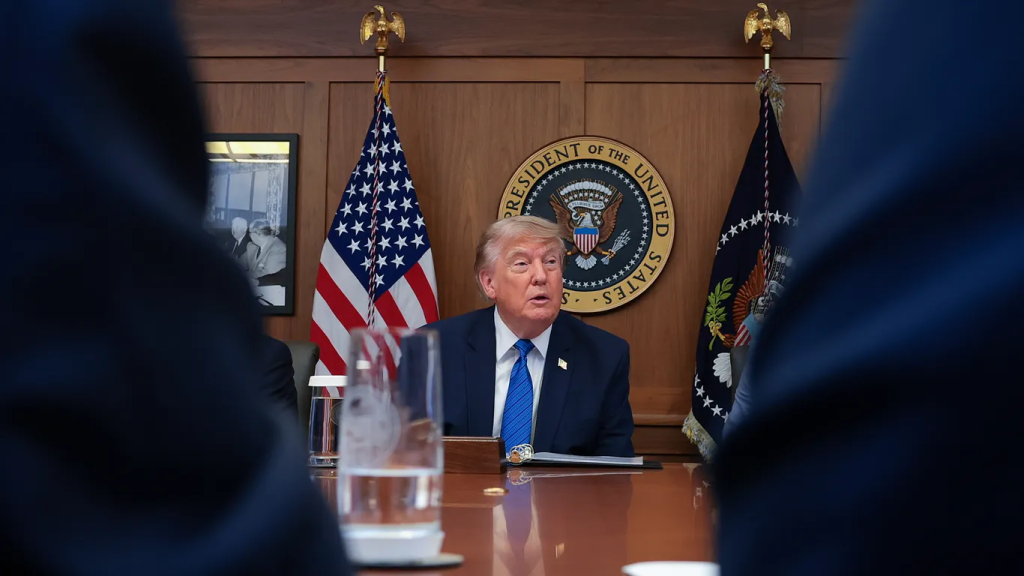
Planned attacks on Iran have been canceled by US President Donald Trump, who cited significant progress in behind-the-scenes negotiations, but warned that the military pause is highly contingent on a “DEAL” being reached rapidly. Trump’s abrupt announcement came as a major surprise to international observers, especially given that only twenty-four hours earlier, senior U.S. defense officials had signaled that a new round of heavy bombardments against Iranian military infrastructure could take place as soon as this weekend. The sudden shift represents yet another dramatic pivot in the months-long conflict, which has pushed the Middle East to the precipice of a full-scale regional war. While the pause offers a temporary diplomatic window, the situation on the ground remains extraordinarily volatile, marked by active drone strikes in Kuwait, retaliatory threats against Gulf nations, and strict new travel advisories for American citizens throughout the region.
The Abrupt Shift in US Military Strategy
The decision to pause the planned strikes has highlighted the highly unpredictable nature of U.S. military strategy under the Trump administration. For weeks, Washington had been intensifying its rhetorical and military pressure on Tehran. President Trump had previously vowed to hit Iran “very hard” to force the Islamic Republic to capitulate to American terms. The Pentagon had prepared a multi-day campaign targeting ballistic missile launch sites, radar installations, and command-and-control nodes. This sudden cancellation reflects a recurring pattern in the administration’s foreign policy, which often pairs aggressive military threats with sudden openings for direct negotiations. Observers note that while this approach is designed to keep adversaries off balance, it also introduces a high degree of uncertainty for regional allies, who must constantly adapt to rapid changes in Washington’s strategic posture.
Inside the Diplomatic Efforts and the “Deal” Demands
According to White House sources, the halt of the initial military plans against Tehran was requested by several regional actors, as well as intermediaries acting on behalf of the Iranian leadership. Trump asserted on his social media platform that he agreed to the pause “for the future benefit of the WORLD and, likewise, the survival of a successful and prosperous Iran.” However, he made it clear that this temporary cessation of air strikes is strictly bound to the swift finalization of a comprehensive diplomatic agreement. The White House’s proposed deal is highly demanding: it requires the permanent dismantling of Iran’s nuclear enrichment capabilities, a complete cessation of its ballistic missile program, and an immediate halt to all maritime attacks. While Washington claims that high-level Iranian representatives have signaled a willingness to negotiate, Iranian state media has aggressively rejected these assertions, labeling the U.S. claims as psychological operations intended to project American dominance.
Regional Escalation: Kuwait Drone Attacks and the Gulf Air Bases
Despite the diplomatic pause announced by Washington, the threat of kinetic escalation has not subsided. The conflict continues to spill over into neighboring Gulf Cooperation Council (GCC) states, demonstrating that local proxies and direct Iranian forces remain highly active.
Kuwait Air Defenses Confront Hostile Iranian Drones
Early on Saturday, Kuwaiti military authorities reported that their air defense networks had successfully intercepted a wave of hostile drone attacks. According to official military statements, the drones, which were launched from Iranian-controlled territory, targeted critical government infrastructure in northern Kuwait and commercial assets on Bubiyan Island. Shrapnel from the intercepted drones caused minor material damage, but no casualties were reported. The incident directly challenges the Iranian leadership’s claims of regional aggression, where Tehran frequently blames the United States and its partners for initiating hostilities. The attack on Kuwaiti soil demonstrates that neutral and semi-neutral nations hosting American logistics hubs are increasingly vulnerable to asymmetric retaliation.
Threat Multipliers: US Regional Bases Under Fire
The escalation in Kuwait is particularly concerning because the state hosts several vital U.S. military installations, including the Ali Al Salem Air Base. Iran’s Islamic Revolutionary Guard Corps (IRGC) has explicitly warned regional governments that any country allowing its territory or airspace to be used for U.S. military operations will be treated as an active combatant. The drone strikes on northern Kuwait are widely interpreted as a direct warning to the Kuwaiti government and other Gulf capitals. By launching precision drones near these facilities, Tehran is signaling its capability to strike deep within allied territory, effectively using regional stability as leverage to deter a renewed American air campaign.
State Department Issues Urgent Travel Warnings for the Middle East
In response to the deteriorating security environment, the U.S. State Department has issued an updated, high-level travel advisory for several countries across the Middle East. American citizens currently residing in or traveling through Bahrain, Kuwait, Israel, Iraq, Jordan, Oman, Qatar, and Saudi Arabia have been strongly urged to consider departing immediately while commercial transit options remain available. This warning highlights the deep skepticism within the U.S. foreign policy establishment regarding the durability of the diplomatic pause. Government analysts fear that if negotiations collapse, the transition back to active warfare will be instantaneous. These escalating conflict timelines suggest that even if a full-scale strike on Tehran is temporarily shelved, the broader regional architecture remains highly combustible, and the safety of Western nationals cannot be guaranteed.
Economic and Maritime Ramifications of the Conflict
The ongoing military standoff has had a devastating impact on global trade, particularly concerning energy shipments transiting through strategic shipping channels like the Strait of Hormuz. As the world’s most critical oil transit corridor, any disruption in the Strait immediately reverberates through global stock and commodity markets. Following the economic fallout of the Gulf conflict, oil prices have spiked significantly, dragging down consumer confidence and straining supply chains worldwide. Prior to the pause, the U.S. Navy had conducted earlier bombings of defense installations along the Iranian coastline in an effort to secure safe passage for international tankers. However, these strikes have only led to highly aggressive asymmetrical responses, with Iran deploying naval mines, anti-ship missiles, and loitering munitions to halt commercial shipping near the Omani coast.
Comparative Regional Conflict Status Table
To better understand the scale and distribution of the current conflict, the table below provides a summary of recent incidents, local defense responses, and the calculated threat levels across key areas in the Middle East.
| Region / Country | Recent Incident Summary | Defense & Military Response | Local Threat Level |
|---|---|---|---|
| Kuwait | Hostile Iranian drone attacks targeted northern government facilities and Bubiyan Island. | Kuwaiti air defenses actively intercepted and destroyed multiple UAVs. | High / Critical |
| Strait of Hormuz | Iranian forces targeted merchant shipping; cargo vessels struck near the coast of Oman. | US and allied naval patrols deployed to enforce freedom of navigation. | Severe |
| Iran (Coastal Zones) | Planned US airstrikes on missile installations and military bases temporarily paused. | IRGC forces placed on maximum alert; air defenses fully operational. | High |
| US Bases (GCC Region) | Direct threats issued by Tehran warning host nations against assisting US forces. | CENTCOM forces locked and loaded, maintaining active defensive postures. | Critical |
Diplomatic Stumbling Blocks and Iran’s Counter-Stance
While the White House remains publicly optimistic about securing a rapid deal, the rhetoric emanating from Tehran paints a vastly different picture. Iran’s Ministry of Foreign Affairs and top military commanders have repeatedly dismissed President Trump’s statements as “psychological warfare.” Iranian officials deny that they requested any pause in the attacks, emphasizing that their armed forces are prepared for an “endless quagmire” if Washington chooses to escalate. The core diplomatic stumbling block remains the scope of the proposed negotiations. Tehran insists that it will not negotiate under the pressure of a continuous naval blockade and has demanded the immediate lifting of economic sanctions before any formal talks can resume. Furthermore, the Iranian Revolutionary Guard Corps (IRGC) continues to expand its asymmetric operations, demonstrating that elements within the Iranian regime are willing to risk a broader confrontation rather than accept what they view as a humiliating diplomatic surrender.
Conclusion and Strategic Outlook
The cancellation of planned strikes on Iran marks a critical, albeit fragile, inflection point in this high-stakes geopolitical drama. President Trump’s strategy of applying maximum pressure followed by sudden diplomatic openings is facing its most severe test yet. While the pause has temporarily prevented a devastating air campaign, the underlying structural drivers of the conflict remain completely unresolved. With Iran maintaining its high alert status, proxy forces active in Kuwait, and vital global shipping lanes severely disrupted, the margin for error is razor-thin. If a diplomatic breakthrough is not achieved within the coming days, the region could easily slide back into active warfare, with consequences that will be felt far beyond the borders of the Middle East.