Trump’s War Against Iran: Six Months of Conflict and the Hormuz Dilemma 2026
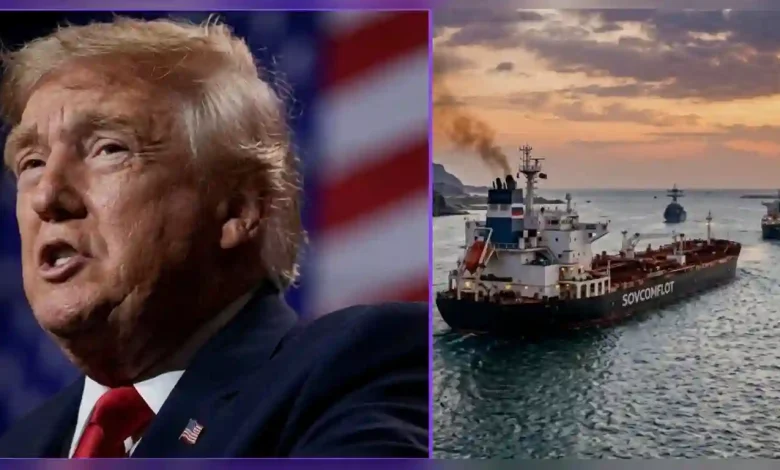
Table of Contents
Trump’s war against Iran has entered a decisive and deeply complicated phase in its sixth month, leaving the White House in an ever-tighter strategic bind. What began on February 28, 2026, as a massive U.S. and Israeli air campaign designed to quickly dismantle Tehran’s nuclear capabilities and military infrastructure has instead degenerated into a prolonged, grueling regional conflict. At the outset, President Donald Trump and his administration confidently projected that military operations would conclude within a matter of weeks, expecting that the swift decapitation of Iran’s top leadership—including the death of Supreme Leader Ayatollah Ali Khamenei—would force immediate capitulation or trigger a rapid collapse of the Islamic Republic. Instead, six months of heavy fighting have demonstrated the limits of absolute military dominance, as a resilient and decentralized Iranian regime continues to project power, disrupt global energy corridors, and resist American demands.
Today, the administration finds itself trapped between two highly risky paths. On one hand, a quiet, Oman-mediated diplomatic channel has produced a controversial interim proposal that would grant Iran unprecedented supervisory authority over the strategic shipping lanes of the Persian Gulf. On the other hand, the administration faces the temptation of ordering a fresh wave of massive airstrikes to break the deadlock—an option that threatens to plunge the Middle East into an even deeper, more catastrophic conflagration. As the economic toll on American taxpayers mounts and public discontent intensifies, the decisions made in the coming days will not only shape the geopolitical architecture of the Middle East but will also heavily influence the domestic political landscape ahead of the pivotal 2026 U.S. midterm elections.
The Strait of Hormuz Dilemma and Oman’s Mediation
Central to this geopolitical crisis is the vital shipping corridor that handles nearly twenty percent of the world’s liquefied natural gas and petroleum liquids. Since the onset of hostilities, the waterway has become the primary battleground of asymmetric warfare, where maritime commerce has been severely choked by Iranian mines, drone attacks, and retaliatory seizures. In response to this economic strangulation, Muscat has stepped forward to mediate a potential exit strategy, presenting an emerging interim Strait of Hormuz deal that aims to restore shipping safety in exchange for major geopolitical concessions. For President Trump, this proposal represents a profound dilemma: accepting the deal would mean granting Tehran a formal supervisory role in the waterway that it never possessed prior to the outbreak of the war.
This compromise would stand as a significant concession, directly undermining the Trump administration’s initial wartime objective of permanently neutralizing Iranian maritime leverage. Throughout the conflict, Washington has insisted that the international community must maintain completely unimpeded, unrestricted transit through the gulf, entirely free from any Iranian oversight or interference. Under the proposed Omani framework, however, Iran would secure a formalized say in managing vessel traffic, effectively validating its status as a regional gatekeeper. Critics argue that such a concession would reward Tehran’s aggressive maritime tactics, while proponents suggest it may be the only realistic mechanism to avert a full-scale global energy collapse.
The Terms of the Emerging Interim Deal
The highly sensitive negotiations with Iran occurring under Omani auspices seek to establish a temporary, highly coordinated shipping mechanism. Under the draft terms, commercial vessels would be permitted to navigate the strait without fear of military attack or boarding by the Islamic Revolutionary Guard Corps (IRGC). However, this safety would be contingent upon a joint monitoring framework. This framework would allow Omani and Iranian authorities to run coordinated maritime verification centers, ostensibly to ensure that transiting cargo ships are not carrying weapons, intelligence assets, or military materiel destinados for hostile operations against Iranian territory.
For Washington, agreeing to these terms would represent a de facto recognition of Iran’s right to supervise international shipping lanes, a concession that successive U.S. administrations have spent decades working to prevent. It would also require the United States to partially suspend its tight blockade on Iranian ports, allowing restricted commercial activity to resume along Iran’s southern coast. In return, Tehran would agree to suspend its tactical targeting of Western-flagged oil tankers and international merchant vessels, providing temporary relief to global supply chains that have been pushed to their absolute limits.
Why Tehran Seeks Maritime Oversight
Tehran’s insistence on establishing formal maritime oversight is driven by a sophisticated strategy of survival and long-term deterrence. Following the devastating initial strikes on their command structures, Iran’s new leadership—headed by Ayatollah Mojtaba Khamenei—realized they could not match the conventional military power of the United States and Israel. Consequently, they regeared their entire war effort toward leveraging global economic vulnerabilities. By formalizing their supervisory role over the strait, Iran aims to secure a permanent, legally recognized economic lever that they can pull whenever they face future external pressure.
Furthermore, establishing maritime oversight allows the Iranian regime to project a major domestic victory. After enduring six months of intense bombardment, economic isolation, and severe civilian hardship, the ability to claim that they forced the United States to accept Iranian authority over the Persian Gulf is an invaluable political tool. It helps consolidate Mojtaba Khamenei’s hold on power, dampens domestic revolutionary dissent, and reassures hardline factions within the IRGC that their go-for-broke resistance strategy has successfully preserved the regime’s regional relevance.
The Alternative: Escalation and the Threat of All-Out War
Faced with the prospect of a politically damaging diplomatic compromise, President Trump has repeatedly signaled that he is prepared to bypass negotiations in favor of overwhelming military force. Recently, Donald Trump warned Iran of catastrophic consequences and unprecedented destruction if the regime refused to accept a comprehensive, unconditional settlement. This rhetoric is designed to project strength and force Tehran into a corner, but military analysts warn that following through on these threats of sharp escalation carries immense danger of triggering a wider, uncontrollable regional war.
The military’s primary contingency for escalation involves launching a fresh, sustained air campaign targeting Iran’s remaining deep-underground nuclear facilities, ballistic missile storage sites, and domestic energy infrastructure. However, after six months of selective bombardment, the most accessible targets have already been struck. Any subsequent campaign would require hitting heavily fortified, deeply buried installations, demanding the use of massive ordnance and potentially involving direct ground operations by special operations forces. This would drastically increase the risk of American casualties and firmly lock the United States into a massive, multi-year nation-building quagmire with no clear exit strategy.
Iran’s Leverage: Maritime Chokepoints and Asymmetric War
If the United States decides to escalate, Tehran’s response is highly unlikely to be calibrated or restrained. Throughout the conflict, Iran’s escalation strategy has relied heavily on unbridled, asymmetric responses designed to inflict maximum economic pain on the West. Beyond the Persian Gulf, Iran has mobilized its regional network of proxy forces to expand the geographic scope of the conflict. In the southern Red Sea, Tehran-backed Houthi forces have intensified their missile and drone attacks on critical shipping lanes, turning the Bab-el-Mandeb into a highly dangerous zone for global commerce and forcing international logistics firms to redirect their fleets around the Horn of Africa.
Inside Iran, the military has dug into a decentralized, defensive posture. They have deployed highly mobile anti-ship missile batteries, swarming fast-attack craft, and sophisticated naval mines along their extensive coastline. This asymmetric arsenal makes any conventional attempt to forcibly clear and secure the Strait of Hormuz an incredibly risky and costly endeavor. Even with absolute air supremacy, the United States cannot guarantee 100 percent protection for commercial tankers against low-cost, decentralized drone and missile strikes, ensuring that any military escalation would result in the prolonged closure of vital trade routes.
The Economic and Domestic Cost of a Prolonged Conflict
The prolonged nature of this war has generated severe economic shockwaves that are now directly impacting American households. As the immediate fallout of the maritime disruptions became clear, global energy markets reacted with extreme volatility. Due to the effective closure of the Persian Gulf, Brent crude oil prices spiked to historic highs, translating into surging gasoline prices at pumps across the United States. This energy crunch has driven up transportation costs across all sectors, fueling broader inflation that has significantly increased the price of basic groceries and consumer goods.
At the same time, the direct financial cost of the military campaign is draining the federal treasury at an alarming rate. The overall war cost has soared into the tens of billions of dollars, forcing Congress to repeatedly debate and approve massive supplemental funding packages. Just recently, congressional Republicans pushed through a controversial $73 billion war-funding bill, drawing fierce criticism from political opponents who argue that these vast sums would be far better spent addressing pressing domestic economic challenges, lowering inflation, and supporting struggling American families.
The Political Reckoning: Midterms and Public Backlash
As the conflict officially hits Iran war day 156, the political consequences of this unending campaign are starting to heavily impact the domestic arena. Congressional Republicans are entering their summer recess facing intense, highly coordinated backlash from constituents who are deeply frustrated by the mismatch between the administration’s early promises of a quick victory and the reality of an expensive, open-ended war. Public opinion polls indicate a significant drop in support for the war effort, even among key segments of President Trump’s core political base, who are increasingly weary of foreign military entanglements.
This widespread discontent is shaping up to be the defining issue of the upcoming November midterm elections. Democratic candidates are aggressively capitalizing on the public’s war weariness, framing the conflict as an unnecessary and incompetent venture that has driven up the cost of living while failing to achieve its strategic goals. Republican lawmakers find themselves in the difficult position of having to defend massive war expenditures to voters who are struggling to pay their monthly utility bills, raising the very real prospect of a major political shift in Congress that could severely constrain the President’s legislative agenda for the remainder of his term.
Comparative Analysis: Options Facing the Trump Administration
To understand the complex choices currently confronting President Trump, it is helpful to examine the three primary strategic pathways available to the administration. Each option carries distinct military requirements, economic consequences, and political risks, illustrating why the White House finds itself in such a restrictive bind.
| Strategic Option | Core Military Actions | Expected Strategic Benefits | Major Geopolitical & Economic Risks | Domestic Political Cost |
|---|---|---|---|---|
| Accept Oman Interim Deal | Suspend port blockade; implement joint U.S.-Oman-Iran maritime monitoring. | Immediate reopening of Strait of Hormuz; rapid stabilization of oil and gas markets. | Formally establishes Iranian oversight over international waters; projects American weakness. | High criticism from hardline conservatives; potential loss of credibility on foreign policy. |
| Order Fresh Military Escalation | Launch massive air campaign targeting deep-underground sites and civil infrastructure. | Degrades remaining IRGC capabilities; attempts to force unconditional capitulation. | Triggers unbridled asymmetric retaliation; risks a multi-year regional war and higher oil spikes. | Severe backlash from war-weary voters; high risk of major losses in upcoming midterm elections. |
| Maintain Blockade Status Quo | Enforce tight maritime blockade; engage in selective, localized retaliatory strikes. | Limits Iranian economic resources while avoiding the risks of an all-out air campaign. | Prolongs the shipping bottleneck; fails to provide a clear, face-saving path to end the conflict. | Continuous, slow drain on public support; ongoing inflation keeps voters frustrated. |
The Diplomatic Paradox: Denial and Secret Channels
The current strategic landscape is further complicated by a stark disconnect between public diplomatic posturing and the reality of secret, backchannel communications. Publicly, the Iranian Foreign Ministry has repeatedly issued sharp, absolute denials regarding any impending direct negotiations with the United States, dismissing President Trump’s social media claims of an imminent breakthrough as political posturing. This public defiance is essential for the Iranian regime to maintain its revolutionary credibility and prevent internal hardline factions from accusing the leadership of surrendering to Western pressure.
Behind closed doors, however, the diplomatic machinery mediated by Oman remains highly active. These secret channels allow both sides to exchange detailed proposals and explore potential compromises away from the highly charged spotlight of public media. Yet, this dual-track approach creates immense volatility. A sudden, inflammatory public statement from either Washington or Tehran can instantly derail weeks of quiet, painstaking diplomatic progress, forcing negotiators back to the drawing board and raising the risk that a simple miscalculation on the water could inadvertently trigger the very military escalation both sides are quietly trying to avoid.
Conclusion: A Menu of Bad Options
Six months into a conflict that was supposed to last only weeks, the Trump administration finds itself completely out of easy options. The emerging interim agreement mediated by Oman offers a rapid way to stabilize global energy markets and lower domestic inflation, but it requires accepting a bitter geopolitical pill by granting Iran a level of control over the Strait of Hormuz that Washington has spent decades trying to prevent. Conversely, choosing the path of military escalation risks unleashing an even more devastating, open-ended regional war that could permanently damage the global economy and doom the ruling party’s prospects in the upcoming midterm elections.
Ultimately, President Trump’s current bind is a stark reminder of the limits of unilateral military power in a highly interconnected and economically sensitive world. Whether the administration chooses to accept a flawed diplomatic compromise, embark on a highly risky military escalation, or attempt to maintain an expensive and unstable status quo, the consequences of this decision will reverberate far beyond the waters of the Persian Gulf, shaping American foreign policy, global energy security, and domestic political alignments for years to come.