Iran’s escalation strategy: Strait of Hormuz conflict and U.S. response 2026
Table of Contents
Iran’s escalation strategy in the Middle East has evolved into a highly coordinated campaign designed to challenge Western hegemony and rewrite maritime boundaries. By targeting international commercial routes, Tehran aims to convince the United States and its allies that containing the crisis is more costly than accommodating Iran’s demands over the Strait of Hormuz. This approach marks a departure from traditional defense plans, moving instead toward an offensive posture of calculated disruption. Tehran’s message is clear: unless Washington accepts a new status quo that gives Iran a greater role in Hormuz, the conflict could spread far beyond the Gulf. By putting multiple maritime chokepoints and energy assets at risk, Iran believes it can significantly strengthen its hand in any future negotiations. This asymmetric warfare relies on maintaining a continuous rhythm of pressure, ensuring that the international community is constantly responding to new tactical moves rather than consolidating its defenses.
The Geopolitical Chessboard of the Strait of Hormuz
Understanding the Strategic Value of Hormuz
The strategic importance of the Strait of Hormuz cannot be overstated. As a narrow waterway separating the Persian Gulf from the Gulf of Oman, it serves as the primary transit route for approximately one-fifth of the world’s liquid petroleum. Any disruption here sends shockwaves through global energy markets, directly affecting international inflation rates and economic stability. Iran has long used its geographic dominance over this chokepoint as a geopolitical lever. Over the past several months of conflict, documented on Iran war day 156, we have witnessed a systematic escalation in naval friction. Tehran asserts that historical agreements no longer reflect the modern balance of power. By actively contesting transit rights, Iran seeks to establish a precedent of co-sovereignty or outright control. The ongoing struggle over Strait of Hormuz maritime security demonstrates how vital this corridor is to both Western commerce and Eastern industrial demand.
The Out-Escalation Doctrine: Stretching the Enemy
Michael Knights on Tehran’s Playbook
To understand the operational mechanics of this campaign, we must examine the tactical concept of “out-escalating” the adversary. Michael Knights, a prominent defense analyst at the Washington Institute, explained to Reuters that Iran has systematically tried to out-escalate the United States by stretching out its escalation options. This ensures that Tehran always has something new to bring every week, whether it is a new geography, a new type of weapon, or a new type of target. This doctrine of continuous variation prevents Western coalition forces from settling into a predictable defensive routine. If the United States deploys anti-drone systems in one sector, Iran shifts its focus to mine-laying or deploying unmanned surface vessels in another. By maintaining the initiative, Tehran ensures that the costs of protection and surveillance remain unsustainably high for coalition forces.
Targeting Multiple Maritime Chokepoints
Spreading the Conflict Beyond the Gulf
A central element of Tehran’s approach is the geographical expansion of the maritime threat. It is no longer just about the Persian Gulf. Iran has successfully leveraged its network of regional proxies to project power into the Red Sea, the Bab el-Mandeb, and even the eastern Mediterranean. Through these proxies, Iran can threaten international shipping lanes simultaneously, compounding the logistical challenges faced by Western navies. When international maritime transport is forced to reroute around the Cape of Good Hope, shipping costs, insurance premiums, and transit times skyrocket. This economic pressure is designed to make Western electorates question the wisdom of endless containment. During these escalations, protecting Iranian energy infrastructure and regional networks remains a key priority for Tehran, as they seek to safeguard their domestic economic lifelines while choking the energy supplies of their adversaries.
Strategic Chokepoints and Risk Indices
To better understand the scale of the threat posed by this multi-front maritime strategy, we can analyze the primary chokepoints currently targeted by Iran and its aligned networks. Below is a comprehensive breakdown of the risk levels associated with each waterway.
| Chokepoint | Primary State Influence | Geopolitical Risk Level | Economic Vulnerability Index |
|---|---|---|---|
| Strait of Hormuz | Iran | Critical | Extreme (20%+ of global oil) |
| Bab el-Mandeb | Yemen / Houthi Movement | High | Severe (Red Sea transit) |
| Strait of Malacca | Multi-nation / Southeast Asia | Medium | High (East Asian supply chains) |
| Suez Canal | Egypt | Medium-High | Very High (Europe-Asia trade) |
The U.S. Response and Regional Implications
Calibrated Responses and the Diplomatic Standstill
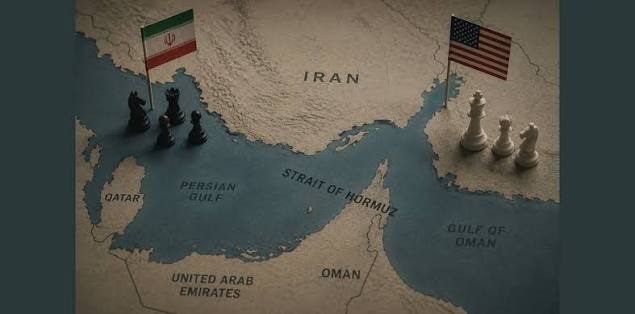
The response from the United States has been a mixture of military deterrence and diplomatic caution. The current administration has deployed advanced carrier strike groups to the region to reassure regional allies and protect commercial convoys. However, direct military confrontation is a path that Washington is desperate to avoid, recognizing that a full-scale war could trigger an unprecedented global economic crisis. During moments of extreme tension, political maneuvers have played a major role; for instance, when the White House intervened and Trump halts planned strikes, it signaled a desire to prevent uncontrolled escalation. This hesitation is interpreted by Tehran as a vindication of its strategy. Iran believes that by keeping the threat level high but carefully calibrated, it can deter a decisive Western response while continuing to slice away at the established maritime order. Meanwhile, Iran bets on calibrated military measures to keep its adversaries off balance without crossing the threshold that would trigger a devastating counter-offensive.
Negotiation Dynamics: Forcing a New Status Quo
As the maritime standoff persists, the ultimate objective remains a diplomatic settlement on Tehran’s terms. Iran’s leadership does not seek a permanent state of open war, which would ultimately devastate its own economy and military assets. Instead, the goal is to enter future negotiations with Iran in a position of overwhelming strength. Tehran wants the international community to accept a new security architecture in the Persian Gulf—one where Iran is recognized as the primary custodian of maritime security. To achieve this, Iranian diplomats are holding firm, using the threat of shipping disruptions as leverage. Proposed frameworks, such as a revamped Strait of Hormuz maritime framework, are being analyzed by policy experts as potential pathways to de-escalation, though critics argue that accommodating Iran’s demands would set a dangerous global precedent of rewarding maritime aggression.
Defensive Postures and Tactical Adaptation
Behind the political rhetoric lies a deeply calculated defensive posture. Tehran has spent decades preparing for a potential conflict with a technologically superior adversary. By investing heavily in swarming fast-attack craft, anti-ship ballistic missiles, and advanced drone technology, the Islamic Revolutionary Guard Corps (IRGC) has developed a highly asymmetric capability. This is detailed in Tehran’s tactical defense plans, which emphasize decentralized command structures and rapid redeployment to survive initial preemptive strikes. By maintaining the ability to launch unpredictable strikes from concealed coastal positions, Iran ensures that any attempt by the United States or its allies to forcibly clear the Strait of Hormuz would result in significant casualties and catastrophic damage to regional oil infrastructure. This reality forces Western commanders to proceed with extreme caution, further validating the out-escalation doctrine.
Future Outlook: Can Containment Succeed?
The ongoing maritime conflict highlights the severe limitations of traditional containment strategies. For decades, the United States has relied on economic sanctions and a forward military presence to keep Iranian ambitions in check. Yet, Tehran has repeatedly demonstrated an ability to adapt, finding new ways to generate leverage and bypass international pressure. As long as the global economy remains dependent on the uninterrupted flow of oil through the Persian Gulf, Iran will hold a powerful card. Whether the United States and its allies can devise a new diplomatic and military strategy to counter this asymmetric threat remains to be seen. What is certain is that the old status quo in the Strait of Hormuz is gone, and the future of maritime security in the Middle East will depend on which side can sustain its strategy of attrition without triggering a catastrophic regional conflagration.