Afghanistan-Pakistan deal: China Brokers Agreement to End Regional Conflict
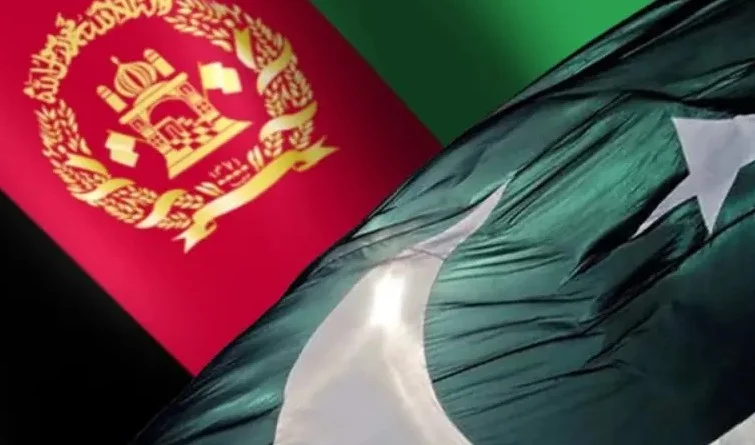
Afghanistan-Pakistan deal negotiations have culminated in a monumental shift in South Asian geopolitics, effectively aiming to resolve the prolonged border and security conflicts that have plagued the neighboring nations for decades. In an unprecedented diplomatic victory, the Chinese Foreign Ministry successfully mediated a comprehensive treaty between Islamabad and Kabul during high-stakes talks held in China. The agreement addresses core economic and security grievances from both sides. On one hand, Pakistan has pledged to provide Afghanistan with unfettered access to its seaports and markets, promising an end to abrupt border closures that have historically crippled Afghan trade. In return, the Afghan administration has committed to a sweeping relocation of heavily armed militant factions, specifically the Tehrik-i-Taliban Pakistan (TTP), the Islamic State Khorasan Province (ISKP), and the Baloch Liberation Army (BLA), moving them away from the Pakistani border towards northern Afghanistan. This landmark resolution not only mitigates immediate military tensions but also paves the way for extensive regional economic integration, setting a new precedent for conflict resolution in a highly volatile region.
Key Terms of the China-Brokered Treaty
The recently announced agreement is multifaceted, addressing the deepest concerns of both the Pakistani state and the Afghan government. For years, diplomatic relations have been stymied by a fundamental lack of trust, primarily revolving around border security and economic strangulation. By directly targeting these two pillars, the Chinese-brokered treaty establishes a reciprocal framework where both nations stand to gain significantly. The explicit documentation of these terms ensures that there are clear benchmarks for success and accountability mechanisms embedded within the diplomatic framework.
Pakistan’s Concessions: Trade and Sea Access
At the heart of the economic provisions is Pakistan’s agreement to grant landlocked Afghanistan full and unrestricted access to its vast maritime infrastructure, specifically the pivotal ports of Karachi and Gwadar. Historically, Afghan merchants have faced immense bureaucratic hurdles, excessive tariffs, and arbitrary delays when attempting to utilize Pakistani seaports for international trade. Under the new stipulations, these artificial barriers will be dismantled. Pakistan will streamline customs procedures, reduce transit duties, and provide dedicated logistical corridors designed exclusively to facilitate Afghan export and import volumes. This concession is an absolute game-changer for the Afghan economy, which relies heavily on the export of agricultural products, minerals, and textiles. By integrating Afghan trade into the broader maritime networks of the Arabian Sea, Pakistan effectively throws a vital economic lifeline to a nation that has endured years of severe financial sanctions and infrastructural decay. Furthermore, this move strategically ties the economic prosperity of Afghanistan directly to the stability of Pakistani ports, creating a mutual dependency that inherently discourages future conflict.
Uninterrupted Border Crossings
Equally critical to the seaport access is Pakistan’s solemn vow to maintain open border crossings. Points of entry such as Torkham and Chaman are the central arteries of bilateral commerce and civilian movement. In the past, escalating political tensions routinely led to the sudden and unilateral closure of these gates by Pakistani authorities, leaving thousands of cargo trucks stranded. This not only caused millions of dollars in losses due to rotting perishable goods but also fueled deep-seated anti-Pakistan sentiment among the Afghan populace. The new treaty expressly forbids the closure of border crossings without solid, verifiable reasons and mandates a strict pre-warning system. A joint border management committee is slated to be established, featuring representatives from both nations alongside neutral Chinese observers, to mediate minor disputes before they escalate into blanket border shutdowns. This guarantee of operational continuity provides Afghan businesses with the predictability they desperately need to engage in long-term commercial planning and foreign investment attraction.
Afghanistan’s Security Commitments
While Pakistan is providing sweeping economic concessions, the burden of security falls squarely on the shoulders of the Afghan leadership. For over a decade, Pakistan has consistently alleged that militant groups utilize Afghan territory as a safe haven to plan and execute devastating cross-border terrorist attacks against Pakistani military outposts, civilian infrastructure, and Chinese nationals working on regional megaprojects. The new treaty directly mandates Afghanistan to take unprecedented, actionable steps to neutralize these threats.
Relocation of TTP, ISKP, and BLA
The most drastic security measure within the agreement is the forced relocation of three prominent militant organizations: the Tehrik-i-Taliban Pakistan (TTP), the Islamic State Khorasan Province (ISKP), and the Baloch Liberation Army (BLA). The Afghan government has formally agreed to uproot the operational bases, training camps, and leadership nodes of these factions from the rugged southern and eastern provinces bordering Pakistan, forcibly transferring them to the far northern regions of Afghanistan. This geographic distancing serves a dual purpose. Firstly, it drastically increases the logistical difficulty for these groups to infiltrate Pakistani territory or conduct quick hit-and-run ambushes across the Durand Line. Moving them closer to the borders of Central Asian states like Tajikistan and Uzbekistan effectively removes them from their traditional ethnic support bases along the Pashtun belt, severely diminishing their operational capacities. The relocation process is highly sensitive and carries immense risks of internal armed resistance within Afghanistan, marking this as perhaps the most ambitious internal security operation the current Afghan administration has ever promised to undertake.
Guaranteeing the Security of Afghan Soil
Beyond the physical relocation of targeted insurgent networks, the Afghan government has codified a stringent operational condition: these groups are strictly prohibited from utilizing Afghan soil to orchestrate, finance, or launch any aggressive actions against the State of Pakistan. To enforce this, Kabul has allegedly agreed to implement rigid surveillance frameworks over the newly established northern settlements. If any of the relocated factions violate these conditions, the Afghan state security apparatus will be treaty-bound to engage them militarily. This commitment transforms Afghanistan’s previous rhetorical promises of non-interference into an actionable legal obligation under international observation. It addresses the core anxiety of the Pakistani defense establishment, which has long argued that true regional peace is impossible without the complete cessation of cross-border terrorism. Furthermore, this clause reassures Beijing that its multibillion-dollar investments in Pakistan will no longer be subjected to relentless sabotage by the BLA or TTP operating out of safe havens.
| Stakeholder | Key Concessions Provided | Strategic Benefits Gained |
|---|---|---|
| Pakistan | Unrestricted access to Karachi and Gwadar ports; guarantee of uninterrupted border operations. | Massive reduction in cross-border terrorism; relocation of TTP and BLA away from national borders. |
| Afghanistan | Relocation of militant factions to northern provinces; strict enforcement of non-aggression policies. | Crucial economic revival through access to the Arabian Sea and global export markets. |
| China | Diplomatic mediation, geopolitical capital investment, and oversight of treaty implementation. | Enhanced security for the China-Pakistan Economic Corridor (CPEC) and expansion of the Belt and Road Initiative (BRI). |
China’s Role in Regional Diplomacy
The successful brokering of this historic peace deal underscores China’s rapidly evolving role as a premier diplomatic heavyweight in global geopolitics. Stepping into a mediator role that was traditionally occupied by Western powers, Beijing has leveraged its massive economic influence and strategic neutrality to achieve a breakthrough where countless others have failed. The direct involvement of the Chinese Foreign Ministry highlights the immense priority the Chinese Communist Party places on securing its western periphery.
The Motivation Behind Beijing’s Intervention
China’s motivation to intervene is deeply rooted in the preservation and expansion of the China-Pakistan Economic Corridor (CPEC), the flagship enterprise of its global Belt and Road Initiative (BRI). Over the past several years, the BLA and the TTP have increasingly targeted Chinese engineers, workers, and infrastructure projects within Pakistan, severely delaying construction and generating profound unease in Beijing. By conditioning its diplomatic and economic support for the Afghan government on the relocation and suppression of these specific militant groups, China is aggressively protecting its foreign investments. Furthermore, the stabilization of Afghanistan is critical to preventing the radicalization of China’s own Xinjiang province, as groups like ISKP have openly expressed hostility toward the Chinese state. Beijing realized that neither Pakistan nor Afghanistan could resolve their security dilemma without a powerful third-party guarantor capable of offering massive economic incentives and threatening credible diplomatic isolation.
Strategic Implications for South and Central Asia
The successful implementation of this treaty holds transformative potential for the broader South and Central Asian theater. A stabilized Afghanistan-Pakistan border creates a contiguous, secure land bridge connecting the energy-rich Central Asian republics to the warm waters of the Arabian Sea. This alignment perfectly dovetails with China’s vision of a highly integrated Eurasian economic zone. As cross-border friction diminishes, plans for massive transnational infrastructure projects, such as the Trans-Afghan Railway and the TAPI (Turkmenistan-Afghanistan-Pakistan-India) gas pipeline, transition from theoretical concepts to highly viable commercial endeavors. The diplomatic victory also signals to the global community that Asian nations are increasingly capable of resolving their own deeply entrenched historical conflicts without Western intervention, fundamentally altering the traditional balance of diplomatic power in the region.
Historical Context of the Afghanistan-Pakistan Conflict
To fully grasp the magnitude of this treaty, one must examine the deeply troubled historical context that has defined relations between Kabul and Islamabad. The mistrust is not a recent phenomenon but a complex web of historical grievances, territorial disputes, and shifting geopolitical allegiances that have haunted the region since the mid-20th century.
Decades of Border Tensions
Since the creation of Pakistan in 1947, the bilateral relationship has been marked by a constant undercurrent of hostility. Both nations have accused each other of funding proxy wars, harboring dissidents, and engaging in overt acts of subversion. The border regions have effectively operated as largely autonomous zones where militant groups could easily cross back and forth to evade capture. Over the past twenty years, these tensions erupted into numerous localized military clashes involving heavy artillery and small arms fire, resulting in the tragic loss of civilian lives and the repeated displacement of border communities. The continuous state of near-war has drained massive financial resources from both nations, forcing them to maintain highly militarized border postures at the expense of domestic economic development.
The Impact of the Durand Line
At the geopolitical epicenter of this animosity is the Durand Line, the 2,640-kilometer colonial-era border drawn by the British in 1893. Successive Afghan governments have steadfastly refused to officially recognize the Durand Line as an international boundary, arguing that it arbitrarily divides the indigenous Pashtun tribes. Pakistan, conversely, considers the line to be a sacrosanct and permanent sovereign border. In recent years, Pakistan undertook a massive, multibillion-dollar project to construct a physical fence along the entire length of the Durand Line to curb militant infiltration, a move that severely angered Kabul. The brilliance of the new Chinese-brokered deal lies in its pragmatic circumvention of the Durand Line recognition debate. Instead of forcing a resolution on the highly emotional territorial dispute, the treaty focuses purely on the functional realities of border management, trade access, and immediate security concerns, allowing both nations to cooperate without conceding their long-term ideological positions.
Economic Benefits for Both Nations
The economic dimensions of the treaty are arguably its most durable feature. By linking the prosperity of both nations to mutual cooperation, the agreement creates a powerful financial deterrent against returning to hostilities. A thriving regional economy serves as the ultimate antidote to the disenfranchisement that historically fuels militant recruitment.
Boosting Bilateral Trade
Before the escalation of border closures, bilateral trade between Afghanistan and Pakistan had reached an estimated $2.5 billion annually, but this figure drastically plummeted due to political instability and systemic bureaucratic blockades. The enforcement of uninterrupted border crossings and the reduction of tariffs are projected to exponentially boost this trade volume within the next fiscal cycle. Pakistani manufacturers will regain a highly lucrative market for cement, pharmaceuticals, and consumer goods, while Afghan farmers will secure reliable, rapid access to massive Pakistani urban centers for their fresh produce. This renewed economic vitality is expected to generate thousands of direct and indirect jobs on both sides of the border, providing critical socioeconomic relief to heavily impoverished border provinces.
Accessing the Arabian Sea
The granting of unhindered access to the Arabian Sea via Karachi and Gwadar effectively ends Afghanistan’s geographic curse. Landlocked nations naturally suffer from depressed economic growth rates due to their reliance on neighbors for global connectivity. By securing a reliable path to international shipping lanes, Afghanistan can drastically reduce its freight transportation costs and make its highly valuable mineral exports—such as lithium, copper, and rare earth elements—competitive on the global market. Simultaneously, Pakistan benefits economically by collecting lucrative transit fees and establishing its southern ports as the premier maritime hubs for the entire Central Asian region, directly competing with Iranian ports like Chabahar.
Challenges and Future Prospects for the Deal
While the diplomatic triumph is universally celebrated, the implementation phase of the Afghanistan-Pakistan deal is fraught with monumental challenges. Agreements forged in negotiation rooms must now survive the brutal realities of regional politics, tribal loyalties, and entrenched militant ideologies.
Monitoring Security Relocations
The foremost challenge lies in the sheer logistical and military complexity of relocating the TTP, ISKP, and BLA. These are deeply entrenched, heavily armed organizations with extensive local intelligence networks and significant financial resources. The Afghan government’s capacity to forcibly move tens of thousands of hardened fighters and their families to northern provinces without sparking a massive internal civil war is highly questionable. Furthermore, ensuring that these groups actually disarm or remain contained within their new northern parameters requires an immense surveillance infrastructure that Afghanistan currently lacks. The potential for militant elements to splinter, go rogue, or openly violently resist relocation poses a severe threat to the entire agreement.
Ensuring Long-Term Compliance
Long-term compliance necessitates robust, impartial verification mechanisms. China’s continued involvement as a guarantor will be critical, but the geopolitical landscape is notoriously volatile. To prevent the treaty from collapsing at the first sign of an isolated border skirmish or a rogue militant attack, a permanent joint verification commission must be rapidly deployed. The international community, particularly entities monitored by global international diplomacy coverage networks, will be closely scrutinizing the enforcement of these security and trade paradigms. If successful, this China-brokered treaty will serve as a foundational blueprint for resolving other seemingly intractable conflicts across the globe. However, if either Kabul or Islamabad fails to deliver on their immense respective promises, the resulting collapse in trust could plunge the region into a devastating era of intensified hybrid warfare and absolute economic ruin.