Netanyahu Demands Lebanon Security Zone Before Peace Talks
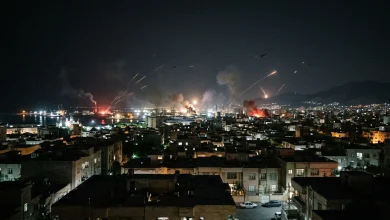
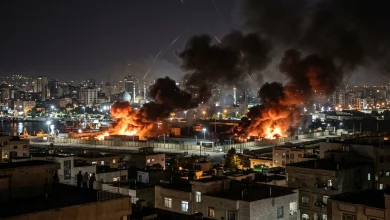
Netanyahu has decisively drawn a proverbial line in the sand, dramatically altering the diplomatic landscape just twenty-four hours before Israel and Lebanon are scheduled to initiate unprecedented direct peace talks. In a sweeping statement that caught many international observers by surprise, the Israeli Prime Minister made it unequivocally clear that he has zero intentions of relinquishing control over southern Lebanon in the immediate future. Instead, he painted a detailed picture of a completely revolutionized security architecture for Israel’s northern border. The core of his strategy relies on what he describes as a solid, deeper security zone firmly entrenched within Lebanese sovereign territory. This bold geopolitical maneuver signifies a massive escalation in diplomatic posturing, setting an incredibly high bar for any potential peace agreement. Furthermore, his explicit demand for the complete and unmitigated disarmament of Hezbollah forces as a baseline precondition essentially places the onus of extraordinary domestic reform entirely on the fractured Lebanese state.
By insisting on a peace agreement that endures for generations rather than a temporary cessation of hostilities, Israel’s leadership has signaled that they are entirely unwilling to return to the precarious status quo that existed prior to the current conflict escalation. This maximalist opening position effectively challenges not only the Lebanese government but also the broader international community, testing the limits of what mediators are willing to enforce. To comprehend the magnitude of these demands, one must dive deeply into the historical, military, and economic layers that define the deeply troubled Israel-Lebanon relationship.
The Core Demands: A Permanent Buffer Zone
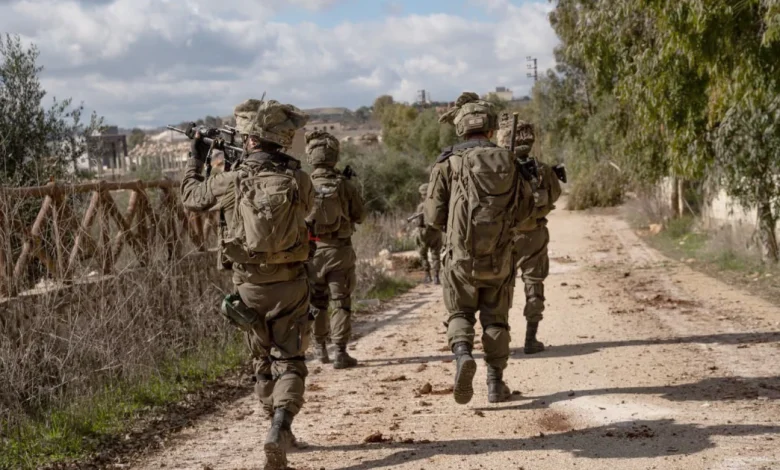
The concept of a security zone inside Lebanon is not a novel strategic thought for Israeli military planners, but the scale and permanence implied by the current rhetoric represent a major paradigm shift. For decades, Israel’s northern communities have lived under the persistent threat of rocket fire, anti-tank missiles, and cross-border incursions. By demanding a solid, deeper security zone, the Prime Minister is effectively proposing a significant territorial annexation or, at the very least, a long-term military occupation of sovereign Lebanese land extending up to or even beyond the Litani River. This buffer is intended to physically remove the threat of short-range munitions and completely neutralize the possibility of specialized militant units executing border raids. The strategic logic dictates that geographical depth is the only reliable substitute for diplomatic guarantees, which Israeli officials argue have repeatedly failed them in the past.
Disarming Hezbollah: An Unyielding Precondition
Perhaps the most contentious and practically challenging aspect of the opening negotiation stance is the absolute demand for Hezbollah’s full disarmament. Hezbollah is not merely a fringe militant organization; it is a deeply embedded political and military powerhouse within Lebanon, often possessing military capabilities that far exceed those of the official Lebanese Armed Forces. Demanding their complete demilitarization as a prerequisite for a peace deal is akin to demanding the fundamental restructuring of the Lebanese state itself. From the Israeli perspective, any agreement that leaves Hezbollah’s vast subterranean network, precision-guided missile stockpiles, and elite combat units intact is inherently flawed and merely serves as a temporary pause before the next inevitable war.
Historical Context of the Security Zone
To fully grasp the implications of these preconditions, it is vital to reflect on the historical context. From 1982 until 2000, Israel maintained a significant military presence in southern Lebanon, an occupation that ultimately became highly unpopular domestically due to the continuous attrition warfare waged by Lebanese resistance factions. The eventual unilateral withdrawal was widely celebrated in Lebanon but left a power vacuum that Hezbollah rapidly filled. The Israeli military establishment views the post-2000 era as a strategic error that allowed an unprecedented military buildup on their northern doorstep. Thus, the current demand for a renewed security buffer is framed as correcting a historical mistake, prioritizing absolute physical security over the optics of territorial occupation.
Lebanon Response and Regional Dynamics
For the government in Beirut, accepting these Israeli terms is politically suicidal and practically impossible. The Lebanese state, already grappling with an unparalleled economic crisis, political gridlock, and heavily fractured sectarian divides, lacks both the political will and the military capacity to forcefully disarm Hezbollah. Furthermore, conceding sovereign territory for an Israeli security buffer would violate the core tenets of the Lebanese constitution and instantly delegitimize whatever administration agrees to such terms. Consequently, Lebanon’s negotiators enter these direct talks severely handicapped, sandwiched between overwhelming Israeli military leverage and the internal dominance of Hezbollah’s armed wing.
The Geopolitical Ripple Effects
The geopolitical ramifications of these extreme preconditions extend far beyond the immediate border region. Neighboring power brokers are watching closely, and the escalating rhetoric has triggered alarm bells across the Middle East. For instance, recent diplomatic channels have highlighted severe warnings regarding the exclusion of Lebanese considerations from broader regional peace frameworks, explicitly outlining the risk of igniting a multi-front conflict. If Israel strictly enforces these maximalist demands, the likelihood of a broader regional war involving Syrian, Iraqi, and Iranian proxy networks increases exponentially, fundamentally destabilizing the entire Middle Eastern theater.
Table: Comparison of Initial Negotiating Positions
| Negotiating Pillar | Israel Preconditions | Lebanon Anticipated Stance |
|---|---|---|
| Territorial Sovereignty | Demands long-term control of a deep security buffer zone inside southern Lebanon. | Demands full Israeli withdrawal to the internationally recognized Blue Line. |
| Military Disarmament | Insists on the complete and verifiable disarmament of all Hezbollah forces. | Views Hezbollah’s arsenal as a complex internal defense matter, resistant to external dictates. |
| Enforcement Mechanisms | Rejects reliance on UNIFIL; demands unilateral freedom of military action. | Insists on strengthening the Lebanese Armed Forces and UNIFIL to secure the border. |
| Duration of Agreement | Requires an absolute, generation-enduring permanent peace treaty. | Seeks an immediate cessation of hostilities and a return to the 2006 UN Resolution 1701 framework. |
Economic Repercussions of Geopolitical Tension
The global economy remains highly sensitive to Middle Eastern instability, and the rigid pre-talk posturing has already generated significant financial waves. The promise of regional peace typically stabilizes volatile markets; however, the maximalist nature of the current demands has introduced a severe layer of uncertainty. For example, global currency markets have already reacted to ceasefire murmurs, experiencing unexpected fluctuations as traders attempt to price in the possibility of either a historic breakthrough or a catastrophic diplomatic collapse. Concurrently, the energy sector is experiencing whiplash. Despite the profound geopolitical risks that usually drive oil prices upward, complex macroeconomic factors have recently led to oil prices plunging below historic thresholds. Yet, if these direct talks disintegrate due to unyielding demands for a Lebanese security buffer, energy markets are primed for an explosive upward correction that could derail global inflation-reduction efforts.
Global Reactions and Diplomatic Maneuvering
The international community’s response to the Prime Minister’s statements has been a mixture of deep concern and frantic diplomatic scrambling. European nations, particularly France, which holds deep historical ties to Lebanon, have urged both sides to approach the negotiating table with flexibility. Meanwhile, alternative global powers are increasingly demonstrating their willingness to step into regional mediation voids, much like their recent successes in brokering regional stability in other deeply entrenched Asian conflicts. The stark reality is that the Western monopoly on Middle Eastern diplomacy is fracturing, and if traditional mediators fail to bridge this immense gap, other international actors may forcefully intervene to impose a settlement.
United States and International Mediation Efforts
The United States finds itself in a particularly delicate position. As Israel’s primary military and diplomatic ally, the US is tasked with balancing unwavering support for Israeli security with the absolute necessity of preventing Lebanon from becoming a totally failed state. US envoys have reportedly been working behind the scenes for months to establish the groundwork for these direct talks, making the sudden public announcement of such rigid preconditions a significant diplomatic hurdle. Independent analysts and international geopolitical monitors widely agree that Washington will need to apply unprecedented leverage on both Jerusalem and Beirut to find a workable compromise that secures Israel’s borders without permanently occupying Lebanese territory.
The Path to a Generation-Enduring Peace?
The explicit desire for a peace agreement that endures for generations is undoubtedly a noble and necessary objective for a region plagued by cyclical violence. However, history demonstrates that enduring peace is rarely achieved through the unilateral imposition of maximalist demands. True generational stability requires mutual security guarantees, economic integration, and the systematic dismantling of the underlying grievances that fuel radicalism. By prioritizing a physical security zone and the total capitulation of Hezbollah’s military infrastructure upfront, the Israeli strategy risks alienating moderate Lebanese factions that might otherwise support a long-term normalization process. The critical question remains whether these public demands are a rigid ideological endgame or an aggressive opening gambit designed to secure lesser, but still strategically vital, concessions.
Analyzing the Likelihood of Direct Talk Success
Given the immense chasm between the Israeli preconditions and Lebanese political reality, the immediate likelihood of a comprehensive peace treaty emerging from these direct talks is vanishingly small. Negotiations of this magnitude, burdened by decades of bloodshed and deep mutual distrust, typically require years of incremental confidence-building measures. The direct talks scheduled for tomorrow are more accurately viewed as the explosive beginning of a grueling diplomatic marathon rather than a final sprint to a treaty signing. Ultimately, while the Prime Minister’s vision of a demilitarized southern Lebanon and a permanent buffer zone articulates a clear definition of absolute security, translating that vision into a signed, internationally recognized, and practically enforceable agreement remains one of the most formidable geopolitical challenges of the modern era.