Iran Threatens New Military Blows Amid Hormuz Crisis
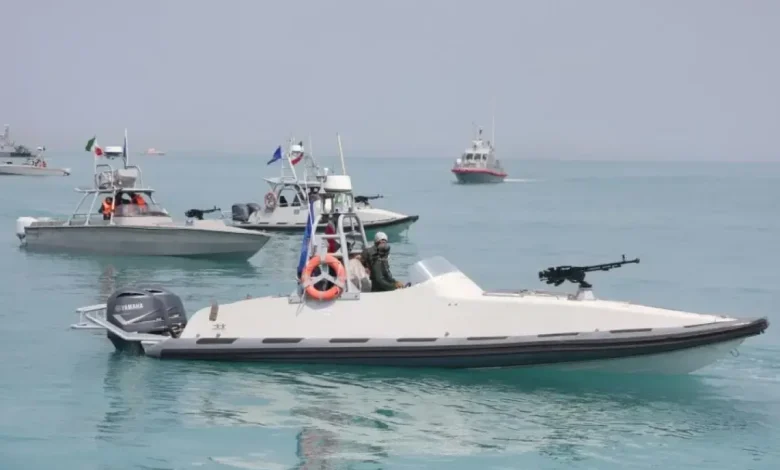
Iran is deliberately accelerating its military posture in the Middle East, unleashing a wave of unprecedented threats and aggressive naval maneuvers that are sending shockwaves through the global security apparatus. Supreme Leader Mojtaba Khamenei has unequivocally stated that the nation’s military apparatus, specifically its formidable naval forces, is entirely prepared to inflict what he termed “new bitter defeats” upon its geopolitical adversaries. The alarming rhetoric points to an overarching strategy designed to challenge the hegemony of the United States and Israel directly, asserting that the Islamic Republic is not merely prepared for conflict but is actively exposing the structural and operational weaknesses of Western alliances. This drastic escalation coincides with a precipitous spike in tensions across the Strait of Hormuz, where military and commercial vessels alike are facing an increasingly hostile environment marked by live gunfire, aggressive interceptions, and a brazen attempt by Tehran to assert total administrative and military control over one of the world’s most critical maritime chokepoints.
The Strategic Shift of Iran in the Strait of Hormuz
The strategic shift of the Islamic Republic in the Strait of Hormuz signifies a calculated departure from indirect proxy warfare to overt, state-sponsored maritime aggression. By transforming the narrow waterway into a heavily militarized flashpoint, the nation seeks to leverage its geographical dominance to dictate the terms of regional trade and security. Military analysts observe that the Iranian Revolutionary Guard Corps (IRGC) Navy has dramatically expanded its operational footprint, utilizing fast attack crafts, advanced drone swarms, and shore-based anti-ship missile batteries to create a layered anti-access/area denial (A2/AD) umbrella. For a comprehensive look at how Tehran has been preparing for this exact scenario, it is vital to analyze the underlying Iran Strategy 2026, which outlines the comprehensive buildup of asymmetric capabilities designed to neutralize technologically superior Western fleets.
Mojtaba Khamenei’s Declaration of Bitter Defeats
Mojtaba Khamenei’s recent declarations are not merely standard regime rhetoric; they represent a crystallized doctrinal shift within the supreme leadership. By openly promising “new bitter defeats,” the leadership is signaling to both its domestic base and its international adversaries that the era of strategic patience has definitively ended. The rhetoric is inherently designed to project strength and unyielding resolve amid crippling economic sanctions and international isolation. By specifically targeting the United States and Israel in these broadcasts, the regime attempts to solidify its position as the undisputed leader of the “Axis of Resistance.” This psychological warfare is intended to deter preemptive strikes against its nuclear infrastructure while simultaneously galvanizing proxy forces scattered across Lebanon, Syria, Iraq, and Yemen to synchronize their aggressive postures in tandem with the central command.
Iran Navy Operations and Escalating Gunfire
The translation of this hostile rhetoric into actionable military operations has been swift and severe. The Iranian Navy has initiated an aggressive campaign of harassing commercial shipping, marked by an alarming increase in escalating gunfire and hostile interceptions. Naval patrols have shifted from simple surveillance to overt intimidation tactics. Reports indicate that heavily armed patrol boats are routinely approaching international cargo ships at dangerously close ranges, ignoring standard maritime communication protocols, and in several instances, firing warning shots across the bows of vessels that refuse immediate compliance with unauthorized operational directives. This tactical escalation leaves little room for miscalculation, significantly increasing the risk of a broader armed conflict in a waterway that facilitates roughly twenty percent of the world’s global oil consumption.
Unpacking the Geopolitical Showdown with the US and Israel
Unpacking the geopolitical showdown reveals a multifaceted conflict where military posturing is intrinsically linked to broader diplomatic and strategic objectives. Tehran’s direct confrontation with the United States and Israel is an attempt to rewrite the rules of engagement in the Middle East. By constantly pushing the boundaries of acceptable behavior, the regime tests the red lines of Washington and Tel Aviv, aiming to demonstrate that Western security guarantees to Gulf allies are inherently fragile and unreliable. This dynamic is exacerbated by shifting political landscapes, where the perceived fragility of any temporary ceasefires highlights the deeply volatile nature of the Israeli-Iranian proxy war, which has now transitioned into a more direct, localized maritime struggle.
Demonstrating Perceived Weakness in Western Navies
A central tenet of the current strategy involves systematically demonstrating the perceived operational weaknesses of Western navies tasked with securing the Gulf. Tehran capitalizes on the bureaucratic and political constraints of international maritime coalitions. By engaging in asymmetric “gray zone” tactics—actions that fall just short of the threshold of conventional war—the regime effectively paralyzes the decision-making processes of Western military commands. Drone surveillance, GPS spoofing, and the deployment of sea mines are utilized to create a constant state of ambiguity and operational friction. The supreme leadership claims these tactics prove that sophisticated Western destroyers and aircraft carriers are fundamentally ill-equipped to counter agile, decentralized, and highly motivated asymmetric forces operating within their own littoral waters.
Assessing the Impact on Global Maritime Security
The immediate impact on global maritime security cannot be overstated. Shipping conglomerates are facing unprecedented operational dilemmas, forced to choose between navigating a heavily contested waterway under the threat of seizure or undertaking massively expensive and time-consuming rerouting. Insurance premiums for vessels traversing the Persian Gulf have skyrocketed, reflecting the stark reality of the heightened threat environment. The international community has attempted to bolster security through various initiatives, but the sheer volume of maritime traffic makes comprehensive protection nearly impossible. In an effort to secure these vital lanes, we have seen the emergence of multinational defense missions aimed at deterring hostile boardings, though their effectiveness remains contested by the sheer scale of the localized naval threat.
Direct Confrontations at Sea: A Timeline of Incidents
The escalation is not theoretical; it is backed by a disturbing timeline of tangible, violent confrontations at sea. Over the past 72 hours alone, the Strait of Hormuz has witnessed a staggering number of incidents that have brought the region to the absolute brink of total war.
| Date | Incident Type | Target Vessel | Outcome |
|---|---|---|---|
| April 16, 2026 | Warning Shots Fired | Marshall Islands-flagged Tanker | Vessel altered course; Coalition forces deployed. |
| April 17, 2026 | Drone Surveillance & Harassment | US Navy Destroyer (Arleigh Burke-class) | Evasive maneuvers; Electronic countermeasures deployed. |
| April 18, 2026 | Direct Confrontation / Boarding Attempt | Liberian-flagged Cargo Ship | Hostile boarding repelled by onboard private security. |
| April 18, 2026 | GPS Spoofing & Comm Jamming | Multiple Commercial Vessels | Navigation errors leading to near-collisions in transit lanes. |
Commercial Vessels in the Crosshairs
Commercial vessels find themselves squarely in the crosshairs of this geopolitical dispute. Unlike naval warships equipped with advanced defense systems, civilian tankers and cargo ships are incredibly vulnerable to swarming tactics and boarding operations. Crew members are facing severe psychological and physical risks as they navigate these treacherous waters. The regime utilizes the threat of vessel seizure as a potent form of diplomatic blackmail, aiming to extract concessions from the international community. Leading maritime authorities and comprehensive global oil market reporting sources indicate that if the frequency of these incidents continues to rise, major shipping lines may entirely suspend operations in the Gulf, leading to a catastrophic breakdown in global supply chains.
Iran Restricting Freedom of Navigation
By systematically restricting freedom of navigation, Tehran is effectively holding the global economy hostage. The regime has begun unilaterally imposing “administrative checks” on vessels transiting international waters, a blatant violation of the United Nations Convention on the Law of the Sea (UNCLOS). These inspections are thinly veiled pretexts for harassment, intelligence gathering, and the assertion of sovereignty over disputed maritime territories. Vessels that refuse to comply with these arbitrary demands are immediately labeled as hostile actors, subjecting them to aggressive interception by the IRGC Navy. This tightening of control is a calculated move to establish a new normal, where passage through the Strait of Hormuz is explicitly contingent upon the goodwill and authorization of the supreme leadership.
Economic and Energy Implications of the Standoff
The economic and energy implications of this standoff are terrifyingly vast. The Strait of Hormuz is the world’s most critical energy artery. Any sustained disruption to the flow of hydrocarbons through this narrow channel immediately translates to extreme volatility in global energy markets. The sheer volume of crude oil, condensates, and liquefied natural gas (LNG) that passes through the strait means that there are no viable alternative routes capable of fully compensating for a total closure. Consequently, the mere threat of military action has already injected a massive geopolitical risk premium into global crude prices, inflating energy costs for manufacturing, transportation, and consumer goods worldwide.
Global Oil Markets and Supply Chain Shocks
Global oil markets are currently experiencing profound supply chain shocks as traders and analysts attempt to price in the heightened risk of a regional conflagration. Brent crude and West Texas Intermediate (WTI) have both seen sharp surges, breaking through critical resistance levels. Importing nations heavily reliant on Middle Eastern energy, particularly in Asia, are scrambling to secure alternative suppliers and draw down strategic reserves. To fully grasp the magnitude of this panic, one must observe how diplomatic channels are shifting, with international energy envoys desperately seeking assurances. For instance, the recent statements from the strategic oil supplies framework highlight the immense pressure on emerging economies to stabilize their energy imports amid the spiraling crisis.
International Response and Future Trajectories
The international response to the escalating crisis has been characterized by a mixture of diplomatic condemnation and rapid military redeployment. Western allies are rushing to reinforce their naval assets in the region, deploying additional carrier strike groups, missile defense systems, and intelligence-gathering platforms. However, there is a palpable reluctance to engage in outright military strikes against Iranian territory, driven by fears of igniting a devastating regional war that could engulf neighboring states and plunge the global economy into a severe recession. Diplomatic backchannels are operating at a frenetic pace, attempting to de-escalate the situation, but the hardline rhetoric emanating from Mojtaba Khamenei suggests that Tehran is currently uninterested in meaningful concessions.
Potential Scenarios for Diplomatic or Military Intervention
Looking ahead, the potential scenarios for either diplomatic resolution or military intervention remain highly volatile. A diplomatic off-ramp would require significant, face-saving concessions from both sides—a highly unlikely prospect given the current ideological entrenchment. Conversely, a military intervention scenario could range from targeted surgical strikes against IRGC naval bases to a full-scale multinational campaign aimed at forcefully reopening the strait. Both options carry immense risks. A limited strike might fail to deter future aggression and instead trigger a massive retaliatory barrage of ballistic missiles against Gulf infrastructure. As the rhetoric of “bitter defeats” continues to echo through the corridors of power in Tehran, the international community must brace for a protracted period of extreme instability, where a single miscalculation at sea could serve as the spark for the next great global conflict.