Ben Shapiro Viewership Plunges 85% As Rival Pundits Surge
The Post-October 7 Shift in Audience Dynamics
The landscape of political commentary is notoriously volatile, but the tectonic shifts witnessed since October 2023 represent a fundamental realignment of the conservative audience base. The catalyst for this rapid realignment was undoubtedly the escalation of the Israel-Hamas conflict. Media consumers, particularly those aligned with conservative and right-leaning ideologies, found themselves at a crossroads between traditional neoconservative foreign policy support and a burgeoning wave of ‘America First’ isolationism. This ideological schism has materialized directly in the subscriber counts and viewership dashboards of the industry’s biggest names, profoundly affecting engagement algorithms.
Tracking the Subscriber Exodus and Viewership Plunge
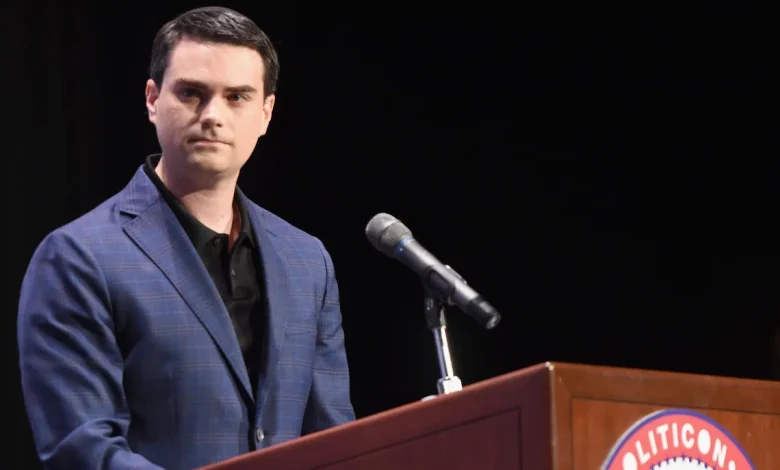
For years, the digital strategy employed by the leading voices in traditional conservative media resulted in consistent, exponential growth. However, the data recorded in the months following the October 7 attacks indicates a severe audience hemorrhage. Losing 20,000 subscribers on a monthly basis is an alarming metric for any digital enterprise, but for a channel that previously boasted relentless upward momentum, it signifies a critical ideological divergence between the creator and the consumer base. Viewers who once tuned in daily for domestic political commentary have expressed alienation regarding the heavy emphasis on foreign conflicts and international interventionism, leading them to actively unsubscribe and seek alternative viewpoints.
Analyzing the 85 Percent Metric Decline
An 85 percent drop in viewership is arguably more damaging than a subscriber loss. While subscriber counts contribute to channel authority, viewership directly dictates algorithmic discoverability and advertising revenue. This dramatic decline suggests that even those who remain subscribed are actively choosing not to click on or complete videos. According to historical analytics from the Social Blade analytics platform, such a sharp drop in sustained viewership usually points to a fundamental misalignment in content-market fit. The audience’s refusal to engage with the content creates a negative feedback loop within recommendation engines, suppressing the videos further down in user feeds and preventing new audience acquisition.
The Meteoric Rise of Rival Independent Voices
While traditional neoconservative commentary experiences a heavy contraction, the digital ecosystem abhors a vacuum. The audiences fleeing mainstream right-wing platforms have not abandoned political media; rather, they have migrated to commentators offering strict non-interventionist, populist, and anti-establishment narratives. The contrast in metrics provides a clear map of where the modern populist audience is heading.
| Commentator | Platform Shift Post-Oct 7 | Current Growth Metrics | Primary Ideological Stance |
|---|---|---|---|
| Ben Shapiro | -85% Viewership | Losing 20,000 subs/month | Traditional Neoconservative |
| Tucker Carlson | Explosive Growth on X/Independent | Adding 10,000 subs every few days | Populist Non-Interventionist |
| Candace Owens | Surging Independent Platform | Gained 40,000 subs in last month | America First / Dissident Right |
| Nick Fuentes | Massive Alternative Platform Reach | Grew from 1 Million | Hardline America First |
Tucker Carlson’s Accelerating Momentum
Since his dramatic exit from Fox News, Tucker Carlson has redefined the boundaries of independent digital journalism. Operating primarily through the X platform and his proprietary network, Carlson’s focus on domestic issues, border security, and stringent skepticism of foreign military funding has resonated deeply with the modern conservative base. His channel’s ability to consistently add 10,000 subscribers every few days is a testament to the high demand for his specific brand of political commentary. Carlson has successfully tapped into the exhaustion many Americans feel regarding international conflicts, directly absorbing the viewership that has migrated away from more hawkish commentators.
Candace Owens and the Daily Wire Departure Impact
The public falling out between Candace Owens and The Daily Wire management over foreign policy and domestic religious dialogues became a watershed moment for conservative media. When Owens departed to launch her fully independent show, she didn’t just retain her audience—she expanded it massively. Gaining 40,000 subscribers in a single month post-departure indicates that a substantial segment of the audience agreed with her critiques. Her rhetoric, which actively questions legacy media narratives and foreign policy consensus, has established her as a central pillar for disgruntled former viewers of mainstream conservative networks.
The Unexpected Surge of Nick Fuentes and America First
Perhaps the most shocking metric in this media realignment is the meteoric rise of Nick Fuentes. Previously relegated to the extreme fringes and banned from almost all mainstream platforms, Fuentes has leveraged alternative broadcasting sites, X, and Telegram to build an audience that has swelled from under 300,000 to over 1 million active followers. The “America First” movement he champions heavily targets Gen Z males who feel entirely disenfranchised by traditional political establishments. This surge highlights a profound radicalization and anti-establishment sentiment brewing among younger demographics, who reject mainstream conservative talking points entirely in favor of unfiltered, hyper-populist rhetoric.
Ideological Fractures Within the Right-Wing Ecosystem
The numerical data is merely a symptom of a much deeper philosophical civil war occurring within right-wing politics. The consensus that defined the conservative movement during the early 2000s has completely fractured, giving way to fiercely competing visions of what conservatism should prioritize in the 21st century.
The Impact of Foreign Policy Divergence
At the core of this fracture is the debate over American unipolarity and international obligations. The legacy conservative stance argues for strong international alliances, military readiness, and active support for historic allies in the Middle East and Eastern Europe. Conversely, the rising populist wing views these entanglements as financially ruinous and detrimental to American sovereignty. As we look at the evolving 2026 geopolitical shifts, it becomes evident that the audience is financially and emotionally fatigued by foreign wars. Commentators who champion sending billions in overseas aid are facing immediate, punitive reactions from their subscriber base, while those demanding secure borders and domestic investment are reaping the algorithmic rewards.
Generational Divides in Content Consumption
This ideological split is heavily stratified by age. Older generations of conservatives continue to support legacy institutions and traditional viewpoints, whereas Millennials and Gen Z conservatives are overwhelmingly drifting toward the populist, anti-interventionist camps. The younger demographic is highly native to digital spaces and possesses a lower tolerance for perceived establishment talking points. This generational divergence means that the long-term viability of political media companies hinges entirely on their ability to capture the youth vote—a demographic currently being dominated by independent, alternative creators rather than polished, studio-backed commentators.
Financial and Platform Implications for the Future
A subscriber exodus and an 85 percent drop in viewership carry massive financial implications that go far beyond pride or digital influence. In the economy of attention, these metrics represent millions of dollars in lost ad revenue, diminishing sponsorship leverage, and weakened merchandise sales.
Algorithmic Adaptation and Monetization Hurdles
Digital platforms rely on watch time, click-through rates, and viewer retention to serve advertisements. When a channel experiences an 85 percent drop in views, the algorithm effectively flags the content as “low interest,” triggering a shadow suppression that is incredibly difficult to recover from. Creators must navigate these turbulent waters while contending with strict platform rules. For instance, recent YouTube monetization updates have made it increasingly difficult for channels with declining retention to secure premium ad placements. Furthermore, the psychological impact of declining engagement on creators is profound, an issue highlighted in recent dialogues surrounding social media engagement metrics and creator burnout. When the algorithm turns against a creator, recouping that lost momentum requires either a massive content pivot or an acceptance of a permanently downsized footprint.
What This Means for The Daily Wire Empire
The Daily Wire has built an impressive, multi-million-dollar empire encompassing movies, razors, chocolates, and streaming content. However, the foundational pillar of this empire has always been its political commentary. If the flagship personalities face sustained audience rejection due to unyielding foreign policy stances, the downstream effects on subscription services like DailyWire+ could be severe. To survive this realignment, legacy digital media conglomerates may need to diversify their rosters further, potentially bringing in voices that align with the surging populist sentiment, or risk permanently losing their dominance to the agile, independent commentators who are currently capturing the zeitgeist of the modern American right.
In conclusion, the data surrounding these media giants serves as a real-time barometer for the political climate. The staggering losses faced by traditional commentators, contrasted with the explosive growth of independent populist voices, confirm that the conservative audience is undergoing a permanent evolution. The creators who fail to adapt to these shifting ideological tides will inevitably find themselves speaking to an increasingly empty digital auditorium.