Hormuz Crisis: Macron and Starmer Lead Defense Mission
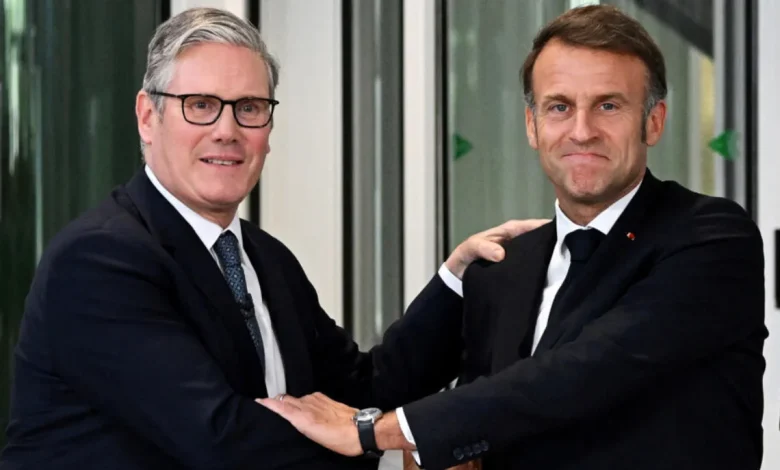
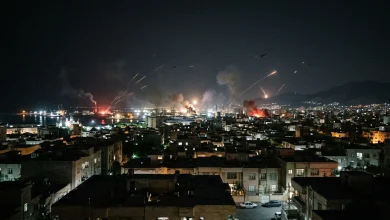
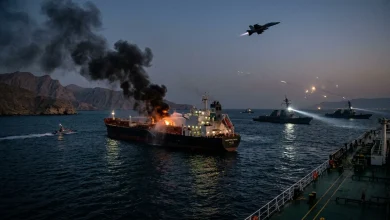
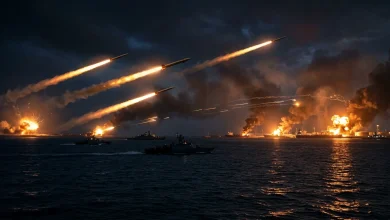
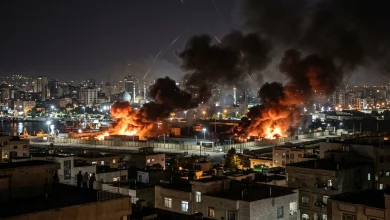
Hormuz shipping lanes are currently facing unprecedented disruption, prompting France and the UK to officially stop waiting for Washington to solve the ongoing maritime crisis. In a decisive and historic maneuver, French President Emmanuel Macron and UK Prime Minister Keir Starmer have announced that they will co-chair a high-level conference in Paris this Friday. The summit aims to bring together a coalition of non-belligerent nations willing to join a newly established defensive mission in the Middle East. The goal is remarkably simple yet geopolitically monumental: to restore freedom of navigation in the critical waterway without escalating the conflict into a full-scale regional war. Europe has made it abundantly clear that it is not joining America’s aggressive blockade strategy; instead, it is methodically building a sustainable, defensive alternative to it. This profound shift underscores a growing transatlantic divide regarding how to handle maritime security, international trade, and diplomatic engagement with complex regional actors.
Hormuz Crisis Sparks a Paradigm Shift in European Geopolitics
For decades, European nations have largely relied on the United States Navy to guarantee the security of vital global chokepoints. However, the current situation has forced a drastic recalculation in European capitals. The realization that American geopolitical objectives may no longer align perfectly with European economic security has triggered a paradigm shift. European leaders are increasingly vocal about the need for ‘strategic autonomy,’ a concept heavily championed by President Macron. By taking the initiative in this maritime corridor, Europe is signaling to the world that it possesses both the political will and the military capability to protect its own sovereign interests without waiting for a green light from the Pentagon. You can read more about the broader implications of these shifts in our comprehensive analysis of Strait of Hormuz news 2026.
The Paris Conference: Macron and Starmer Take the Lead
The upcoming Paris conference scheduled for this Friday is not merely a symbolic gathering; it is a highly orchestrated operational planning summit. Prime Minister Keir Starmer and President Emmanuel Macron are utilizing their combined diplomatic leverage to invite representatives from nations that rely heavily on the strait but wish to avoid military escalation. Countries such as Spain, Italy, Germany, and even key Asian economic powerhouses have been approached to participate in this groundbreaking framework. The discussions will center on standardizing rules of engagement, establishing unified command structures, and pooling naval resources. By co-chairing this event, Macron and Starmer are effectively positioning a unified Franco-British alliance at the forefront of European defense architecture, a move that redefines post-Brexit security cooperation.
Breaking Away from Washington’s Blockade Strategy
Perhaps the most critical aspect of the Paris initiative is its deliberate departure from the strategy currently being pursued by Washington. The United States has favored a robust, blockade-centric approach, aiming to heavily penalize adversarial actors through aggressive deterrence and intercept operations. Europe, conversely, views this as a dangerous escalation that threatens to ignite a broader conflict. The European mission strictly opposes the blockade methodology, arguing that such tactics inevitably trap innocent commercial vessels in the crossfire. This strategic divergence is part of a larger trend of diplomatic separation, mirrored in recent events where we saw NATO allies shut airspace in defiance of certain unilateral directives. Europe’s alternative is built on de-escalation, deterrence through presence, and an unwavering commitment to international maritime law.
The Core Objective: Restoring Freedom of Navigation
At the heart of the Franco-British proposal is the fundamental principle of freedom of navigation. This is not about projecting offensive power; it is about ensuring that global commerce can flow uninterrupted. The proposed European naval task force will focus exclusively on escorting commercial shipping, providing a protective umbrella against piracy, state-sponsored harassment, and asymmetrical drone attacks. By guaranteeing safe passage, the coalition hopes to lower insurance premiums for shipping companies and stabilize the volatile global supply chain that depends on these waters. It is a mission rooted deeply in the conventions established by the Chatham House framework on international relations and maritime legal standards, emphasizing defense over offense.
Defining the Non-Belligerent Defensive Mission
To attract a broad coalition of nations, Macron and Starmer have meticulously branded this initiative as a ‘non-belligerent defensive mission.’ The rules of engagement for participating naval vessels will be strictly limited to self-defense and the defense of escorted commercial ships. There will be no preemptive strikes on coastal radar installations, no aggressive territorial incursions, and no participation in offensive blockade maneuvers. This nuanced approach is designed to avoid antagonizing regional powers while still providing a robust shield for international trade. It offers a diplomatic middle ground for countries that are desperate to protect their economic lifelines but are politically unable or unwilling to join a US-led military offensive.
Economic Ramifications for Global Supply Chains
The economic stakes of this European initiative cannot be overstated. With a significant percentage of the world’s liquefied natural gas and crude oil passing through the strait, any prolonged disruption sends immediate shockwaves through the global economy. The current crisis has already led to severe supply chain bottlenecks, impacting everything from manufacturing in Germany to retail prices in the UK. By deploying a defensive naval shield, Europe aims to preempt further economic damage. The success of this mission could stabilize fluctuating energy markets, providing much-needed relief to consumers and industries worldwide. Understanding these dynamics is crucial, especially when we observe how oil plunges below 100 impact broader economic realities despite ongoing regional tensions.
Evaluating the Alternative Maritime Coalition
To fully grasp the strategic difference between the existing US-led approach and the proposed European alternative, it is necessary to examine their respective operational frameworks. The European model prioritizes international consensus and strictly defensive operations, aiming to lower the regional temperature while maintaining security. The table below outlines the core differences between the two competing maritime strategies currently vying for dominance in the region.
| Strategic Element | US-Led Blockade Strategy | European Defensive Mission (Paris Framework) |
|---|---|---|
| Primary Objective | Aggressive deterrence and embargo enforcement | Restoration of freedom of navigation via escorts |
| Rules of Engagement | Preemptive capabilities, offensive posturing | Strictly non-belligerent, defensive response only |
| Target Audience | Military allies, strategic partners | Non-belligerent nations reliant on global trade |
| Diplomatic Posture | Coercive diplomacy against regional adversaries | De-escalatory, focusing on maritime law compliance |
| Command Structure | Centrally commanded by US Naval Forces | Joint European command (Franco-British leadership) |
Potential Participating Nations and Naval Contributions
The success of the Paris conference hinges on the tangible naval commitments secured from participating nations. France is expected to deploy advanced frigates equipped with state-of-the-art anti-air and anti-drone defense systems. The United Kingdom will likely contribute its formidable Type 45 destroyers, renowned for their unparalleled aerial tracking and interception capabilities. Furthermore, diplomatic channels suggest that Germany may provide vital logistical support vessels, while Italy and Spain are considering the deployment of maritime patrol aircraft and additional escort ships. This combined European armada, operating under a unified command, would represent one of the most significant independent European naval deployments in modern history.
Operational Logistics in High-Risk Waters
Operating a multinational naval task force in highly contested waters presents monumental logistical challenges. The European coalition will need to establish secure supply lines, coordinate complex aerial surveillance patterns, and integrate diverse communication systems across different navies. France’s existing naval base in Abu Dhabi, alongside the UK’s strategic footprint in the region, will serve as critical logistical hubs for the operation. Furthermore, the coalition plans to leverage advanced satellite surveillance and artificial intelligence to monitor maritime traffic and identify potential threats before they materialize, ensuring that escort vessels can be positioned proactively rather than reactively.
Global Reactions to the European Initiative
The announcement of the Paris conference has sent ripples across the international diplomatic community, drawing varied reactions from global powers. For many nations in the Global South, the European initiative represents a welcome alternative to the binary choice between supporting US militarism or accepting trade disruptions. However, the move has also exposed underlying geopolitical fractures. The deliberate exclusion of offensive tactics has been noted by various international observers, highlighting the complex balancing act Europe must perform. For a deeper understanding of how emerging powers view these Middle Eastern dynamics, consider reading about the BRICS silence on Iran crisis and its implications for global alliances.
American Diplomatic Stance and Potential Friction
Washington’s reaction to the Franco-British initiative is expected to be a mixture of public support and private frustration. While the US technically welcomes any allied contribution to burden-sharing in international waters, the explicit rejection of the US blockade strategy by Europe is a diplomatic slight. The Pentagon may view the independent European command structure as a complicating factor that could lead to operational overlap or miscommunication in a highly volatile theater. Macron and Starmer will need to navigate this transatlantic friction carefully, ensuring that their independent mission does not inadvertently undermine broader NATO solidarity or provoke retaliatory diplomatic measures from Washington.
Middle Eastern Stakeholders and Regional Stability
For Middle Eastern stakeholders, the arrival of a distinctly European, non-belligerent naval force introduces a new dynamic to regional security. Gulf states that rely on the strait for their primary source of national revenue are likely to quietly support the initiative, as it provides security without the heavy geopolitical baggage of aligning with US offensive operations. Meanwhile, regional adversaries may calculate that harassing European vessels carries different diplomatic risks than engaging with American forces. The European coalition’s strict adherence to defensive postures is intended to signal that their presence is purely economic and stabilizing, avoiding the trap of being perceived as an occupying or hostile armada.
Long-term Implications for International Trade
The geopolitical ramifications of Europe stepping out from under the American security umbrella in the Middle East will resonate for decades. If the Macron-Starmer initiative succeeds, it will prove that a multipolar approach to maritime security is not only possible but potentially more effective at de-escalating regional crises. This could lead to a fundamental restructuring of how global trade routes are protected in the 21st century. Independent coalitions of the willing, bound by shared economic interests rather than rigid military alliances, may become the new standard for international crisis management, permanently altering the landscape of global diplomacy and maritime law.
Safeguarding the Global Energy Lifelines
Ultimately, the core mission of the European defensive coalition is about safeguarding the lifelines of the global economy. As the world slowly transitions toward renewable energy, the immediate reality remains that access to Middle Eastern oil and gas is non-negotiable for the survival of European industries. By taking direct responsibility for the security of these resources, France and the UK are asserting a mature, pragmatic approach to geopolitical risk management. The Paris conference this Friday is not the end of the crisis, but it marks the definitive beginning of a new era where Europe defines its own destiny, protects its own interests, and charts a bold, independent course through the turbulent waters of the modern world.