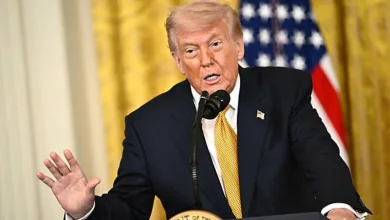
Beijing Summit: Trump and Xi Meet Amid Trade Tensions and Iran Conflict
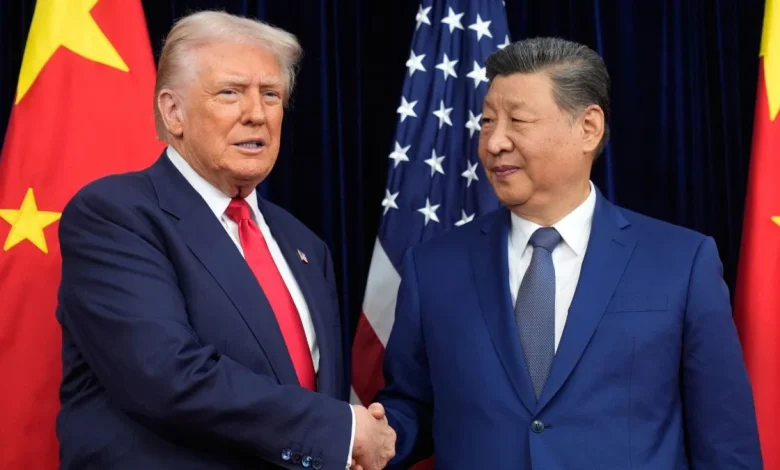
Beijing is set to host a high-stakes summit between U.S. President Donald Trump and Chinese President Xi Jinping, commencing on Thursday. The meeting aims to solidify a trade truce between the world’s two largest economies, even as the United States grapples with escalating tensions with Iran. This visit marks Trump’s first to China as president since his trip nine years prior. He has promised a spectacular display, recalling a conversation where he told Xi to prepare “the biggest display you’ve ever had in the history of China.”
While Trump has consistently portrayed his relationship with Xi in amicable terms, the summit is laden with pressure that both sides are keen to downplay publicly. Trade negotiations will dominate the agenda, with Trump accompanied by a delegation of prominent chief executives, including Tim Cook of Apple, Elon Musk of SpaceX and Tesla, and Jensen Huang, the CEO of Nvidia. Huang joined Trump on the tarmac in Alaska during the second leg of the journey to Beijing.
Introduction: A Pivotal Meeting in Beijing
The summit in Beijing represents a critical juncture in U.S.-China relations. With global economic stability hanging in the balance, the discussions between President Trump and President Xi are expected to address pressing trade imbalances, technology transfers, and intellectual property rights. Beyond trade, the summit also provides an opportunity to address broader geopolitical issues, including the escalating tensions with Iran and regional security concerns. The presence of key business leaders underscores the importance of these talks for the future of international commerce and technological cooperation.
Setting the Stage: Trump’s Grand Expectations
President Trump’s approach to diplomacy has often been characterized by a flair for the dramatic, and his expectations for the Beijing summit are no exception. His emphasis on a grand display reflects a desire to project strength and prestige on the international stage. This approach, while unconventional, is consistent with his broader strategy of using personal relationships and high-profile events to advance U.S. interests. However, the underlying substance of the discussions remains paramount, as both nations seek to navigate complex and often conflicting priorities.
Trade at the Forefront: High Stakes Discussions
Trade will undoubtedly be the central theme of the Beijing summit. The U.S. and China have been locked in a protracted trade dispute, marked by tariffs and retaliatory measures that have disrupted global supply chains and dampened economic growth. The current trade truce, while providing a temporary respite, requires a more durable and comprehensive agreement to ensure long-term stability. Key issues on the table include reducing the U.S. trade deficit with China, addressing intellectual property theft, and ensuring fair market access for American companies. The success of these negotiations will hinge on both sides’ willingness to compromise and find common ground.
The Business Delegation: Who’s Coming to Beijing?
The composition of the U.S. business delegation to Beijing speaks volumes about the priorities and objectives of the summit. The inclusion of Tim Cook, Elon Musk, and Jensen Huang underscores the importance of technology and innovation in the U.S.-China relationship. These leaders represent companies that are at the forefront of their respective industries and have significant investments and operations in China. Their presence signals a desire to foster collaboration and address concerns related to market access, regulatory hurdles, and intellectual property protection. Furthermore, having Elon Musk, whose company SpaceX is making great strides in space, shows the United States’ commitment to remaining competitive in space and highlights the Space Force’s preparedness.
Iran Conflict Shadowing the Summit
The escalating conflict between the U.S. and Iran adds a layer of complexity to the Beijing summit. China, as a major importer of Iranian oil and a strategic partner of Iran, has a vested interest in de-escalating tensions and maintaining stability in the Middle East. President Trump may seek to enlist China’s support in pressuring Iran to curb its nuclear ambitions and regional activities. However, China is likely to resist any efforts to isolate Iran completely, given its own economic and strategic interests. The interplay between trade negotiations and geopolitical considerations will be a key dynamic to watch during the summit. The United States may need China’s help if there is a trillion-dollar war with Iran.
U.S.-China Relations: A Historical Context
Understanding the historical context of U.S.-China relations is crucial for appreciating the significance of the Beijing summit. For decades, the relationship has been characterized by a mix of cooperation and competition, with periods of rapprochement alternating with periods of tension. From Nixon’s historic visit to China in 1972 to the establishment of diplomatic relations in 1979, the two countries have forged deep economic and cultural ties. However, differences over trade, human rights, and security issues have persisted, creating ongoing challenges for policymakers on both sides. The current summit must be viewed within this broader historical framework, as both nations seek to manage their differences and find areas of mutual interest.
Economic Implications of the Summit
The economic implications of the Beijing summit are far-reaching and extend beyond the U.S. and China. As the world’s two largest economies, their policies and actions have a profound impact on global trade, investment, and economic growth. A successful resolution of the trade dispute could provide a significant boost to the global economy, while a failure to reach an agreement could exacerbate existing challenges and uncertainties. The summit also has implications for other countries and regions, including Europe, Asia, and Latin America, which are heavily reliant on trade with both the U.S. and China. Therefore, the outcome of the summit will be closely watched by governments, businesses, and investors around the world.
Potential Outcomes and Scenarios
Several potential outcomes and scenarios could emerge from the Beijing summit. At one end of the spectrum, the two sides could reach a comprehensive trade agreement that addresses key issues and establishes a framework for future cooperation. This scenario would likely be welcomed by markets and businesses, leading to increased investment and economic growth. At the other end of the spectrum, the summit could end without a significant breakthrough, leading to renewed trade tensions and uncertainty. A middle-ground scenario could involve a partial agreement that addresses some issues but leaves others unresolved. The specific outcome will depend on the negotiating positions of both sides and their willingness to compromise.
China’s Perspective and Priorities
To fully understand the dynamics of the Beijing summit, it is essential to consider China’s perspective and priorities. China has emerged as a global economic powerhouse, with its own set of interests and objectives. President Xi Jinping has articulated a vision of China as a responsible global leader, committed to promoting multilateralism and international cooperation. China seeks to maintain stable economic growth, advance its technological capabilities, and protect its sovereignty and security. In the context of the trade dispute, China is likely to resist any demands that it perceives as infringing on its economic sovereignty or undermining its development goals. China’s relationship with countries like Iran may also influence their approach to negotiations, especially given events such as the UAE’s warning to the US about shifting to Yuan oil sales.
Expert Analysis and Projections
Leading experts and analysts have offered a range of perspectives and projections on the potential outcomes of the Beijing summit. Some believe that the two sides are likely to reach a limited agreement that addresses some of the most pressing trade issues, while others are more skeptical, citing deep-seated differences and mistrust. Economic forecasts vary, with some predicting a rebound in global growth if a trade deal is reached, and others warning of a slowdown if tensions persist. Geopolitical analysts are also closely watching the summit, assessing its implications for regional security and international relations. Ultimately, the success or failure of the summit will depend on the specific details of any agreement and the subsequent actions of both governments. There are also concerns about whether events, such as the Ohio University divestment vote, will impact the summit’s success.
Geopolitical Ramifications
The Beijing summit carries significant geopolitical ramifications that extend well beyond the realm of trade. The summit’s outcomes could influence the balance of power in the Asia-Pacific region, shape the future of multilateral institutions, and impact the global response to challenges such as climate change and nuclear proliferation. A successful summit could signal a willingness by the U.S. and China to cooperate on shared interests, while a failure could lead to increased geopolitical competition and rivalry. The summit’s impact will be felt by countries and regions around the world, as they navigate the evolving landscape of international relations.
Conclusion: Navigating Complex Challenges
The Beijing summit between President Trump and President Xi represents a critical opportunity to stabilize U.S.-China relations and address pressing global challenges. While trade will be at the forefront of discussions, the summit also provides a platform to address broader geopolitical issues and foster cooperation on shared interests. The stakes are high, and the outcome will have far-reaching implications for the global economy and international relations. As both nations navigate complex and often conflicting priorities, the world will be watching closely to see whether they can find a path towards a more stable and cooperative future.
| Topic | U.S. Perspective | China’s Perspective | Potential Outcomes |
|---|---|---|---|
| Trade Imbalances | Reduce trade deficit, protect intellectual property | Maintain economic sovereignty, promote growth | Comprehensive trade agreement, partial agreement, or no agreement |
| Iran Conflict | Enlist China’s support in pressuring Iran | Maintain stability in the Middle East, protect energy interests | China’s cooperation on Iran, continued support for Iran |
| Technology | Ensure fair market access for American companies | Advance technological capabilities, protect intellectual property | Increased collaboration, continued competition |
| Geopolitical Influence | Maintain leadership in the Asia-Pacific region | Promote multilateralism, protect sovereignty | Cooperation on global challenges, increased competition |