Gold Exports Surge: U.S. Shifts its Oldest Asset to China
Introduction
The global economic landscape is witnessing a significant shift as gold has emerged as the United States’ leading export commodity over the past five months. This development marks a notable departure from traditional trade patterns, where sectors like oil, pharmaceuticals, and aircraft engines typically dominate the export rankings. The surge in gold exports, primarily directed towards China via Switzerland, raises important questions about the underlying forces reshaping international commerce and financial relationships. This article delves into the factors driving this unprecedented trend, examining its implications for the U.S. economy, the global financial system, and the evolving dynamics between the world’s two largest economies.
Gold as America’s Top Export
In March 2026, U.S. gold exports reached unprecedented levels, surpassing traditional export giants by a considerable margin. Specifically, gold exports were 1.7 times greater than oil exports, twice the value of pharmaceutical exports, and 2.5 times that of aircraft engine exports. This dramatic shift underscores the growing importance of gold in the U.S. export portfolio and its increasing demand in the global market. The sheer scale of these exports is a clear indication that something significant is occurring, warranting a closer examination of the factors at play.
Historical Context and Abnormal Trends
Historically, the United States has not been a major exporter of gold on this scale. Typically, the U.S. maintains a relatively stable gold reserve and engages in gold trading more as a balancing act within its financial system rather than as a primary export activity. The current surge in gold exports, therefore, represents a significant deviation from the norm. This anomaly demands attention, as it suggests a fundamental change in the economic or geopolitical landscape that is influencing trade dynamics between the U.S. and other nations. This is a marked change from typical trade flows, where manufactured goods, technology, and services often take precedence.
The Swiss-China Route
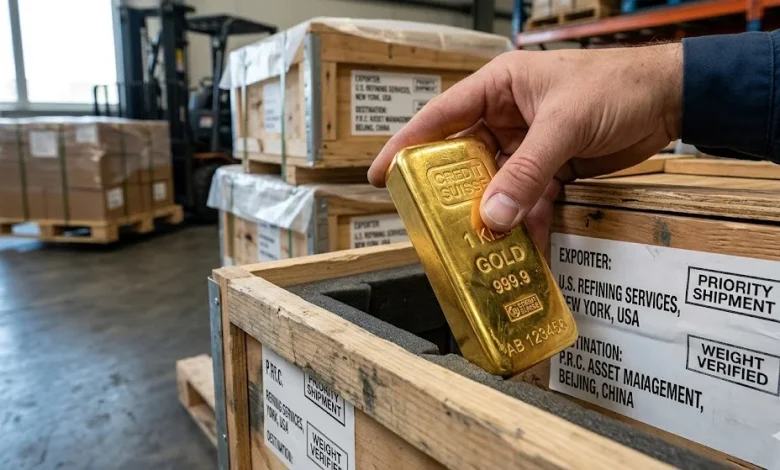
A significant portion of the gold exported from the United States is routed through Switzerland before ultimately reaching China. Switzerland has long been a major hub for gold refining and trading, owing to its neutral status, strong financial infrastructure, and stringent security measures. The country’s gold refineries are renowned for their ability to process gold of varying purities into standardized bars suitable for international trade. The flow of gold from the U.S. to Switzerland and then onward to China highlights the complex supply chains and financial intermediaries involved in the global gold market. The choice of this route likely reflects a combination of factors, including established trading relationships, favorable regulatory environments, and the strategic importance of Switzerland in the global gold market. This route could also be influenced by geopolitical considerations, as countries seek to diversify their trading partners and reduce reliance on direct trade routes.
Drivers of the Gold Export Surge
Several key factors are driving the surge in U.S. gold exports. These include:
- Geopolitical Tensions: Heightened tensions between the U.S. and other global powers, particularly China, are driving investors and central banks to seek safe-haven assets like gold.
- Inflation Hedging: Concerns about rising inflation are prompting investors to allocate capital to gold as a hedge against currency devaluation and loss of purchasing power.
- Settlement Mechanism: Growing indications suggest that gold is quietly emerging as a settlement mechanism in U.S.-China trade flows, potentially circumventing the traditional reliance on the U.S. dollar.
These factors are interconnected and mutually reinforcing, creating a perfect storm for increased gold demand and, consequently, higher gold exports from the United States.
Geopolitical Tensions and Safe-Haven Demand
Geopolitical tensions have a significant impact on the demand for gold. As global uncertainties rise, investors and central banks often turn to gold as a safe-haven asset. Gold tends to maintain its value during times of political and economic instability, making it an attractive option for those seeking to protect their wealth. The ongoing tensions between the U.S. and China, stemming from trade disputes, technological competition, and geopolitical rivalries, have contributed to increased demand for gold as a hedge against potential economic disruptions. Moreover, regional conflicts and political instability in various parts of the world further amplify the appeal of gold as a safe store of value. Similar geopolitical factors have recently influenced events such as the tensions between Iran and the UAE. The perception of gold as a reliable store of value in uncertain times underpins its role as a safe-haven asset. As geopolitical risks continue to evolve, the demand for gold is likely to remain strong.
Inflation Hedging Strategies
Inflation is another critical driver of gold demand. As inflation erodes the purchasing power of fiat currencies, investors often seek assets that can maintain or increase their value in real terms. Gold has historically served as an effective inflation hedge, as its price tends to rise during periods of high inflation. The current inflationary environment, characterized by rising consumer prices and concerns about the long-term stability of fiat currencies, has prompted investors to allocate capital to gold as a way to protect their wealth. Central banks, too, may increase their gold reserves as a hedge against inflation and currency devaluation. The appeal of gold as an inflation hedge is rooted in its limited supply and its historical track record of preserving value over long periods. As long as inflationary pressures persist, the demand for gold as an inflation hedge is likely to remain robust. The Federal Reserve’s monetary policies and fiscal stimulus measures also play a significant role in shaping inflationary expectations and, consequently, the demand for gold.
Gold as a Settlement Mechanism
Perhaps the most intriguing aspect of the gold export surge is the possibility that gold is quietly becoming a settlement mechanism in U.S.-China trade flows. Traditionally, international trade is settled in U.S. dollars, which has been the world’s reserve currency for decades. However, growing concerns about the dominance of the U.S. dollar and the potential for weaponization of the financial system have led some countries to explore alternative settlement mechanisms. Gold, with its intrinsic value and lack of reliance on any single nation’s currency, offers a potential alternative. If gold is indeed being used to settle trade imbalances between the U.S. and China, it could signal a gradual shift away from the dollar-centric global financial system. This development would have far-reaching implications for the U.S. dollar’s status as the world’s reserve currency and the balance of power in the global economy. Recent events, such as China defying U.S. sanctions related to Iranian oil, highlight the ongoing tensions and the potential for alternative financial arrangements.
Implications for the U.S. Dollar
The shift towards gold as a settlement mechanism, even if only partial, could have significant implications for the U.S. dollar. The dollar’s status as the world’s reserve currency has long been a source of economic and geopolitical power for the United States. If countries begin to reduce their reliance on the dollar for international trade, it could erode the dollar’s dominance and potentially weaken the U.S.’s influence in the global economy. A decline in the dollar’s reserve currency status could lead to higher borrowing costs for the U.S. government, reduced demand for U.S. assets, and a potential decline in the dollar’s value. These are serious considerations that warrant careful monitoring and strategic planning. The long-term consequences of this shift could reshape the global financial landscape and alter the balance of economic power among nations. Events in other countries, like Iran’s nuclear talks and fractures within its leadership, further complicate the geopolitical landscape and potential impacts on the U.S. dollar.
Expert Opinions and Market Analysis
Market analysts and economists hold varying views on the gold export surge. Some believe that it is a temporary phenomenon driven by short-term factors such as geopolitical tensions and inflation concerns. Others view it as a more fundamental shift that reflects a growing distrust of fiat currencies and a desire for alternative stores of value. Some experts suggest that the trend signals a potential realignment of global economic power, with China seeking to reduce its reliance on the U.S. dollar and assert its influence in the global financial system. Regardless of the specific interpretation, most analysts agree that the gold export surge is a development worth watching closely, as it could have significant implications for the future of the global economy. The perspectives of market experts are crucial in understanding the potential long-term effects of this trend.
Data Table: U.S. Export Comparison (March 2026)
| Export Category | Relative Value (Compared to Gold) |
|---|---|
| Gold | 1.0x |
| Oil | 0.59x |
| Pharmaceuticals | 0.50x |
| Aircraft Engines | 0.40x |
This table illustrates the magnitude of gold exports compared to other major U.S. export categories in March 2026.
The Future of Gold in Global Trade
Looking ahead, the role of gold in global trade is likely to continue to evolve. As geopolitical tensions persist and concerns about inflation remain, the demand for gold as a safe-haven asset and inflation hedge is expected to remain strong. Whether gold becomes a more widely used settlement mechanism in international trade remains to be seen, but the current trend suggests that it is a possibility that cannot be dismissed. The rise of digital currencies and blockchain technology could also influence the role of gold in the future, potentially leading to new ways of trading and storing gold. The intersection of gold and technology could create new opportunities and challenges for the global financial system. The actions of central banks and governments will also play a crucial role in shaping the future of gold in global trade. For example, President Trump’s past reviews of Iran’s peace offers reflect the complexities of international relations and their potential impact on economic trends.
Conclusion
The emergence of gold as America’s biggest export, flowing primarily to China via Switzerland, is a noteworthy development with potentially far-reaching implications. Driven by geopolitical tensions, inflation hedging, and the possibility of gold becoming a settlement mechanism, this trend warrants close attention from policymakers, investors, and economists alike. Whether this is a temporary phenomenon or a more fundamental shift in the global financial landscape remains to be seen. However, it is clear that the role of gold in international trade is evolving, and its impact on the U.S. dollar and the global balance of power could be significant. Keeping an eye on events such as potential troop withdrawals from Germany, as discussed by Trump, can provide context to the broader geopolitical landscape. As the world’s reserve currency country ships its oldest store of value to its biggest rival at a record pace, the future of global trade and finance may be undergoing a subtle but significant transformation. It’s a story worth paying attention to, as it unfolds. Furthermore, understanding the factors driving these economic shifts requires considering various global events, such as the situation with Narges Mohammadi in Iran, which can indirectly influence economic policies and international relations. The interplay between geopolitical events and economic trends highlights the complexity of the current global landscape. Internal Link: China Defies U.S. Sanctions, Internal Link: Trump Iran Final Blow, Internal Link: Iran President Pezeshkian