Iran-US conflict 2026: Airstrikes Hit Bushehr and Al-Azraq Base
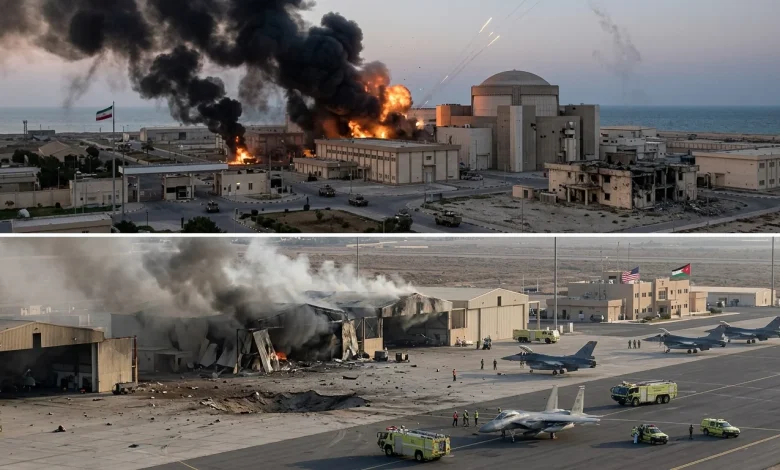
Table of Contents
Introduction to the Escalation
Iran-US conflict dynamics have reached an alarming and unprecedented tipping point following a series of overnight military exchanges that have ignited fears of a full-scale regional war in the Middle East. Early on Saturday morning, United States forces launched deep-penetration strikes targeting key military facilities in Iran’s southern coastal province of Bushehr. This offensive drew an immediate and fierce retaliatory response from the Islamic Revolutionary Guard Corps (IRGC), which launched a massive, coordinated missile and drone strike against a strategic US military base in Al-Azraq, Jordan. The swift tit-for-tat violence underscores the collapse of previous stabilization efforts and signals a major regionalization of the conflict, dragging neighboring Arab states further into the crossfire.
The highly charged atmosphere has left diplomats scrambling to contain the fallout. What began as a localized standoff over commercial shipping and strategic maritime lanes has now transformed into a multi-theater conflagration. With both sides demonstrating a willingness to strike deep within sovereign territories and target highly fortified defense infrastructure, the margin for error has shrunk to zero, leaving the international community on edge.
The Strikes on Bushehr Province: Dashti County and Choghadak
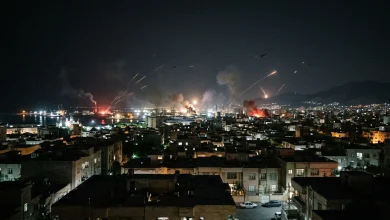
The latest phase of the escalation began when the United States carried out precision strikes on two distinct military installations in Iran’s southern Bushehr Province. According to official reports, US aircraft or long-range precision-guided munitions hit targeted installations situated in Dashti county as well as the city of Choghadak. These strikes are part of an ongoing campaign of airstrikes against Iran, designed to degrade Tehran’s coastal surveillance capabilities, anti-ship missile sites, and logistical centers. Bushehr, which hosts Iran’s primary nuclear power plant and sits in close proximity to critical maritime corridors, has been a central focus of US intelligence and military planning for years.
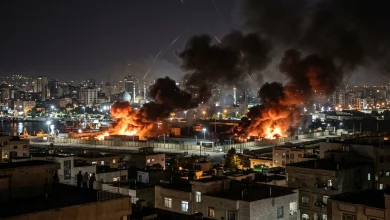
The strikes in Dashti county targeted a strategic communication and radar outpost. Military analysts suggest that the US aimed to blind local Iranian naval defense networks that monitor shipping lanes in the Persian Gulf. Meanwhile, the strike in Choghadak targeted an installation believed to be associated with regional drone operations and missile storage. Despite the highly precise nature of the munitions used, the local population was thrown into panic as explosions lit up the night sky along the coast, triggering air defense sirens across the province.
Ehsan Jahanian’s Official Assessment
Following the airstrikes, Iranian state media immediately sought to downplay the tactical impact of the American assault while condemning the breach of national sovereignty. Ehsan Jahanian, the deputy political and social affairs governor of Bushehr, told Iran’s Islamic Republic News Agency (IRNA) that the US forces hit an area in Dashti county, confirming the geographical scope of the attack. “The explosion caused by this attack did not cause any casualties,” he said, aiming to reassure the public and project resilience in the face of foreign aggression. Jahanian also noted another attack in Choghadak city but emphasized that civil defense forces and emergency services had quickly stabilized the targeted sites.
While Iranian authorities frequently minimize the material damage inflicted by Western airstrikes, independent intelligence monitors have pointed out that even non-lethal strikes can cause significant operational disruptions. By targeting radar systems, drone launch ramps, and communication towers, the US military continues to chip away at Iran’s asymmetrical defense capabilities along the coastline. However, the lack of immediate casualties has allowed Tehran to pivot its focus entirely toward a robust rhetorical and military counteroffensive, framing the strikes as criminal acts of desperation by an imperialist power.
The IRGC’s Retaliatory Strike on Al-Azraq Base in Jordan
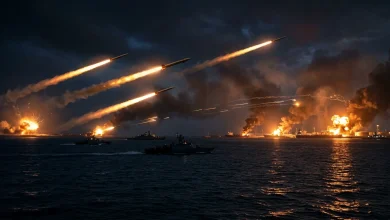
Tehran’s response to the Bushehr attacks was swift, highly coordinated, and calculated to project maximum force across the region. Iran’s IRGC announced that it had launched “a devastating and simultaneous missile and drone attack on fighter jet shelters and a large aircraft parking ramp at a US base in Al-Azraq, Jordan”. The Muwaffaq Salti Air Base in Al-Azraq is a critical hub for US Air Force operations in the Middle East, housing dozens of advanced fighter aircraft, reconnaissance assets, and unmanned aerial vehicles. By directly targeting this highly sensitive facility, the IRGC has sent a clear message that no American installation in the region is beyond its reach.
The choice of Al-Azraq is strategically profound. The base plays a central role in conducting coalition operations, providing close air support, and enforcing regional airspace security. Utilizing a swarm of sophisticated loitering munitions—commonly referred to as “suicide drones”—alongside high-precision ballistic missiles, the IRGC managed to overwhelm localized air defense systems. This massive barrage bypassed early warning networks and struck deep within the facility’s active operational zones, causing severe structural damage and triggering widespread fires that illuminated the Jordanian desert.
The Destruction of American Fighter Jets
The IRGC’s official statement boasted of substantial tactical successes during the operation, claims that have sparked intense debate among international military experts. The IRGC claimed that the attack “completely [destroyed] at least two American fighter jets and [caused] significant damage to several others”. If verified, the destruction of active multi-role fighter aircraft inside hardened shelters would mark one of the most significant single-day material losses for the US military in the region in decades. It would also indicate a major lapse in the defensive posture of coalition bases, raising serious questions about the efficacy of Western Patriot and C-RAM defense systems against dense, low-flying drone swarms and high-velocity ballistic missiles.
Western defense officials have yet to confirm the exact extent of the damage, but sources within the region acknowledge that emergency response teams at Al-Azraq spent hours battling intensive fires on the aircraft parking ramps. The loss or severe degradation of front-line fighter jets, such as F-15s or F-16s, would temporarily impact the operational readiness of US forces. It also demonstrates the refined precision of Iranian targeting intelligence, suggesting that Tehran has obtained highly accurate coordinates of specific hangars and aircraft parking schedules, possibly through advanced drone surveillance or local intelligence networks.
Iran’s Direct Appeal to the Jordanian Armed Forces
In addition to the physical strikes, Iran has launched an aggressive psychological and diplomatic campaign aimed at driving a wedge between Western allies and Arab host nations. Following the attack, Iran called on the Jordanian army to target the US forces, issuing a direct and highly provocative statement designed to exploit local religious and political sentiments. The IRGC asserted that “the invading, infidel military forces are considered legitimate targets,” demanding that Jordan’s sovereign forces rise up against the foreign military presence on their soil.
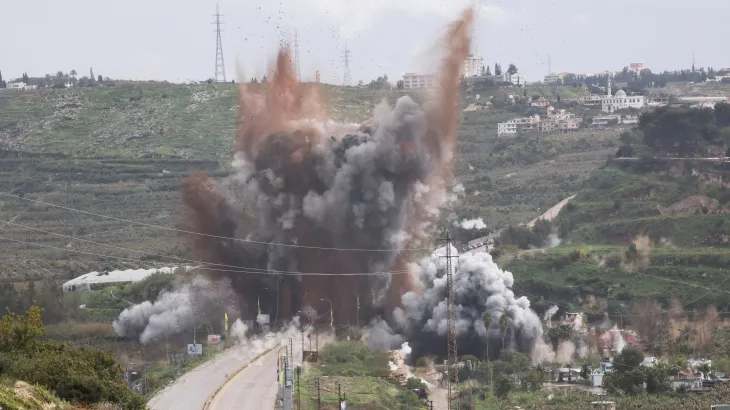
This rhetorical offensive places the Jordanian government in an incredibly precarious position. Jordan has long maintained a delicate balancing act, maintaining a strategic partnership with the United States while managing a domestic population that is deeply sympathetic to regional pan-Islamic and anti-Western causes. By framing the US military as “infidels” and “invaders,” Iran seeks to stir domestic unrest within Jordan, potentially mobilizing local factions to disrupt US military logistics. This escalation marks a dangerous shift from conventional warfare to hybrid political subversion, threatening the internal stability of Jordan and other moderate Arab states that host Western military assets.
Comparative Summary of the Strikes
To better understand the immediate dynamics and tactical outcomes of this latest exchange, the following table provides a comparative breakdown of the strikes carried out by both sides:
| Attribute | US Strikes on Iran | IRGC Strikes on US Base (Jordan) |
|---|---|---|
| Primary Locations Targeted | Dashti County & Choghadak (Bushehr Province) | Al-Azraq Air Base (Muwaffaq Salti Base, Jordan) |
| Delivery Systems Used | Precision-guided missiles / Coalition fighter aircraft | Simultaneous ballistic missiles & loitering drones |
| Declared Military Objectives | Degrading coastal radar, communication, & missile sites | Targeting fighter jet shelters & parking ramps |
| Reported Casualties | No immediate casualties reported by Bushehr officials | Undisclosed by US; IRGC claims significant impact |
| Material Damage Claims | Infrastructure damage to communication outposts | At least 2 fighter jets destroyed; several damaged |
| Diplomatic/Political Actions | Conducted under regional deterrence mandate | Direct appeal to Jordanian military to target US forces |
This comparison reveals a stark asymmetry in operational goals. While the United States continues to utilize a doctrine of targeted attrition to degrade Iranian offensive capabilities, Iran has adopted a high-impact, retaliatory strategy designed to inflict maximum symbolic and material damage, utilizing regional proxies and cross-border strikes to challenge Western air superiority directly.
Contextualizing the Broader Conflict and Maritime Tensions
The current military escalation cannot be viewed in isolation; it is the culmination of months of deteriorating relations, broken ceasefires, and proxy clashes. Observers note that the region has seen escalating casualties in Tehran and surrounding regions as a result of persistent, multi-layered aerial campaigns. These strikes have repeatedly targeted military barracks, research centers, and manufacturing plants, forcing Iran’s leadership into a corner where they feel compelled to show overwhelming force to maintain internal credibility and regional deterrence.
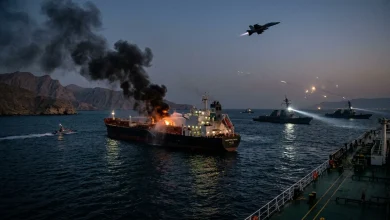
At the heart of this geopolitical struggle is the control over critical maritime shipping lanes. The Strait of Hormuz conflict remains a dangerous flashpoint, with Iran repeatedly threatening to shut down the strait—through which a significant portion of the world’s liquefied natural gas and petroleum passes—if its sovereign territory continues to face Western attacks. According to reports from the Reuters news service, international shipping firms have already begun diverting tankers around the Cape of Good Hope, a costly detour that has drastically increased shipping times and freight insurance premiums, sending shockwaves through the global supply chain.
Economic Shockwaves and Volatile Energy Markets
As the drums of war beat louder, global markets have reacted with predictable anxiety. The threat of a prolonged conflict that disrupts oil production in the Persian Gulf and transit through the Strait of Hormuz has led to a dramatic spike in crude oil futures. Financial analysts warn that these geopolitical disruptions will directly translate into volatile energy prices, which could derail fragile post-pandemic economic recoveries in the West and exacerbate stubborn inflationary pressures worldwide.
For consumer-driven economies, rising energy costs act as an artificial tax, driving up transport costs, manufacturing overheads, and utility bills. Central banks, which have been walking a tightrope of interest rate adjustments to curb inflation without triggering a recession, now face the nightmare scenario of stagflation. The economic instability is not limited to the West; developing nations that rely heavily on imported fuel are facing severe balance-of-payments crises, demonstrating how a localized military exchange in Bushehr can have profound, real-world consequences for households thousands of miles away.
Geopolitical Ramifications and Diplomatic Stalemate
The intense military friction has also exposed deep cracks within international coalitions and diplomatic frameworks. Western allies are facing mounting NATO summit tensions as member states debate the limits of collective security and the wisdom of deep military entanglements in the Middle East. Some European partners have advocated for a return to robust diplomatic channels, expressing concern that unchecked US military action could spark a global conflict involving other major nuclear powers, such as Russia or China, both of which maintain strong economic and strategic ties with Tehran.
This diplomatic impasse is further complicated by the history of failed bilateral initiatives. While previous years saw fleeting moments of hope—including highly publicized diplomatic overtures including prisoner releases]—the trust between Washington and Tehran has completely evaporated. The current US administration faces immense pressure from congressional hawks who demand a decisive military response, while the Iranian leadership is locked into a dogmatic stance where compromise is viewed as weakness. As long as both nations prioritize domestic political posturing over realistic diplomatic compromises, the cycle of violence is likely to persist.
Domestic Pressures and International Coalition Stances
Both Washington and Tehran are heavily influenced by internal political dynamics that leave little room for strategic retreat. In the United States, upcoming electoral cycles and sharp partisan divides have created an environment where any perceived weakness on foreign policy is quickly weaponized. The administration must balance the need to protect US servicemen stationed abroad with growing domestic political pressures to avoid another costly, open-ended war in the Middle East. Voters are increasingly skeptical of foreign military interventions, demanding that resources be focused on pressing domestic economic challenges instead.
Conversely, the regime in Tehran faces its own existential challenges. Economic sanctions have crippled the local economy, fueling domestic discontent and sporadic civil protests. To maintain its grip on power, the ruling clerical and military elite relies heavily on nationalist mobilization and the projection of external strength. By presenting themselves as the vanguard of resistance against Western imperialism, the Iranian leadership hopes to unify a fractured public behind the flag. Consequently, neither side can afford to back down, creating a highly volatile escalatory loop where each strike must be met with an even more spectacular counter-strike.
Conclusion and the Path Forward
The military exchanges in Bushehr and Jordan mark a dangerous departure from proxy warfare to direct state-on-state confrontation. The IRGC’s daring strike on the Al-Azraq base in Jordan has shattered the illusion of safety for Western forces stationed in neighboring Arab countries, while the US precision attacks on Bushehr underscore Washington’s determination to degrade Iran’s strategic infrastructure. As both sides brace for further hostilities, the risk of a miscalculation that could trigger a wider regional war is higher than ever.
Resolving this crisis will require more than just tactical military operations or defensive posturing. It demands a fundamental reassessment of regional security architecture and a willingness by all parties to engage in genuine dialogue. Without a structured diplomatic off-ramp, the Middle East faces the grim prospect of a protracted, destructive conflict that will claim innocent lives, destabilize sovereign nations, and inflict lasting damage on the global economy.