Mario Nawfal warns of Global Depression Risk as Gulf War Escalates
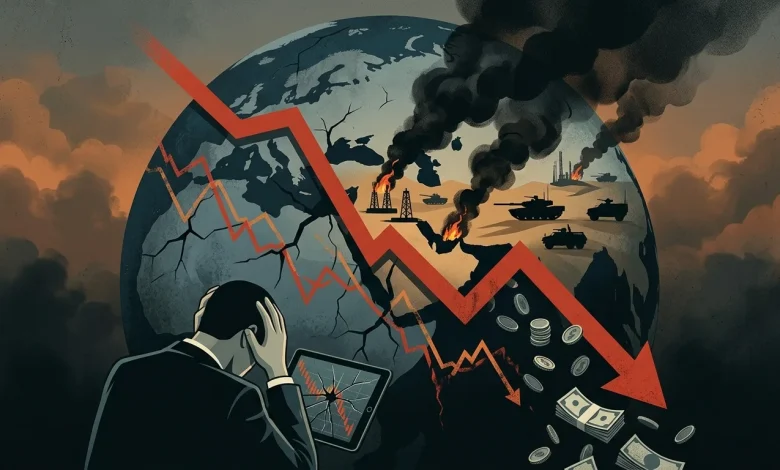
Table of Contents
Mario Nawfal warns that the international financial system faces an existential threat of a severe global depression by the close of summer 2026. This stark warning, disseminated across social media channels and elaborated upon in major geopolitical broadcasts, emphasizes that if Iran successfully targets critical “energy weak points” in the Middle East, the resulting supply chain disruptions will trigger a historic economic collapse. As regional hostilities between Washington and Tehran reach a fever pitch, Nawfal’s analytical assessments have captured the attention of financial markets, international policymakers, and military strategists worldwide. With his massive digital broadcast footprint and recent technological alliance with DeFi enterprise media platform Roundtable, his warnings are reshaping the public understanding of the escalating warfare in the Persian Gulf.
Mario Nawfal: The Summer 2026 Geopolitical Flashpoint
The geopolitical landscape of 2026 has been defined by unprecedented friction in the Middle East. As diplomatic channels fail, we can observe how the Iran-US conflict escalates rapidly under intense domestic political pressure. The confrontation has expanded beyond proxy warfare, shifting into direct state-on-state actions that threaten to collapse the global shipping lanes. Economists and military intelligence officers agree that the margins of safety in global energy supply chains have narrowed to razor-thin levels. Unlike prior energy shocks in the 1970s and 1990s, today’s integrated global economy relies on just-in-time delivery systems that cannot withstand prolonged blockades or active combat zones near key terminals. The current trajectory has brought the international community to the brink of a systemic crisis.
Mario Nawfal: Understanding the Energy Sector Weak Points
The core of the current crisis lies in the concentrated nature of global oil and gas infrastructure. Mario Nawfal’s analysis draws attention to the fact that over 20% of the world’s liquefied natural gas (LNG) and crude oil transits through highly vulnerable choke points. Specifically, Qatar’s Ras Laffan Industrial City and major shipping corridors in the Persian Gulf remain highly exposed to modern asymmetric warfare. The implementation of modern drone swarms and high-precision missile technology has neutralized traditional naval defense advantages. In this high-stakes environment, the unilateral reinstatement of a U.S. blockade on Iran has forced regional economies into extreme energy conservation mode. Any successful Iranian counter-offensive targeting these critical energy assets could sever supply chains to Europe, East Asia, and the Americas simultaneously, inducing a structural collapse in industrial output.
Mario Nawfal: Military Confrontation in the Persian Gulf
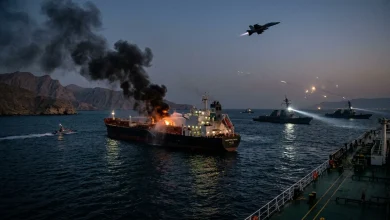
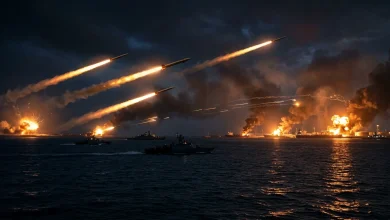
On the ground, military operations are intensifying at an alarming rate. The U.S. Navy and CENTCOM have launched devastating offensive sweeps, but reports of the Defense Department running out of cash amid rapid deployment timelines have exposed critical systemic vulnerabilities. This financial strain complicates the prolonged deployment of carrier strike groups and defensive missile batteries. Col. Larry Wilkerson, former chief of staff to Colin Powell, joined Mario Nawfal’s broadcast on July 17, 2026, to discuss the unsustainable nature of this military campaign. Wilkerson emphasized that modern naval forces are facing an asymmetric challenge: cheap, easily mass-produced drones are successfully draining highly expensive, limited interceptor stockpiles. The military reality is that the U.S. cannot guarantee 100% protection for commercial shipping when facing saturated drone and missile attacks.
Mario Nawfal: Iran’s ‘Samson Option’ and the Hormuz Transit Toll
A critical component of Iran’s strategy is what military analysts term the “Samson Option” for the Persian Gulf. Unable to defeat the United States in a conventional blue-water naval conflict, Iran has constructed an asymmetric containment strategy. By utilizing low-cost loitering munitions and mobile coastal defense missile batteries, Tehran can effectively close the Strait of Hormuz at will. This asymmetric power has been further complicated by political maneuvers, including demands for transit tolls and shipping blockades. Even as Hezbollah leader Naim Qassem rejects US-brokered diplomatic frameworks, Iran’s regional proxy networks have established a coordinated defensive wall. This unified front ensures that any strike on Iranian soil triggers a multi-theater retaliation, targeting both military bases and energy infrastructure across the Gulf, escalating the threat to global markets.
Mario Nawfal: Tactical Strikes on Transit and Port Infrastructure
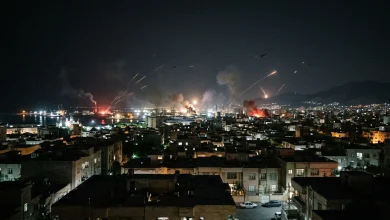
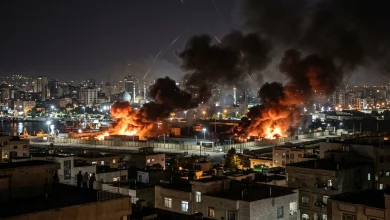
The conflict has rapidly shifted from sea lanes to physical land-based infrastructure. A stark example occurred where the Iran-US conflict: US strikes target key ports like Bandar Abbas led to extensive physical destruction, while consecutive nights of American airstrikes against Iran crippled crucial bridge and railway networks. This persistent combat has caused multiple deaths in Tehran and surrounding cities, turning civilian infrastructure into frontline war zones. The destruction of logistics networks severely limits Iran’s domestic distribution capabilities, but it also increases the likelihood of desperate retaliatory measures. By knocking out regional transit networks, the coalition forces hope to cripple Iran’s economic lifeline; however, this strategy carries the high risk of pushing Tehran to activate its full offensive capabilities against neighboring energy terminals, such as those in Kuwait and Saudi Arabia.
Analytical Scenarios: Oil Shocks and Economic Meltdown
To fully understand the economic consequences of this conflict, analysts have developed several modeling scenarios based on the extent of infrastructure damage and transit closures. The baseline assumption is that global markets are unprepared for a dual supply shock involving both crude oil and LNG. The table below outlines the potential trajectories as the conflict progresses through the summer of 2026:
| Scenario Tier | Key Energy Hub Targeted | Estimated Crude Oil Price (per barrel) | Depression Probability | Global Economic Fallout |
|---|---|---|---|---|
| Scenario A: Moderate Friction | Strait of Hormuz (Partial Closures) | $110 – $130 | 35% | Supply chain delays, localized power rationing in GCC countries, and stock market volatility. |
| Scenario B: Severe Escalation | Ras Laffan LNG / Kuwaiti Refineries | $140 – $170 | 65% | European natural gas shortages, double-digit inflation spikes, and heavy industrial shutdowns. |
| Scenario C: Samson Option | Total Blockade & Gulf Oil Terminal Strikes | $200+ | 90% | Immediate global depression, systemic bond market collapse, and widespread sovereign defaults. |
As detailed in the scenarios above, even a moderate level of friction in the Gulf can push crude prices well above historical averages. In a worst-case “Samson Option” scenario, the total paralysis of Gulf shipping would instantly trigger a supply deficit of over 15 million barrels of oil per day. No international reserve, including the U.S. Strategic Petroleum Reserve, has the capacity to offset a deficit of this magnitude for more than a few weeks. The resulting price shock would cascade through global agriculture, manufacturing, and transport sectors, initiating a severe, synchronized global depression.
Overvalued Markets and the Threat of Financial Contagion
The timing of this energy crisis could not be worse for global financial markets, which are currently trading at historical extremes. In July 2026, the S&P 500’s CAPE ratio reached 41.4, nearly matching the peak of the dot-com bubble and significantly exceeding valuations seen before the 1929 market crash. This market overvaluation has been driven heavily by a hyper-concentration in mega-cap technology and artificial intelligence stocks. These disruptions are playing out against a backdrop of historic NATO summit tensions, where leaders clash over resource allocation and defense spending. If an energy shock forces inflation back into double digits, central banks will be left with no choice but to raise interest rates, rapidly popping the asset bubble and triggering a massive credit contraction across Western banking systems.
Decentralized Journalism and Mario Nawfal’s Digital Platform
In an era of centralized narrative control and rapid geopolitical developments, the demand for real-time, objective information has skyrocketed. Citizens globally are turning away from traditional legacy media outlets, which are often perceived as slow or partisan, in favor of independent citizen journalists. Mario Nawfal has emerged as a central figure in this movement, hosting the largest and most-viewed broadcasts on the X platform. To secure his intellectual property and bypass potential corporate censorship, Nawfal recently finalized a technology partnership with Roundtable (RTB). This decentralized, AI-powered enterprise media platform will run his independent hub, MarioNawfal.com, using Web3 technology. By integrating DeFi monetization and on-chain publishing, Nawfal is establishing a resilient framework for high-integrity journalism that remains immune to geopolitical pressure or corporate takedown attempts.
Strategic Outlook: Finding De-escalation Channels
The path forward remains fraught with extreme peril. Without active diplomatic de-escalation, the global economy is marching toward a self-inflicted systemic collapse by the end of August 2026. While backchannel negotiations have occasionally been initiated through international intermediaries, the core issues of blockades, unilateral sanctions, and territorial disputes remain unresolved. For Wall Street and international business leaders, the summer of 2026 represents a critical turning point. If the United States and Iran cannot establish stable communication protocols and de-escalate their military footprint in the Gulf, the warnings of a global depression will transition from analytical forecasting into severe economic reality. The next few weeks will decide whether global markets experience a soft landing or a catastrophic correction.