Iranian exam cancellations 2026: Southern Provinces Suspend Finals
Table of Contents
Iranian exam cancellations have been officially enacted across four southern provinces of Iran due to escalating security crises and unstable regional conditions. The decision, announced by the Iranian Education Ministry on Saturday, July 18, 2026, suspends final examinations for 11th and 12th-grade students on Sunday and Monday. According to reports from Al Jazeera and the semi-official Tasnim News Agency, the suspension applies exclusively to the provinces of Hormozgan, Bushehr, Khuzestan, and Sistan and Baluchestan, highlighting the targeted nature of this emergency measure. While other provinces across the country will proceed with their standardized academic calendars as scheduled, the southern coastal and border zones remain gripped by heightened military activity, creating conditions that officials have deemed too volatile for safe public assembly or standardized testing.
The decision by the Supreme Council of Tests within the Ministry of Education represents a direct response to a rapidly deteriorating security situation in the Persian Gulf and along Iran’s southern border. For weeks, the region has witnessed intense military exchanges and severe infrastructural disruptions. Under these circumstances, bringing hundreds of thousands of high school students together in testing halls was deemed highly risky. Parents and local education unions had voiced growing concerns over the safety of commuting during active alert phases, ultimately forcing the central government to intervene and implement these sweeping suspensions.
Introduction to the Emergency Academic Suspensions
The decision to implement regional academic halts marks a significant moment in the ongoing conflict, illustrating how civil administration must bend to the realities of kinetic warfare. Education officials noted that while preserving the academic calendar remains a priority, the duty of care toward students, teachers, and administrative staff is paramount. Security reports from the provinces of Hormozgan, Bushehr, Khuzestan, and Sistan and Baluchestan described frequent sirens, disruptions in local transport networks, and sudden communications blackouts.
According to a report by Reuters, shipping corridors through the Persian Gulf and the surrounding airspace have become highly contested, prompting emergency sirens in municipal zones. These conditions have fundamentally disrupted the logistics of exam distribution. Because Iranian national high school exams are tightly regulated and require secure physical distribution of test papers alongside synchronous online authentication, any network blackout or localized threat of air strikes compromises both the physical safety of the participants and the structural integrity of the academic evaluation process.
Geopolitical Context: A Region Under Siege
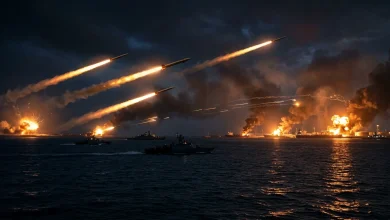
To fully comprehend the gravity of the Iranian exam cancellations, one must examine the broader military confrontation currently unfolding in the Middle East. The suspension of academic activities occurs against a backdrop of intensifying conflict, specifically marked by airstrikes against Iran that have targeted key naval and logistical hubs along the southern coastline. These operations have dramatically escalated tensions, forcing civilian administrative bodies to prioritize immediate safety protocols over routine civil functions.
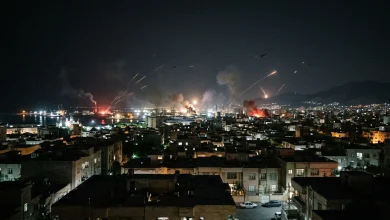
The military campaign has entered an active and highly destructive phase, with reports indicating six consecutive nights of U.S. airstrikes striking defense installations and dual-use transport facilities across southern Iran. Local sources in Bushehr and Khuzestan have confirmed hearing multiple severe explosions, generating widespread panic and prompting the government to declare localized emergency protocols. The proximity of these strikes to populated urban centers has made daily life increasingly unpredictable, forcing schools and public facilities to shutter as defensive postures are reinforced.
The Impact of Recent U.S. Airstrikes in Bushehr and Khuzestan
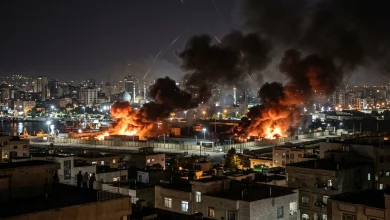
The geographical focus of the educational suspensions directly mirrors the impact zones of recent coalition strikes. In Bushehr, which hosts Iran’s primary commercial nuclear power facility, residents have been subjected to several waves of precision strikes targeting military ports and peripheral air-defense batteries. Similarly, in the oil-rich province of Khuzestan, critical transport arteries and municipal boundaries have experienced localized fallout from incoming projectiles. The psychological toll on the student population, coupled with real physical dangers, has rendered normal classroom activities impossible. Under continuous threat, local administrators cannot guarantee that students will not have to scramble for shelter mid-examination, an eventuality that would cause severe panic and endanger hundreds of young lives.
Naval Confrontations and Maritime Pressures in the Gulf
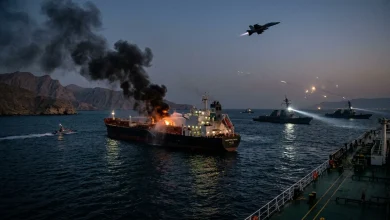
Beyond air campaigns, the maritime domain remains a primary theater of conflict. There is an escalating blockade in the Persian Gulf that has stifled trade, disrupted fishing communities, and created a highly militarized coastal strip. With international naval forces enforcing restrictions and intercepting vessels, the coastal provinces have essentially transitioned onto a war footing. This blockade has caused secondary economic crises, with fuel shortages and communication blackouts further hampering the administration of high school examinations, which require stable regional power grids and secure logistics networks.
Geographic Scope: The Four Affected Provinces
The suspension of final exams is not national; rather, it is strictly concentrated in the provinces running along the Persian Gulf, the Gulf of Oman, and the southeastern borders. These areas bear the brunt of both the economic blockade and the kinetic military engagements. Understanding the unique realities of each province sheds light on why the Education Ministry felt compelled to act.
Hormozgan: Strategic Gateway Facing Escalating Threats
Hormozgan sits at the very heart of global energy geopolitics, directly overlooking the Strait of Hormuz. Because of its strategic positioning, it is highly sensitive to any shift in maritime security. Recent developments, including Strait of Hormuz transit fee disputes and efforts to assert control over commercial shipping, have drawn heavy naval patrols to the province’s waters. Students in Bandar Abbas and neighboring coastal settlements face regular disruptions due to low-flying aircraft, naval exercises, and the threat of incoming strikes on local port facilities.
Bushehr: Industrial Heartlands and Nuclear Safeguards
Bushehr represents Iran’s primary nuclear industrial hub. Given the critical nature of the Bushehr Nuclear Power Plant, any military activity in this province carries profound regional security implications. The decision to suspend tests in Bushehr was largely motivated by precautionary evacuation protocols and the necessity of keeping civilian transit routes clear for military and emergency personnel. The province’s dual-use transport hubs have been a focal point of foreign surveillance and defense counter-measures, making routine school assemblies an unnecessary security risk.
Khuzestan: Energy Corridor and Borderland Vulnerabilities
Historically a highly contested borderland, Khuzestan is the backbone of Iran’s petrochemical and agricultural sectors. Air attacks near Abadan and Mahshahr have directly affected local municipalities, causing intermittent power outages and communication disruptions. The Education Ministry noted that the local power grid’s instability, caused by secondary damage to energy distribution infrastructure, made the computerized and highly monitored national 11th and 12th-grade final exams structurally impossible to administer in a fair and secure manner.
Sistan and Baluchestan: Remote Deprived Borders and Dual Pressures
Sistan and Baluchestan is Iran’s southeastern-most province, sharing borders with Pakistan and Afghanistan. While further from the direct center of the Persian Gulf blockade, the province has suffered from chronic underdevelopment, security pressures, and border skirmishes. The current crisis has strained national administrative resources, diverting domestic security forces away from routine civic protection in Sistan and Baluchestan to reinforce coastal defense. Additionally, spillover from regional military maneuvers has created an atmosphere of high alert, convincing local authorities that postponing exams is the safest course of action.
Comparative Impact of Regional Tension on Education
The following data table illustrates how the current conflict has affected educational administration across the southern provinces compared to the rest of the nation:
| Province | Strategic Significance | Primary Conflict Impact | Exam Status (Sunday & Monday) | Administrative Strategy |
|---|---|---|---|---|
| Hormozgan | Strait of Hormuz gateway, major naval assets | Air raids, naval blockades, drone activity | Suspended | Postponement; reassessment scheduled for Tuesday morning |
| Bushehr | Nuclear Power Plant, commercial port terminals | Airstrikes on military sites, defensive exercises | Suspended | Postponement; synchronization with emergency civil defense |
| Khuzestan | Petrochemical hub, vital oil refining infrastructure | Municipal explosions, intermittent power blackouts | Suspended | Postponement; shift to localized safety schedules |
| Sistan & Baluchestan | Southeastern border, Chabahar deep-sea port | Security strain, border alerts, diverted resources | Suspended | Postponement; rural testing centers closed indefinitely |
| Other 27 Provinces | Administrative, agricultural, central industrial | Minimal direct kinetic impact | Proceeding as Normal | Standard nationwide testing protocols continue uninterrupted |
Broader Consequences: Society, Infrastructure, and Morale
The cancellation of final exams is a strong domestic indicator of how deeply the conflict is penetrating everyday life in Iran. Educational milestones, which are traditionally shielded from political disputes, have now been absorbed into the national security calculus.
The Domestic Atmosphere and National Public Morale
The psychological impact of these suspensions cannot be understated. In Iran, the 11th and 12th-grade final examinations are pivotal milestones that heavily weigh on the “Konkur”—the highly competitive national university entrance exam. Postponements disrupt years of preparation and inject profound anxiety into households already struggling with economic sanctions and hyperinflation. While Iran’s national sports teams have historically served as a vehicle to uplift public morale during times of high geopolitical stress, the tangible disruption of educational systems brings the reality of conflict directly to the doorsteps of ordinary citizens.
Disruptions to Regional Energy and Strategic Security
The instability in southern Iran is closely linked to broader regional vulnerabilities. The region has seen severe energy disruptions, similar to other major incidents in the Gulf, such as the massive regional energy infrastructure disruptions that have historically paralyzed industrial production across regional gas fields. When infrastructure is targeted, schools, municipal offices, and digital testing networks are often the first civilian sectors to go dark. Educational authorities have acknowledged that without a reliable electrical grid and secure intranet connections, the integrity of national exams is fundamentally compromised.
Furthermore, the risk of asymmetric maritime security incidents along the coast has forced local administrators to redirect fuel, personnel, and emergency communication services away from schools and toward strategic logistics. For students living near major ports, the continuous sound of air defense sirens and naval movements makes focusing on complex academic testing an unrealistic expectation.
Diplomatic Horizons: Is De-escalation Possible?
As southern Iran remains under a cloud of military uncertainty, the international community has continued to seek a diplomatic off-ramp. Over the past year, various neutral nations have attempted to broker ceasefires. Some minor progress was seen in diplomatic efforts involving dual citizens, which briefly signaled that behind-the-scenes negotiations were still active. However, as the current air campaign demonstrates, these diplomatic gains remain fragile and highly susceptible to sudden escalation.
Until a comprehensive diplomatic resolution is reached, civilian life in Iran’s southern provinces will likely remain highly disrupted. The Education Ministry has announced that it will monitor security conditions on a daily basis to determine whether exams can resume later in the week, or if alternative grading methodologies will need to be developed to ensure students can graduate and transition into higher education.