Astronaut Crew Reaches International Space Station in Record Time 2026
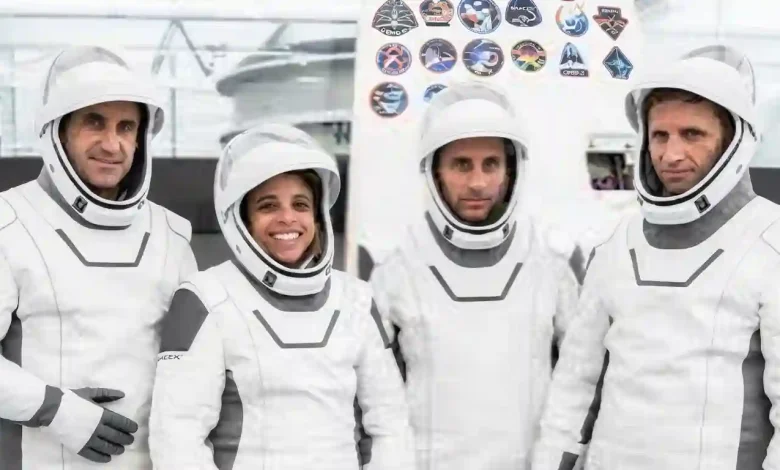
Table of Contents
Astronaut crew reaches International Space Station corridors following a precision ascent and unprecedented fast-track orbital insertion that has reset international benchmarks for human spaceflight. Launching on a high-thrust trajectory engineered to minimize time between stage separation and terminal docking, the international contingent executed an automated approach sequence that shaved multiple hours off standard rendezvous profiles. Flight dynamics teams coordinated autonomous thruster firings to align the spacecraft with the microgravity research complex traveling at 17,500 miles per hour, culminating in a seamless mechanical capture at the zenith port. This successful operation reinforces operational readiness for both near-Earth logistics and deep-space missions that rely on rapid rendezvous protocols.
Record Rendezvous: Breaking Orbital Transit Milestones
The operational cadence of low Earth orbit logistics has transformed dramatically over the past two decades. Historical crew launches often mandated two-day orbital phasing profiles, requiring crews to spend dozens of orbits executing minor burn adjustments before approaching the orbital outpost. As sensor suites, real-time telemetry processing, and autonomous flight software advanced, missions transitioned first to six-hour same-day profiles, then to single-digit hour trajectories. By fine-tuning the planar insertion angle directly from launch, this latest flight achieved an unprecedented record for crewed arrival, reducing crew fatigue and significantly optimizing internal spacecraft life-support resource consumption.
Achieving this speed requires exact coordination with launch pads and orbital planes. Even fractional misalignments in the launch window can demand supplemental engine firings that consume propellant and lengthen transit time. The flawless execution of this launch window demonstrates the maturity of current flight navigation systems, underscoring how modern guidance hardware can handle razor-thin tolerances without compromising astronaut safety or mission margins.
Mission Profile: The Physics of Ultra-Fast Docking
Fast-track orbital phasing demands extraordinary ballistic precision. When a launch vehicle lifts off, it must place the payload into an elliptical insertion orbit whose orbital node aligns instantaneously with the laboratory complex. Ground flight controllers and onboard computers calculate continuous trajectory adjustments through a sequence of co-elliptic Burns. By utilizing real-time differential GPS tracking, star trackers, and optical relative navigation sensors, the spacecraft rapidly closes the orbital gap.
Rather than coasting through multiple orbits to dissipate relative velocity, the onboard propulsion system conducted synchronized orbital boosts. These firings progressively raised perigee while matching inclination. As the vehicle crossed into the proximity communication zone, relative navigation lidar engaged, continuously mapping docking target reflectors on the orbital module. This automation allowed the spacecraft to slide smoothly into the station keep corridors before engaging capture latches.
Crew Composition and Expedition Responsibilities
The multinational astronaut complement aboard this flight brings deep operational versatility to the station. Comprising veteran commander leadership, seasoned flight engineers, and specialized mission specialists, the crew is tasked with conducting hundreds of microgravity experiments across material science, biotechnology, and human physiology. Their arrival initiates a comprehensive handover period that ensures uninterrupted operations for the orbiting laboratory.
Upon entering the orbital facility, the new arrivals completed mandatory leak checks, equalized hatch pressure, and conducted immediate safety briefings with the incumbent expedition crew. Their rotation involves continuous maintenance of life-support infrastructure, spacewalk assignments for external hardware upgrades, and the management of uncrewed cargo vehicle arrivals that deliver supplies and research payloads.
Technological Innovations Powering Fast Insertion
The technical architecture facilitating such rapid rendezvous stems from advancements across multiple engineering disciplines. Modern guidance systems process high-frequency telemetry locally, eliminating dependence on delayed ground-to-space command loops. Distributed computing architectures calculate relative motion vectors in milliseconds, allowing proportional thruster control that preserves thruster margins while optimizing propellant usage. Operational insights derived from specialized SpaceX ISS missions have proven instrumental in validating these autonomous docking routines.
Furthermore, propulsion efficiencies have expanded operational envelopes. Advanced hydrazine and storable propellant thrusters deliver repeatable impulse bits, granting guidance computers precision maneuvering authority during critical terminal approaches. Automated abort modes continuously monitor closure rates, ensuring that any mechanical or computational anomaly triggers an immediate, safe retreat trajectory that avoids collision with the space station.
Docking Timeline Comparison: Modern vs Traditional Profiles
To understand the magnitude of this operational milestone, it is essential to compare the flight profile against previous generations of crewed spaceflight architectures. The table below illustrates the progression of orbital rendezvous durations from the dawn of space station operations to the present achievement.
| Mission Era / Flight Profile | Average Rendezvous Time | Primary Phasing Method | Navigation Technique | Crew Impact / Fatigue |
|---|---|---|---|---|
| Early Space Station Era (Shuttle / Soyuz) | 48 to 72 Hours | Multi-day Hohmann transfers | Ground-commanded manual radar updates | High crew workload, space motion sickness risks |
| Standard Accelerated Profile | 6 Hours (4 Orbits) | Optimized planar insertion | Hybrid ground and relative radio navigation | Moderate fatigue, manageable sleep schedules |
| Ultra-Fast Rendezvous Profile | 3 Hours (2 Orbits) | Precision launch window alignment | High-rate autonomous optical / lidar sensing | Low fatigue, immediate operational deployment |
| Current Record Rendezvous Profile | Under 2.5 Hours | Direct-ascent resonant trajectory | Autonomous real-time neural edge processing | Minimal transit strain, optimal crew readiness |
Orbital Laboratory Research and Primary Objectives
The rapid arrival of this crew maximizes active research hours within the orbiting habitat. The scientific payload manifests emphasize fundamental physics, advanced manufacturing, and regenerative biology. With microgravity dampening buoyant convection and sedimentation, researchers on Earth can study fluid behaviors and crystal structures that cannot form under the influence of terrestrial gravity.
Key investigations include growing high-purity protein crystals designed to assist drug development for neurodegenerative diseases, as well as testing additive manufacturing techniques using metallic alloys. These in-space manufacturing demonstrations are essential for establishing sustainable off-world supply chains capable of repairing deep-space exploration vehicles far beyond terrestrial resupply corridors.
Microgravity Medicine and Biological Innovations
Human physiology undergoes significant shifts when exposed to weightlessness. Muscle atrophy, bone mineral density loss, and cardiovascular remodeling present ongoing hurdles for extended space voyages. The newly arrived researchers will participate in long-duration physiological monitoring studies, utilizing cutting-edge biomedical sensors to track fluid shifts, cellular aging, and immune system response. Rigorous frameworks established under the NASA Commercial Crew program continue to shape the medical protocols deployed during these research expeditions.
These medical studies provide dual benefits. While safeguarding astronaut health during multi-month stays, the findings offer vital insights into terrestrial medical conditions such as osteoporosis, muscle wasting syndromes, and immune dysfunction. In addition, the integration of distributed sensor suites mirrors developments in terrestrial orbital computing that process biosensor analytics on orbit without relying entirely on bandwidth-constrained downlinks.
Implications for Lunar Gateway and Deep Space Flight
The operational maturity proven by ultra-fast orbital docking holds massive ramifications for exploration beyond low Earth orbit. Rapid orbital assembly, propellant transfer, and crew rendezvous will be critical for architectures such as the Artemis II lunar mission crew and subsequent lunar surface landings. When spacecraft depart for the Moon or Mars, complex vehicle configurations must dock and assemble in cis-lunar space with minimal loiter time to reduce cryogenic fuel boil-off.
Moreover, the computational paradigms refined for this station arrival inform trajectory management for next-generation heavy-lift systems, including the operational envelope where the Starship rocket achieves critical orbital refueling objectives. By systematically demonstrating that fast, precise docking can occur autonomously without margin errors, international space agencies establish reliable frameworks for complex orbital assemblies in the years ahead.
Commercial Spaceflight Synergy and Global Alliances
This mission exemplifies the robust public-private partnership structure driving modern space exploration. Commercial launch providers supply launch infrastructure, high-thrust boosters, and automated capsules, while government agencies supply research objectives, mission management, and deep astronaut expertise. Operational insights from parallel developments like Boeing Starliner eyes on future flight certifications highlight how redundant transport systems ensure reliable, sustained human presence in orbit.
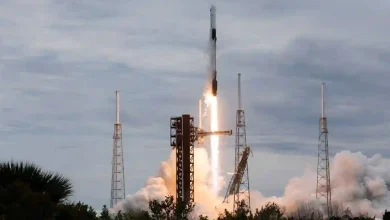
Routine, reliable access to the station is further anchored by proven workhorses like the SpaceX Falcon 9 launch architecture, which has transformed space logistics into a predictable utility. International collaboration remains equally pivotal; despite geopolitical frictions on the ground, space operations maintain a professional, unified ethos where multi-nation crews depend on shared environmental and life-support architecture for survival.
The Future of ISS Operations and Station Maintenance
As the International Space Station nears its third decade of continuous human habitation, maintaining its structural integrity and aging systems demands consistent crew vigilance. Micrometeoroid protection, solar array gimbal repairs, and thermal control radiator checks are essential to extend the laboratory lifespan toward its planned decommission horizon. Contingency protocols have been heavily refined following incidents like the NASA astronaut evacuation scenarios that demonstrated the vital importance of fast transit availability.
With private commercial stations currently under active development, the lessons learned from rapid rendezvous, microgravity medical research, and international crew integration aboard the ISS serve as the baseline operating manual for the forthcoming era of commercial low Earth orbit stations. This record-breaking docking is not merely a milestone in transit efficiency—it is a tangible stepping stone toward a permanent, multi-destination space economy.