Nancy Grace Roman Space Telescope Lifespan Doubled to 22 Years
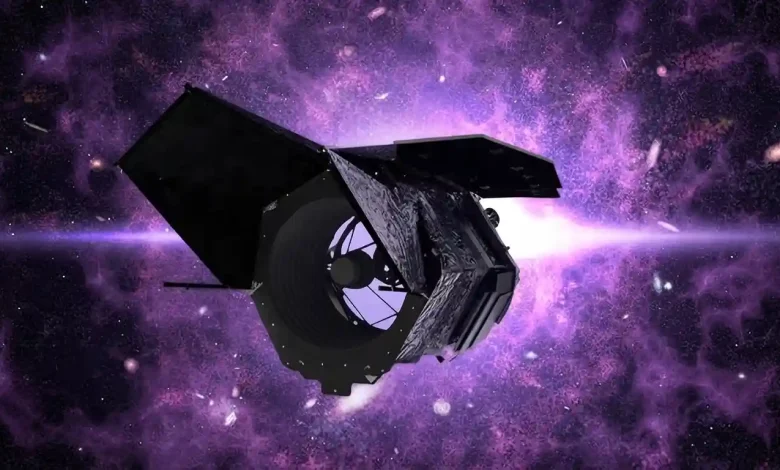
Table of Contents
Nancy Grace Roman Space Telescope operations have received a monumental boost as NASA confirms that the flagship observatory possesses enough propellant to remain active for up to 22 years. Even before reaching its designated halo orbit around the second Sun-Earth Lagrange point (L2), trajectory evaluation teams discovered that the spacecraft consumed significantly less fuel during initial orbit insertion maneuvers than originally planned. Prior to deployment, NASA and international mission partners had established baseline expectations of a five-year primary phase and an optional five-year mission extension, underpinned by a conservative 10-year fuel budget. The new analysis reveals that extraordinary orbital insertion accuracy has more than doubled the potential operational lifespan of the instrument.
Orbital Milestone: Launch Accuracy Unlocks Decades of Science
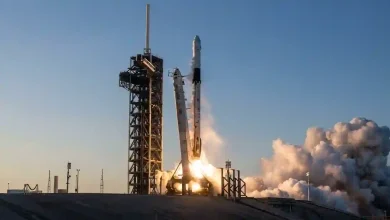
The remarkable extension stems directly from the millimeter-precise insertion executed during launch and separation. In high-stakes orbital mechanics, heavy-lift rockets bear the burden of imparting velocity to loft observatories outward toward Lagrange points. Any small deviation during ascent or stage separation requires the spacecraft onboard propulsion systems to fire corrective thrusters, consuming finite on-board hydrazine and oxidizer. Because the initial trajectory achieved nearly flawless parameters, mission navigators eliminated multiple scheduled trajectory correction maneuvers. This conservation windfall echoes the success seen in previous space science endeavors, including historical missions covered across commercial launch operations and deep-space vehicle trajectories.
Flight controllers at the Space Telescope Science Institute and NASA Goddard Space Flight Center verified that the propulsion reserves onboard Roman remain almost entirely untouched. Navigators calculated that the propellant saved during the transit phase directly translates into additional years of station-keeping burns. At the Sun-Earth L2 point, approximately one million miles from Earth, gravitational forces require occasional micro-thrust firings to keep the spacecraft perched in its dynamic quasi-halo orbit. With the current fuel reserve, Roman can easily maintain this delicate position until the late 2040s, providing uninterrupted cosmic survey coverage.
Fuel Budget Breakdown: How Precision Saves Decades
Every deep-space observatory is built against strict mass allocations where propellant represents a balance between launch vehicle capacity and mission longevity. The Roman spacecraft carries a chemical monopropellant subsystem configured to handle initial detumble, course corrections, reaction wheel desaturation, and orbital maintenance. NASA engineers budgeted generous margins for worst-case ascent errors, anticipating that substantial delta-v would be burned merely to steer the observatory onto an accurate transfer vector. When the trajectory telemetry confirmed optimal performance, that allocated delta-v became surplus endurance, mirroring orbital maintenance strategies developed for orbital observatory rescue frameworks and longevity engineering.
Station-keeping at L2 is surprisingly economical once an observatory settles into its operational pattern. Unlike low-Earth orbit missions subject to atmospheric drag, an L2 platform experiences minimal external friction, requiring only gentle station-keeping maneuvers every few weeks. By reserving the bulk of its chemical fuel for these delicate trims, the Roman observatory transforms from a short-term survey system into an intergenerational research foundation capable of serving global astronomy for over two decades.
Scientific Capabilities: The Wide Field Instrument and Coronagraph
The telescope core payload consists of two primary systems: the Wide Field Instrument (WFI) and the Coronagraph Instrument (CGI). The WFI provides a 300-megapixel focal plane array delivering a field of view 100 times larger than that of the Hubble Space Telescope, while maintaining comparable angular resolution. This wide-angle capability allows Roman to capture vast swaths of sky in single exposures, collecting comprehensive photometric and spectroscopic datasets across optical and near-infrared bands. Previous evaluations of the instrument highlighted how this wide field transforms astrophysics, as explored in detailed assessments of space observatory instrumentation and detector performance.
Complementing the survey work of the WFI is the Coronagraph Instrument, an advanced technology demonstrator designed to suppress stellar glare by factors up to one billion. This extreme contrast enables direct imaging and atmospheric spectroscopy of mature exoplanets orbiting distant stars, laying technological groundwork for future missions seeking habitable worlds. With 22 years of possible mission time, scientists can execute multiple survey campaigns, observe long-period planetary orbits, and revisit targets across stellar cycles.
Technical Comparison: Roman vs Predecessors
To understand the profound advantage of Roman extended endurance, a technical comparison demonstrates how launch precision, optics, and mission designs contrast across major orbital observatories.
| Observatory | Primary Mirror Diameter | Field of View | Orbital Location | Design Lifespan | Expected Lifespan |
|---|---|---|---|---|---|
| Hubble Space Telescope | 2.4 meters | 0.005 sq degrees | Low Earth Orbit (540 km) | 15 years | 35+ years (Serviced) |
| James Webb Space Telescope | 6.5 meters | 0.008 sq degrees | Sun-Earth L2 Point | 5-10 years | 20+ years |
| Nancy Grace Roman | 2.4 meters | 0.28 sq degrees | Sun-Earth L2 Point | 5-10 years | 22 years (Unserviced) |
| Euclid (ESA) | 1.2 meters | 0.53 sq degrees | Sun-Earth L2 Point | 6 years | 6-10 years |
Unraveling Cosmic Mysteries: Dark Energy and Exoplanets
Extending Roman operations to more than two decades fundamentally alters research strategies for dark energy and dark matter. By performing wide-area cosmological surveys, Roman maps the distribution of billions of galaxies across billions of light-years. Measurements of weak gravitational lensing, baryon acoustic oscillations, and Type Ia supernovae yield independent constraints on the equation of state of dark energy, advancing research parallel to dark matter breakthroughs across cosmological simulations.
Simultaneously, the observatory galactic bulge microlensing survey detects exoplanets that elude other detection methods. Microlensing relies on the gravitational field of a foreground star bending light from a background star, revealing worlds in wide orbits, cold gas giants, rocky terrestrial planets, and rogue planets drifting unattached through interstellar space. Over a multi-decade timeline, Roman tracks rare microlensing events with unmatched statistical significance, yielding a comprehensive census of planetary systems throughout the Milky Way galaxy, complementing discoveries cataloged across cosmic exploration initiatives.
Sun-Earth L2 Environment and Long-Term Station-Keeping
Operating in the vicinity of the Sun-Earth L2 point provides thermal stability and an unobstructed view of deep space, free from Earth occultation and significant thermal cycling. However, L2 is an unstable equilibrium point; without deliberate orbit maintenance, any spacecraft will inevitably drift out of position. The dynamics of quasi-halo orbits require meticulous navigation modeling to apply delta-v pulses at optimum orbital phases. Deep-space flight protocols leverage lessons learned from previous lunar and orbital staging efforts seen in operational flight management systems.
Because Roman utilizes high-efficiency thruster valves and cold gas desaturation systems alongside its primary propellants, reaction wheels manage pointing attitudes while thrusters fire only when angular momentum limits are approached. Conserving propellant at every interval ensures that station-keeping does not outpace the thermal endurance of the onboard solar arrays and electronics, allowing the spacecraft to maintain peak precision over its expanded operational window.
Implications for Astrophysics and Future Decadal Surveys
The astrophysics community now anticipates unprecedented multi-wavelength synergies. By operating concurrently through the late 2030s and into the 2040s, Roman collaborates directly with current space observatories and next-generation ground facilities such as the Vera C. Rubin Observatory and the Extremely Large Telescope. The ability to cross-calibrate wide-field infrared data with targeted deep-space observations offers astronomers a persistent global sky observatory, supporting long-range space projects analogous to multi-platform collaborations managed under joint agency space operations.
This extended lifespan also allows astronomers to implement open community-driven investigations that go far beyond baseline mission objectives. Initially, specific survey campaigns dominated the observing schedule, but with 22 years of orbital operational capability, NASA can dedicate vast tranches of time to General Observer programs. This allows astronomers worldwide to propose unique targets, from tracking Kuiper Belt objects at the edge of our solar system to inspecting deep gravitational arcs created by massive galaxy clusters, as documented in evolving astronomical mission profiles.
Engineering Longevity: Redundancy and Component Endurance
While propellant sufficiency guarantees orbit retention, operational success for 22 years demands extraordinary hardware robustness. The Roman telescope features cold-redundant avionics, duplicate communications transceivers, and robust thermal shielding configured to shield sensitive focal arrays from deep-space radiation. Cosmic rays, micrometeoroid impacts, and solar flare particles pose continual hazards to space-based assets, but Roman critical computing components are hardened against total ionizing doses to prevent microelectronic degradation.
Ground operations teams are already adapting mission architecture to optimize the lifecycle of mechanical systems, including reaction wheel bearings and filter wheels. By throttling cycles and reducing unnecessary mechanical maneuvers, NASA Goddard engineers plan to maintain high scientific throughput across each stage of operation. With propellant worries resolved by an immaculate launch, the Nancy Grace Roman Space Telescope enters the history books as one of humanity most durable and expansive eyes on the cosmos.