U.S. and Iranian forces Clash at Sea: Six Tankers Hit 2026
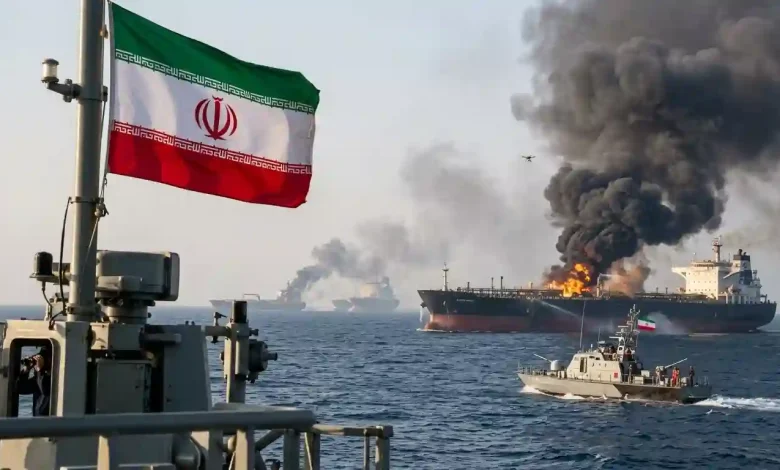
Table of Contents
U.S. and Iranian forces clashed in the waters surrounding Iran on Saturday, September 5, 2026, marking a dramatic and highly volatile escalation in the long-running maritime confrontation. The intense exchange of fire resulted in direct strikes on six commercial and energy transport vessels across several strategic waterways, including the Persian Gulf, the Gulf of Oman, and the critical Strait of Hormuz. In a series of rapidly unfolding events, American forces launched precision attacks that disabled two Iranian crude oil carriers and completely destroyed a third. This highly calculated offensive by the United States military was carried out in direct retaliation for a ballistic missile attack launched by Iran’s Islamic Revolutionary Guard Corps (IRGC) against two U.S. Navy warships. Almost immediately, Tehran responded by targeting multiple commercial tankers navigating what it classified as unauthorized corridors, raising fears of a wider, unmanageable conflict that could choke off global energy supplies.
The Maritime Engagement of September 5: An Overview
The explosive confrontation on Saturday began when the IRGC Navy fired several anti-ship ballistic missiles at two U.S. Navy vessels—an aircraft carrier and a guided-missile destroyer—that were actively patrolling the international waters of the region. According to U.S. Central Command (CENTCOM), the American naval assets successfully deployed advanced countermeasures and evaded the incoming strikes, avoiding any casualties or material damage. In the immediate aftermath of this failed assault, the Pentagon abandoned its previous posture of targeting land-based radars or missile launch facilities, opting instead to hit Iran’s most sensitive economic vulnerabilities: its commercial shipping and energy transport fleet. This shift reflects the broader, ongoing conflict with Iran, which has evolved into a high-stakes campaign of military deterrence and economic reprisal.
To better understand the scale and precision of the operations, military analysts pointed to the swiftness of the American response. Within hours of the IRGC missile launches, U.S. fighter aircraft and unmanned aerial vehicles (UAVs) executed coordinated strikes on three key Iranian oil tankers. According to reports published by the Associated Press, the objective of these strikes was not only to protect American servicemen but also to dismantle the maritime network that finances Iran’s military activities and its regional proxies. By targeting the lifeblood of the Iranian economy, Washington sent a severe and unmistakable warning to Tehran that any future aggression against Western military assets would be met with overwhelming and disproportionate commercial consequences.
American Strikes on Iranian Oil Tankers: Targets and Impact
The primary targets of the American retaliatory strikes were three major crude oil carriers identified by CENTCOM as integral components of Iran’s sanctions-evading export mechanism. These vessels—the M/T Downy, the M/T Stark 1, and the M/T Kylo—were struck in different maritime zones surrounding the Iranian coast, proving that the U.S. military possessed the intelligence and capability to strike multiple moving targets simultaneously. By disabling and destroying these vessels, the United States aimed to cut off the revenue streams that flow directly into the coffers of the IRGC.
The following table summarizes the key characteristics, target locations, and operational outcomes of the U.S. maritime strikes executed on Saturday:
| Vessel Name | Strike Location | Vessel Status | Strategic Role / Impact |
|---|---|---|---|
| M/T Downy | Off the coast of Kharg Island (Iran’s primary export terminal) | Permanently Disabled | Struck near the stern to disable propulsion; crew evacuated with zero casualties. |
| M/T Stark 1 | Near the port city of Jask (Southern Iran) | Permanently Disabled | Impacted near the stern; anchored and stationary in the Jask Port area. |
| M/T Kylo | Gulf of Oman | Completely Destroyed & Sunk | Suffered catastrophic structural damage after multiple strikes; caught fire and sank. |
The Sinking of the M/T Kylo in the Gulf of Oman
The most devastating blow of the afternoon was dealt to the M/T Kylo, a massive crude oil carrier operating in the Gulf of Oman. According to footage released by CENTCOM, the vessel was subjected to a heavier bombardment than the other two tankers. Before the strike was initiated, U.S. forces issued clear warnings to the vessel’s crew, allowing them sufficient time to abandon ship and avoid loss of life. Once the crew evacuated, American aircraft launched a series of high-precision ordnance that ripped through the tanker’s hull. The resulting explosions engulfed the M/T Kylo in towering flames, causing it to list heavily before ultimately sinking into the depths of the Gulf of Oman. CENTCOM’s public relations team later posted video of the sinking vessel, stating that the Kylo had ‘joined Iran’s navy at the bottom of the sea’. This action underscored the words of Admiral Brad Cooper, the commander of CENTCOM, who declared that the U.S. would not hesitate to destroy Iran’s ‘limited and exposed oil fleet’ if hostile acts continued.
Disabling the M/T Downy and M/T Stark 1
In contrast to the total destruction of the Kylo, the strikes on the M/T Downy and the M/T Stark 1 were designed to neutralize their operational capabilities without immediately sinking them. The M/T Downy was targeted off the coast of Kharg Island, which serves as Iran’s primary terminal for crude oil exports. An attack so close to Iran’s economic crown jewel carried massive symbolic and practical weight, signaling that no maritime zone—even those heavily guarded by coastal air defenses—was beyond the reach of American airpower. Meanwhile, the M/T Stark 1 was disabled near Jask, a port city that has recently been integrated into Iran’s strategic oil transit network. Both vessels suffered severe damage to their propulsion and steering systems, rendering them completely inoperable and leaving them drifting or anchored near the coast, where local authorities scrambled to manage subsequent oil leakages.
Iran’s Retaliatory Measures and Threats in the Strait of Hormuz
Tehran did not remain passive as its shipping assets burned. Within hours of the American strikes, the Islamic Republic of Iran Broadcasting (IRIB) announced that the Iranian military had retaliated by targeting several vessels. Iranian state media claimed that their forces had successfully struck three ‘American ships’ and targeted three commercial tankers that they accused of navigating on unauthorized and prohibited routes through the strategic Strait of Hormuz. The IRGC Navy issued a stern, sweeping warning to all international shipping companies operating in the Persian Gulf, cautioning them to avoid any cooperative movements with Western militaries.
The escalation was further aggravated by the deployment of coastal defense assets. In their official statement, the IRGC Navy declared: ‘Do not be deceived by the terrorist U.S. military and refrain from any suspicious movement aimed at passing through unauthorized waterways. Otherwise, you will be targeted’. This aggressive posture has effectively placed a chokehold on commercial maritime traffic, as shipping companies must now weigh the immense risks of navigating the narrow strait under the threat of Iranian missile batteries and fast-attack naval craft. The exchange represents a critical escalation in the Strait of Hormuz, a shipping corridor through which more than twenty percent of the world’s petroleum passes daily.
Geopolitical Stakes and the Fight for Maritime Chokepoints
The maritime clash of September 5 cannot be viewed in isolation. It is the direct consequence of Tehran’s refusal to accept U.S. demands regarding its regional posturing, missile development, and nuclear ambitions. Over the preceding months, Washington has tightened its containment strategy, deploying a unilateral American maritime blockade intended to starve the Iranian regime of its primary source of foreign currency: crude oil sales. This aggressive posture aligns with the broad diplomatic red lines outlined by Washington, which emphasize that any attempts to disrupt international shipping or threaten coalition forces will be met with direct military kinetic action.
Furthermore, the Trump administration has ramped up its efforts by combining tactical naval positioning with severe economic pressure campaigns. By labeling the IRGC’s commercial network a threat to international security, the U.S. government has justified its attacks on tankers as a form of self-defense and sanctions enforcement. This strategy aims to force Tehran back to the negotiating table, though many regional experts warn that such pressure is more likely to provoke asymmetric retaliation, such as cyber warfare, mine-laying in the shipping lanes, or localized drone attacks on neutral commercial vessels.
The Economic Fallouts: Energy Markets and Global Trade
The immediate impact of the weekend’s naval battles was felt on global financial and energy markets. As news of the burning tankers spread on Saturday, energy trading platforms braced for extreme volatility. The threat of a prolonged disruption in the Strait of Hormuz has sent shockwaves through the oil industry, leading many to predict a sharp rise in Brent crude prices and shipping insurance premiums. For everyday consumers, this instability threatens to translate into a significant surge in retail fuel costs, complicating efforts to control domestic inflation in the United States and Europe.
To combat Iran’s ability to finance these naval skirmishes, the U.S. Treasury Department has simultaneously rolled out aggressive financial measures targeting the front companies and foreign bank accounts that facilitate Iranian crude smuggling. However, as the physical security of the shipping lanes deteriorates, the cost of transporting oil from the Persian Gulf to East Asia and Europe is expected to climb exponentially. Marine underwriters are already revising risk assessments for any vessels entering the Gulf of Oman, with some contemplating a complete suspension of coverage for non-convoy transits.
International Response and Diplomatic Maneuvers
The international community has reacted with deep alarm to the Saturday clashes, with several nations calling for immediate restraint to prevent a full-scale regional war. The United Kingdom Maritime Trade Operations (UKMTO) urged all vessels in the area to exercise extreme caution and report any suspicious activities immediately. Meanwhile, diplomatic channels are working at capacity. Iranian Foreign Minister Abbas Araghchi reportedly held urgent phone discussions with his counterparts in Turkey and Saudi Arabia, seeking to build regional diplomatic pressure against what Tehran calls ‘American piracy and war crimes’ on the high seas.
Despite these frantic diplomatic maneuvers, the path to de-escalation remains highly uncertain. With both Washington and Tehran locked in an escalatory cycle of strike and counter-strike, the risk of a miscalculation that could trigger a wider military conflict remains at an all-time high. The coming days will be critical in determining whether international maritime security can be restored, or if the Persian Gulf will devolve into an active, unrestricted war zone.



One Comment