Strait of Hormuz Dispute: Iran Denies Trump Claims of Total Control 2026
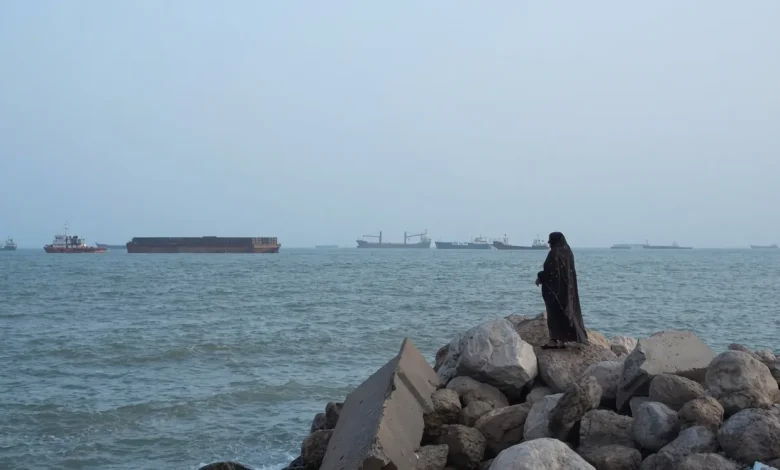
Table of Contents
Strait of Hormuz tensions have reached a boiling point as Iran continues to deny claims by the United States that Washington controls the critical maritime passage. Amid stalling diplomatic efforts to negotiate a broader Strait of Hormuz deal to reopen the waterway, both sides have hardened their rhetorical and military stances. On Wednesday, U.S. President Donald Trump repeated his assertion that American forces are in “total control” of the waterway, a statement that was met with fierce, immediate denials from Tehran. Iranian officials maintain that they will not permit the unrestricted flow of commercial shipping until the U.S. fulfills several strict conditions, including an end to aggressive military operations, the payment of massive reparations, and the wholesale lifting of economic sanctions.
This dangerous war of words unfolds within the wider context of the ongoing Iran war that erupted earlier this year, severely disrupting the international economy and challenging long-held doctrines of maritime security. Despite claims of a breakthrough from regional mediators, the gap between the primary combatants appears wider than ever, threatening to prolong a maritime crisis that has already reshaped global trade routes.
The Disputed Sovereignty of the Strait of Hormuz
The geography of the Strait of Hormuz has made it one of the most vital—and contested—maritime chokepoints in human history. Stretching 167 kilometers from the Persian Gulf to the Gulf of Oman, its narrowest point spans a mere 33 kilometers, with shipping lanes running directly through the territorial waters of Iran and Oman. Because of this geography, Iran has historically asserted a high degree of sovereign authority over the northern portion of the passage, a position that directly collides with the Western interpretation of “transit passage” as defined under the United Nations Convention on the Law of the Sea.
Iran’s strategic resilience throughout the conflict has been a source of frustration for Washington. Despite suffering heavy aerial bombardments and targeted political decapitation strikes since the onset of the U.S. war with Iran earlier this year, the clerical regime has not collapsed. Instead, Tehran has leveraged its coastal geography to fortify its defensive positions, utilizing anti-ship cruise missiles, naval mines, and fast-attack craft to enforce its own blockade, denying passage to any vessels connected to the U.S., Israel, or their regional allies.
President Trump’s Assertion of “Total Control”
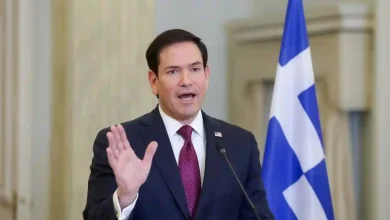
In a series of public statements on Wednesday, President Donald Trump declared that the United States is now in “total control” of the shipping lanes, attributing this achievement to the heavy naval presence of the U.S. Fifth Fleet and an ongoing maritime containment campaign. Trump argued that the American blockade of Iranian ports has effectively neutralized Tehran’s capability to project power beyond its immediate coastline. According to administration officials, the high volume of U.S. aerial surveillance and naval patrols has successfully deterred massive Iranian maneuvers in the Gulf of Oman.
However, critics within the diplomatic and defense communities suggest that the administration’s claims of control are overstated. While U.S. warships continue to escort a limited number of allied vessels through the region, the general flow of international commercial shipping has plummeted. To say the U.S. is in “total control” ignores the persistent threat posed by hidden Iranian battery installations along the mountainous coastline, which can target civilian tankers with minimal warning.
Iran’s Angry Denials and Demands
Tehran was quick to dismiss President Trump’s claims, labeling them as “fabrications and empty lies” designed to soothe anxious domestic audiences in the United States. The Persian Gulf Strait Authority, an entity established by Iran to manage shipping during the crisis, issued an official statement confirming that the waterway remains effectively blocked to hostile traffic. Iranian Foreign Minister Abbas Araghchi asserted that the United States has once again “miscalculated” the determination of the Iranian people and their armed forces.
According to Iranian state media, the Islamic Revolutionary Guard Corps (IRGC) Navy continues to actively patrol the strait, maintaining a high level of operational readiness. Iranian officials warn that any unilateral attempt by U.S. naval forces to force open the transit routes without a formal diplomatic agreement will be met with immediate and devastating retaliatory strikes. For Iran, the blockade is their ultimate leverage, and they have no intention of yielding it without securing substantial concessions from the West.
The Six Non-Negotiable Demands of Tehran
To formalize its position, Iran’s Supreme National Security Council, led by outgoing secretary Mohammad Baqer Zolqadr, released a detailed list of six non-negotiable demands that the United States must meet before the strait can be reopened to international commerce. These demands reflect Tehran’s broader geopolitical objectives and its insistence on being treated as an equal sovereign power rather than a defeated nation. The requirements are as follows:
- Cease Hostile Rhetoric: The United States must permanently cease using threatening language and show respect for the national and religious sanctities of Iran.
- End Regional Aggression: The U.S. and its partners must permanently halt all military campaigns and acts of aggression against Iran and its regional allies in Lebanon, Palestine, Yemen, and Iraq.
- Lift the Naval Blockade: Washington must immediately end its naval blockade of Iranian ports and withdraw all naval and air assets from the immediate vicinity of the Persian Gulf.
- Pay Comprehensive Reparations: The U.S. must pay full, unreduced compensation for the massive physical and economic damage caused by its aggressive actions during the war.
- Abolish All Sanctions: The economic embargoes and “cruel” sanctions imposed on the Iranian nation must be completely and irreversibly lifted.
- Release Frozen Assets: The United States must unconditionally release all frozen and seized Iranian financial assets held in international banks.
Reparations, Sanctions, and Aggression
The demand for war reparations has emerged as one of the most contentious obstacles to peace. Iranian officials point to the severe destruction of their infrastructure, civilian energy grids, and port facilities caused by thousands of joint U.S.-Israeli airstrikes. Foreign Ministry representatives have publicly questioned who will bear the burden of rebuilding these facilities, asserting that the “aggressors” must pay for the physical consequences of their campaign.
Simultaneously, the insistence on lifting sanctions highlights the immense pressure under which Tehran is currently operating. The combination of direct military action and severe economic isolation has contributed to a worsening Iran economic situation as inflation soars and access to foreign currency dwindles. By tying the reopening of the strait to sanctions relief, Iran is attempting to break the economic stranglehold that has crippled its domestic markets.
Oman-Mediated Peace Talks on Life Support
Diplomatic efforts to resolve the standoff have been centered in Muscat, where Omani officials have worked tirelessly to find a compromise. For a brief period, regional observers were optimistic, with foreign diplomats suggesting that an interim transit route agreement was close to completion. However, those talks have now faltered due to the uncompromising demands of both Washington and Tehran. President Trump rejected Iran’s conditions outright, reversing the demand for compensation by insisting that Iran must instead pay the families of those harmed by IRGC-backed operations in the region.
This diplomatic deadlock is compounded by shifting political dynamics in the region. While some mediators have claimed that the two sides were close to an arrangement, the public posturing of both leaders suggests otherwise. The breakdown of these talks has renewed fears of a prolonged conflict, especially as both nations face domestic political pressures that discourage compromise. Additionally, reports of strategic exhaustion and concerns about critical munitions shortages among U.S. forces have made the prospects of a decisive military victory highly uncertain, pushing the conflict into an grinding stalemate.
Global Economic Fallout of the Blockade
The prolonged closure of the waterway has had a catastrophic impact on the global economy. Historically, roughly 20% of the world’s petroleum and a massive portion of liquefied natural gas passed through this narrow corridor daily. Since the hostilities began, verified tanker transits have plummeted by over 90%, leaving global shipping conglomerates with few viable alternatives. Ships are forced to undertake long, expensive detours around the Cape of Good Hope, adding weeks to transit times and driving up shipping insurance rates to unprecedented levels.
This logistical disruption occurred shortly after several planned strikes on Iran were cancelled by the White House, a move that some hoped would signal a de-escalation but instead resulted in a protracted period of economic uncertainty. The inability of energy exporters to reliably deliver their products has strained supply chains across Europe and Asia, highlighting the delicate nature of global trade systems.
Impact on International Oil and Energy Markets
The disruption to the energy supply chain has triggered a severe global energy crisis. Brent crude and West Texas Intermediate (WTI) prices have risen consistently, hovering near record highs and driving up inflation in consumer countries. In the United States, this supply contraction has caused a dramatic gas prices surge across the nation, pushing the national average past $4.00 per gallon and placing a heavy burden on American households.
Financial institutions warn that if the diplomatic impasse continues, oil prices could escalate even further, potentially triggering a broader global recession. The economic pressure is designed to force Iran to capitulate, but Tehran’s leadership appears willing to endure domestic hardship in exchange for maintaining its strategic veto over the world’s primary energy highway.
Military Realities and Strategic Standoff
On the military front, the situation remains highly volatile. U.S. Central Command has maintained its naval blockade of Iran, occasionally engaging cargo vessels attempting to bypass the security cordon. Despite the high-tech superiority of the U.S. Navy, the threat of asymmetric warfare from Iran remains a potent deterrent. The IRGC’s extensive arsenal of low-cost drones and shore-based anti-ship missiles allows them to threaten even the most advanced military vessels, making a complete clearing of the strait a risky and costly proposition.
The current standoff illustrates the limits of conventional military power when confronted with unfavorable geography. While the U.S. can prevent major naval deployments from Iranian ports, it cannot guarantee the safety of civilian commercial vessels navigating the narrow channel. This operational reality is why many military analysts believe that a military-only solution is impossible, and that some form of negotiated settlement will eventually be required to restore the freedom of navigation.
Summary of the U.S.-Iran Strait Standoff
The ongoing dispute over the waterway is characterized by deeply polarized positions, with neither side willing to take the first step toward de-escalation. The following table provides a comparison of the core positions and strategic outlooks of both the United States and Iran regarding this critical geopolitical flashpoint:
| Issue Category | United States Position | Iranian Position |
|---|---|---|
| Control of the Waterway | Claims “total control” via naval blockade and regional air supremacy. | Rejects U.S. claims; asserts sovereignty and physical denial of the strait. |
| Primary Conditions for Peace | Demands Iran halt maritime attacks and pay compensation for historical casualties. | Insists on six demands, including lifting sanctions and receiving war reparations. |
| Diplomatic Strategy | Prefers “semi-negotiating” to maintain maximum economic pressure. | Coordinates with Oman on transit routes while refusing direct concessions. |
| Economic Impact & Leverage | Weathers domestic inflation but seeks to preserve the global rules-based order. | Endures severe economic pressure while using energy exports as geopolitical leverage. |
As the conflict continues, the international community remains deeply concerned about the long-term implications for maritime law. The precedent of using vital shipping lanes as a bargaining chip threatens to undermine global commerce far beyond the Persian Gulf, making a diplomatic resolution to the crisis a matter of urgent global priority.