Health benefit cost growth: Navigating Corporate Strategies 2026

Table of Contents
Health benefit cost growth has emerged as one of the most pressing financial hurdles for modern enterprises, forcing corporate leaders to walk a tightrope between fiscal sustainability and employee satisfaction. In recent years, healthcare inflation has risen significantly faster than general economic indices, leaving corporate benefits departments struggling to absorb the impact. According to recent surveys by the global consulting firm Mercer, employer-sponsored healthcare costs are projected to increase by a staggering 6.7% in 2026, pushing the average premium cost past $18,500 per employee. This dramatic upward trajectory represents the highest annual surge in nearly fifteen years, following a relatively stable decade of moderate 3% increases.
“Employers are under intense pressure to manage another year of elevated health benefit cost growth, but they also know that affordability matters deeply to employees,” said Simon Camaj, Mercer’s U.S. Health Leader. Historically, the default corporate reaction to tightening margins has been cost-shifting: passing a greater portion of the expense directly onto the workforce in the form of higher employee premiums, elevated deductibles, or increased out-of-pocket expenses. However, progressive organizations are discovering that this traditional cost-shifting playbook is yielding diminishing returns and creating serious long-term consequences for employee retention, workplace performance, and operational consistency.
Decoding the Pressures of Modern Corporate Healthcare
The contemporary business landscape demands a highly nuanced understanding of healthcare economics. Rising provider consolidation, aging employee demographics, and the introduction of groundbreaking but incredibly expensive therapeutic treatments have combined to drive up base costs. For many years, companies could absorb these micro-fluctuations, but the compounding pressure of consecutive years of high healthcare inflation has made full absorption mathematically unfeasible for most mid-sized and large enterprises.
To put this in perspective, managing these rising health budgets requires a strategic approach to capital allocation. This level of comprehensive fiscal planning is similar to how the federal Defense Department must carefully audit and restructure its extensive operational budgets to adapt to long-term national security demands. Corporate health plans must now be managed with the same level of rigorous oversight, auditing, and structural control to prevent runaway inflation from devouring profits.
Traditional Cost-Sharing: A Double-Edged Sword for Employee Morale
When faced with immediate budget deficits, the most common response for several companies is to adjust plan design variables—such as raising individual deductibles, increasing co-insurance percentages, and raising paycheck deductions. While this shifting of financial responsibility directly addresses short-term balance sheets, it introduces a dangerous form of financial strain on workers. When workers face higher out-of-pocket thresholds, they frequently choose to delay necessary preventative treatments, skip routine physicals, or fail to fill critical prescriptions.
Over time, this strategic choice by employees leads to a cascading drop in overall health. Rather than saving the company money, delayed care often results in catastrophic medical emergencies down the road, which are far more costly to the employer-sponsored self-insured plan than routine preventative maintenance. Relying entirely on passing the buck down to workers may solve immediate cash-flow problems, but it ultimately drives organizations into an administrative and cultural strategic dead end that diminishes retention and damages the corporate brand.
The Impact on Office Productivity and Retention
The correlation between health coverage affordability and overall office performance is direct and measurable. Employees suffering from financial stress are statistically less engaged, more prone to absenteeism, and presenteeism—where they are physically present at work but functionally unproductive due to stress or underlying, untreated medical conditions. When basic medical needs become financially out of reach, employees begin seeking alternative employment options with more competitive wellness benefits. Thus, the short-term cost savings realized by inflating employee premiums are quickly erased by the steep costs associated with recruiting, hiring, and training replacement staff.
Strategic Alternatives to Out-of-Pocket Expenses
Rather than relying solely on cost-sharing, forward-thinking employers are exploring innovative approaches to improve the value of their health plans. When asked, employers stated that they are “using different levers to manage costs, including both traditional cost-sharing tactics and strategies that steer employees toward higher-value care and provide support where it can have the greatest impact.” This marked pivot toward value-based design ensures that businesses are not simply cutting expenditures, but actively optimizing how health dollars are allocated.
Steering Employees Toward High-Value Care
A primary strategy within value-based design is the active steering of members toward high-performing networks and centers of excellence. Not all healthcare providers deliver identical outcomes or charge identical fees; indeed, the price discrepancy for the exact same medical procedure within a single metropolitan area can exceed 300%. By implementing tiered networks and variable copay designs, employers can financially incentivize employees to utilize pre-selected, high-performing medical groups and facilities that have demonstrated superior clinical outcomes and cost-efficient practices.
Deploying such targeted healthcare frameworks can be as logistically intense as securing major maritime assets, like deploying the USS Abraham Lincoln to maintain regional security. Navigating these complex legal and provider agreements often mirrors high-stakes corporate disputes, such as when Apple sues OpenAI over copyright and systemic training issues. It requires intense negotiation, clear communication, and precise contractual alignments to ensure that employees receive premium-tier support without the prohibitive premium costs.
Non-Traditional Medical Plans and HRA Options
Another major structural trend is the rapid adoption of non-traditional medical plans, such as Individual Coverage Health Reimbursement Arrangements (ICHRAs). In 2026, over 20,000 businesses entered into these health reimbursement arrangements—a massive 53% increase compared to 2025. By utilising an HRA model, employers define a set financial contribution to give directly to employees, who then use those funds to purchase personalized health coverage on the individual marketplace. This defined contribution strategy provides complete budgetary predictability for the organization while granting employees absolute freedom of choice, effectively neutralizing the friction caused by standardized employer plans.
Comparative Breakdown of Cost-Mitigation Strategies
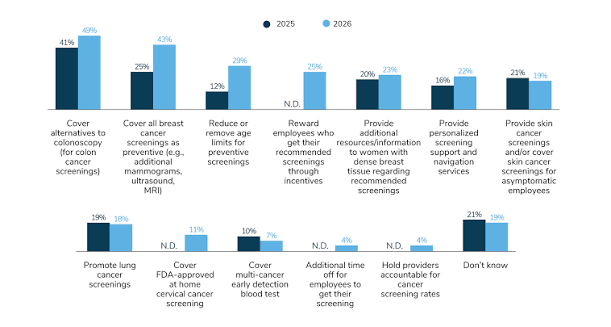
The following table illustrates the key differences, benefits, and inherent organizational risks associated with various contemporary employer-sponsored healthcare tactics:
| Strategy Category | Key Tactics Employed | Short-term Employer Savings | Long-term Impact on Employees | Performance & Productivity Risk |
|---|---|---|---|---|
| Traditional Cost-Sharing | Higher premiums, increased deductibles, elevated copays, greater out-of-pocket limits | High (Immediate reduction in corporate liability) | Financial strain, delayed care, lower medical adherence | High risk of reduced office performance and absenteeism |
| Innovative High-Value Care | High-performance networks, variable copay plans, narrow provider steering | Moderate (Iterative savings through efficient care) | Access to vetted top-tier providers at lower personal costs | Low risk; improved health outcomes boost long-term performance |
| Health Reimbursement Options | Individual Coverage HRAs (ICHRAs), defined contribution models | High (Predictable, fixed healthcare budgeting) | Complete personal choice of plan with customized employer funding | Low to moderate; employees gain agency over their healthcare |
Managing High-Cost Pharmaceutical Trends
A primary driver of the current health benefit cost growth is the rapid rise of pharmaceutical expenses, particularly driven by specialty drugs and the skyrocketing demand for GLP-1 weight-loss medications. While these treatments yield remarkable therapeutic outcomes, they carry extraordinary retail price tags that quickly inflate an employer’s prescription drug budget. Pharmacy benefits, which grew nearly 9% in 2026 alone, represent the fastest-growing cost center for modern health sponsors.
To counteract rising drug costs, organizations must implement robust auditing and predictive analysis tools. This level of risk oversight is similar to how financial platforms actively monitor and block Google Cloud fraud to prevent systemic fiscal leakage. By applying rigorous clinical reviews, prior authorization requirements, and structured step-therapy programs, organizations can ensure that incredibly costly medications are only prescribed when medically necessary, preserving precious healthcare resources for those who need them most.
Structural Realities: Why Healthcare Inflation is Accelerating
The root causes of healthcare price hikes go far beyond simple corporate margins. General economic inflation, massive shortages in healthcare labor, and the continuing consolidation of health systems into regional monopolies have empowered providers to demand higher reimbursement rates from commercial insurers. The global healthcare supply chain is vulnerable to macroeconomic disruptions, comparable to diplomatic disputes like the ones between Norway’s foreign minister and other allied powers over global trade agreements.
Furthermore, calculating these extensive long-term liabilities can feel as financially overwhelming as modeling projected US-Iran war costs during periods of heightened geopolitical instability. Any disruption to international shipping lanes, such as transit bottlenecks in the Strait of Hormuz, can instantly inflate raw medical material and pharmaceutical import pricing, demonstrating that the health benefit cost growth is deeply intertwined with volatile global market forces.
Balancing Employer Budgets with Employee Well-being
Ultimately, the corporate challenge of the coming decade lies in finding a harmonious equilibrium between managing escalating budgets and maintaining employee affordability. A business cannot thrive with a chronically unhealthy or disengaged workforce, nor can it survive with an unsustainable benefits liability. Shifting entirely away from cost-sharing may be unrealistic, but relying on it exclusively is a recipe for workplace failure.
By blending traditional cost-sharing with modern value-driven care, digital advocacy tools, and robust wellness education, organizations can manage another year of elevated health benefit cost growth while proving that employee affordability remains a top priority. Moving forward, the most successful companies will be those that view health benefits not as a mere cost center to be minimized, but as a strategic asset to be optimized for the mutual prosperity of the organization and its employees.




One Comment