Iran War Day 151: Strategic Risks, Oil Shocks, and Diplomacy
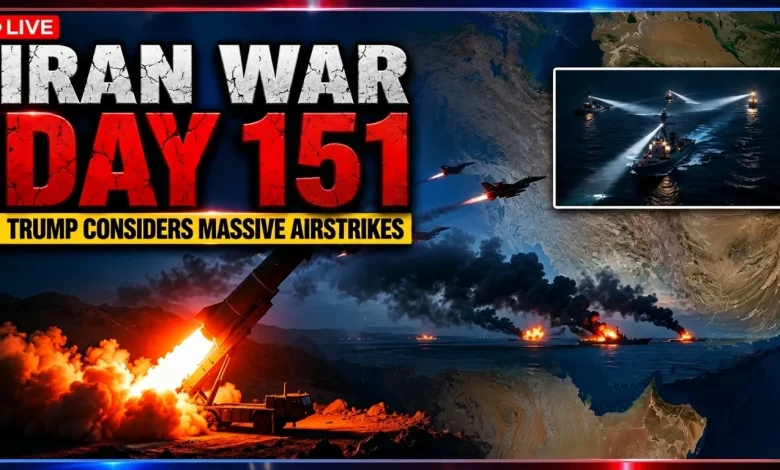
Table of Contents
Iran war dynamics have now entered approximately their 151st day, marking a grueling and highly volatile chapter in modern Middle Eastern history. What began as localized border skirmishes and targeted naval responses has expanded into a complex, multi-theater campaign involving highly sophisticated military technologies, economic warfare, and high-stakes international posturing. Over the course of the last five months, the conflict has steadily evolved through several distinct phases, shifting from rapid kinetic exchanges to a war of attrition characterized by deep-penetration missile attacks, asymmetric drone offensives, and targeted airstrikes against strategic military infrastructure. As both sides dig in, the international community watches with growing alarm, recognizing that the current path of escalation threatens to permanently alter the geopolitical fabric of the region.
As of late July 2026, the intensity of active combat operations shows no signs of abating. Both the Iranian military command and its Western and regional opponents have reported successful operations over the past 48 hours, while simultaneously warning that any further provocation will meet with an even more devastating response. This cyclical pattern of retaliatory strikes has led to the systematic targeting of command-and-control centers, advanced air defense networks, and drone manufacturing plants deep within sovereign territories. The direct fighting between the United States and Iran has resulted in unparalleled devastation across military sites, creating a delicate tactical environment where even a minor miscalculation could trigger a catastrophic, uncontrolled escalation across multiple nation-states.
Military Landscapes: Precision Strikes and Defensive Retaliation
The operational landscape of the conflict on day 151 is defined by a dense combination of precision-guided munitions, long-range ballistic vectors, and layered anti-access/area-denial (A2/AD) networks. Military installations on both sides of the Persian Gulf are operating under maximum alert status as airspace incursions remain a near-constant occurrence. Western coalition forces have continued their campaign of degrading offensive launch platforms, leveraging stealth aircraft and sea-launched cruise missiles to bypass dense surface-to-air defense systems. These operations are aimed not just at immediate deterrence, but at dismantling the long-term projection capabilities of the Islamic Revolutionary Guard Corps (IRGC) and its regional affiliates.
Conversely, Iran has demonstrated a resilient defensive posture, utilizing highly mobile, domestically produced missile systems that are difficult to locate and neutralize. Analysts comparing current military posture to the strategic calculations on day 147 point out a marked shift toward decentralized command structures. By dispersing launch sites into rugged mountainous terrain and utilizing reinforced underground bunkers, Iran has maintained a credible retaliatory threat despite sustaining heavy losses. This decentralization has enabled continuous counterattacks, challenging the coalition’s air superiority and demonstrating the immense difficulty of achieving a decisive, unilateral military victory in such complex geography.
Target Breakdown: Missiles, Drones, and Key Infrastructure
A granular look at recent combat logs reveals a deliberate focus on degrading drone infrastructure and precision-guided missile stockpiles. Unmanned aerial vehicles (UAVs) have emerged as the primary tool of asymmetric disruption throughout this conflict, utilized heavily to probe enemy air defenses, conduct reconnaissance, and carry out explosive kamikaze missions. Consequently, coalition forces have prioritized the destruction of drone assembly plants, telemetry control stations, and testing grounds located in western and southern provinces. By disrupting the supply chain of critical microelectronics and propulsion units, the coalition hopes to blunt the frequency of drone swarms that have repeatedly targeted naval assets and defensive outposts.
However, the offensive is not one-sided. Iranian rocket forces have repeatedly demonstrated their ability to orchestrate coordinated salvos of medium-range ballistic missiles capable of overwhelming modern air defense systems. These strikes have specifically targeted radar installations, forward operating bases, and logistics hubs used by coalition forces. The ongoing tactical chess match has seen both sides rapidly adapt their electronic warfare capabilities, attempting to jam satellite guidance systems and spoof command frequencies in real-time. This continuous cycle of technological measure and counter-measure has transformed the airspace over the Persian Gulf into one of the most electronically contested environments in the history of warfare.
The Critical Chokepoint: Strait of Hormuz Security Escalations
Beyond the immediate military casualties, the primary focal point of global concern remains the security situation surrounding the Strait of Hormuz. Representing a vital artery for international commerce, this narrow waterway sees the passage of approximately one-fifth of the world’s petroleum consumption daily. Any prolonged disruption to shipping lanes within the strait threatens to send immediate shockwaves through the global economy, directly impacting energy prices, maritime insurance rates, and international supply chains. Over the past several weeks, the security environment inside the strait has deteriorated significantly, with merchant vessels increasingly caught in the crossfire of the broader geopolitical struggle.
The situation remains extremely volatile, reminiscent of the intense Strait of Hormuz crisis that paralyzed shipping just days ago. Mines, fast-attack craft harassments, and drone strikes have forced major international shipping conglomerates to alter their routes, with some choosing to bypass the region entirely in favor of the much longer and more expensive journey around the Cape of Good Hope. Naval escorts provided by international coalitions have offered some reassurance, but the sheer volume of traffic and the narrowness of the shipping lanes make absolute protection an logistical impossibility. The constant threat of asymmetric interdiction has created an atmosphere of profound uncertainty among global maritime operators.
Global Energy Volatility and Market Shocks
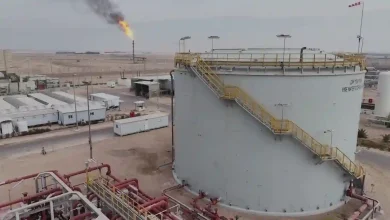
The direct consequence of this maritime insecurity is a highly volatile global energy market. Crude oil prices have fluctuated wildly in response to daily reports of military activity near the strait. These shipping disruptions have already catalyzed profound global oil shocks that are reverberating through international stock exchanges. Energy analysts warn that if the Strait of Hormuz is fully closed or rendered completely impassable for an extended period, global oil supplies could experience an unprecedented deficit, potentially driving prices to historic highs and triggering severe inflationary spirals across major industrial economies.
To monitor these shifts, international bodies rely on global commodity tracking systems to evaluate the real-world flow of liquid natural gas and crude oil. While some regional producers have attempted to offset these disruptions by utilizing overland pipelines to bypass the Persian Gulf, the capacity of these alternative routes is highly limited. Consequently, importing nations in Europe and Asia are facing the grim prospect of energy rationing and steep price hikes if a diplomatic resolution is not reached swiftly. The economic stakes of the conflict have thus transcended the immediate borders of the Middle East, making its resolution a matter of critical domestic policy for governments worldwide.
Comparative Analysis of Strategic Military Indicators
To fully understand the current state of play on day 151, it is essential to examine the strategic metrics that define the military capacities of the opposing blocks. Below is a comparative analysis detailing key operational indicators, highlighting the asymmetric nature of this conflict.
| Operational Indicator | Western Coalition Forces | Iranian Military & IRGC Forces |
|---|---|---|
| Air Superiority | High (Stealth-capable, advanced electronic jamming) | Low to Moderate (Layered SAMs, mobile air defenses) |
| Asymmetric Capabilities | Targeted Special Forces, cyber warfare | Extensive drone swarms, fast-attack naval craft, proxy networks |
| Missile Technology | Precision cruise missiles, advanced interceptors (Patriot, THAAD) | High-volume ballistic missiles, land-attack cruise missiles |
| Maritime Access | Deep-water naval dominance, carrier strike groups | Chokepoint interdiction, localized coastal defense systems |
| Economic Resilience | High global reserve backing, diverse supply lines | Sanction-resistant war economy, localized manufacturing |
Diplomatic Maneuvers: Backchannel Dialogues and Ceasefire Projections
Despite the intensifying military operations on the ground, the diplomatic arena is experiencing its most active period since the outbreak of hostilities. While official channels remain publically adversarial, ongoing backchannel diplomacy indicates that both parties are exploring avenues to avoid total regional ruin. These highly sensitive, closed-door discussions are aimed at establishing temporary humanitarian corridors, negotiating prisoner exchanges, and outlining the foundational parameters required for a mutually acceptable ceasefire. The challenge, however, lies in reconciling the fundamentally incompatible political demands of the primary belligerents.
Within Washington, tense White House debates over escalation have divided policy advisors between hawkish generals and cautious diplomats. Some argue that only a sustained, overwhelming military campaign will permanently neutralize the regional threat, while others contend that such a course of action will inevitably draw the United States into another endless, multi-trillion-dollar foreign entanglement. These operational limits became clear after the administration’s official strike policy was revised to prioritize de-escalation over protracted occupational war. Consequently, the diplomatic option remains an active, albeit fragile, component of the overall strategic framework.
Regional Stances and Third-Party Mediation
Neutral regional states find themselves in an incredibly challenging position as the war enters its sixth month. Nations such as Oman, Qatar, and Switzerland have taken on pivotal roles as third-party mediators, leveraging their diplomatic neutrality to facilitate communication between the warring factions. These mediators have repeatedly warned that the continued expansion of the conflict poses an existential threat to regional stability, urging both sides to exercise maximum restraint and avoid actions that could permanently close the door to peaceful negotiations.
At the same time, regional powers are actively reinforcing their own defensive perimeters and diversifying their diplomatic alliances. There is a profound fear that a major miscalculation could drag neighboring states directly into the conflict, leading to widespread infrastructure damage and domestic instability. This has led to a flurry of regional summits aimed at establishing common security frameworks and exploring contingency plans to protect national economies from the ongoing fallout. The diplomatic landscape is therefore highly fragmented, with nations balancing their immediate national security interests against the complex demands of international alliances.
Future Trajectories: The Looming Threat of Region-Wide War
As the conflict marks its 151st day, the future trajectory of the war remains highly uncertain, with multiple potential scenarios hanging in the balance. The most optimistic projection involves a gradual cooling of hostilities, driven by mutual economic exhaustion and successful backchannel negotiations. Under this scenario, a limited ceasefire could be established, accompanied by a phased withdrawal of naval forces from the Strait of Hormuz and a reduction in airstrikes. However, achieving this outcome would require significant political compromises from all involved parties, a prospect that currently seems distant given the deeply entrenched public rhetoric.
Conversely, the risk of a dramatic, unchecked escalation remains dangerously high. This follows weeks of intense domestic deliberation, with the executive branch weighing a massive attack to permanently disable Western Iranian launch sites. If such an operation is launched, it would almost certainly trigger an all-out regional response, involving massive missile strikes against metropolitan centers, widespread cyberattacks on critical national infrastructure, and the complete blockade of the Persian Gulf. Such a development would drag the global economy into unchartered territory, transforming a localized conflict into a global geopolitical crisis with profound and long-lasting consequences. As the military operations continue and diplomatic efforts struggle to find solid footing, the international community must prepare for a prolonged period of instability, recognizing that the resolution of this conflict will shape the global geopolitical landscape for decades to come.