Boris Nadezhdin Released After Extremism Arrest in Russia 2026
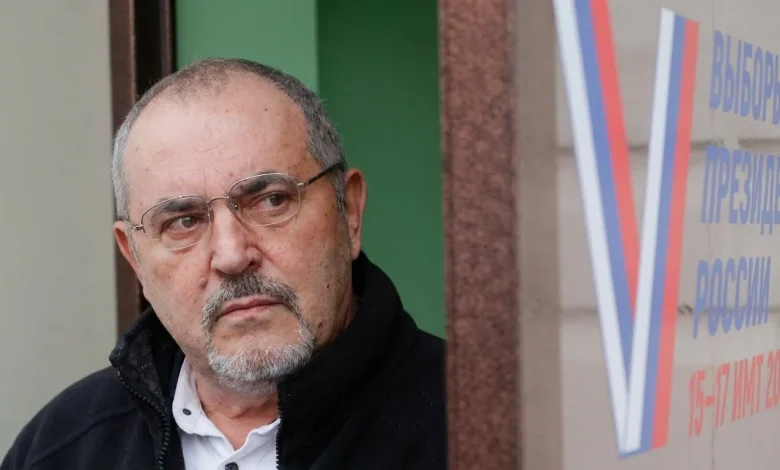
Table of Contents
Boris Nadezhdin: The Targeted Crackdown on Russia’s Leading Anti-War Voice
Boris Nadezhdin, a prominent Russian anti-war politician who attempted to run against President Vladimir Putin in the 2024 presidential election, said on Monday he had been released from police custody and is due to appear in court on Friday, July 17, 2026. Nadezhdin, a liberal member of Russia’s parliament from 1999 to 2003, was detained earlier on Monday, just days after being designated a “foreign agent” by authorities. The TASS news agency cited Nadezhdin‘s lawyer as saying that he had been charged with displaying symbols of extremist organizations. The lawyer, Dmitry Trunin, said the case stemmed from a social media post linking to a video featuring the late Alexei Navalny and his Anti-Corruption Foundation (ACF), which Russian authorities have designated as extremist and banned. This rapid succession of legal maneuvers highlights the escalating pressure on independent voices in Russia, where the legal apparatus has been increasingly weaponized to stifle opposition.
The Sudden Detention in Dolgoprudny
To understand the significance of this detention, one must look at Nadezhdin’s unique position in the Russian political landscape. Unlike many other high-profile critics who are either in exile, imprisoned, or deceased, Nadezhdin has continued to live and operate openly within the country. His political career spans decades, beginning as an academic and legal expert, leading to his service in the State Duma during the relatively liberal era of the late 1990s and early 2000s. As a close associate of the assassinated opposition leader Boris Nemtsov, Nadezhdin has long championed a vision of a democratic, modern Russia that cooperates with the international community. The systemic dismantling of this vision has left Nadezhdin as one of the last prominent public figures willing to openly call for a halt to the military conflict in Ukraine.
The actual arrest occurred on the afternoon of July 13, 2026, in the town of Dolgoprudny, situated on Moscow’s northern outskirts. Nadezhdin, who resides in the town, took to his Telegram channel to write: “The police have come. They are taking me to the Dolgoprudny precinct”. News of his detention quickly spread across independent Russian media outlets, causing immediate concern among his supporters and international human rights watchdogs. This incident is reminiscent of other high-stakes legal campaigns globally, where opposition leaders are systematically isolated. For instance, while Western nations navigate different legal challenges—such as the high-profile trial of political figures facing strict scrutiny—the Russian system has consolidated its power to eliminate domestic opposition entirely.
The Legal Pretext: Banned Symbols and Social Media Links
Nadezhdin was released after spending several hours in custody, but only after signing an obligation to appear in court on Friday, July 17, 2026. According to his legal defense team, he has been charged under Article 20.3 of the Russian Code of Administrative Offenses. This specific law deals with the public display of symbols of extremist organizations. The prosecution’s case centers on a deleted social media post from November 2023 on Nadezhdin’s Telegram channel. The post contained a hyperlink to a YouTube video on the channel of activist Elvira Vikhareva, titled “Candidate Against Putin 2024,” which featured a photograph of the late opposition leader Alexei Navalny. Since Navalny’s Anti-Corruption Foundation has been legally designated as an extremist organization by Russian courts, any public link or reference to their materials is treated as a major administrative infraction.
The late Alexei Navalny, who died under highly controversial circumstances in an Arctic penal colony in February 2024, remains a powerful symbol of resistance to the Kremlin. Following his death, Russian authorities have redoubled their efforts to scrub any mention of him or his organizations from the public sphere. Under Russian law, a conviction under Article 20.3 carries not only a potential 15-day administrative jail sentence but also far-reaching political consequences. Crucially, anyone convicted of displaying extremist symbols is barred from running in elections at any level for a period of one year. This penalty is a calculated bureaucratic tool designed to dismantle political campaigns before they can even reach the ballot box.
The Strategic Timing: Foreign Agent Designation and Election Barriers
This arrest was far from a random enforcement of internet regulations; rather, it was the second blow in a coordinated, multi-stage strategy. Just three days prior, on Friday, July 10, 2026, Russia’s Ministry of Justice formally added Nadezhdin to its notorious registry of “foreign agents”. The ministry justified the designation by claiming that Nadezhdin had helped distribute materials produced by other foreign agents and undesirable organizations, spread false information about the decisions of Russian authorities, and called for participation in unsanctioned public rallies. The foreign agent label carries heavy social stigma and subjects recipients to intense financial reporting, but its most critical impact is statutory: since May 2024, individuals designated as foreign agents are legally barred from seeking public office in Russia.
The State Duma Aspirations Blocked
Nadezhdin had recently submitted documents in mid-June 2026 to run as an independent candidate for the State Duma, Russia’s lower house of parliament, in the upcoming elections scheduled for September 2026. His team had actively begun collecting signatures across several Russian regions, attempting to tap into the underlying anti-war sentiment that remains quiet but persistent among many citizens. Despite his designation as a foreign agent, Nadezhdin remained defiant, stating: “I will keep living and fighting… I will keep running for the State Duma and collecting signatures”. This persistent defiance in the face of insurmountable systemic barriers shows the resilience of Russian activists, standing in sharp contrast to the institutional purging seen in other state-controlled entities where ideological compliance is strictly enforced.
Legal Impact of Article 20.3 on Election Eligibility
The struggle of independent political figures in modern Russia represents a broader trend of civil liberties being curbed under autocratic pressure. While democratic nations frequently debate electoral regulations to ensure the transparency of their systems, Russian authorities utilize the law to systematically exclude candidates with popular support. This absolute exclusion prevents any peaceful avenue of transition, mirroring situations where citizens are driven to desperate acts of political protest to make their voices heard against overwhelming state structures. The Kremlin’s zero-tolerance policy toward any form of anti-war dissent has effectively closed the door on conventional democratic participation, shifting the political arena into a highly controlled legal battlefield.
The Legacy of Nadezhdin’s 2024 Anti-War Campaign
To understand the dual-layered legal net cast over Nadezhdin, we can examine how the state uses both administrative and political laws to secure its power. The table below outlines the two separate legal actions taken against him in July 2026 and their combined impact on his political ambitions.
| Legal Action Taken | Enforcement Date | Primary Justification Provided | Direct Political Consequence |
|---|---|---|---|
| Foreign Agent Designation | July 10, 2026 | Distributing materials from other foreign agents and undesirable organizations, spreading “false information” about official decisions, and calling for unsanctioned rallies. | Legally bars the candidate from participating in any public elections at any level under the legislation enacted in May 2024. |
| Extremist Symbols Administrative Charge (Article 20.3) | July 13, 2026 | Sharing a social media link in November 2023 on Telegram to a YouTube video containing an image of late opposition figure Alexei Navalny. | Punishable by a fine or up to 15 days in prison, alongside a mandatory one-year ban on running for public office if found guilty. |
A Brief Window of Unprecedented Public Mobilization
The strategy of combining administrative charges with sweeping status designations is a tried-and-true method of political neutralization. In democratic systems, even when controversial judicial rulings generate heated debate, there remains an independent judiciary and a public process of appeal. In Russia, however, the judiciary functions as an extension of the executive branch. This dual approach of designating a candidate a “foreign agent” while simultaneously levying administrative “extremist symbol” charges acts as a failsafe mechanism. If Nadezhdin manages to appeal his foreign agent designation, the administrative conviction will still legally disqualify him from the upcoming September 2026 State Duma elections. This level of preemptive engineering ensures that outsider candidates are barred long before voters ever get a chance to cast their ballots.
Systemic Barriers and the Supreme Court Rejections
This domestic crackdown is playing out against a backdrop of severe international isolation and ongoing military operations. As Russia remains locked in its prolonged conflict with Ukraine, the Kremlin is highly sensitive to any internal fissures. The country’s leadership views any domestic anti-war movement as an existential threat that must be crushed immediately. These domestic suppression efforts are deeply linked to broader geopolitical tensions, where Russia seeks to project an image of absolute internal unity and strength to its international adversaries. Any domestic challenge to the war effort is framed not merely as political disagreement, but as state treason and foreign-backed subversion.
The Broadening Web of Kremlin Repression
The actions taken against Nadezhdin are part of a wider campaign targeting the remaining remnants of liberal opposition in Russia. Recently, other politicians have faced severe consequences. Maxim Kruglov, the deputy leader of the liberal Yabloko party, has also faced intense legal scrutiny, accused of spreading false information about the Russian military. The Russian public has witnessed a steady stream of arrests, forcing many to flee the country. For those who remain, any public stance against the conflict, or even a simple political protest, carries immense personal risk. By closing all avenues of peaceful political competition, the Russian state risks turning minor administrative proceedings into major historical turning points.
A Chronology of Systematic Opposition Silencing
Looking back at the trajectory of the past few years, the pattern is unmistakable. Following the 2024 presidential race, where Nadezhdin’s campaign offices saw thousands of citizens lining up to sign support documents, the state recognized the potent threat of a unified anti-war platform. The subsequent Supreme Court rulings upholding his disqualification were the first warning shots. In 2025 and 2026, the legislative net was pulled tighter, culminating in the complete ban of foreign agents from ballots and the retrofitting of past social media activity into present-day extremism charges. This systematic sequence ensures that no spontaneous political challenge can emerge to disrupt the state’s tight control over the electoral narrative.
Conclusion: The Future of Dissent in Russia
The upcoming court hearing on Friday, July 17, 2026, will be a critical moment for Nadezhdin’s political future. While a fine or a 15-day jail term may seem relatively light compared to the lengthy prison sentences handed down to other opposition figures, the broader consequences are devastating for his political campaign. If found guilty, his bid to run for the State Duma is officially dead. This legal battle will show whether any tiny sliver of independent political space remains in Russia, or if the transition to a fully closed political system is complete. For Nadezhdin and his supporters, the struggle is no longer just about winning an election, but about preserving the basic right to offer an alternative vision for the nation’s future.