Frank Carone trial set for August in Brooklyn corruption case
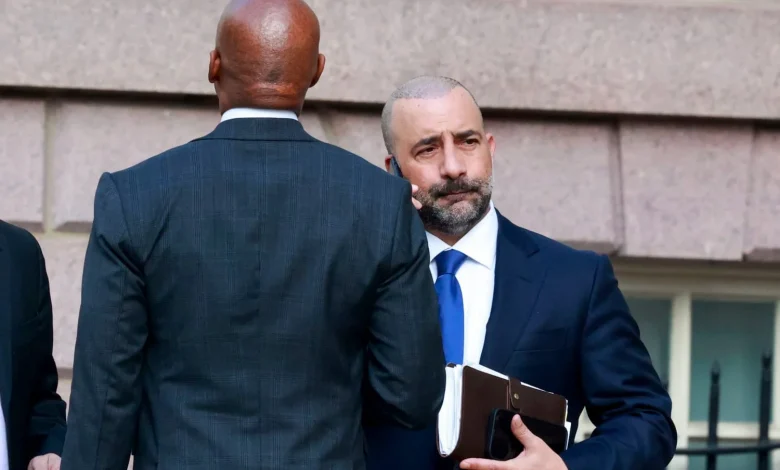
Table of Contents
Frank Carone trial proceedings have tentatively been scheduled to begin in late August 2026, marking a critical milestone in a federal corruption case that is poised to expose the inner workings of municipal emergency contracting and political influence-peddling. In a courtroom drama that has captivated political observers and local residents alike, the former Chief of Staff to New York City Mayor Eric Adams, Frank Carone, faces severe federal allegations of bribery, wire fraud, and money laundering conspiracy. On Wednesday, U.S. District Judge Kiyo Matsumoto set a tentative trial date of August 24, 2026, signaling the beginning of what promises to be a highly scrutinized legal battle involving one of New York City’s most influential political kingmakers.
As federal prosecutors from the U.S. Attorney’s Office for the Eastern District of New York prepare to present millions of pages of discovery, defense attorneys are launching a vigorous counter-offensive, asserting that the government’s case is fundamentally weak and built on assumptions rather than concrete facts. The upcoming trial represents a high-stakes test of the federal government’s ability to police municipal corruption in America’s largest city, and its outcome could reverberate through the political landscape of New York for years to come.
Introduction to the Frank Carone Bribery Allegations
The indictment against Frank Carone, unsealed in late June 2026, alleges a sophisticated and calculated scheme designed to exploit New York City’s unprecedented migrant crisis for personal financial gain. Carone, a prominent New York City attorney and long-time political strategist who served as Mayor Eric Adams’ chief of staff during the first year of his administration, is accused of using his immense political leverage to steer a lucrative emergency shelter contract to a hotel owner in Queens.
According to the federal indictment, the conspiracy resulted in a $6.83 million city contract being awarded to the Microtel Inn by Wyndham in Long Island City, Queens. In exchange for facilitating this agreement, prosecutors allege that Carone received $120,000 in bribes, which were systematically routed through his brother’s law firm to disguise their illicit nature. The allegations have cast a long shadow over the legacy of the Adams administration, which was already marred by numerous federal investigations and high-profile departures.
The Judicial Timeline: Judge Matsumoto’s Tentative Trial Date
During a status conference in Brooklyn federal court, U.S. District Judge Kiyo Matsumoto established August 24, 2026, as the tentative start date for the trial. However, the judge was quick to acknowledge that this late-summer timeline is highly aggressive and may ultimately prove unrealistic given the vast complexity of the case. Judge Matsumoto noted that the logistical hurdles of reviewing millions of pages of documents, coupled with ongoing forensic extraction of digital devices, could necessitate a delay.
The scheduling of the trial reflects a broader tension in the federal judiciary between the constitutional right to a speedy trial and the practical realities of managing complex white-collar litigation. Federal judges often set firm tentative schedules to prevent cases from languishing on the docket, a common procedural tactic observed across other high-profile legal cases. For now, the trial is projected to last approximately eight weeks, which would carry the proceedings well into October 2026.
The Alleged Bribery Scheme: Microtel, Migrants, and Money Laundering
The core of the prosecution’s case centers on the emergency measures implemented by New York City in late 2022 to address the influx of migrant asylum seekers. During this period, the city utilized federal grant programs to rapidly lease entire hotels to serve as emergency humanitarian shelters. This rapid influx of capital and lack of traditional oversight created an environment that prosecutors allege was ripe for exploitation.
Federal funding for emergency housing became a flashpoint nationwide, similar to administrative disputes over federal funding allocations, such as when grants halted by the federal administration became the subject of intense constitutional and statutory debates. In the case of the Microtel Inn, prosecutors allege that the hotel had initially been rejected by municipal staff as an unsuitable site. However, after the hotel’s owner allegedly agreed to pay bribes to Carone, the rejection was abruptly overruled, and the multi-million dollar emergency contract was approved.
The Role of the Co-Defendants
Frank Carone is not the sole defendant in this sprawling corruption case. The indictment also names three other individuals who allegedly played vital roles in executing and concealing the bribery scheme:
- Anthony Carone: Frank’s brother and a Queens-based attorney, who is accused of utilizing his law firm’s escrow and business accounts to receive the bribe payments and funnel them to his brother under the guise of legitimate legal consultations.
- Yan Po Zhu: The owner of the Microtel Inn by Wyndham in Long Island City, who allegedly authorized and funded the $120,000 bribe payments in order to secure the lucrative emergency shelter contract.
- Crystal Chen: An employee of Yan Po Zhu, who is accused of acting as a key intermediary, coordinating meetings and facilitating the communication and financial transfers between the hotel owner and the Carone brothers.
All three co-defendants have joined Frank Carone in pleading not guilty to the charges, setting up a unified front against the Eastern District prosecutors.
The ‘Big Guy’ and the Text Message Trail
Electronic communications form a primary pillar of the government’s evidence. The indictment alleges that Yan Po Zhu referred to Frank Carone in text messages as ‘my big guy,’ highlighting Carone’s perceived status as an elite political fixer capable of overcoming bureaucratic hurdles.
Prosecutors have detailed a specific sequence of events on September 22, 2022, which they argue establishes a direct link between the bribes and official city actions. On that day, a phone call took place between Frank Carone and then-Department of Homeless Services (DHS) Commissioner Gary Jenkins. According to telephone logs, just one minute after this call ended, Jenkins contacted DHS First Deputy Commissioner Molly Park and directed her to ‘take a look’ at the Microtel proposal, which had previously been dismissed. Over the subsequent weeks, Jenkins allegedly pressured subordinate staff to prioritize the hotel, eventually resulting in the approval of the contract.
Case Summary and Defendant Overview
The following table outlines the key defendants, their legal representation, and the primary charges leveled against them by the federal government:
| Defendant | Relationship / Role | Primary Charges | Defense Representation |
|---|---|---|---|
| Frank Carone | Former Chief of Staff to Mayor Eric Adams | Bribery, wire fraud, money laundering conspiracy | Andrew Goldstein, Russell Capone, Arthur Aidala |
| Anthony Carone | Queens Attorney (Brother of Frank Carone) | Bribery and money laundering conspiracy | Not disclosed |
| Yan Po Zhu | Owner of Microtel Inn by Wyndham | Bribery, wire fraud conspiracy | Not disclosed |
| Crystal Chen | Employee of Yan Po Zhu | Bribery and wire fraud conspiracy | Not disclosed |
Voluminous Discovery and Tech Seizures: The Prosecution’s Mountain of Evidence
Assistant U.S. Attorney Sara Winik has informed the court that the volume of evidence in this case is exceptionally large. The discovery package includes millions of pages of municipal records, internal emails, financial statements, and bank transaction histories. This vast archive of documentation reflects a multi-year investigation that thoroughly examined the financial dealings of Oaktree Solutions—the consulting firm Carone founded after leaving City Hall—as well as the personal accounts of the defendants.
In addition to paper and digital documents, the government is actively extracting data from multiple electronic devices that were seized during recent law enforcement raids. Forensic analysis of these cell phones, tablets, and computers is expected to yield additional text messages, call logs, and location data that prosecutors believe will corroborate the timeline of the conspiracy. The process of downloading, sorting, and indexing this information is a massive technical undertaking that will require significant time for both the prosecution and defense to digest.
The Defense Strikes Back: Allegations of ‘Glaring Holes’ and ‘Frankenstein Indictments’
The defense team has wasted no time in attacking the credibility of the federal government’s case. Outside the Brooklyn federal courthouse, prominent defense attorney Andrew Goldstein told reporters that the 27-page indictment is filled with ‘glaring holes’ and represents an ‘utterly misguided’ prosecution. Goldstein argued that despite a two-and-a-half-year investigation, the government has failed to produce any evidence of an actual, explicit corrupt agreement between Carone and the other parties.
Attorney Arthur Aidala took the criticism a step further, describing the charges as a ‘Frankenstein indictment’. Aidala argued that prosecutors have merely stitched together unrelated text messages and phone records to manufacture a narrative of corruption where none exists. He asserted that the government targeted Carone because of his high profile and close association with former Mayor Adams, rather than any actual criminal wrongdoing. This aggressive public defense strategy mirrors the media saturation seen in other high-profile political investigations, where public perception is heavily influenced by the competitive framing of mainstream and digital media, reminiscent of broader shifts in conservative media ecosystems.
The Gary Jenkins Connection and Exculpatory Evidence Claims
A primary battlefield in the pretrial phase will center on the role of Gary Jenkins, the former DHS Commissioner. While the indictment positions Jenkins as the critical link who executed the scheme inside city government, he has not been charged with any crime. The defense contends that Jenkins will actually serve as a key witness to exonerate Carone.
Andrew Goldstein has formally accused the government of withholding exculpatory evidence—commonly referred to as ‘Brady material’—that directly contradicts the prosecution’s claims. According to Goldstein, the defense has reason to believe that prosecutors possess witness interviews, potentially including statements from Jenkins himself, indicating that Carone never instructed, directed, or pressured city officials to approve the Microtel contract. Under federal law, prosecutors are strictly required to disclose any evidence that is favorable to the accused, and any failure to do so could result in severe judicial sanctions or the dismissal of the charges.
Broader Political Fallout for the Former Adams Administration
The indictment of Frank Carone is merely the latest in a long series of legal scandals that defined the Eric Adams administration. During Adams’ single term as mayor, which began in 2022 and concluded in late 2025, his administration was subjected to relentless federal scrutiny. This culminated in Adams’ own historic criminal indictment in September 2024, which charged him with wire fraud, bribery, and receiving illegal foreign campaign contributions.
The administrative chaos surrounding the Adams administration also saw the forced resignations and prosecutions of Buildings Commissioner Eric Ulrich, Police Commissioner Edward Caban, and Schools Chancellor David Banks, among others. The federal investigation into Carone’s emergency shelter deals highlights what critics describe as a systemic failure of procurement oversight during a time of crisis. These federal corruption trials reflect a broader national debate over executive administrative overreach and the limits of municipal power, which often parallels broader disputes over federal authority and the legality of unilateral administrative decisions.
What to Expect Next as the Late-Summer Trial Date Approaches
As the August 24, 2026 tentative trial date approaches, both the prosecution and defense will engage in intensive motion practice before Judge Matsumoto. The defense is expected to file multiple motions to dismiss, challenging the legal sufficiency of the indictment and demanding the immediate release of all potential Brady material. Meanwhile, prosecutors will continue to process the digital forensic data extracted from the seized electronic devices to solidify their evidentiary chain.
While the defense insists they are eager to proceed to trial as soon as humanly possible, the sheer volume of discovery makes a postponement highly likely. White-collar trials of this magnitude rarely proceed on their initial tentative dates, and legal experts predict the trial may eventually be rescheduled for late autumn of 2026 or early 2027. Regardless of the timeline, the Frank Carone trial is set to be one of the most significant municipal corruption trials in recent New York history, offering a rare and revealing look into the intersection of political influence, emergency spending, and public trust.