Tibetan Activist Dies in Self-Immolation Near UN 2026
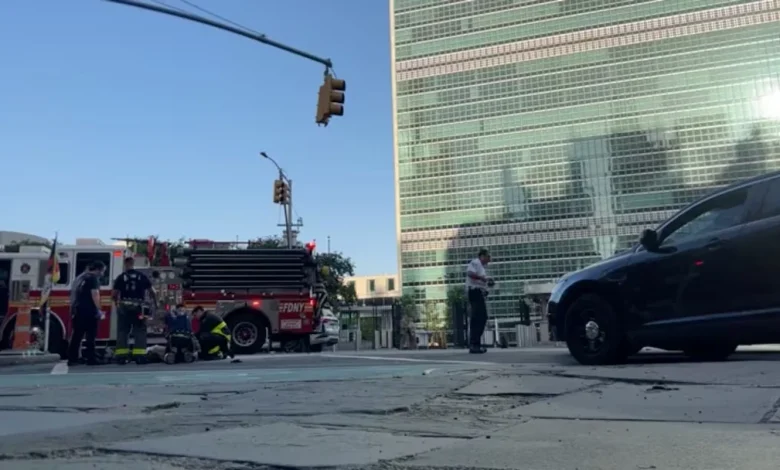
Table of Contents
Tibetan advocates and international human rights organizations are in deep mourning after a tragic self-immolation occurred outside the United Nations headquarters on Thursday evening. The extreme act of protest, carried out by a long-time resident of the United States and a devoted advocate for the independence of his homeland, has cast a harsh spotlight on the escalating tensions surrounding China’s ethnic minority policies. Occurring at the doorstep of the world’s preeminent diplomatic body in New York City, the incident has ignited deep discussions about human rights, international inaction, and the desperate lengths to which exiled dissidents will go to draw attention to their cause.
Introduction to the Tragic Incident at the United Nations
On the evening of Thursday, July 2, 2026, the quiet of Manhattan’s East Side was shattered by a shocking display of political self-sacrifice. Emergency responders rushed to the vicinity of the United Nations headquarters following a flurry of 911 calls reporting a man engulfed in flames. By the time police and fire personnel arrived, the individual had suffered catastrophic, life-threatening injuries. He was immediately transported to Bellevue Hospital, where medical staff worked frantically but were ultimately unable to save him. He was pronounced dead shortly after arrival, leaving behind a scene marked by police tape, a solitary Tibetan flag, and scattered leaflets calling for the end of Chinese rule in Tibet.
Who Was Logba Rangzen? A Life in Exile and Activism
The victim was quickly identified by the Regional Tibetan Youth Congress of New York and New Jersey, as well as the exile-led media outlet Voice of Tibet, as Logba Rangzen (also spelled Lobga Rangzen), a 52-year-old Tibetan activist. Rangzen had been living in the United States for approximately 20 years, earning a living as an Uber driver while remaining deeply active in the local diaspora community. To those who knew him, Rangzen was a passionate and tireless advocate for his homeland, known for attending community gatherings, vigils, and demonstrations calling for the preservation of Tibetan culture and the return of the Dalai Lama.
According to fellow Uber driver Lobsang Paljor, who spoke with local media outlets, Rangzen had grown increasingly distraught and enraged in recent weeks. The source of his torment was the systematic erasure of Tibetan identity by the Chinese government, coupled with a feeling of profound helplessness that many in the diaspora experience. Rather than allowing his grief to remain silent, Rangzen chose to make the ultimate sacrifice to amplify the voices of those silenced inside Tibet.
The Timeline of the Self-Immolation Protest
The events of July 2 unfolded with tragic precision during the evening rush hour. At approximately 6:30 p.m. ET, Rangzen arrived near East 42nd Street and First Avenue, dressed in traditional monastic robes. Surveillance footage from the area showed him calmly placing a Tibetan flag on the sidewalk. According to exile sources, he made a live broadcast appeal on social media shortly before his actions, urging for Tibetan independence and absolute ethnic unity among his people. Within moments of completing his appeal, he doused himself in an accelerant and set himself on fire.
Traffic on the busy street continued to flow for a brief moment as drivers sounded their horns in confusion before the horror of the scene became clear. Police officers and security personnel from the United Nations perimeter rushed toward Rangzen, deploying fire extinguishers and blankets to put out the flames in approximately 15 seconds. Despite their rapid intervention, the intensity of the fire had already inflicted fatal damage. The Tibetan flag remained at the scene for over an hour, cordoned off by investigators as they collected leaflets that read “China Out of Tibet” and other literature outlining the political motives behind the self-immolation.
Summary of the Incident and Activist Profile
| Attribute | Details of the Incident |
|---|---|
| Name of Deceased | Logba Rangzen (also spelled Lobga Rangzen) |
| Age and Occupation | 52 years old, Uber driver and community organizer |
| Date and Time of Protest | Thursday, July 2, 2026, at approximately 6:30 p.m. ET |
| Exact Location | Outside the United Nations Headquarters (East 42nd St & First Ave, NYC) |
| Key Protesting Symbols | Tibetan flag, leaflets demanding “China Out of Tibet,” traditional robes |
| Immediate Cause/Catalyst | The implementation of China’s new “Ethnic Unity” law (Effective July 1, 2026) |
| Medical Outcome | Pronounced dead at Bellevue Hospital due to severe, extensive burns |
China’s New “Ethnic Unity” Law: The Catalyst for Despair
The timing of Logba Rangzen’s self-immolation was far from coincidental. It took place just one day after China’s highly controversial new “Ethnic Unity” law officially went into effect on July 1, 2026. The legislation represents a significant escalation in Beijing’s long-standing campaign to assimilate ethnic minorities. Critics argue that under the guise of creating “social harmony” and “ethnic integration,” the law actively accelerates the erasure of Tibetan, Uyghur, and Mongolian cultures, replacing distinct regional languages and traditions with a unified, state-mandated national identity.
What is the 2026 Ethnic Unity Legislation?
Under this new legal framework, the Chinese Communist Party (CCP) has codified the requirement for all 55 recognized ethnic minority groups to prioritize a “shared Chinese national identity” over their regional or religious heritages. In practice, this manifests as mandatory Mandarin-language instruction in schools, the systematic dismantling of local monasteries and cultural institutions, and severe penalties for anyone displaying regional symbols—such as the Tibetan flag or images of the Dalai Lama. For Tibetans who have spent decades fighting to preserve their unique Buddhist culture, this law is seen as an existential threat that could permanently sever future generations from their history.
Expanding Extraterritorial Jurisdiction
What has particularly alarmed the global diaspora is the law’s explicit extraterritorial reach. The 2026 Ethnic Unity law provides Beijing with a domestic legal basis to target and take punitive action against individuals outside Chinese borders who are deemed to be promoting “separatism” or “ethnic discord”. This means that exiled activists living in democratic nations like the United States, Canada, or the United Kingdom are now legally subject to tracking and harassment by Chinese state agents. Human rights organizations have repeatedly warned that China’s security apparatus is no longer confined to local borders, utilizing advanced technological surveillance systems and space-based hardware. These global tracking mechanisms reflect Beijing’s broader geopolitical maneuvers, reminiscent of its advanced defense exports and activities such as the satellite technology partnerships designed to project power globally.
The History and Symbolism of Tibetan Self-Immolations
Self-immolation has unfortunately become one of the most visible and tragic forms of political protest within the Tibetan independence movement. According to historical data tracked by advocacy organizations like the International Campaign for Tibet, more than 150 Tibetans have set themselves on fire since 2009. The vast majority of these protests have occurred inside Tibet and in neighboring Chinese provinces with large Tibetan populations, such as Sichuan, Qinghai, and Gansu. In almost all cases, the individuals have shouted slogans demanding the return of the Dalai Lama and basic human rights before being consumed by flames.
While the Chinese government characterizes these acts as “suicidal terrorism” driven by external “extremist cliques”, the Tibetan community views them as ultimate acts of non-violent sacrifice. From a Buddhist perspective, self-immolation is not an act intended to harm others; rather, it is a desperate attempt to offer one’s own body to draw attention to a suffering nation. It represents a profound cry for help when all other avenues of political expression, legal petitioning, and peaceful assembly have been violently suppressed by a totalitarian state.
Comparative Context: Self-Immolations Outside the UN and Worldwide
The decision to self-immolate outside the United Nations headquarters in New York highlights the growing global nature of the Tibetan resistance. While internal protests are easily hidden by Beijing’s draconian internet blackouts and tight media control, an incident in the heart of Manhattan is impossible to ignore. Rangzen’s action carries deep historical resonance, mirroring past acts of ultimate self-sacrifice designed to force the international community to confront its diplomatic moral failures.
Throughout history, individuals have used their bodies as sites of political struggle in times of profound despair. These desperation-driven demonstrations have historic parallels to other international flashpoints, such as when mass protests erupted in Cuba over domestic economic blockades and infrastructure collapse, showing how public spaces are used to project regional grievances onto the world stage. By taking his life in front of the United Nations, Rangzen was not merely protesting Chinese policy; he was actively condemning the silence of the international community, which continues to prioritize trade and diplomatic relations with Beijing over the human rights of occupied peoples.
International Reactions and the Role of the UN
The tragedy has sparked immediate condemnation from human rights watchdogs and members of the Tibetan government-in-exile based in Dharamshala, India. Tencho Gyatso, the president of the International Campaign for Tibet, issued a statement praising Rangzen’s lifelong commitment to the cause while expressing deep sorrow over the agonizing nature of his death. Activists have already begun planning candlelight vigils and protests at the site of the self-immolation, demanding that the United Nations formally address the human rights crisis in Tibet.
The United Nations, which has long been a venue for intense bilateral disputes and mediation—frequently serving as the background for delicate global peace processes, including the highly complex multilateral diplomatic talks over international nuclear treaties—is now tasked with addressing this tragedy on its own doorstep. Critics point out that despite decades of systematic cultural destruction in Tibet and Xinjiang, the UN Security Council and the General Assembly have consistently failed to hold China accountable, largely due to Beijing’s veto power and economic leverage over developing member states.
Geopolitical Strains and China’s Global Standing
This tragic display of resistance comes at a time of mounting domestic vulnerability and strategic pivot within China itself. While Beijing faces significant domestic trials, including energy resource realignments like the decline in Middle East oil imports, its leadership continues to aggressively enforce internal security and assimilation policies. The fear of domestic fragmentation has driven Beijing to adopt increasingly nationalistic, hardline laws designed to crush any semblance of regional autonomy.
By forcing ethnic minority groups into a rigid “national identity,” Beijing hopes to preemptively eliminate internal security threats. However, as the tragic death of Logba Rangzen demonstrates, these heavy-handed policies often achieve the opposite effect, driving deep-seated resentment and pushing peaceful citizens into acts of desperate resistance. The international community’s response to the new ethnic unity law will be a crucial test of whether democratic nations are willing to stand up to Beijing’s expanding authoritarian reach or if they will continue to look the other way.
The Path Forward for the Tibetan Independence Movement
As the Tibetan diaspora mourns the loss of Logba Rangzen, his death serves as a stark reminder of the enduring pain and resilience of a people struggling to keep their culture alive. For decades, the Tibetan independence movement has adhered to the principles of non-violence championed by the Dalai Lama. However, as the aging spiritual leader’s succession looms and China’s grip on the region tightens, younger generations of activists are grappling with the limitations of peaceful diplomacy in the face of absolute state power.
The legacy of Rangzen’s final protest will depend heavily on whether his sacrifice can break through the noise of global media and prompt real policy changes. While the NYPD continues its standard investigation into the incident, the political message left behind on the streets of Manhattan is clear: the struggle for Tibet is far from over, and the fire of resistance continues to burn, both inside the Himalayas and on the streets of the world’s most powerful cities.