Mojtaba Khamenei: How the U.S.-Israel War Installed an Unprecedented Hardline Regime in Iran
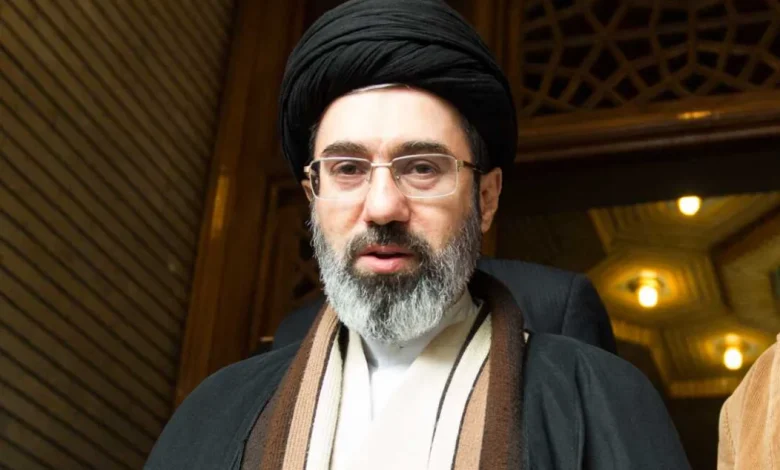
Mojtaba Khamenei stands at the center of one of the most disastrous strategic miscalculations in modern Western geopolitical history. The United States and Israel embarked on a comprehensive military campaign against Iran with a distinct, publicly telegraphed objective: to destabilize the existing theocratic establishment and pave the way for a more reasonable, pragmatic, and reform-minded leadership. The strategic calculus assumed that immense military and economic pressure would fracture the hardline core of the regime, empowering moderate voices and the vast segments of the Iranian population desperate for democratic reform. Instead, the intervention achieved the exact opposite. The crucible of war forged an unparalleled consolidation of power among the most extreme factions of the Islamic Republic, culminating in the ascension of a new supreme leader whose ruthless career was built on dismantling the very reformist elements the West hoped to elevate.
The Unintended Consequences of the U.S.-Israel Military Intervention
When allied forces initiated kinetic operations and escalated covert warfare against Iranian nuclear and military infrastructure, the operational blueprint was heavily influenced by optimistic intelligence assessments. Policymakers in Washington and Jerusalem believed that the clerical establishment was already teetering on the edge of collapse due to years of domestic protests, economic strangulation, and crippling international sanctions. The expectation was that a sudden, overwhelming demonstration of military superiority would serve as the final catalyst, shattering the regime’s security apparatus and emboldening civil society to reclaim their nation. The reality on the ground, however, unfolded with grim irony. Rather than breaking the regime, the foreign military intervention provided the ultimate unifying narrative for the ultraconservative factions. Under the looming threat of an existential external enemy, the state’s security organs, particularly the Islamic Revolutionary Guard Corps (IRGC), initiated a sweeping internal purge. Any political figure exhibiting even the slightest inclination toward moderation, diplomacy, or reform was branded a traitor, marginalized, or outright eliminated. The ensuing power vacuum was swiftly filled by ultra-hardliners who thrived in the atmosphere of absolute mobilization and martial law. This dynamic was a textbook example of how external pressure can inadvertently fortify authoritarian resilience. For a deeper understanding of the failed diplomatic prelude to this conflict, one must analyze the peace talks collapse that set the stage for this inevitable military confrontation.
The Fall of Reformists and the Rise of the Hardliners
The systematic dismantling of Iran’s reformist political bloc was not an accidental byproduct of the war; it was a deliberate, meticulously executed strategy orchestrated by the new supreme leader and his loyalists within the intelligence community. For decades, Iranian politics featured a carefully managed, albeit restricted, tension between pragmatic conservatives and reformists who advocated for gradual social freedoms and international engagement. The military intervention obliterated this delicate balance. Using wartime emergency decrees as legal cover, the security state shuttered reformist publications, imprisoned moderate clerics, and disqualified thousands of pragmatic candidates from participating in any level of governance. The narrative pushed by the state media was absolute: the nation was fighting a holy war for its survival, and any dissent was tantamount to collaboration with the Zionist and American enemies. Consequently, the political spectrum in Tehran underwent a radical contraction, shifting violently to the extreme right and ensuring that only those who demonstrated unyielding ideological purity and loyalty to the supreme leader were permitted to hold positions of power.
Profiling Mojtaba Khamenei and His Radical Inner Circle
Understanding the gravity of the current geopolitical landscape requires a detailed examination of the man now wielding absolute authority in Tehran. Unlike previous leaders who often maintained a veneer of religious scholarship and political balancing, the current supreme leader is a creature of the security apparatus. He did not ascend through widespread clerical consensus or popular mandate; rather, he engineered his rise through the ruthless, systematic consolidation of control over the IRGC, the Basij paramilitary forces, and the state’s shadowy intelligence agencies. His career has been defined by his willingness to deploy overwhelming violence to crush domestic uprisings and his unwavering commitment to elevating the most extreme, uncompromising commanders within the Revolutionary Guard. To illustrate the profound radicalization of the Iranian state, one must look at the alarming composition of his immediate inner circle. These are not politicians or diplomats; they are hardened operatives, assassins, and ideologues whose records are steeped in international terrorism and bloodshed.
| Figure / Faction | Current Role in Administration | Notorious Background & Allegations | Ideological Stance |
|---|---|---|---|
| Mojtaba Khamenei | Supreme Leader of Iran | Architect of crackdowns on reformists; consolidated power via IRGC networks. | Ultra-hardline authoritarianism; complete rejection of Western diplomacy. |
| Ahmad Vahidi & IRGC Elite | Senior Military & Intelligence Advisors | Implicated in the 1994 AMIA bombing in Buenos Aires, Argentina. | Global asymmetric warfare and sponsorship of proxy militias. |
| National Security Chief (Unnamed) | Head of Supreme National Security Council | Assassinated an American petroleum engineer prior to the 1979 Revolution. | Violent anti-Americanism as a foundational governing principle. |
| Messianic Command Council | Top Echelon of the Revolutionary Guard | Actively diverting state resources to prepare for apocalyptic prophecies. | Belief that the destruction of Israel is required to trigger a Shiite messiah. |
The 1994 Buenos Aires Bombing Connection
The presence of men accused of orchestrating the 1994 AMIA bombing in Buenos Aires within the supreme leader’s inner sanctum is a chilling testament to the regime’s unapologetic embrace of global terrorism. The bombing of the Argentine Israelite Mutual Association, which claimed the lives of 85 innocent people and injured hundreds more, remains one of the deadliest antisemitic attacks since the Holocaust. For decades, international tribunals and Interpol have sought the arrest of the Iranian officials responsible for planning and executing the atrocity. Instead of facing justice, these very individuals have been rewarded with immense power, effectively shielding them behind the apparatus of a sovereign state. Their elevation sends an unmistakable signal to the international community: the new leadership does not seek to distance itself from its bloody past; it views acts of international terror as legitimate tools of statecraft and badges of honor. This aggressive posturing is closely tied to internal power struggles, such as the widely documented IRGC coup that sidelined remaining pragmatists in favor of unquestioning militants.
Apocalyptic Ideology: The Shiite Messiah and the Destruction of Israel
Perhaps the most terrifying aspect of the new regime is not its military capability, but the eschatological ideology that governs its strategic decision-making. Historically, while the Iranian state employed extreme anti-Israel rhetoric, Western analysts often viewed this as a cynical geopolitical tool designed to project power across the Muslim world and distract from domestic failures. Under the current supreme leader and his IRGC commanders, this calculation has fundamentally changed. The destruction of Israel is no longer merely a rhetorical flourish or a long-term geopolitical aspiration; it has been elevated to the organizing principle of the Iranian state. The highest echelons of the military command are now populated by zealous ideologues who genuinely believe that the violent annihilation of the Jewish state is a theological necessity required to trigger the return of the Mahdi, the prophesied Shiite messiah. This shift from geopolitical pragmatism to apocalyptic theology makes traditional doctrines of deterrence practically obsolete.
From Fringe Belief to Organizing State Principle
When state policy is dictated by apocalyptic prophecy, the standard rules of international relations disintegrate. A leadership that believes enduring massive casualties and widespread destruction is merely a stepping stone to divine salvation cannot be deterred by the threat of economic sanctions or retaliatory strikes. This terrifying reality is corroborated by leading global security experts, including scholars at the Council on Foreign Relations, who have meticulously tracked the ideological radicalization within the IRGC over the past decade. The integration of this messianic fervor into the state’s military doctrine means that Iran’s nuclear program, its ballistic missile development, and its extensive network of regional proxy militias are all being orchestrated toward a singular, cataclysmic goal. The West is no longer negotiating with a rational state actor seeking regional hegemony; it is confronting a religiously motivated military cult armed with the resources of a nation-state.
Israeli Intelligence Assessment: A Reality That Is Worse
The profound failure of the allied intervention is perhaps best summarized by the sobering admission of the former head of the Iran desk for Israeli military intelligence. In a stark evaluation of the war’s aftermath, the official stated, “We created a reality that is worse than what Iranians were facing before the war.” This extraordinary confession from a high-ranking intelligence official underscores the magnitude of the strategic blunder. Israeli intelligence, long considered the premier authority on Iranian internal dynamics, severely underestimated the resilience of the deep state and the capacity of the IRGC to exploit the chaos of conflict. The war did not liberate the Iranian people; it entrenched their oppressors. The Israeli establishment is now grappling with an adversary that is more unified, more radicalized, and infinitely more dangerous than the one they initially sought to degrade. This terrifying new paradigm is heavily influencing regional defense strategies, leading many to fear that a temporary ceasefire with Iran could end quickly, plunging the Middle East back into total war.
Political Miscalculations: Trump’s More Reasonable Remark
Amidst the overwhelming evidence of Iran’s radical transformation, political rhetoric in the West has occasionally diverged sharply from the grim intelligence reality. Former U.S. President Donald Trump’s baffling assertion that the new Iranian leadership is “more reasonable” represents a profound disconnect from the facts on the ground. Such statements suggest a dangerous misunderstanding of the supreme leader’s background, the composition of his terror-linked cabinet, and the apocalyptic worldview driving the state’s military apparatus. Asserting that a regime governed by accused mass murderers and messianic extremists is “reasonable” not only undermines the credibility of Western foreign policy but also emboldens the leadership in Tehran. As one intelligence analyst bluntly noted, politicians making such claims desperately “need to read the room.” Mischaracterizing the nature of the enemy severely hampers the international community’s ability to formulate a coherent, unified response to the escalating threat. It creates dangerous diplomatic blind spots that adversaries will inevitably exploit.
Global Repercussions: The Strait of Hormuz and Energy Markets
The geopolitical shockwaves of this newly entrenched, ultra-hardline regime extend far beyond the immediate borders of the Middle East. With an uncompromising supreme leader at the helm, the global economy is now uniquely vulnerable to Iranian military adventurism, particularly in critical maritime choke points. The Strait of Hormuz, through which a massive percentage of the world’s daily oil supply flows, is now effectively held hostage by IRGC commanders who view economic disruption as a legitimate weapon in their holy war against the West. Unlike previous administrations that might have hesitated to trigger a global energy crisis for fear of total economic collapse, the current leadership, driven by its apocalyptic ideology, may actively seek to provoke international chaos. This heightened risk premium has already sent shockwaves through global commodities markets, fundamentally altering international trade calculations. The specific tactical advantages held by Tehran in this maritime domain are deeply complex, encompassing asymmetric naval warfare, advanced drone swarms, and fortified anti-ship missile batteries. A comprehensive analysis of the Iran strategy 2026 reveals exactly why Western naval powers face an uphill battle in securing these vital shipping lanes against a highly motivated and technologically capable adversary.
Conclusion: Navigating a Dangerous New Middle East Reality
The objective of installing a moderate, compliant government in Tehran through military force has yielded a catastrophic failure of historic proportions. The U.S. and Israel, blinded by optimistic assumptions and flawed intelligence, inadvertently functioned as the ultimate architects of an ultra-hardline resurgence. The ascension of a supreme leader who built his entire legacy on the brutal suppression of reform, surrounded by a cabinet of internationally wanted terrorists and driven by an apocalyptic vision of regional annihilation, represents a worst-case scenario for global security. The international community is now forced to confront an Iranian state that is entirely devoid of pragmatism, unconstrained by traditional deterrence theory, and actively preparing for a messianic conflict. Addressing this unprecedented threat will require Western policymakers to abandon the comfortable illusions of the past, acknowledge the severe consequences of their strategic miscalculations, and develop entirely new paradigms for containing a heavily armed, religiously motivated adversary that genuinely believes it is fighting on behalf of divine prophecy. The Middle East has entered an era of profound darkness, and the world must rapidly adapt to a reality that is, as Israeli intelligence so chillingly noted, unequivocally worse than before.