IRGC Coup: Vahidi Sidelines Ghalibaf and Araghchi in Iran
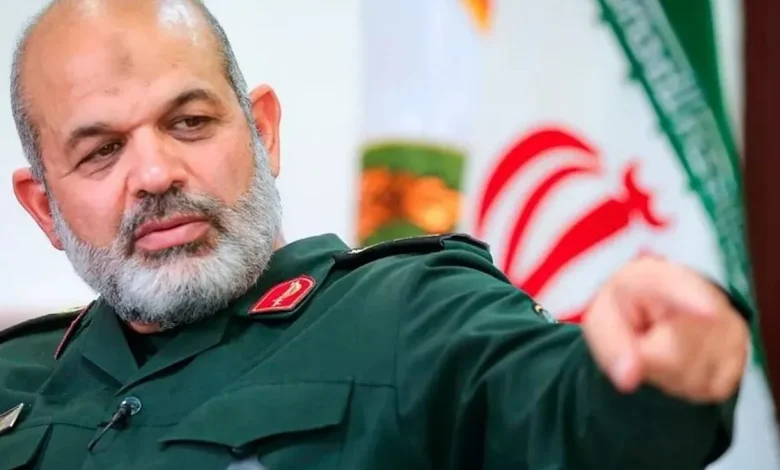
IRGC Commander Ahmad Vahidi is moving aggressively to reshape the internal political architecture of the Islamic Republic of Iran, systematically dismantling the influence of political figures once deemed pivotal for international diplomacy. In a calculated maneuver to sideline Parliament Speaker Mohammad Bagher Ghalibaf and Foreign Minister Abbas Araghchi—both of whom were subtly favored by the Trump administration as pragmatic interlocutors—Vahidi is cementing the reality that the true power center in Tehran remains entirely clad in olive drab. While diplomatic delegations travel to Islamabad to present a cooperative front to the international community, the unvarnished truth is that the individuals with genuine authority are not boarding those planes. The Islamic Revolutionary Guard Corps (IRGC) dictates the nation’s trajectory. In stark terms, the same military-clerical elite that held uncontested power before the recent regional war remains decisively in control today.
IRGC Power Consolidation: Ahmad Vahidi Takes the Reins
The ascendancy of Ahmad Vahidi within the uppermost echelons of the IRGC marks a definitive shift away from any remaining pretense of civilian oversight in Iran’s statecraft. Vahidi, a seasoned military strategist with a history deeply intertwined with the Quds Force and external intelligence operations, has initiated a sweeping internal purge masquerading as a bureaucratic realignment. By outmaneuvering Ghalibaf—a fellow conservative but one possessing a more technocratic and politically malleable agenda—Vahidi ensures that the parliament acts merely as a rubber stamp for the Revolutionary Guards’ military and economic directives. Araghchi, tasked with navigating the treacherous waters of foreign relations, finds his ministry effectively bypassed. Crucial diplomatic communiqués and backchannel negotiations are now increasingly handled directly by IRGC-appointed liaisons, leaving the official foreign ministry hollowed out and effectively irrelevant on matters of high-stakes national security.
The Illusion of Diplomacy in Islamabad
Recent diplomatic summits in Islamabad have featured high-level Iranian civilian envoys shaking hands and signing memorandums of understanding with regional neighbors. However, a deeper geopolitical analysis reveals these engagements as largely performative. The delegations dispatched to Pakistan and other neighboring states are populated by bureaucrats who lack the mandate to alter Iran’s strategic posture or compromise on its regional proxy network. The IRGC permits these diplomatic exercises precisely because they provide a necessary smokescreen, projecting an image of a functional, conventional state apparatus. Behind this facade, the command structures managed by Vahidi and his inner circle are making the definitive calls on weapons proliferation, proxy funding, and border security. The officials smiling for the cameras in Islamabad are, by design, shielded from the central levers of Iranian power.
Sidestepping Trump’s Preferred Moderates
During moments of acute crisis, the Trump administration and aligned Western strategists often looked toward figures like Ghalibaf and Araghchi as potential conduits for de-escalation. Despite their conservative credentials, these men were viewed as transactionalist politicians who understood the dire economic consequences of perpetual conflict. Vahidi’s campaign to marginalize them is a direct rejection of this Western diplomatic calculus. The IRGC views any transactional diplomacy with Washington as an existential threat to the ideological foundation of the Republic. By stripping Araghchi of his negotiating autonomy, the IRGC signals an uncompromising, hardline stance. This refusal to engage through preferred civilian channels creates profound friction globally; as macroeconomic analysts note, the looming threat of an unmitigated U.S.-Iran war threatens markets globally, driving up energy costs and destabilizing international trade routes.
Historic Context of the Revolutionary Guards Supremacy
To understand the current power dynamic, one must examine the institutional evolution of the IRGC since its inception in 1979. Originally formed as an ideological counterweight to the regular armed forces (the Artesh) to prevent coups, the IRGC has metastasized into a pervasive deep state. Through the grueling Iran-Iraq war and decades of crippling Western sanctions, the Guards embedded themselves inextricably into Iran’s infrastructure, telecommunications, and energy sectors. They are not merely an army; they are an autonomous economic and political empire. The current marginalization of figures like Ghalibaf is not an anomaly but the continuation of a decades-long trend where the IRGC periodically prunes the civilian government whenever it senses a drift toward unwanted moderation or compromise.
Comparing the Power Dynamics: IRGC vs. Civilian Leadership
The disparity in actual authority between the military elite and the civilian government is stark. The following table delineates the structural power imbalance currently defining Iranian politics.
| Domain of Influence | IRGC Command (Ahmad Vahidi) | Civilian Leaders (Ghalibaf/Araghchi) |
|---|---|---|
| Military Strategy | Absolute control over ballistic missiles, proxy networks, and nuclear security. | Zero operational control; restricted to public endorsement. |
| Economic Power | Dominates national economy via Bonyads (foundations) and the Khatam al-Anbiya construction headquarters. | Relies on a shrinking state budget constrained by global sanctions and inflation. |
| Foreign Policy | Directs regional strategy in Lebanon, Syria, Iraq, and Yemen independently of the state. | Executes ceremonial diplomacy; issues press releases aligned with military goals. |
| Western Relations | Strictly hostile; views diplomatic engagement as a tactic for strategic delay rather than peace. | Open to transactional negotiations for sanctions relief, if permitted by the Supreme Leader. |
Military Escalations and the IRGCs Unyielding Grip
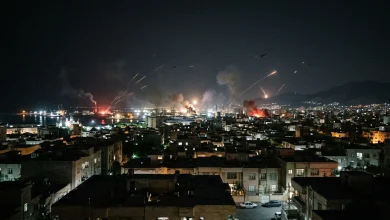
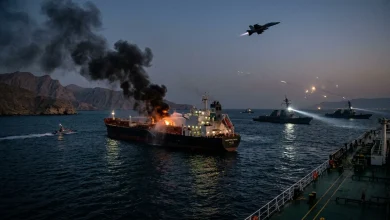
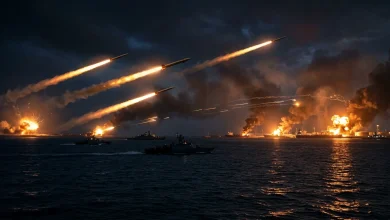
To maintain its supremacy at home, the IRGC consistently utilizes regional military escalations to justify its outsized budget and extrajudicial powers. The perpetual state of conflict serves as a domestic unifying tool, framing the Guards as the sole defenders of the nation against imperialist aggression. Recent aggressive maneuvers underline this strategy. From rapid troop mobilizations to a concerning military escalation in strategic maritime choke points, the IRGC demonstrates its capacity to dictate terms through force. Furthermore, inflammatory propaganda, such as state media actively offering bounties for downed US pilots, is orchestrated directly by IRGC psychological warfare divisions, deliberately bypassing Araghchi’s Foreign Ministry to ensure that diplomatic normalization remains virtually impossible.
The Post-War Landscape: Same Rulers, New Realities
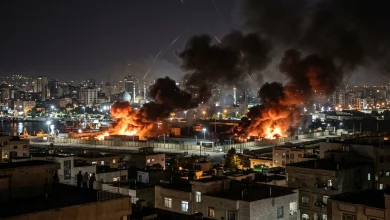
Observers hoping that the severe toll of recent conflicts would precipitate a shift in Iranian governance have been met with a sobering reality. The war did not weaken the Revolutionary Guards; it provided them with the ultimate pretext to consolidate absolute control under the guise of national emergency. By declaring a state of perpetual defense, Commander Vahidi and his allies have successfully labeled domestic political opposition or even moderate bureaucratic pushback as akin to treason. The civilian populace, suffering under severe economic strain, finds itself governed by a security apparatus that answers only to the Supreme Leader. The faces on international television might occasionally change, but the hands holding the reins of the state remain exactly the same as they were before the first shots of the war were fired.
Economic Control and the Bonyads
One cannot discuss the IRGC’s political dominance without addressing its financial lifeblood. The Guards control vast conglomerates known as Bonyads—charitable foundations that morphed into massive, tax-exempt business empires. These entities control an estimated third of Iran’s total economy, encompassing everything from oil and gas extraction to telecommunications and major infrastructure projects. Because these conglomerates operate largely outside the purview of the civilian government and the national parliament overseen by Ghalibaf, the IRGC is immune to domestic budgetary pressures. When the civilian economy collapses under the weight of Western sanctions, the IRGC’s parallel economy thrives through illicit smuggling networks, oil piracy, and unregulated trade with anti-Western blocs, ensuring their military and political operations remain fully funded regardless of civilian suffering.
International Reactions to the Hardliner Shift
The international community is acutely aware of this internal power shift, and diplomatic postures are rapidly adjusting to the reality of an IRGC-monopolized Iran. European capitals, once hopeful that Araghchi could deliver a revitalized nuclear framework, are abandoning those diplomatic avenues. The United States, heavily influenced by its own internal politics, is taking an increasingly hardline approach in response. The frustration over allied inaction has reached a boiling point in Washington, highlighted dramatically when Trump threatens NATO exit over Iran war snub, showcasing the deep fractures within Western alliances on how to handle the uncompromising regime in Tehran. For a deeper understanding of the institutional mechanisms that allow the IRGC to operate with such impunity globally, experts frequently point to comprehensive analyses provided by organizations like the Council on Foreign Relations, which detail the group’s global reach and economic entanglement.
What This Means for Future Regional Stability
The definitive sidelining of Mohammad Bagher Ghalibaf and Abbas Araghchi by Commander Ahmad Vahidi signifies an era of amplified volatility for the Middle East. With the IRGC operating without even the minor friction previously provided by pragmatic civilian leaders, Iran’s foreign policy will undoubtedly become more kinetic. Proxy groups in Lebanon, Syria, and Yemen can expect increased operational autonomy and advanced weaponry, as the diplomatic costs of these actions are no longer factored into Tehran’s calculus. For global energy markets, regional security frameworks, and the broader international order, an Iran entirely subsumed by its Revolutionary Guards guarantees that the geopolitical landscape will remain perilous. The men heading to Islamabad may carry briefcases, but the men staying in Tehran carry the ballistic missile codes, and they have no intention of surrendering their power.