Lebanon War: Hezbollah Radwan Forces Halt IDF in Bint Jbeil
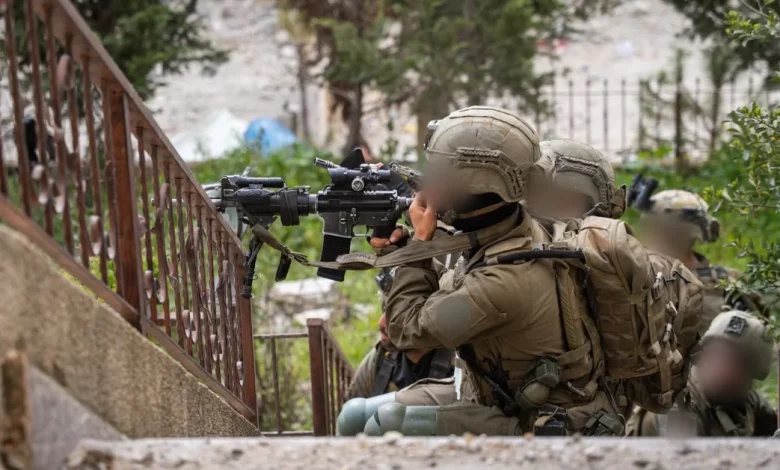
Lebanon is currently witnessing the most violent and sustained ground clashes since the onset of the broader regional war, as heavy fighting continues to rage across its southern territories. At the epicenter of this brutal conflict is the city of Bint Jbeil, where Hezbollah’s elite Al-Radwan forces are engaged in intense, prolonged clashes with advancing Israeli Defense Forces (IDF). Despite initiating a comprehensive siege, the Israeli military has struggled to penetrate the urban core of this deeply symbolic stronghold. This unfolding battle is not just a tactical skirmish; it is a defining moment that illustrates the sheer difficulty of conducting urban warfare against heavily entrenched, highly trained insurgent units operating on their home turf.
The Strategic Importance of Bint Jbeil
Situated just a few kilometers from the Israeli border, Bint Jbeil is widely recognized as the “Capital of the Liberated South.” Its geographical location gives it immense tactical value, overlooking key supply routes and providing a natural fortress for defensive operations. For Hezbollah, holding Bint Jbeil is essential not only for logistical superiority but also for maintaining the psychological upper hand in the broader theater of the war in southern Lebanon. The rugged, hilly terrain surrounding the city naturally limits the mobility of heavy armored vehicles, forcing the IDF to rely heavily on dismounted infantry units, which inherently levels the playing field against a deeply entrenched guerrilla force.
Historical Context of the Stronghold
The current standoff in Bint Jbeil cannot be fully understood without referencing the 2006 Lebanon War. During that conflict, Bint Jbeil was the site of one of the fiercest battles between Hezbollah fighters and Israeli forces. The IDF’s inability to secure the city swiftly and decisively in 2006 became a highly publicized operational failure that resonated deeply within Israeli military circles. Today, history appears to be repeating itself. Hezbollah has spent nearly two decades fortifying the city, constructing an elaborate network of subterranean tunnels, reinforced bunkers, and hidden firing positions. This extensive preparation has transformed Bint Jbeil into a veritable fortress, specifically designed to bog down a modern mechanized army and inflict maximum casualties through a war of attrition.
The IDF’s Siege Tactics and Ground Assault
In an effort to avoid the deadly ambushes that characterized previous incursions, the IDF has attempted to implement a comprehensive siege strategy. The Israeli army has maneuvered its armored columns and infantry battalions to encircle Bint Jbeil from four distinct axes. The objective of this multi-directional assault is to cut off Hezbollah’s supply lines, prevent reinforcements from arriving from the northern Bekaa Valley, and gradually suffocate the defenders trapped inside the urban perimeter. Artillery barrages and continuous aerial bombardments by the Israeli Air Force (IAF) have relentlessly pounded the outskirts of the city, attempting to soften the defensive lines before a major ground push.
A Four-Front Assault Fails to Breach the Center
Despite the overwhelming firepower and the strategic encirclement from four sides, the IDF has so far failed to break into the city center. The outer neighborhoods of Bint Jbeil have transformed into a pulverized landscape of rubble, serving as deadly kill zones engineered by Hezbollah’s defensive planners. Advancing Israeli infantry units are encountering stiff resistance at every corner. Progress is measured in mere meters, with urban blocks taking days to secure. The inability to penetrate the urban core highlights the limitations of traditional siege tactics when applied against a highly motivated adversary that does not rely on conventional supply lines, utilizing pre-stocked subterranean caches instead.
Hezbollah’s Elite Al-Radwan Forces: Dug-In and Deadly
The primary reason for the IDF’s stalled advance is the presence of Hezbollah’s Al-Radwan forces. Named after the assassinated Hezbollah military commander Imad Mughniyeh (also known as Hajj Radwan), this elite special operations unit represents the pinnacle of the organization’s combat capabilities. Unlike standard Hezbollah militiamen, Radwan fighters undergo rigorous training in advanced infantry tactics, close-quarters combat, sniper operations, and the use of sophisticated anti-tank guided missiles (ATGMs). Their deployment in Bint Jbeil signals the strategic priority Hezbollah has placed on retaining the city at all costs.
Mastering the Art of Urban Combat
The Radwan units are utilizing classic asymmetric urban warfare tactics with devastating efficiency. By deeply embedding themselves within the civilian infrastructure—which has largely been evacuated—they have neutralized the IDF’s technological and aerial advantages. Radwan fighters operate in small, autonomous cells that emerge from hidden tunnel shafts to launch hit-and-run attacks using Kornet anti-tank missiles and rocket-propelled grenades before vanishing back underground. These “pop-up” attacks have effectively stalled armored columns and caused significant casualties among Israeli infantry units. The labyrinthine nature of Bint Jbeil’s streets, coupled with the constant threat of booby traps and improvised explosive devices (IEDs), means that every building presents a lethal challenge for the advancing forces.
Tactical Comparison: IDF vs. Hezbollah Radwan Forces
To understand the dynamics of this grueling stalemate, it is crucial to examine the contrasting tactical doctrines and operational strengths of the two combatants engaged in Bint Jbeil.
| Aspect | IDF Ground Forces | Hezbollah Al-Radwan Forces |
|---|---|---|
| Primary Tactics | Combined arms maneuver, massive fire support, mechanized infantry assaults. | Asymmetric guerrilla warfare, subterranean ambushes, anti-armor hit-and-run strikes. |
| Technological Advantage | Total air superiority, advanced ISR (Intelligence, Surveillance, Reconnaissance), heavy armor. | Advanced ATGMs (Kornet), fortified tunnel networks, explosive booby traps. |
| Logistical Strategy | Heavy reliance on secure overland supply routes and continuous air resupply. | Pre-positioned underground caches, decentralized command, self-sustaining small cells. |
| Strategic Objective | Rapid encirclement, decisive destruction of enemy combatants, securing the urban core. | Prolonged war of attrition, maximizing enemy casualties, retaining symbolic territory. |
Geopolitical Fallout and Regional Standoffs
The prolonged and bloody standoff in Bint Jbeil is sending shockwaves far beyond the borders of southern Lebanon. As the IDF struggles to achieve a swift victory, the strategic calculations of various regional actors are shifting. The inability to rapidly crush Hezbollah’s resistance emboldens the “Axis of Resistance” and complicates broader diplomatic efforts across the Middle East. For instance, the fierce resistance serves as a bargaining chip on the geopolitical stage, especially considering the recent developments where Israel torpedoes U.S.-Iran peace talks in an attempt to isolate Hezbollah’s primary benefactor. The military quagmire in Bint Jbeil severely limits the diplomatic leverage of the United States and its allies, who are increasingly concerned about the conflict expanding into a regional conflagration.
The Diplomatic Stalemate Amidst Escalation
Politically, the situation is becoming increasingly fraught for the Israeli government. Domestically, there is immense pressure to deliver a decisive victory and secure the northern border so that displaced Israeli citizens can return home. This urgency is reflected in the hardline stance where Netanyahu demands Lebanon security zone as a strict prerequisite for any ceasefire negotiations. However, as long as Hezbollah’s Radwan forces hold the line in Bint Jbeil, enforcing such a security buffer remains an elusive military objective. Furthermore, international analysts at the Reuters Middle East intelligence desk note that this tactical delay provides crucial time for Hezbollah’s allies. Intelligence suggests that the protracted urban battles are creating a smokescreen, allowing for a situation where Iran rebuilding missiles amid tactical pause becomes a harsh reality, further entrenching the overarching Iran strategy 2026 framework of regional dominance through proxy warfare.
What This Means for the Future of the Southern Front
The battle for southern Lebanon is far from over. The fierce resistance encountered by the IDF in Bint Jbeil serves as a stark reminder of the limitations of conventional military power against a deeply entrenched, highly motivated, and well-equipped guerrilla force. Hezbollah’s Al-Radwan forces have successfully dictated the pace of the battle, forcing the IDF into a slow, grinding war of attrition that inherently favors the defender. If the Israeli military cannot secure Bint Jbeil quickly, it raises serious questions about their ability to push further north towards the Litani River without sustaining unacceptable levels of casualties.
In the coming weeks, the IDF will likely be forced to reassess its tactical approach. This may involve an even heavier reliance on destructive aerial bombardments to systematically level the city block by block, a strategy that will undoubtedly draw severe international condemnation and exacerbate an already catastrophic humanitarian crisis. Conversely, Hezbollah will continue to exploit its subterranean advantages, aiming to bleed the advancing forces and maintain the symbolic aura of invincibility surrounding Bint Jbeil. Ultimately, the outcome of this singular, hyper-violent urban clash will likely set the trajectory for the remainder of the war, dictating not only the military realities on the ground but also the terms of any future diplomatic resolution in the volatile Levant.