Iran war today: 6th Night of U.S. Strikes and Escalation

Table of Contents
Iran war today has escalated into an intense regional conflict. Early Friday local time, the United States military concluded its sixth consecutive night of major offensive strikes against Iranian military targets. This rapid surge in direct military confrontation has shattered the fragile, Pakistan-mediated memorandum of understanding (MoU) signed earlier this year, raising the specter of a full-scale, uncontainable conflict in the Middle East. As both sides trade increasingly destructive blows, civilian populations, energy markets, and international governments are preparing for the potential of an unprecedented infrastructure war.
Introduction to the Conflict
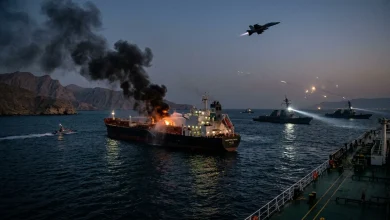
The current military campaign represents a critical flashpoint in the broader regional war that first erupted in early 2026. After a brief period of de-escalation mediated by international actors, the conflict reignited following repeated maritime confrontations. At the heart of the crisis lies control over the vital waterways of the Middle East, particularly the shipping lanes through which a significant portion of global energy resources pass. Despite recent attempts to establish a stable maritime corridor, the region’s geopolitical dynamics remain highly unstable, especially as details surrounding the proposed Strait of Hormuz transit fee proposal have become a flashpoint for regional economic security.
With diplomatic channels rapidly closing, both Washington and Tehran have adopted maximalist positions. The collapse of the June ceasefire has seen both nations resort to aggressive military measures to force the other back to the negotiating table on more favorable terms. However, the current trajectory suggests that instead of facilitating a diplomatic breakthrough, the reliance on kinetic force is drawing neighboring states deeper into the crossfire.
Six Consecutive Nights of U.S. Strikes
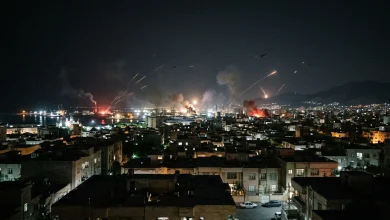
According to official statements from U.S. Central Command (CENTCOM), American forces successfully completed their latest wave of precision strikes on Iranian territory late Thursday evening. This military action marks the sixth consecutive night that the United States has launched coordinated attacks. The operation involved a sophisticated array of military assets, including carrier-based fighter jets, long-range aerial drones, and surface warships stationed in the Persian Gulf and adjacent waters.
CENTCOM officials emphasized that the primary objective of these strikes is to degrade Iran’s offensive military capabilities. By targeting coastal surveillance networks, early-warning radar systems, and active missile storage facilities, the U.S. military aims to diminish Tehran’s ability to threaten international shipping or launch cross-border drone and missile attacks. At the Commander-in-Chief’s direction, the operational envelope of these strikes has expanded significantly over the past week, shifting from isolated maritime targets to deeper facilities inside sovereign Iranian territory.
Detailed Operational Breakdown of CENTCOM Strikes
The tactical execution of the sixth night of strikes was described by defense analysts as highly coordinated and precise. Moving in waves, U.S. air assets targeted key command-and-control hubs that coordinate fast-attack naval craft operated by the Islamic Revolutionary Guard Corps (IRGC). Electronic warfare aircraft were heavily utilized to suppress Iranian air defense networks, allowing strike fighters to deliver precision-guided munitions with minimal operational risk.
Before the recent military campaign kicked off, there were warnings from Washington that Iranian negotiators targeted by Western intelligence would face severe repercussions if they failed to adhere to initial de-escalation timelines. The transition from espionage and targeted intelligence operations to open, sustained aerial bombardment highlights the exhaustion of covert diplomacy. Defense officials argue that the degradation of these coastal sites is vital for re-establishing freedom of navigation in the region.
Target Coordinates: From Bandar Abbas to Qeshm Island
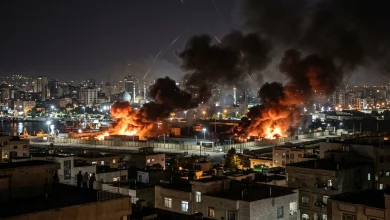
Specific targets hit during the latest bombardment include military facilities on Qeshm Island and locations near Bandar Abbas, which hosts Iran’s largest commercial and military port infrastructure. These strategic geography points control the bottleneck of the shipping lanes. Additionally, local Iranian media reported strikes targeting critical bridge infrastructure and transport nodes in Bandar Khamir, alongside airfield infrastructure at Iranshahr Airport in the southeastern region of the country.
These developments also follow diplomatic friction over the release of individuals such as the detained American Dena Karari, which previously dominated headlines. The escalation of targets to include dual-use transport facilities like bridges and regional airports marks a significant shift in U.S. target selection, raising concerns among humanitarian groups about the growing impact of the military campaign on civilian movement and logistical supply lines inside Iran.
Iran’s Retaliatory Measures Across the Gulf
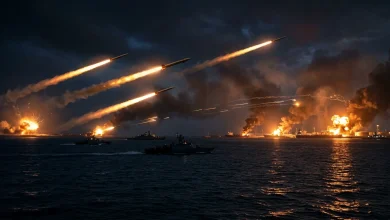
In response to the sustained American air campaign, Iran’s military and paramilitary forces have vowed to deliver a decisive and destructive retaliation. The IRGC has activated its extensive network of regional proxy forces and mobile missile launchers, launching coordinated strikes aimed at U.S. assets and allied nations across the Persian Gulf. Iranian state media has aggressively publicized these counter-strikes, claiming they have successfully hit multiple American bases and logistical hubs.
The escalatory patterns have been exacerbated by the activities of various regional militias, particularly after certain Iran-backed proxy groups were formally banned by allied governments in Europe due to their extremist rhetoric. These groups have historically acted as a force multiplier for Tehran, allowing the regime to project power far beyond its borders without immediately triggering a direct, conventional war with superior Western militaries. Now, however, the lines between proxy warfare and direct state-on-state conflict have become perilously blurred.
Claims of Attacks on Regional U.S. Military Bases
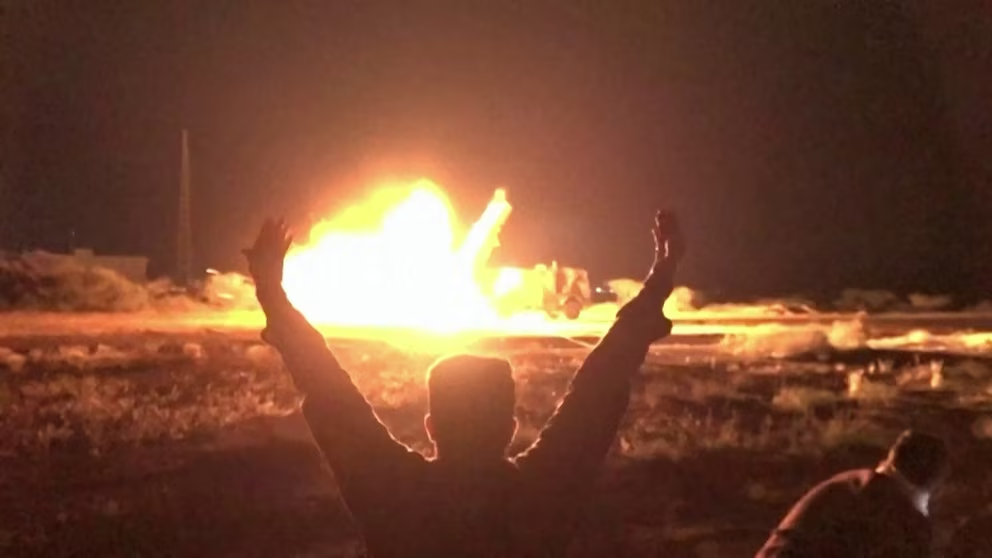
Early Thursday, Iranian state media claimed that its forces had targeted several U.S. military facilities located in Jordan, Kuwait, and Bahrain. The IRGC declared that its Aerospace Force utilized surface-to-surface missiles and low-flying suicide drones to bypass regional air defense systems, alleging that the strikes caused significant fires and structural damage at the targeted locations.
Despite these dramatic claims from Tehran, U.S. defense officials have stated there are no immediate reports of weapons successfully hitting American bases or causing military casualties. Military analysts suggest that while Iran is indeed launching significant numbers of projectiles, the highly sophisticated air defense systems deployed at U.S. bases throughout the Gulf—including Patriot missile batteries and C-RAM systems—have successfully neutralized the vast majority of inbound threats.
Missile Interceptions over Jordan and Regional Security Alerts
The intensity of the Iranian response was felt acutely in neighboring countries. Jordan’s state-run media confirmed that its national air defense systems intercepted and shot down three Iranian missiles that had entered Jordanian airspace. The kingdom’s military forces issued warnings to its population to remain vigilant, highlighting the direct danger that regional escalation poses to non-belligerent states caught geographically between the primary combatants.
Concurrently, security alerts were issued across several Gulf nations, including Kuwait, Qatar, and Bahrain. In Qatar, residents in the capital city of Doha reported hearing distant explosions, which were later attributed to active air defense interceptions. Local authorities reported that at least one civilian child suffered minor injuries from falling shrapnel, underscoring the immediate risk to civilian populations as the skies over the Gulf become active combat zones.
The Deteriorating Diplomatic Front
The rapid descent into open military conflict has severely strained diplomatic relations globally. While some nations have called for an immediate cessation of hostilities and a return to the negotiating table, the rhetoric originating from both Washington and Tehran remains deeply uncompromising. The collapse of the previous Pakistan-mediated truce has left a diplomatic vacuum, with international mediators struggling to find common ground that could satisfy the security demands of both nations.
This unilateral approach by Washington has also fueled intense debate on the global stage, reminiscent of recent diplomatic clashes with international allies who argue that bypass diplomacy could lead to regional disaster. European and Asian allies have expressed deep concern that a prolonged military campaign could destabilize the global energy market and drag reluctant coalition partners into a costly, protracted Middle Eastern campaign they had hoped to avoid.
Press Secretary Karoline Leavitt’s Briefing Analysis
During a high-profile press briefing at the White House on Thursday, Press Secretary Karoline Leavitt defended the administration’s aggressive military posture. Leavitt emphasized that the United States would not tolerate ongoing acts of terrorism or maritime interference in the Strait of Hormuz. She stated clearly that President Trump was “not going to sit by and allow these active acts of terrorism to take place in the strait without ensuring Iran pays consequences.”
Leavitt argued that the current U.S. military strikes are a direct consequence of Iran’s failure to honor its commitments under the previously agreed-upon memorandum of understanding. According to the White House, the MoU strictly prohibited Iran from targeting or firing upon commercial vessels transiting international waterways. By violating this core tenet, Leavitt asserted, Tehran had brought the devastating military consequences upon itself, while simultaneously claiming that the administration remains open to genuine diplomatic negotiations if Iran alters its behavior.
Donald Trump’s Threat to Target Civilian Infrastructure
The diplomatic friction reached a boiling point following direct warnings from President Trump regarding the potential targets of future military waves. The president threatened that if Iran does not return to the negotiating table and halt its regional maritime attacks, the U.S. military will expand its target list to include civilian-use infrastructure, specifically targeting Iran’s electrical power grids, transport bridges, and vital water desalination plants.
Iran’s military leadership reacted swiftly to these threats. Spokesmen for the Iranian armed forces stated on Thursday that if the United States follows through on threats to destroy civilian infrastructure, Iran will systematically target “all infrastructure in the region.” This threat explicitly places regional oil production facilities, power networks, and shipping hubs in neighboring Gulf states directly in the line of fire, threatening to turn a bilateral conflict into a total regional economic shutdown.
International Legal Implications and War Crime Debates
The threat to target civilian power grids, transport networks, and water purification facilities has sparked intense legal and ethical debates worldwide. Under the 1949 Geneva Conventions, which dictate the humanitarian conduct of nations during armed conflict, direct attacks on infrastructure essential for the survival of civilian populations are strictly prohibited. International legal scholars have warned that executing such strikes could constitute severe violations of international law, potentially mounting to war crimes.
As global attention shifts toward this growing conflict, governments are also struggling to balance military spending against other domestic crises, ranging from ecological catastrophes like unexpected global emergencies to local infrastructure demands. Human rights organizations, including Amnesty International, have issued urgent appeals to both Washington and Tehran, warning that an infrastructure-focused war would disproportionately harm over 90 million civilians who rely on these utilities for basic daily survival.
Global Economic and Energy Consequences
The economic ramifications of the intensifying war are already vibrating through global financial markets. Because the Strait of Hormuz serves as the transit point for approximately 20% of the world’s total petroleum supply, any military disruption in this localized zone immediately triggers global energy volatility. Following the resumption of the U.S. blockade on vessels bound to and from Iranian ports, oil futures have spiked to multi-week highs.
Furthermore, the geopolitical shockwaves are unfolding alongside a series of other global challenges, including severe weather challenges that have strained energy grids worldwide. The cumulative effect of regional wars and environmental stressors is placing immense pressure on the global supply chain, leading to increased shipping insurance rates and forcing maritime operators to seek much longer, more expensive alternative routes around the African continent.
The blockades and high shipping risks come at a particularly precarious moment, compounding concerns over a broader global economic slowdown that has already impacted manufacturing hubs. With industrial nations heavily reliant on stable oil prices to fuel their economic recoveries, a prolonged conflict that successfully chokes off energy exports from the Persian Gulf could push the global economy into a severe, long-term recession.
Comparative Summary of Current Hostilities
To better understand the operational scale and strategic dynamics of the escalating conflict, the table below provides a detailed comparison of the military actions, tactical targets, and public claims made by both the United States and Iran during the current wave of hostilities.
| Conflict Dimension | United States / CENTCOM Actions | Iran / IRGC Retaliation & Claims |
|---|---|---|
| Operational Wave | Completed 6 consecutive nights of airstrikes | Initiated “12th wave” of retaliatory strikes |
| Primary Assets Deployed | Fighter jets, long-range drones, and navy warships | Surface-to-surface missiles, weaponized drones |
| Key Targets Hit / Claimed | Qeshm Island, Bandar Abbas, Bandar Khamir bridges | U.S. bases in Kuwait, Jordan, Syria, and Bahrain |
| Official Operational Goal | Degrade offensive military and maritime capabilities | Deter American aggression and enforce control over the Strait |
| Reported Casualties & Damage | Slight civilian casualties in strike zones; bridges collapsed | No confirmed damage or casualties at U.S. facilities |
| Next-Phase Threat Level | Threatening civilian power grids and transport bridges | Threatening “all infrastructure” in the Gulf region |
What Comes Next? Outlook on the Escalation
The immediate outlook for the U.S.-Iran conflict remains highly precarious. With the United States threatening to expand its strike list to civilian power plants and bridges next week, the margin for error is virtually non-existent. Should President Trump follow through on these threats, the conflict will transition from a targeted military campaign into an economic war of attrition. Such a development would almost certainly trigger the massive retaliatory strikes promised by Tehran, potentially devastating the energy infrastructure of neighboring countries like Saudi Arabia and the United Arab Emirates, who are desperately attempting to remain neutral.
Diplomatically, the path forward is obscured by a lack of trust and a breakdown in communication channels. While the White House insists that Iran remains eager to secure a deal due to the economic and military pressure it is facing, Tehran’s public posture suggests a regime unwilling to capitulate under direct military duress. Unless international mediators—such as China, Pakistan, or European allies—can successfully establish an emergency backchannel, the region is poised to slide into a broader, more destructive phase of warfare that will have profound consequences for the global economy and international security for years to come.