Salah Leads Egypt to First-Ever World Cup Victory 2026
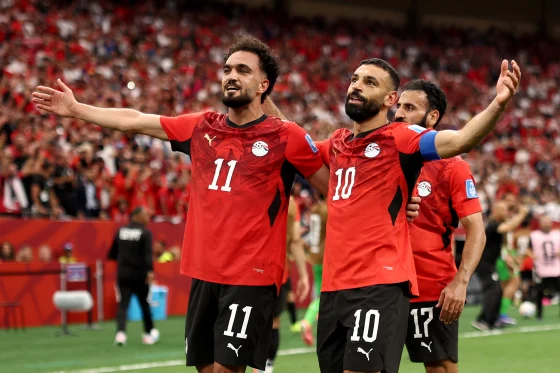
Salah celebrated his 68th international goal by pumping his fist before he was mobbed by his teammates in the 67th minute, to the thrill of the red-clad Pharaohs fans in the sellout crowd at BC Place Vancouver. This breathtaking moment was far more than just a go-ahead goal; it was the emotional pinnacle of a historic evening that saw Egypt secure its first-ever World Cup victory. For a country with an incredibly rich footballing pedigree—including a record seven Africa Cup of Nations titles—the global stage had long been a source of immense frustration. The 3-1 triumph over New Zealand represented a monumental breakthrough, breaking a 92-year-old hoodoo dating back to their first tournament appearance in 1934. When Salah was subbed off in the 85th minute, he was treated to a standing ovation, leaving the pitch as the undisputed architect of a historic comeback.
The significance of this victory cannot be overstated. Egypt had entered the tournament carrying the weight of a passionate soccer nation that had suffered the disappointment of missing out on the previous World Cup in Qatar. Standing tall in front of over 52,000 spectators at BC Place, the Pharaohs showed immense character after falling behind early in the first half. Mohamed Salah’s leadership, combined with a tactical masterclass in the second period, allowed the North African giants to assert their dominance. It was a victory forged in resilience, tactical flexibility, and clinical execution under intense pressure.
Salah’s Legacy and Egypt’s Historic World and Salah’s Cup Milestone
Entering the match, the pressure on Egypt and their talismanic captain was palpable. Having drawn their opening group fixture, the Pharaohs knew that anything less than a victory against a disciplined New Zealand side would severely jeopardize their tournament ambitions. Mohamed Salah, now in the twilight of his glittering career, carried the expectations of nearly 110 million Egyptians on his shoulders. The match in Vancouver presented a clean slate, and despite a shaky start, the veteran forward delivered when his country needed him most.
For years, critics have questioned whether Salah could replicate his club-level success with Liverpool on the international stage during major global tournaments. While his individual brilliance has never been in doubt, Egypt’s collective struggles at past World Cups often left him isolated. However, this historic performance proved that under the right tactical framework, Salah remains one of the most lethal and influential footballers on the planet, capable of transforming a match with a single touch.
Salah Match Breakdown: How the Pharaohs Conquered BC Place
The clash at Vancouver’s BC Place was expected to be a tightly contested affair, with both teams eager to register their first wins of the campaign. The early exchanges were dominated by New Zealand’s aggressive high-press. Darren Bazeley’s side looked highly organized and energetic, utilizing their physical advantage to disrupt Egypt’s possession-based style. The midfield battles were fierce, and for long stretches of the first half, the Egyptian players looked isolated, struggling to supply quality ball to their attackers.
However, the second half saw a dramatic shift in momentum. Hossam Hassan, the legendary Egyptian forward turned head coach, made critical adjustments during the halftime interval. The team played with much higher intensity, moving the ball quicker and using the width of the pitch to drag the New Zealand defenders out of their compact low block. This tactical adjustment paid immediate dividends. The Pharaohs began to pin the All Whites in their own defensive third, creating a flurry of chances that eventually broke New Zealand’s resistance and turned the match completely on its head.
Salah Tactical Setup: Hossam Hassan’s Central Salah Gamble
Much of the pre-match talk centered around how Hossam Hassan would utilize Egypt’s greatest attacking weapon. Throughout his stellar career, Salah has primarily operated as an inside-forward on the right wing, cutting inside on his favored left foot. However, Hassan opted for a bold tactical shift, deploying Salah in a more central playmaker role behind the main striker, Omar Marmoush, in a fluid 4-2-3-1 formation. This strategic tweak aimed to increase Salah’s involvement in the buildup and prevent New Zealand from isolating him on the flank.
This central gamble initially struggled to bear fruit in a tight first half, as New Zealand packed the midfield. But as the game opened up, Salah’s ability to operate in the half-spaces became a nightmare for the Kiwi defense. By dropping deeper to collect the ball, Salah dragged the central defenders out of position, opening up spaces for late runners like Emam Ashour and Mostafa Zico. This tactical fluidity was key to unlocking New Zealand’s defense, proving that Hassan’s strategic vision was perfectly suited for the demands of the modern game.
Salah Kiwi Dominance: Finn Surman Stuns Egypt Early On
Finn Surman put New Zealand in front in the 15th minute with a flying header off a corner kick delivered by Instagram sensation Tim Payne. It was the third international goal for the 6-foot-3 defender who plays for the Portland Timbers in MLS. The goal was a deserved reward for New Zealand’s positive start. They had already threatened twice through Sarpreet Singh and Elijah Just, exploiting gaps in the Egyptian flank defenses with direct, diagonal runs.
The All Whites’ opening goal came from a beautifully designed set-piece routine. Payne, known as much for his social media presence as his precise crossing ability, whipped in a superb, bending corner to the back post. Surman read the trajectory perfectly, using his towering physical frame to outleap the Egyptian markers and power his header past Egypt’s goalkeeper. The early setback stunned the Egyptian fans in the stadium, raising fears of yet another disappointing World Cup outing for the Pharaohs.
The Comeback Trail: Mostafa Zico Sparks the Egyptian Revival
Egypt turned up the pressure coming out of the half and Mostafa Zico broke through with the equalizer, finding space between Surman and Payne for a header that goalkeeper Max Crocombe got a hand on but couldn’t stop in the 58th minute. Zico celebrated by gesturing for the fans in the crowd to cheer, a moment that completely shifted the energy in the stadium. The crowd, previously anxious, erupted into a wall of sound that fueled the players on the pitch.
The equalizer was a testament to Egypt’s patience and persistent wing-play. Just minutes before the goal, Egypt’s goalkeeper Mostafa Shobeir had made a sensational reflex save to deny Callum McCowatt’s flicked header, preventing New Zealand from doubling their advantage. That crucial intervention kept the Pharaohs within striking distance. When the opportunity arose, Zico showed superb aerial ability, finding the tight space between New Zealand’s primary defenders to direct his header home. The match was level, and the momentum had fully swung in favor of the North Africans.
A Moment of Magic: Deconstructing Salah’s 68th Goal
Omar Marmoush dropped a free kick off to Salah in the 35th minute, but it went just wide and bent into the side netting. That near-miss was a harbinger of the magic that would unfold in the second half. In the 67th minute, Salah scored his 68th international goal, finishing off a sequence of sheer brilliance that will be remembered for years to come. The goal puts him just one away from tying his coach Hossam Hassan for the national team’s all-time scoring lead.
The sequence began with a sharp interception in midfield, transitioning the ball rapidly into the penalty box. Zico received the ball and, showing immense awareness under pressure, executed a cheeky, perfectly weighted back-heel pass into the path of the oncoming Salah. The Egyptian captain, displaying his legendary composure, stroked a low, curling shot past the outstretched arm of Crocombe. The crowd at BC Place erupted, as the Pharaohs took a well-deserved lead, celebrating a goal of the highest quality.
Sealing the Deal: Trezeguet’s Diving Header Secures the Points
New Zealand, determined to find a way back into the game, began to commit more players forward, leaving themselves vulnerable to the counter-attack. Egypt, buoyed by the lead, took full advantage of the spaces. In the 82nd minute, Trezeguet wrapped up the scoring for the Pharaohs with a dramatic diving header, putting the game completely out of New Zealand’s reach and securing a historic 3-1 victory.
The goal came from a swift break down the wing. Trezeguet, who had been introduced to add fresh energy and defensive work rate, read the play beautifully. As the cross came in, he threw himself forward, connecting with a diving header that flew into the net. This goal was a fitting conclusion to a brilliant second-half performance, demonstrating Egypt’s clinical efficiency and squad depth on the world’s biggest sporting stage.
Group G Standings: The High-Stakes Road to Seattle
Egypt moved to the top of the standings in Group G with the win but was not yet assured a spot in the knockout round. The Pharaohs will play a deciding game against Iran on Friday in Seattle, needing at least a draw to advance. This victory has put Egypt in a favorable position, but the competitive nature of Group G means there is no room for complacency. Earlier in the day, Belgium and Iran had battled to a scoreless draw, keeping the group incredibly tight.
The upcoming clash in Seattle will be a high-stakes encounter. Iran possesses a disciplined squad with a reputation for being tough to break down. For Egypt, securing at least a point will guarantee passage into the round of 32, a feat they have never accomplished. To follow the latest team news, player statistics, and group updates, fans can visit the official FIFA tournament website. The journey is far from over, but the self-belief within the Egyptian camp has never been higher.
Historical Perspective: Egypt’s Long-Awaited World Cup Evolution
Egypt is making its fourth World Cup appearance after missing the field in Qatar four years ago. Salah scored a pair of goals in the 2018 World Cup in Russia, but those efforts were ultimately in vain as the Pharaohs exited the tournament without a single point. This victory at BC Place represents a major milestone in the evolution of Egyptian football, showing that the team has grown beyond relying solely on Salah’s individual brilliance.
The current squad possesses a balanced blend of experienced veterans and hungry young talents. Players like Mostafa Zico, Omar Marmoush, and Mostafa Shobeir represent the future of the national team, capable of sharing the burden of expectations with their legendary captain. Under Hossam Hassan’s guidance, Egypt has developed a robust collective identity, combining structural defensive solidity with rapid, vertical transitions that can hurt any opponent in world football.
Key Performance Indicators: Egypt vs. New Zealand
To better understand the tactical dynamics of this historic matchup, the table below provides a detailed comparison of the key performance indicators between the two sides during their Group G encounter at BC Place.
| Match Metric | Egypt (The Pharaohs) | New Zealand (All Whites) |
|---|---|---|
| Final Score | 3 | 1 |
| Possession Percentage | 52% | 48% |
| Total Shots | 14 | 10 |
| Shots on Target | 7 | 4 |
| Corner Kicks | 5 | 6 |
| Saves Made | 3 | 4 |
| Fouls Committed | 12 | 14 |
| Yellow Cards | 2 | 1 |
The statistical breakdown highlights how evenly matched the first half was, but also underscores Egypt’s superior efficiency in the final third during the second half. While New Zealand held their own in possession and earned more corners, Egypt’s clinical finishing and ability to hit on the counter proved to be the decisive factors in securing their historic win. With three points secured, the Pharaohs can look forward to their final group stage game with renewed confidence and the hopes of an entire nation backing them.