Jannik Sinner Out for Rest of 2026 Season with Knee Injury
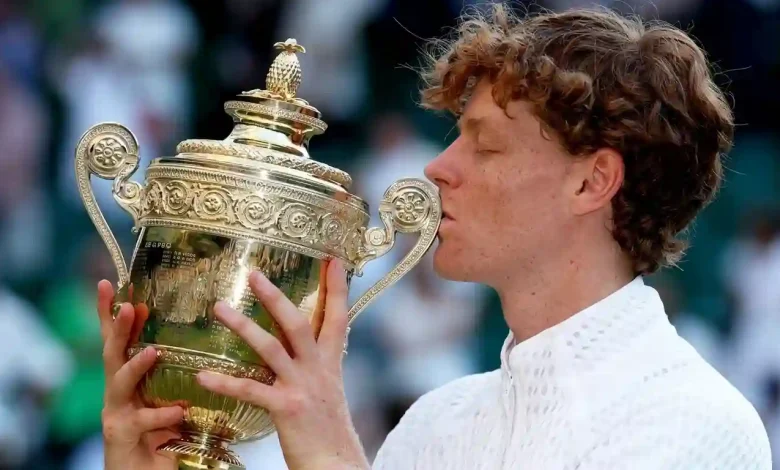
Table of Contents
Jannik Sinner will not step foot on a competitive tennis court for the remainder of 2026, announcing an extended hiatus to ensure a comprehensive recovery from a debilitating knee issue. The reigning world number one, who has been sidelined since lifting the Gentlemen’s Singles trophy at the All England Club in mid-July, confirmed his decision on Tuesday following rigorous consultations with medical specialists across Europe. The announcement officially curtails what had been a dominant campaign, bringing a premature conclusion to his tournament schedule and transforming the dynamic of the men’s professional tour as the season enters its final stretch.
Jannik Sinner Shuts Down 2026 Campaign
The Italian superstar released a detailed statement outlining why stepping back immediately serves the long-term health of his career. Having wrestled with persistent inflammation and structural discomfort in his knee throughout the spring and early summer, Sinner’s team determined that attempting an accelerated return for the autumn indoor swing would expose his joint to severe, potentially chronic aggravation. After an initial summer assessment that prompted a Jannik Sinner withdrawal from key warm-up competitions, conservative therapy was prioritized over quick-fix solutions.
By shutting down his competitive obligations for October, November, and December, Sinner foregoes an opportunity to defend his position at the prestigious ATP Finals in Turin, an event where he was expected to serve as the headline attraction on home soil. Furthermore, Italy’s Davis Cup Finals defense will proceed without its talismanic leader. The decision was not made lightly, but both Sinner and his coaching staff—led by Darren Cahill and Simone Vagnozzi—reached unanimous agreement that risking long-term mobility for short-term accolades represented an unacceptable gamble.
The Anatomy and Timeline of the Knee Injury
Modern tennis imposes immense lateral and deceleration stress on the lower kinetic chain, particularly on modern hard courts and slick grass surfaces where aggressive baseline sliding has become standardized. Medical evaluations revealed that Sinner’s right knee experienced repetitive strain that aggravated cartilage and surrounding tendon structures during intense multi-set matches. Rather than suffering an acute ligament tear, the condition manifested as chronic patellar tendinopathy complicated by bone stress markers.
The issue initially surfaced in embryonic form during the European clay-court swing, causing minor movement limitations during extended rallies. While therapeutic interventions, targeted load management, and anti-inflammatory protocols permitted Sinner to compete through June and July, the sustained physical exertion demanded across seven consecutive best-of-five matches on grass pushed the joint to its functional threshold. Post-Wimbledon imaging confirmed that continued high-intensity competition without complete biomechanical unloading would risk tendon degeneration.
Wimbledon 2026: The Pinnacle Before the Physical Toll
The crowning achievement of Sinner’s 2026 season remains his extraordinary performance at the All England Club, an event that demonstrated his generational caliber while simultaneously exhausting his physical reserves. In a masterclass of ball-striking, depth control, and mental composure, the 25-year-old dismantled high-caliber opposition before executing a commanding victory over German contender Alexander Zverev in the final on Centre Court on July 12.
Throughout that historic fortnight, Sinner showcased unprecedented tactical maturity, serving with razor-sharp precision and executing aggressive baseline patterns that neutralized big hitters. Observers noted subtle signs of physical discomfort between rallies during the semi-final and final rounds, yet his on-court efficiency masked the severity of the underlying strain. Lifting the trophy marked the realization of a lifelong ambition, but it also demanded an exorbitant physical price, serving as the final competitive fixture of his 2026 calendar year.
ATP Rankings Breakdown: The World No. 1 Vulnerability
The decision to forfeit the remainder of the calendar year sends profound shockwaves through the upper echelons of the ATP Tour rankings. Entering the late summer with an enormous cushion of ranking points, Sinner had appeared nearly untouchable atop the standings. However, the inability to defend points accumulated from the prior year’s deep runs through Cincinnati, Flushing Meadows, Beijing, Shanghai, Paris, and Turin creates an inevitable vacuum.
Without active defense, Sinner’s ranking will drop substantially as the 2026 campaign concludes. Thousands of ranking points will evaporate from his tally, opening the door for hungry rivals to seize the year-end World No. 1 ranking. The points forfeiture reshapes tournament seedings going into early 2027, as top contenders will no longer encounter Sinner at the opposite end of championship draws until his competitive return materializes.
The Rivalry Landscape: Carlos Alcaraz and Alexander Zverev
With Sinner removed from the active competitive field, the battle for tour supremacy narrows substantially. Spanish phenom Carlos Alcaraz finds himself in an enviable position to capitalize on his rival’s absence, maintaining relentless pressure across all surfaces. When Carlos Alcaraz demands the absolute highest level of tennis from himself and his opponents, the results typically speak for themselves, altering title probabilities in every draw he enters.
Similarly, German star Alexander Zverev, still pursuing his elusive maiden major title after falling to Sinner on Centre Court, stands to gain substantial momentum. Following a strong North American stretch where Alexander Zverev cruises through early rounds with commanding serving displays, his quest for master-series hardware and ranking ascendancy encounters far less elite resistance. The absence of Sinner transforms every ATP Masters 1000 event into an open arena for top-ten mainstays.
Chronology of Tournaments Missed in the 2026 Calendar
The severity of Sinner’s absence becomes starkly visible when examining the sheer volume of premier events from which the Italian has been forced to withdraw. His summer began with painful absences from the North American hardcourt swing, including the National Bank Open in Canada and the Western & Southern Open in Ohio, an event where players like Arthur Rinderknech claim Cincinnati qualifying spots and unexpected main-draw momentum.
The centerpiece of his missed calendar was undoubtedly the US Open in New York. With the world number one watching from afar, the men’s singles draw expanded into an unpredictable shootout. As thrilling storylines developed and rising competitors battled through the US Open quarter-finals, the absence of the defending champion left an unmistakable void in the narrative arc of the Grand Slam season.
| Tournament Name | Category | Surface | Status / Outcome for Sinner |
|---|---|---|---|
| Canadian Open (Toronto/Montreal) | ATP Masters 1000 | Outdoor Hard | Withdrew prior to tournament draw |
| Cincinnati Open | ATP Masters 1000 | Outdoor Hard | Withdrew; points expired |
| US Open (Flushing Meadows) | Grand Slam | Outdoor Hard | Absent; 2000 points surrendered |
| China Open (Beijing) | ATP 500 | Outdoor Hard | Missed entire Asian swing |
| Shanghai Masters | ATP Masters 1000 | Outdoor Hard | Withdrew to focus on biological rehab |
| Paris Masters (Bercy) | ATP Masters 1000 | Indoor Hard | Forfeited entry; season terminated |
| Nitto ATP Finals (Turin) | Tour Finals | Indoor Hard | Unable to participate before home crowd |
| Davis Cup Finals (Malaga) | Team Event | Indoor Hard | Unavailable for Team Italy selection |
Rehabilitation Strategy: Medical Decisions and Surgical Avoidance
A critical dimension of Sinner’s shutdown is the strategic decision to avoid surgical intervention. Invasive procedures on the knee joint often carry unpredictable recovery trajectories and risk altering baseline joint biomechanics. Working alongside top orthopedic authorities in northern Italy and Austria, Sinner opted for an intensive conservative biological therapy protocol. This approach emphasizes cellular regeneration, progressive isometric loading, and complete kinematic realignment.
The initial phase of the protocol required total avoidance of lateral deceleration and aggressive hardcourt impacts. Sinner dedicated the late summer to non-impact cardiovascular maintenance, hydrotherapy, and targeted eccentric strengthening of the quadriceps, hamstring complexes, and hip abductors. Restoring balanced force distribution through the lower limbs prevents localized stress from overwhelming the patellar tendon upon his eventual return to full-speed movement.
Tour peers have recognized the wisdom of complete recovery periods over hasty returns. As high-intensity power baseliners like Ben Shelton consistently elevate physical demands on the modern tour, any compromise in foot speed or stability leaves even the most technically gifted players exposed. Total rehabilitation ensures that when Sinner steps onto the court, his explosive lateral elasticity remains completely intact.
Historical Precedents: Long Layoffs Among Elite Tennis Champions
Extended competitive pauses among top-ranked tennis professionals are not without precedent, and history offers compelling evidence that deliberate patience often yields career longevity. Legends such as Rafael Nadal, Roger Federer, and Novak Djokovic all navigated multi-month injury absences, only to return with refined technical mechanics, renewed psychological hunger, and prolonged dominance. Federer’s famous 2016 six-month hiatus famously led to his 2017 Australian Open victory, demonstrating the restorative benefits of complete physical resets.
Across the broader sport, comparable patience has paid dividends for major champions facing structural setbacks. Female powerhouses like Elena Rybakina have demonstrated how measured scheduling and listening to physical limits stabilize elite trajectories over multi-year cycles. For Sinner, stepping away at age 25 ensures that his prime athletic window—typically spanning from age 24 to 30—is not compromised by chronic degenerative degradation.
The Road Ahead: Projected Return for the 2027 Australian Open
With 2026 officially behind him, Sinner’s comprehensive focus pivots entirely toward the 2027 Australian Open in Melbourne. The Happy Slam holds enormous personal significance for the Italian, representing the site of his breakthrough major title in 2024. The southern hemisphere major provides an ideal benchmark for his return, allowing an uninterrupted five-month window for progressive on-court training without the stress of mid-season tournament obligations.
Current projections indicate Sinner will commence light tennis drills in late November, transitioning to high-intensity match simulations by late December. His team intends to evaluate potential participation in a low-stakes warm-up exhibition or ATP 250 event prior to Melbourne, ensuring match sharpness before entering a demanding best-of-five major. Though his absence casts a shadow over the closing acts of the 2026 season, tennis fans can take solace in knowing that the world’s most electrifying ball-striker is prioritizing a resilient, injury-free future that promises years of captivating championship drama.