Explosive Voting Rights Crisis: 1 Strong Warning From Senator Warnock Shocks the Senate
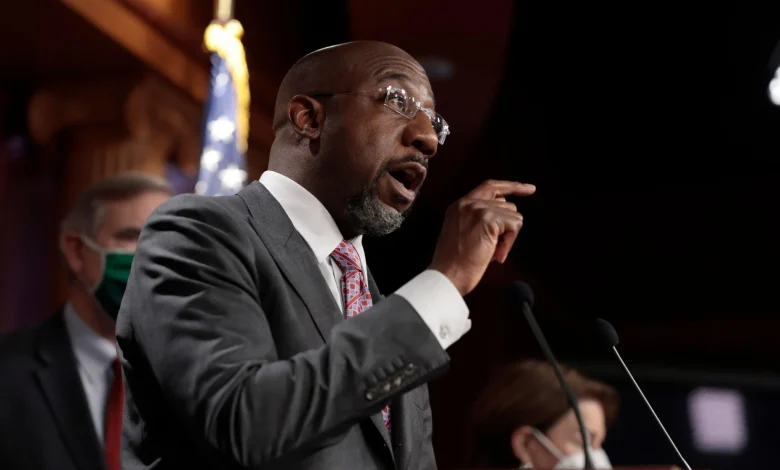
Table of Contents
Voting rights represent the bedrock of American democracy, yet as the nation marks another Juneteenth holiday, the legal framework protecting equal representation is fracturing under unprecedented judicial pressure. This special edition of Inside Scoop explores the immediate aftermath of a series of highly controversial Supreme Court decisions that have significantly weakened the historic Voting Rights Act (VRA) of 1965. In the wake of these judicial shifts, a dramatic scramble has erupted across Southern states to redraw congressional lines, with several majority-Black districts finding themselves targeted for dissolution or structural dilution. To unpack the historical, legal, and moral dimensions of this pivotal moment, we spoke in-depth with United States Senator Reverend Raphael Warnock, D-Ga., the senior pastor of Atlanta’s historic Ebenezer Baptist Church and a leading legislative voice on civil rights.
The timing of these political and legal maneuvers adds a layer of bitter irony to this year’s Juneteenth celebrations. While communities nationwide pause to reflect on the long, arduous journey toward freedom and full citizenship, the very mechanism that guarantees equal participation at the ballot box is facing some of its steepest challenges in decades. From Louisiana to Alabama, newly configured electoral maps are threatening to dilute the political influence of minority voters, reshaping the landscape of Southern politics ahead of the critical 2026 midterm elections.
The Historical Resonance of Juneteenth at the Ballot Box
Juneteenth, which commemorates the announcement of the abolition of slavery in Texas in 1865, has always represented more than just a historical milestone. It is a symbol of the continuous struggle for self-determination and equal rights. In modern American history, that struggle has been fought primarily through the power of the franchise. The passage of the Voting Rights Act of 1965 was the legal realization of the promises of emancipation, providing federal protections against discriminatory practices like poll taxes, literacy tests, and gerrymandered voting maps designed to systematically shut Black citizens out of the political process.
However, as we observe the holiday in 2026, those hard-won federal protections are being rolled back. The strategic discussions that take place following recent national contests—much like the ongoing debates surrounding Harris’s 2028 ambitions and the 2024 election postmortem—underscore how closely tied voting access is to the future of national leadership and representation. Without robust, federal-level enforcement of the VRA, states have been given a green light to execute sophisticated map redraws that systematically target and divide minority voting blocs, turning what should be a celebration of freedom into a stark reminder of the fragile state of American democracy.
The Legal Shift: Analyzing Louisiana v. Callais and Alabama’s Map
The current crisis in southern voting rights is driven by a series of aggressive judicial decisions, chief among them the Supreme Court’s ruling in Louisiana v. Callais on April 29, 2026. In a 6-3 decision, the conservative majority struck down Louisiana’s newly drawn congressional map, which had included a second majority-Black district. The map, originally enacted to comply with lower court orders under Section 2 of the Voting Rights Act, was challenged as an unconstitutional racial gerrymander. The Supreme Court ruled that state lawmakers had allowed race to unconstitutionally predominate when redrawing the state’s congressional map, establishing a highly restrictive legal precedent.
This decision represents a major blow to the Voting Rights Act, as it restricts the ability of states and civil rights organizations to advocate for fair representation under Section 2. The legal impact was felt almost immediately outside Louisiana. In early June 2026, the Supreme Court followed this precedent by allowing Alabama to use a congressional map that eliminated a key district where Black voters historically had the opportunity to elect their candidate of choice. Civil rights organizations, including the Brennan Center for Justice, have warned that these back-to-back rulings effectively dismantle the legal guardrails that have protected minority voters in the South for sixty years, granting state legislatures the authority to dilute minority voting power under the guise of avoiding “racial predominance”.
Inside the Scramble: Mid-Decade Southern Redistricting
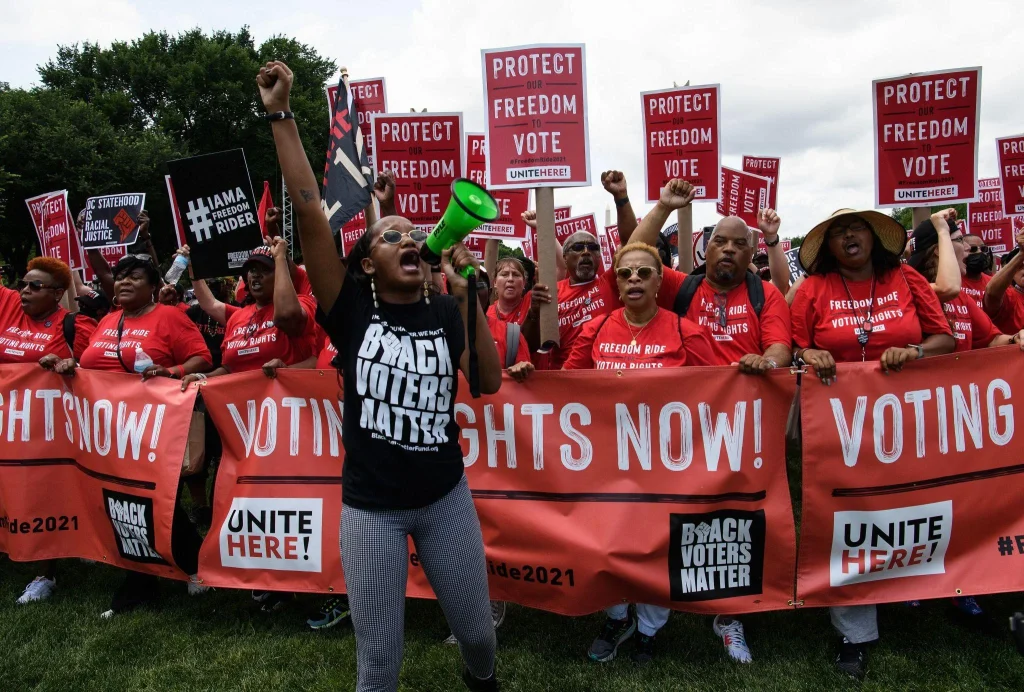
In the wake of the Supreme Court’s rulings, a highly coordinated, mid-decade redistricting scramble has taken hold across the American South. This effort marks one of the largest coordinated attempts to redraw congressional districts between decennial censuses in modern American history. Historically, congressional district boundaries are updated once every ten years following the national census. However, the legal opening created by Louisiana v. Callais has prompted conservative-led legislatures in Alabama, Louisiana, Tennessee, and Florida to quickly push through new, highly favorable maps ahead of the 2026 midterm elections.
Proponents of these new maps argue they are correcting previous judicial overreaches and ensuring compliance with the Fourteenth Amendment’s Equal Protection Clause. Opponents, however, point out that the practical effect of these maps is the systematic dilution of Black political power. In states where Black voters form the backbone of the Democratic coalition, redrawing these lines directly benefits the Republican party’s quest to solidify and expand its House majority. This scramble for partisan dominance is occurring not just in the House but across the entire legislative branch, echoing the highly polarized environments of recent Senate contests, such as the race where Greene won a critical Michigan Senate seat. The targeted redrawing of districts ensures that state-level dynamics will dictate the color of national leadership for years to come.
A Direct Look at State Redistricting Actions in 2026
The swift redrawing of maps across the South has created a patchwork of legal disputes and shifting political landscapes. Below is a comprehensive breakdown of the major states currently undergoing mid-decade redistricting shifts, the key judicial actions involved, and the anticipated impact on local and national representation:
| State | Key Judicial Action (2026) | Map Change Description | Expected Political & Racial Representation Impact |
|---|---|---|---|
| Louisiana | Supreme Court decides Louisiana v. Callais (April 29) | Struck down the SB8 map, which featured two majority-Black congressional districts. | Dismantles a newly formed majority-Black district; heavily favors a Republican retention of the seat. |
| Alabama | Supreme Court greenlights updated map (June 3) | Eliminated a competitive district designed to allow Black voters to elect preferred candidates. | Dilutes Black voter density; increases likelihood of safe Republican seats in the state. |
| Tennessee | Mid-decade redistricting map finalized | Further subdivided urban, diverse congressional boundaries around Nashville. | Maintains safe Republican margins; limits the voting impact of concentrated urban minority populations. |
| Florida | Mid-decade adjustments approved | Reinforced highly partisan boundaries across northern and central districts. | Ensures a persistent Republican advantage; limits competitive seats in historically diverse metro areas. |
Senator Raphael Warnock on the Moral Meaning of American Democracy
To better understand the human and systemic impact of these rulings, Inside Scoop sat down with Senator Reverend Raphael Warnock, D-Ga. As Georgia’s junior senator and the leader of Ebenezer Baptist Church, Warnock has long viewed the battle for voting rights as a moral imperative rather than a purely partisan struggle. In his view, the recent wave of Supreme Court rulings represents a direct assault on the fundamental rights of ordinary citizens.
“Today’s Supreme Court decision marks a profound defeat for American democracy and will pave the way for partisan politicians to pick their voters,” Warnock stated, reacting to the Callais ruling. He expanded on this theme during our conversation, linking the judicial decisions to his recently published book, The Crooked Places Made Straight: Reflections on the Moral Meaning of America. In the book, Warnock argues that democracy is not merely a political mechanism, but the “political enactment of a spiritual idea” that asserts all human beings are of equal worth in the eyes of their Creator.
Warnock believes that when we systematically dilute the voices of specific communities, we damage the moral authority of the entire nation. “What we’re dealing with right now is not the difference between right and left, it’s really the difference between right and wrong,” Warnock emphasized. He also issued a gentle warning to his own party, stating that “it’s really too bad when my party cedes so much of the faith and values space to those on the right,” calling for a broader moral imagination that directly confronts systemic injustices at the ballot box.
Legislative Battles: Restoring the John R. Lewis Voting Rights Advancement Act
For Senator Warnock and other civil rights advocates in Washington, the only permanent solution to this nationwide fracturing of voting protections is federal legislative action. In July 2025, Warnock reintroduced the John R. Lewis Voting Rights Advancement Act. The proposed legislation seeks to update and restore critical safeguards of the original 1965 Voting Rights Act that have been dismantled by successive conservative-majority Supreme Court rulings, beginning with Shelby County v. Holder in 2013 and culminating in the 2026 Callais decision.
The bill would restore the geographic preclearance formula, which requires states and local jurisdictions with a documented history of voting discrimination to obtain federal approval before changing their voting laws. Additionally, it would introduce a new nationwide “known practices preclearance” and clarify legal standards to protect against voter dilution and voter purges. However, in a deeply divided Congress, the bill faces an uphill battle. With federal protections under threat, local and primary contests have become increasingly unstable, manifesting in a highly fragmented electoral landscape similar to a crowded race that lacks a clear front-runner. Without federal intervention, the battle shifts to the states, where Democratic-led legislatures are attempting to pass state-level voting rights acts, leaving voters in conservative Southern states largely unprotected.
The Shifting Electoral Landscape of 2026 and Beyond
The immediate political consequences of the Supreme Court’s decisions will be felt in the upcoming November 2026 midterm elections. The mid-decade redistricting wave has dissolved several competitive and majority-Black seats, shifting the baseline math of the House of Representatives. What was once shaping up to be a highly favorable environment for a Democratic congressional surge has now been fundamentally altered, with newly drawn maps offering Republicans a structural advantage in critical Southern districts.
Yet, beyond the immediate math of the 2026 midterms, the long-term demographic and social implications are even more profound. By diluting Black voting power in the South—where the vast majority of Black Americans live—these judicial rulings threaten to alienate an entire generation of voters who feel that their voices are being systematically silenced by a hostile court. Despite these massive obstacles, grassroots organizations and voting rights advocates throughout the region remain undeterred. Local organizers are shifting their strategies from litigation to intensive voter mobilization, education, and registration efforts. As Senator Warnock reminded us, the path toward a more perfect union has never been straight or easy; it requires constant, moral pressure to ensure that the promise of Juneteenth becomes a reality for every American citizen.