Tyler Adams Regains USMNT Captaincy for 2030 World Cup Cycle
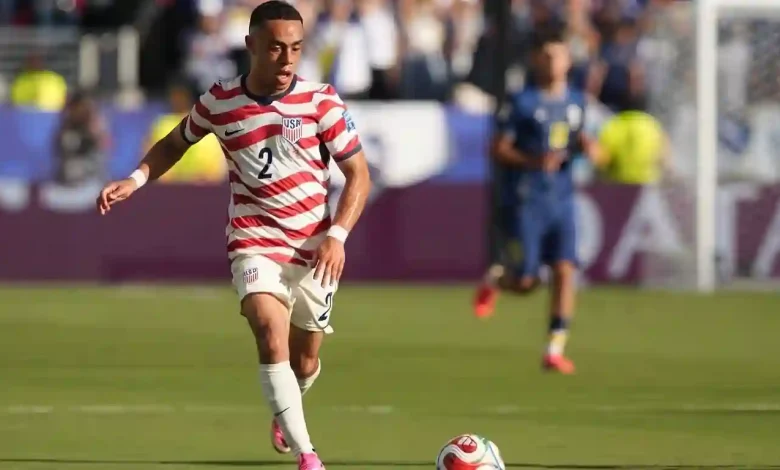
Table of Contents
Tyler Adams has reclaimed the armband as captain of the United States Men’s National Team, inaugurating a fresh tactical and psychological chapter as the federation turns its gaze toward the long-term cycle culminating at the end of the decade. The decision marks a significant leadership restoration for the tenacious defensive midfielder, who originally held the permanent captaincy during earlier international campaigns before injuries and rotational leadership models altered the hierarchy. Following veteran center-back Tim Ream’s decision to conclude his storied international career, national team leadership moves back into the hands of Adams, an assertive midfield general widely regarded by peers and coaches as the cultural standard-bearer of the modern American player pool.
Tyler Adams Returns as USMNT Captain
Tyler Adams steps back into the captaincy with both institutional credibility and a clear mandate to mold a battle-tested roster into a coherent, resilient international force. At 27 years old, the midfielder balances youthful energy with extensive top-flight European and international experience. Adams famously captained the United States during crucial tournaments earlier in his twenties, earning praise from international media and domestic observers alike for his poise under intense global scrutiny. His reinstatement underscores the coaching staff’s desire for vocal accountability, tireless pressing in the center of the park, and an uncompromising competitive mentality.
The return of Adams to the formal leadership post arrives as the program recalibrates following successive competitive cycles. The national team has frequently tested alternative captaincy models, sharing the responsibility across an elected leadership council that featured several senior figures. However, the sheer authority Adams brings to defensive transitions and organizational shape makes his elevation natural. In modern international soccer, midfield anchors frequently serve as the operational brainstem of their teams, directing pressing triggers and communicating between the backline and attacking lines. By formalizing his role once again, the national coaching setup provides crystal clarity for the locker room ahead of an exacting series of continental tests and international friendlies.
Honoring Tim Ream: A Farewell in St. Louis
The leadership transition follows the official international retirement of central defender Tim Ream, whose steadying influence guided the squad across multiple high-pressure tournaments. At 38 years old, Ream decided to step away from international duty, drawing the curtain on a remarkably resilient career that saw him earn dozens of caps while overcoming extended absences from national team camps to re-emerge as a defensive pillar in major tournaments. Ream wore the armband throughout the summer tournament, anchoring the defensive unit before an agonizing round of 16 loss to Belgium brought a halt to that campaign.
The U.S. Soccer Federation chose to honor Ream in front of his hometown supporters in St. Louis, Missouri, during a spirited friendly encounter against Chile. The emotional ceremony recognized Ream’s consummate professionalism, unyielding positional discipline, and his vital mentorship of a vibrant, youthful squad that required veteran stability. In post-match remarks, coaching staff members and players noted how Ream routinely set the standard for training-ground preparation, tactical analysis, and level-headed composure under pressure. His departure closes a chapter defined by veteran grit, paving the way for Adams to shepherd the core group into their competitive prime.
Tactical Evolution and Midfield Anchor Role
Restoring Adams to the captaincy has profound implications for tactical deployment on the pitch. As a destructive, ball-winning defensive midfielder, Adams functions as the tactical adhesive holding the formation together. When Adams is fully fit and orchestrating defensive transitions, the team gains immense tactical freedom, permitting full-backs to push forward aggressively and allowing creative central playmakers to occupy advanced half-spaces. In the modern global game, international teams must balance aggressive pressing with tactical pragmatism, especially when navigating grueling multi-continent tournaments.
Coaches and tactical analysts have observed that the side exhibits substantially lower defensive vulnerability against counter-attacks when Adams dictates the tempo from the base of the midfield. His vocal guidance instructs the center-backs on line depth, cues the wingers to press inside corridors, and ensures that defensive spacing remains tight. This structural stability was central to previous USMNT knockout stage qualifications, proving that an organized, disciplined defensive block is an absolute prerequisite for advancing past elite continental opposition.
Comparative Analysis of Modern USMNT Captains
The national team’s captaincy lineage reveals distinct eras of tactical philosophies and leadership temperaments. From vocal central organizers to calm technical leaders, the role has evolved alongside the squad’s changing technical identity on the world stage.
| Captain | Tenure Range | Primary Role | Key Tournaments Led | Core Leadership Trademark |
|---|---|---|---|---|
| Tyler Adams | 2022–Present | Defensive Midfielder | World Cup Tournaments, Continental Finals | High-intensity pressing, vocal positional accountability |
| Tim Ream | 2024–2026 | Central Defender | Summer Continental Tournaments | Composure under pressure, elite passing from deep |
| Christian Pulisic | Rotational / Vice | Winger / Playmaker | Nations League, Continental Championships | Leading by attacking example, creative focal point |
| Michael Bradley | 2015–2019 | Central Midfielder | Copa América Centenario, Gold Cup | Tactical command, continuous communication, high work rate |
| Clint Dempsey | 2013–2015 | Forward / Attacking Mid | 2014 World Cup, Gold Cup | Relentless tenacity, fearless swagger in frontline duels |
Building the Pathway Toward the 2030 World Cup Cycle
The reappointment of Adams is explicitly framed around creating structural stability for the comprehensive four-year buildup toward the 2030 World Cup final roadmap. With major international tournaments expanding and squad depths tested like never before, establishing an unwavering leadership core is essential for international success. The 2030 cycle presents unique challenges, featuring global matches spanning diverse climates, travel demands, and varying styles of play from European, South American, and African contenders.
Navigating these demands requires a captain capable of maintaining cohesion over prolonged stretches away from home. While individual players will inevitably cycle through domestic club leagues, European club competitions, and domestic cup fixtures, the national team identity must remain static. International managers often struggle to forge institutional unity in the limited windows provided by international breaks. Under Adams, the expectation is that standard-setting begins the moment players report to camp, ensuring no training session is wasted in the multi-year progression toward tournament peaks.
Dressing Room Culture and Young Talent Integration
A primary responsibility facing Adams is the stewardship of an incoming cohort of teenage and early-twenties prospects emerging from domestic academies and European youth pipelines. Over recent seasons, American soccer has witnessed an unprecedented influx of young talent signing professional terms across top leagues. Yet, raw technical competence does not automatically translate into cohesive international results without experienced guiding hands.
Just as Ream mentored young center-backs through difficult spells against top-tier forwards, Adams must now guide emerging central midfielders, wingers, and defenders through the realities of elite international competition. The pressure cooker of hostile away environments, critical media analyses, and complex travel schedules requires psychological resilience. Adams has repeatedly demonstrated an ability to unite diverse dressing room personalities, fostering an environment where young contributors feel supported yet held to rigorous tactical standards.
Furthermore, broader structural factors in international football management reinforce the importance of an empowered captain. Recent tactical management debates across top national federations emphasize that modern coaches rely heavily on on-field generals to interpret tactical instructions in real time. When game models must pivot mid-half due to red cards, tactical shifts, or tactical mismatches, Adams serves as the tactical translator, ensuring the entire eleven adapts synchronously without waiting for half-time interventions.
Physical Durability, Tactical Rigor, and High-Stakes Tests
While the captaincy return is greeted with widespread optimism, significant challenges loom for both player and team. For Adams, physical durability remains the primary variable determining his long-term impact. His relentless, ground-covering style places extreme physical demands on his body, and previous campaigns have been interrupted by frustrating hamstring issues and soft-tissue rehabilitation cycles. Maintaining optimal conditioning across grueling club seasons while flying across time zones for international friendlies requires meticulous load management.
On the pitch, the international game continues to evolve toward hyper-athletic, fluid tactical systems. The national team must confront challenges that mirror the complexities seen in European club governance and high-stakes athletic structures, where even off-field regulatory dynamics such as the recent Manchester City verdict influence squad planning and economic dynamics globally. When competing against the best national teams in the world, split-second errors in concentration can lead to the devastating margins witnessed in high-pressure tournament finals, where disciplined leadership makes the difference between elimination and triumph.
Additionally, the broader ecosystem of international sports increasingly intertwines with global administrative affairs and institutional pressures, mirroring the broader geopolitical dynamics in global football that shape modern federations. For Adams, leading the national team involves navigating not only 90 minutes of intense football but also the heavy responsibilities of global representation, media obligations, and federation ambassadorship.
As the international calendar unfolds with high-profile friendlies and competitive continental fixtures, the U.S. Men’s National Team enters a decisive phase of maturation. With Tim Ream having handed over the symbolic torch in St. Louis and a new cycle officially underway, Tyler Adams stands ready to guide the United States forward with purpose, passion, and tactical grit.