Narcoterrorist boat strikes 2026: US military escalates operations
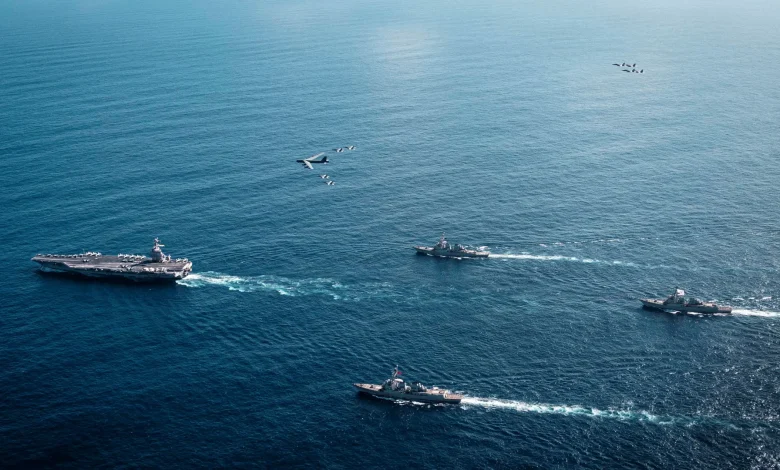
Narcoterrorist boat strikes in the Caribbean Sea and eastern Pacific Ocean have escalated dramatically, representing a fundamental shift in how the United States projects military force against transnational criminal organizations. Since the Trump administration officially launched a campaign targeting maritime smuggling vessels in early September 2025, the U.S. armed forces have conducted more than 60 kinetic strikes. These operations have led to the deaths of at least 210 individuals, drawing sharp international criticism, congressional scrutiny, and intense legal debates over executive authority and international maritime law. What began as a localized interdiction effort in the Caribbean has grown into a sustained, high-intensity militarized campaign across vast ocean corridors, leaving a trail of questions regarding its efficacy, legality, and human cost.
The campaign, known in military circles as Operation Southern Spear, is executed by a joint coalition including the Navy, Air Force, Marine Corps, and the Coast Guard, under the operational direction of U.S. Southern Command (SOUTHCOM). Leveraging advanced aerial reconnaissance, unmanned aerial vehicles, and guided munitions, U.S. forces have consistently targeted low-profile vessels—frequently referred to as “go-fast” boats or semi-submersibles—along known transit lanes. While the administration asserts that these operations are vital to protecting American lives from the scourge of illicit narcotics, critics and human rights organizations argue that the deployment of lethal, non-warning kinetic force against unarmed vessels in international waters sets a dangerous global precedent.
The Rapid Escalation of Operation Southern Spear
The militarization of the war on drugs entered an unprecedented phase when President Donald Trump declared that the United States is in an “armed conflict” with Latin American drug cartels. Historically, maritime drug interdictions were law enforcement operations led by the U.S. Coast Guard, emphasizing board-and-search procedures, detention, and subsequent prosecution in federal courts. However, the paradigm shifted abruptly in late 2025. By designating cartel networks and associated maritime smugglers as “narcoterrorists,” the administration cleared the path for rules of engagement typical of active combat zones.
Under this military framework, suspected vessels are treated as hostile military targets. Under the leadership of SOUTHCOM, the military has utilized armed aircraft, including tactical fighters and attack helicopters, to execute precision strikes. The speed and intensity of these attacks mean that vessels are often destroyed before any direct physical communication or law enforcement boarding can be attempted. This aggressive strategy has resulted in a staggering rise in casualties, with over 60 attacks officially recorded in less than ten months. The administration has steadfastly defended the operational pacing, asserting that swift and decisive kinetic actions are the only way to disrupt highly adaptive transnational criminal networks.
A Deeper Dive into the Latest Maritime Strike
The latest strike, which occurred in the eastern Pacific Ocean, highlights the extreme violence characterizing these maritime encounters. According to brief statements released by military officials, a suspected smuggling vessel was detected navigating a known trafficking route. Surveillance footage captured by U.S. military assets—and later shared in black-and-white on social media platform X—depicted a high-speed boat cutting through open waters. Without warning, a visible projectile struck the vessel, causing it to instantly burst into a massive ball of fire and smoke.
This attack resulted in the immediate deaths of two individuals on board, while leaving six survivors clinging to the wreckage in international waters. The suddenness of the strike and the catastrophic destruction of the vessel left little time for immediate rescue maneuvers by the attacking military unit. Instead of an immediate naval rescue operation, U.S. Southern Command stated that it notified the U.S. Coast Guard of the incident and the presence of survivors. The ultimate fate of these six survivors remains shrouded in uncertainty, as federal agencies have declined to clarify whether any search-and-rescue assets successfully reached the scene before the ocean currents took their toll.
The Human Toll and Disputed Survival Outcomes
The human cost of Operation Southern Spear has become a central point of contention for international observers, humanitarian groups, and the families of those lost at sea. With the death toll now surpassing 210, questions regarding the survival and rescue protocols for targeted crew members are mounting. Unlike traditional naval warfare, where rescuing defeated adversaries is mandated under international humanitarian law once the threat is neutralized, the hybrid nature of “narcoterrorist” operations has created a troubling grey area in accountability.
In multiple instances, the U.S. military has announced strikes that left survivors, yet follow-up information regarding their status is virtually non-existent. For example, a similar strike conducted on June 16, 2026, left two survivors in the water. While Southern Command stated it followed standard protocol by notifying the Coast Guard, subsequent search efforts yielded no results. The Coast Guard later confirmed it had suspended its active search after 24 hours due to “no signs of survivors or debris.” This pattern has fueled concerns that the strikes are designed to maximize lethality while delegating the complex and time-sensitive task of maritime rescue to distant search-and-rescue units that may not have assets close enough to respond effectively.
The Silence of the Pentagon and Coast Guard Search Efforts
Public accountability regarding the aftermath of these strikes has been exceptionally limited. The Pentagon has repeatedly declined to answer detailed questions from journalists and human rights organizations regarding the rescue outcomes of survivors. When pressed for clarification on whether survivors are being detained, hospitalized, or left to drown, military spokespersons frequently refer back to brief, pre-approved press releases emphasizing that the Coast Guard was “duly notified.”
This bureaucratic compartmentalization has drawn criticism from military legal scholars. Under international maritime customs and treaties—such as the International Convention for the Safety of Life at Sea (SOLAS)—any vessel, including military warships, has an obligation to render assistance to persons in distress at sea if they can do so without serious danger to their own ship. By striking vessels and immediately departing the area, leaving rescue operations to the Coast Guard, which might be hundreds of miles away, the U.S. military walks a fine legal line that critics argue undermines long-standing maritime humanitarian standards.
Operation Southern Spear: Cumulative Metrics and Key Phases
To better understand the scale and trajectory of the U.S. military’s maritime campaign, the following table compiles the key phases, recorded casualties, and geographic focus areas of the strikes since their inception in late 2025.
| Timeline / Phase | Operational Details & Scope | Confirmed Casualties / Status | Primary Maritime Sectors |
|---|---|---|---|
| Phase I (Sep – Oct 2025) | Initiation of Operation Southern Spear; focus on Caribbean lanes. | Over 40 killed; first strike killed 11 Venezuelan nationals. | Caribbean Sea (Near Venezuela & Colombia) |
| Phase II (Nov 2025 – Jan 2026) | Expansion to the Eastern Pacific Ocean; integration of advanced drone strikes. | ~90 killed; multiple vessels destroyed without warnings. | Eastern Pacific Ocean (Smuggling Corridors) |
| Phase III (Feb – Apr 2026) | High-intensity campaign; deadliest day on Feb 16 (11 killed in 3 strikes). | ~150 cumulative deaths; launch of first wrongful death lawsuits. | Dual-theater operations (Caribbean & Pacific) |
| Phase IV (May – Jun 2026) | Continued kinetic interdictions; growing focus on survivor accountability. | Death toll surpasses 210; multiple strikes with survivors left at sea. | Eastern Pacific Ocean (Deep water lanes) |
Justifying the “Armed Conflict” with Latin American Cartels
The administrative justification for Operation Southern Spear rests entirely on the classification of the U.S. war on drugs as an “armed conflict” under the laws of war. President Donald Trump has repeatedly asserted that Latin American cartels and designated gang networks—such as the Venezuelan-origin syndicate Tren de Aragua and the Colombian National Liberation Army (ELN)—pose a direct national security threat equivalent to foreign terrorist organizations. By framing the drug epidemic as an act of asymmetric warfare, the White House has bypassed traditional civilian law enforcement protocols.
In official statements, the president has argued that these strikes are a necessary and proportionate response to stem the flow of illicit narcotics that contribute to tens of thousands of fatal drug overdoses in the United States every year. From the administration’s perspective, these vessels are not merely transport vehicles; they are delivery systems for weapons of mass destruction (fentanyl and other synthetic opioids) that poison American communities. This framing has resonated strongly with a significant portion of the American public and conservative lawmakers, who view the maritime strikes as a long-overdue, muscular defense of the homeland.
The Missing Drug Evidence and Intelligence Claims
Despite the administration’s aggressive rhetoric, a persistent issue throughout the campaign has been the absolute lack of physical evidence presented to the public. In almost every reported strike, U.S. Southern Command has claimed that its targets were “positively identified” narcoterrorists operating along known smuggling routes. However, because the targeted vessels are typically incinerated or sunk in deep waters by high-yield explosives, retrieving physical evidence of illegal drug cargoes is virtually impossible.
Independent observers and journalists have repeatedly requested proof—such as intercepted manifests, post-strike debris analysis, or detailed intelligence dossiers—confirming that the destroyed vessels were indeed carrying narcotics. To date, the Pentagon has refused to release such information, citing the need to protect classified intelligence sources and methods. This lack of transparency has led to growing skepticism, with critics pointing out that innocent fishermen, migrants, and local maritime traders could easily be misidentified as drug runners by high-altitude surveillance sensors, with catastrophic and irreversible consequences.
Legal Debates and Potential Violations of International Law
The legal framework supporting Operation Southern Spear is highly contested by constitutional scholars, international lawyers, and human rights advocates. Under traditional international law, the use of lethal military force is strictly regulated. It is generally permitted only in self-defense against an imminent armed attack, or under a mandate from the United Nations Security Council. Because drug smuggling, however damaging, is classified as a transnational criminal activity rather than an armed invasion, the unilateral execution of maritime strikes in international waters raises profound legal questions.
Opponents of the strikes argue that they violate Article 2(4) of the UN Charter, which prohibits the threat or use of force against the territorial integrity or political independence of any state, as well as the United Nations Convention on the Law of the Sea (UNCLOS). Furthermore, critics contend that the strikes constitute extrajudicial executions, depriving suspects of their fundamental right to due process and a fair trial. The administration’s defense rests on an expansive interpretation of the President’s Article II powers under the U.S. Constitution, arguing that the commander-in-chief has inherent authority to protect the nation from external threats, regardless of whether those threats emerge from traditional state actors or transnational cartels.
Fentanyl and the Efficacy of Maritime Interdiction
Beyond the legal and ethical dilemmas, policy analysts have questioned whether the maritime strike campaign is an effective strategy for combatting the U.S. drug crisis. The primary driver of fatal overdoses in the United States is fentanyl, a synthetic opioid that is highly potent in extremely small volumes. According to data from border security agencies, the vast majority of fentanyl enters the United States via land border crossings, hidden in commercial vehicles or smuggled by pedestrians through official ports of entry.
Maritime routes through the Caribbean and Pacific are primarily used to transport bulkier, traditional organic narcotics, such as cocaine and marijuana, which require large vessels due to their volume and weight. Because fentanyl is highly concentrated, cartels rarely rely on massive maritime shipments to transport it. Consequently, even if Operation Southern Spear succeeds in shutting down major maritime smuggling corridors, its direct impact on the domestic fentanyl crisis is likely to be negligible. This disconnect has led some experts to argue that the campaign is more of a political theater designed to project toughness, rather than a data-driven strategy to curb drug-related deaths.
Congressional Scrutiny and Demands for Transparency
As the casualty count continues to climb, a growing coalition of U.S. lawmakers has begun demanding greater transparency and oversight of the military’s maritime operations. Democratic senators and representatives have voiced intense concern over the secrecy surrounding the rules of engagement and the classification of targets. In recent legislative sessions, lawmakers have formally demanded that the Pentagon release unedited, high-resolution video footage of the strikes, particularly the very first strike in early September, which remains highly controversial due to allegations that survivors were targeted in a follow-up attack.
The congressional pushback reflects a broader anxiety over the erosion of civilian oversight. By conducting these operations under the umbrella of “counter-terrorism” or “national defense” without explicit congressional authorization, the executive branch has set a precedent that could allow future administrations to deploy military assets globally against a wide array of non-state actors without legislative approval. While some Republican lawmakers continue to strongly defend the president’s actions, calling them necessary measures to protect American citizens, the demand for clear, verifiable evidence of cartel affiliation and cargo contents remains a bipartisan flashpoint.
The Strategic Outlook of USSOUTHCOM Operations
Looking ahead, the future of Operation Southern Spear remains uncertain. In congressional testimony, General Francis Donovan, the Commander of U.S. Southern Command, admitted that while boat strikes are a powerful kinetic tool, they are “probably not the most effective” method for achieving a long-term solution to transnational drug trafficking. This candid assessment highlights the internal friction within the military and defense establishment, where some leaders recognize that military force alone cannot resolve complex socioeconomic issues like drug addiction and cartel recruitment.
As the legal challenges proceed through domestic and international courts, and as congressional committees continue to push for investigations, the administration shows no signs of scaling back its maritime campaign. The tension between National Security imperatives and human rights compliance will likely continue to define the debate surrounding these strikes. For now, the waters of the eastern Pacific and Caribbean remain a militarized zone, where the lines between law enforcement and active warfare have been permanently blurred, and where suspected smugglers face swift, lethal, and unappealable justice on the high seas.