Coco Gauff Speaks Out Against Intense Abuse at China Open 2026
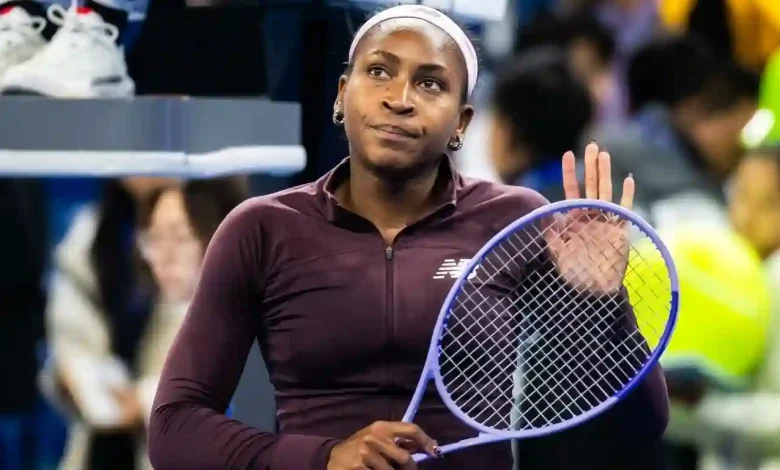
Table of Contents
Coco Gauff encountered severe online harassment after advancing at the China Open, calling attention once again to the virulent nature of digital abuse directed at high-profile athletes. The world-renowned tennis star, already a two-time Grand Slam singles champion, defeated local Chinese wildcard teenager Sun Xinran in straight sets, 7-5, 6-1, to secure her place in the round of 16 in Beijing. However, the athletic triumph was immediately overshadowed by a contentious passage of play during the opening set that ignited fury among certain segments of spectators both inside the stadium and across global digital channels.
Coco :Match Overview: Navigating High Tension on Diamond Court
Entering the third-round encounter as a heavy favorite, the American found herself locked in a far more competitive baseline battle than many expected during the initial stages. The match commenced with Sun playing fearless tennis, using her flat groundstrokes to trouble the top-tier seed. As spectators followed the tactical chess match, fans were reminded of how volatile professional tennis can be, not unlike how the Carlos Alcaraz tennis trajectory often features abrupt swings of momentum under high-pressure spotlight conditions.
Sun, eager to make a lasting impression in front of a spirited home crowd, traded blows from the baseline, earning break opportunities and testing the defensive elasticity of the American champion. Just as the opening set reached its crescendo, an unexpected equipment anomaly interrupted the rhythm of play, transforming an ordinary tour contest into a flashpoint of international debate.
Coco :The Critical Point: Flickering Screen and Umpire Intervention
The controversy occurred deep in the first set with Sun serving under tremendous pressure and setting up an apparently routine finishing volley. As the Chinese teenager drew back her racket to strike the ball into open court, a digital courtside LED advertising banner experienced an abrupt technical failure, displaying rapid flickering lights directly across the receiver’s peripheral field of vision.
Reacting instantly to the visual disruption, the American raised her racket and signaled toward the chair umpire to stop the rally before the ball landed. Under strict tennis federation regulations, external visual and audible anomalies can be deemed a genuine distraction, enabling officials to order a let. The chair umpire concurred that the equipment malfunction presented a legitimate hindrance, nullifying the sequence and commanding that the point be replayed from first service.
The decision prompted immediate consternation from the stands. Sun appeared visibly deflated by the reversal of fortune, and the American seized on the reprieve to secure a pivotal service break. The psychological shift was palpable, paving the way for a swift 6-1 sweep in the following set as technical proficiency asserted itself.
Coco :Online Harassment and the Athlete Mental Health Crisis
In the hours following the conclusion of the contest, toxic vitriol flooded social media feeds, prompting the champion to describe the volume of explicit insults and racial slurs as completely unacceptable and insane. Rather than assessing the incident as an operational error managed by tournament staff, bad actors targeted the athlete personally with hate speech.
This deplorable reaction emphasizes the recurring perils top competitors face across global sports. Similar dynamics occurred when Aryna Sabalenka faced fierce public scrutiny during high-stakes championship runs, showing that digital platforms routinely struggle to curb abusive behavior targeting female athletes. The psychological pressure placed on international champions can mirror the demanding mental landscape highlighted by Ben Shelton career hurdles on the international ATP tour.
Coco :Performance Metrics and Key Statistics
A rigorous review of the on-court statistics highlights how the match unfolded from a technical perspective, showing that the outcome ultimately hinged on unforced error differentials and return depth rather than a single contentious ruling.
| Match Metric | American Champion | Sun Xinran |
|---|---|---|
| First Serve Percentage | 64% | 58% |
| Aces / Double Faults | 5 / 3 | 1 / 4 |
| Break Points Converted | 5 / 8 (62.5%) | 2 / 6 (33.3%) |
| Unforced Errors | 21 | 37 |
| Total Points Won | 74 | 52 |
| Match Duration | 1 Hour 28 Mins | 1 Hour 28 Mins |
As illustrated in the data, the American converted break points with surgical efficiency in the latter stages of the match, steadily pulling away once her tactical adjustments neutralized Sun’s baseline timing.
Coco :Rules, Regulations, and Hindrance Interpretations in Professional Tennis
To fully understand why the chair umpire awarded a replay, one must look closely at the governing handbook of the women’s tour. According to rule provisions regarding hindrance, if a player is hindered in playing a point by an intentional or unintentional external act, the point must be replayed immediately if the umpire determines that the impediment genuinely compromised fairness.
Courtside digital technology, including dynamic LED screens, has become a core element of major sports venues worldwide. Yet as modern sports rely increasingly on complex visual electronics, glitches are inevitable. This technological fragility is evident across modern athletics, just as technical officiating disputes and computerized review errors recently stirred controversy when Premier League tactical controversies unfolded during high-profile football fixtures.
Coco :Broader Implications for the WTA Tour in Asia
The Asian swing represents one of the most lucrative and culturally vital segments of the global tennis calendar. Tournaments in cities like Beijing, Wuhan, and Tokyo provide crucial ranking points that determine qualification for the year-end finals. However, the acute national pride associated with emerging home players can occasionally translate into heightened hostility toward foreign competitors.
Managing crowd emotions and cross-border digital engagement requires proactive leadership from tournament organizers. Industry insiders point to recent evaluations of international tournament environments, such as the strategic updates published in our review of Coco Gauff ranking analytics, which emphasize that maintaining player safety and psychological well-being is vital for sustainable global sports expansion. A lack of structural safeguards damages both athlete performance and the global reputation of premier events.
Coco :Modern Athletes Standing Firm Against Digital Hostility
Rather than ignoring the abuse or allowing it to simmer behind closed doors, modern athletes are increasingly choosing transparent confrontation. By shining a spotlight directly onto the messages received, players force governing bodies, digital platforms, and law enforcement agencies to confront systemic toxicity.
The sporting community has witnessed similar calls for institutional intervention across multiple leagues. Just as players in elite team competitions voiced collective concern during the fierce team rivalries of American football or the intense pressures detailed during intense domestic derby matches, individual tennis competitors must carry the burden of public hostility largely on their own.
Welfare programs designed to protect players now utilize artificial intelligence to filter slurs before notifications reach athletes’ phones. Yet as the recent episode in Beijing demonstrates, bad actors continually find mechanisms to bypass standard content filters, necessitating stronger verification protocols across major digital networks.
Looking Forward: Championship Path and Competitive Trajectory
Despite the harrowing off-court harassment, the American remains focused on her competitive goals in the tournament draw. Having captured multiple Grand Slam crowns early in her career, her resilience under adversity continues to define her standing among the world’s sporting elite. Fans who witnessed historical perseverance in the sport, such as the storied determination seen when Elina Svitolina made her comeback to elite competition, recognize that mental toughness remains an indispensable weapon.
With the fourth round underway, tournament officials have reportedly initiated internal audits regarding courtside technical systems to prevent recurring screen glitches during critical rallies. Meanwhile, tennis authorities must continue reinforcing their zero-tolerance policies toward discriminatory abuse, ensuring that athletic excellence remains the defining narrative of global competition.