Starship Engine Failure Jeopardizes NASA Artemis Moon Landing 2026
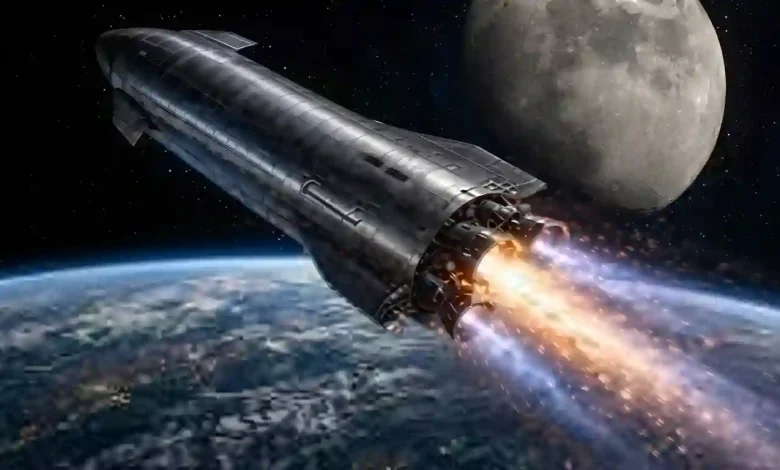
Table of Contents
Starship engine failure during the critical ascent phase of SpaceX’s fourteenth uncrewed integrated test flight has sent shockwaves through the aerospace community, casting a shadow of uncertainty over NASA’s schedule to return human beings to the lunar surface. The anomaly, which developed as the upper-stage spacecraft executed its insertion burn toward orbital velocity, severely compromised vehicle performance and narrowly missed triggering a catastrophic mission abort. While ground controllers ultimately coaxed the vehicle through an alternate trajectory, the incident exposed lingering vulnerabilities in the Raptor propulsion architecture at a time when the agency is desperate for operational stability.
Flight 14 Flight Path and Anomaly Overview
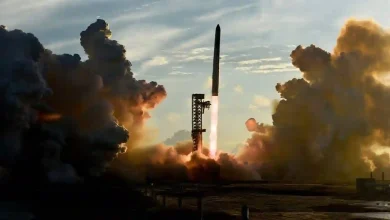
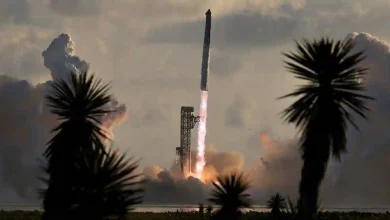
The integrated launch system lifted off from the Starbase facility in Boca Chica, Texas, under the power of its Super Heavy booster stage. Initial ascent metrics appeared nominal through stage separation, with the hot-staging ring jettisoning cleanly as planned. However, trouble materialized shortly after the ship ignited its suite of three sea-level and three vacuum-optimized Raptor engines. Telemetry indicated a sudden thermal surge and erratic chamber pressure oscillations in the center gimbal cluster, culminating in the premature shutdown of one vacuum engine and the severe throttling of an adjacent unit.
Despite onboard guidance computers executing rapid thrust compensation routines to prevent vehicle loss, the orbital insertion profile fell significantly short of targeted parameters. The event mirrors previous development hurdles documented during earlier Starship flight test 14 preparations, reigniting questions about manufacturing tolerance thresholds and combustion stability under sustained acceleration loads. Although the craft maintained structural integrity, the propulsion anomaly thwarted planned orbital coast experiments, forcing mission directors to conduct an early ocean disposal rather than executing full atmospheric reentry profiling.
Anatomy of the Raptor Propulsion Breakdown
The technical root of the malfunction centers on the full-flow staged combustion cycle utilized by SpaceX’s methane-fueled Raptor engines. Operating at extreme combustion chamber pressures exceeding 300 bar, the engines push materials science to its theoretical limits. Preliminary data streams suggest a high-pressure turbopump seal breach occurred within the liquid oxygen manifold, causing localized combustive erosions and rapid blade stripping. When the turbopump suffered cavitation, onboard sensor telemetry automatically triggered an automated abort to isolate the affected powerhead before catastrophic fragmentation occurred.
Understanding this breakdown requires reviewing earlier propulsion milestones, such as when the Starship rocket achieves critical burn thresholds under less demanding test conditions. Engineers now face the complex task of determining whether this failure represents an isolated metallurgical defect or a systemic design deficiency under multi-engine aerodynamic interaction. The severe vibration environments caused by asymmetric thrust configurations during engine shutdowns pose exceptional hazards to adjacent avionics, cryogenic lines, and thermal protection tiles.
Repercussions for NASA’s Artemis Lunar Timelines
NASA selected a modified variant of Starship as the initial Human Landing System (HLS) to deliver astronauts from lunar orbit to the South Pole of the moon. Under current architectures, the mission requires a flawless sequence: launch, orbital fueling, deep-space transit, docking with the Orion spacecraft, and executing a powered descent to the unforgiving lunar terrain. The recent Starship engine failure directly undermines confidence in meeting target launch windows, which have already slipped repeatedly past the initial mid-decade goals.
Astronaut safety mandates demand that any crew-rated propulsion system display near-zero probability of loss-of-mission events during terminal descent maneuvers. Unlike orbital insertion, where shut-down engines can occasionally be offset by extending burn times of surviving units, a lunar landing profile provides no margin for error. A single flameout during powered descent could cause an irrecoverable trajectory loss. Program officials within NASA are now reassessing the pacing of crewed milestones against broader infrastructure schedules, including the long-planned NASA Artemis II update milestones designed to pave the way for eventual surface touchdowns.
Cryogenic Propellant Transfer and Orbital Refueling
Perhaps the most technically demanding facet of the Starship lunar architecture is the requirement for in-space cryogenic propellant transfer. Because the massive lunar lander exhausts most of its propellant reaching low Earth orbit, it must be met by a succession of tanker flights carrying hundreds of metric tons of subcooled liquid methane and liquid oxygen. Estimates suggest that between ten and twenty individual tanker launches will be necessary to fill a single lunar lander depot prior to translunar injection.
This reliance on rapid-cadence orbital launches magnifies the consequences of any propulsion failure. If launch vehicles experience recurring engine shut-downs, SpaceX cannot achieve the launch cadence required to prevent cryogenic boil-off in orbit. Furthermore, broader commercial ambitions involving heavy launch architectures—such as initiatives explored in the muskonomy singularity inside the 1 25t spacex xai merger the pivot to orbital compute—hinge entirely on predictable, high-cadence rocket availability. Any prolonged groundings enforce severe compounding delays across the entire space supply chain.
The Human Landing System Dual-Source Landscape
Recognizing the immense technical risk associated with developing unprecedented super-heavy vehicles, NASA intentionally pursued a dual-vendor strategy for lunar landing capabilities. While SpaceX holds the primary contract for initial Artemis landings, Blue Origin and its National Team consortium were selected to develop the Blue Moon lander for subsequent missions. This competitive tension is underscored by legislative and agency pushes, such as the lunar lander contracts NASA speeds up moon base framework, designed to prevent single-supplier bottlenecks from permanently halting American lunar ambitions.
Blue Origin’s architecture relies on hydrolox propulsion systems and distinct architectural choices that carry their own development risks. However, if propulsion anomalies continue to plague Starship’s orbital tests, pressure will mount on Capitol Hill to redistribute funding toward alternative landing platforms. Industry analysts note that NASA’s previous reliance on commercial partnerships—established through programs like NASA Commercial Crew initiatives—succeeded precisely because multiple launch systems existed to back up critical operational capabilities when technical anomalies inevitably emerged.
Technical Comparison: Lunar Landing Architectures
Evaluating the differences between competing lunar landing methodologies highlights why engine reliability remains the paramount variable in deep space exploration architectures:
| Mission Metric | SpaceX Starship HLS | Blue Origin Blue Moon (MK2) | Apollo Lunar Module (Historical) |
|---|---|---|---|
| Propellants | Liquid Methane / Liquid Oxygen (Methalox) | Liquid Hydrogen / Liquid Oxygen (Hydrolox) | Aerozine 50 / Nitrogen Tetroxide (Hypergolic) |
| Primary Engines | Raptor (Full-Flow Staged Combustion) | BE-7 (Dual-Expander Cycle) | DPS (Pressure-Fed Engine) |
| Orbital Refueling Required | Yes (10 to 20 Tanker Flights) | Yes (Fewer Flights via Cislunar Transporter) | No (Direct Saturn V Stack Launch) |
| Dry Mass Estimate | ~100 Metric Tons | ~16 Metric Tons | ~4.3 Metric Tons (Ascent Stage) |
| Crew Capacity | Up to 10 Astronauts (Extended Stays) | Up to 4 Astronauts | 2 Astronauts (Short Stays) |
| Target Landing Year | 2028 (Under Revision) | 2029–2030 | 1969–1972 (Operational) |
Federal Aviation Administration and Engineering Oversight
In the wake of Flight 14, the Federal Aviation Administration (FAA) and internal review boards must determine whether an intensive mishap investigation is required. Under commercial space launch regulations, any flight anomaly that deviates significantly from approved trajectory envelopes or compromises vehicle systems triggers formal oversight before launch licenses can be renewed. While SpaceX favors a rapid “fly-fix-fly” iterative methodology, human rating certification demands exhaustive paperwork, traceable metallurgical verifications, and deterministic failure mode analysis.
NASA’s Aerospace Safety Advisory Panel (ASAP) has repeatedly warned that certifying uncrewed prototypes is distinct from verifying a vehicle intended to carry astronauts. The high combustion pressures, dense packaging of plumbing, and thin walls of propellant tanks leave almost no physical buffer against shrapnel or cascade failures if a powerhead ruptures during flight. Resolving these concerns will require extensive ground-test stand firing runs at the company’s McGregor, Texas facility to demonstrate statistical reliability under long-duration burn conditions.
The Pathway Toward Lunar Operational Readiness
Reaching the moon requires SpaceX to overcome a series of daunting developmental gates before astronauts ever step aboard the vehicle. The immediate priority is retrofitting the Raptor turbopump bearings and turbine wheels with superior alloys capable of withstanding the thermal stresses encountered during prolonged orbital ascent. Engineers must also prove an uncrewed ship-to-ship propellant transfer demonstration in low Earth orbit—a milestone currently scheduled for an upcoming integrated test flight.
Following orbital refueling validation, an uncrewed lunar landing demonstration must successfully touch down on the jagged topography of the lunar South Pole and demonstrate stability on slopes and rocky fields. Only after this sequence is completed without a single critical propulsion failure will NASA clear human crews to board the vessel. With international rivals advancing their own independent human spaceflight initiatives, the stakes surrounding Starship’s engine reliability extend far beyond commercial rocketry—they directly shape the geopolitical balance of power in the modern space race.