Lunar Lander Contracts 2026: NASA Speeds Up Moon Base Development
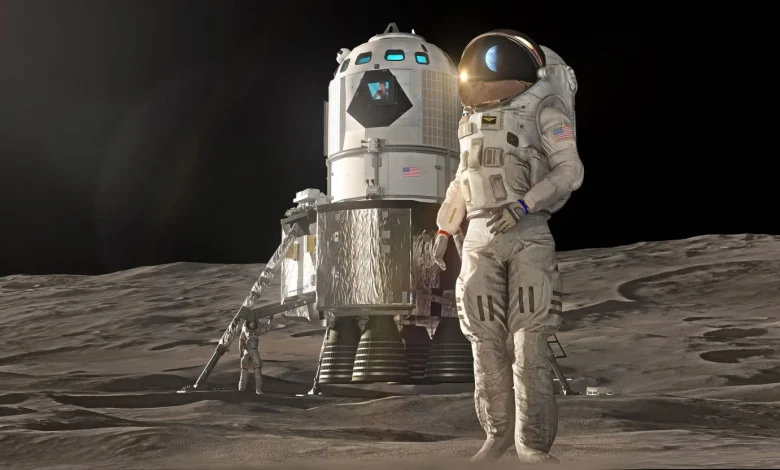
Table of Contents
Lunar exploration is accelerating at an unprecedented pace as NASA lays the groundwork for its highly anticipated Moon Base. Under the leadership of NASA Administrator Jared Isaacman, the agency announced a major milestone: the selection of three prominent commercial space partners to execute four robotic moon landings in late 2028. This $590.4 million contract sweep marks a crucial development in NASA’s pivoted vision for establishing a permanent surface outpost. By leveraging private industry through the Commercial Lunar Payload Services (CLPS) program, NASA is fast-tracking its logistics network to ensure science and infrastructure payloads arrive at the lunar surface in quick succession.
The announcement is the latest in an aggressive pipeline of awards intended to scope out critical locations, test navigation and radiation instruments, and mitigate the intense technical risks of lunar operations. With nearly $1 billion awarded for initial uncrewed missions and a total projected budget of $20 billion over the next seven years, NASA is building the physical framework for what will become humanity’s first permanent outpost on another celestial body.
The Strategic Pivot: Building the Surface Moon Base
In early 2026, NASA underwent an aggressive architectural realignment under Jared Isaacman. The agency paused its plans for the Lunar Gateway—a proposed space station designed to orbit the moon—and instead redirected its vast technical and financial resources directly toward constructing a surface-level Moon Base near the lunar south pole. The lunar south pole is of supreme strategic value, as it is believed to harbor massive deposits of water ice hidden within permanently shadowed craters. This water ice can be processed for life support systems and split into liquid hydrogen and oxygen to manufacture rocket fuel, transforming the moon into a deep-space fueling station.
This shift from orbit to surface has fundamentally changed NASA’s procurement and testing schedule. Rather than waiting for complex orbital assembly, the agency is prioritizing a rapid cadence of uncrewed commercial landers to verify landing safety and gather local environmental data. The logistical and tactical challenges of managing such rapid space operations highlight the defense sector’s parallel interests in orbital readiness, much like how the U.S. military validated tactical flexibility during the Space Force combat debut in Operation Epic Fury. The establishment of a permanent lunar presence represents both a logistical triumph and a critical security asset for the nation.
Analyzing the Late 2028 Contract Winners
The newly announced $590.4 million in funding is distributed among three of the most experienced commercial space companies currently operating under the CLPS framework. Each of these firms has designed specialized lunar landers that will undergo major upgrades to match the rigorous payload requirements of the late 2028 missions.
- Astrobotic: Headquartered in Pittsburgh and currently in the process of being acquired by Voyager Technologies, Astrobotic secured the largest share of the funding, totaling $297.9 million for two dedicated deliveries. The firm will utilize upgraded versions of its lander designs to increase cargo capacity.
- Intuitive Machines: Based in Houston, the company was awarded $148.3 million for a single landing mission using an updated variant of its Nova-C class lander. Intuitive Machines has been a key player in the commercial lunar market, achieving historical significance with its early robotic surface missions.
- Firefly Aerospace: Operating out of Austin, Texas, Firefly secured $144.2 million for one landing mission utilizing its Blue Ghost lander platform. Firefly’s successful Blue Ghost Mission-1 in 2025 demonstrated the high reliability of its vertical descent systems.
| Company | Contract Value (USD) | Missions Awarded | Primary Lander Platform | Target Delivery Window |
|---|---|---|---|---|
| Astrobotic | $297.9 Million | 2 deliveries | Upgraded Peregrine / Griffin | Late 2028 |
| Intuitive Machines | $148.3 Million | 1 delivery | Upgraded Nova-C Class | Late 2028 |
| Firefly Aerospace | $144.2 Million | 1 delivery | Upgraded Blue Ghost | Late 2028 |
Technical Payloads: What Are the Landers Carrying?
Rather than sending unique and highly specialized scientific payloads on each vessel, NASA is taking a systematic, standardized approach for these late 2028 flights. Every single lander will carry three identical, state-of-the-art NASA instruments designed to analyze landing dynamics, navigation baselines, and localized environmental hazards.
First, the Stereo Camera for Lunar Plume Surface Studies (SCALPSS) will capture high-definition, 3D imagery of how the lander’s rocket exhaust interacts with the fine, abrasive lunar dust (regolith) during descent. This is crucial for designing stable, permanent landing pads that won’t sandblast nearby habitats or solar arrays during arrivals. Second, the Laser Retroreflector Array (LRA) will act as a passive navigation marker, allowing orbiting spacecraft and descending landers to pinpoint locations with millimeter accuracy using laser rangefinders. Lastly, the Linear Energy Transfer Spectrometer (LETS) will measure radiation on the lunar surface, mapping out solar and cosmic radiation dangers to ensure the safety of future human crews. By multiplying these measurements across multiple landing coordinates, NASA will compile an invaluable database of environmental conditions.
The PROMISE Initiative: A Mars Rover Goes to the Moon
A surprising element of Tuesday’s briefing was the revelation that NASA is actively studying a plan to repurpose existing interplanetary hardware for the Moon Base. Dubbed PROMISE (Polar Rover for Observation, Mapping, and In-Situ Exploration), this concept proposes sending an engineering development model originally built for NASA’s Mars rovers (Curiosity and Perseverance) to the lunar south pole.
PROMISE would utilize an advanced Radioisotope Thermoelectric Generator (RTG) power system, allowing it to operate continuously in the pitch-black shadows of the polar craters where solar power is non-existent. This heavy-duty rover would perform high-resolution chemical and physical mapping of water ice deposits. While NASA’s Jet Propulsion Laboratory (JPL) is still defining the precise specifications and opportunities, utilizing existing Mars designs could drastically reduce development timelines and save taxpayers hundreds of millions of dollars in engineering research.
Geopolitical Significance: The Great Lunar Space Race
The rapid cadence of these commercial missions is not merely driven by scientific curiosity; there is an intense geopolitical race underway to secure a permanent foothold on the moon. China is aggressively advancing its own lunar ambitions, seeking to construct the International Lunar Research Station (ILRS) in a similar south-pole territory by the early 2030s. The nation that establishes the first functioning infrastructure will enjoy significant leverage in setting the legal, commercial, and operational standards for future cislunar activity.
By funding a diverse ecosystem of private American contractors, NASA is attempting to build a highly adaptable commercial lunar economy. The resilience of these networks, backed by the strategic coordination of national security interests, mirrors the ongoing push for next-generation defense architecture, such as the operational assessments seen in Space Force Operation Epic Fury. Establishing these logistics corridors ensures that the United States maintains its technological and strategic edge in the cislunar domain.
Financial and Logistical Headwinds
Despite the immense excitement surrounding the late 2028 flights, the Moon Base program faces significant financial and systemic hurdles. NASA Administrator Jared Isaacman has faced intense questioning from reporters and congressional watchdogs regarding the lack of transparency surrounding the total cost of the broader Moon-to-Mars initiative. While the surface-level base itself has a projected $20 billion cost estimate over seven years, the true price tag remains highly elusive.
Furthermore, a June 2026 report from the Office of Inspector General (OIG) revealed that contract values on four recently canceled or repurposed Artemis systems more than doubled, ballooning from $2.8 billion to $5.9 billion. The Government Accountability Office (GAO) has also designated NASA’s acquisition management as a high-risk area for over three decades, citing systemic cost overruns and scheduling delays. Additionally, recent physical infrastructure challenges—such as Blue Origin’s New Glenn launchpad failure in May 2026—illustrate the fragile nature of relying entirely on commercial launch providers. The complex software and command infrastructure underlying these missions are vulnerable to operational failures, in a manner that parallels the advanced algorithmic threats discussed in relation to the Mythos AI cyberattacks. Any single failure in launch, landing, or digital systems can result in the catastrophic loss of hundreds of millions of dollars in hardware.
Looking Ahead: The Roadmap to 2033
The late 2028 landings will mark the culmination of Phase 1 of NASA’s revised Moon Base roadmap. If these missions successfully establish the necessary navigational arrays and hazard maps, NASA plans to quickly transition into Phase 2. Running from 2029 to 2032, Phase 2 will focus on landing heavy infrastructure, including vertical solar arrays, nuclear fission surface power systems, and in-situ oxygen production plants.
By 2033, Phase 3 aims to support sustained crew rotations, allowing astronauts to live and work on the moon for up to 28 days straight. These long-duration surface stays will test deep-space habitation systems, waste recycling, and robotic exploration technologies that will eventually carry humanity to Mars. For more information on the ongoing progress of these private contracts, you can monitor updates directly on the NASA Moon Base Program Portal. Ultimately, the success of the four late 2028 missions will prove whether commercial partnerships can truly open the gateway to the solar system.