Dr. Frank Wilczek: Unlocking Cosmic Harmony, Axions, and Mathematical Beauty 2026
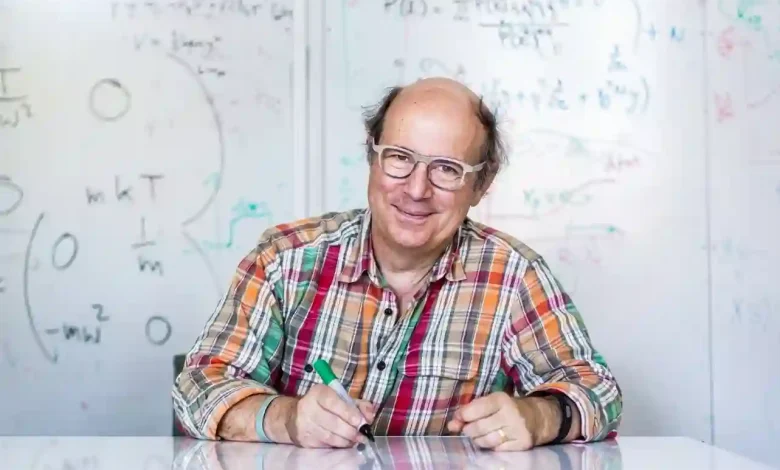
Table of Contents
Dr. Frank Wilczek stands as one of the most brilliant minds of modern science, a theoretical physicist whose profound contributions have permanently reshaped our understanding of the universe. Born in Mineola, New York, in 1951, Wilczek displayed an early and extraordinary aptitude for mathematics and logical structures. He completed his undergraduate studies at the University of Chicago before moving to Princeton University, where he earned his Ph.D. in physics in 1974. It was during his graduate studies under the mentorship of David Gross that Wilczek performed the groundbreaking calculations that would eventually earn him the 2004 Nobel Prize in Physics, shared with Gross and H. David Politzer. His achievements in physics put him in the first rank of modern scientists, alongside legendary figures who redefined the boundaries of human knowledge. Throughout his illustrious career, which has spanned tenure at prestigious institutions such as the Massachusetts Institute of Technology (MIT), Arizona State University (ASU), and Stockholm University, Wilczek has remained at the vanguard of theoretical exploration. His intellectual pursuits are not confined merely to highly specialized equations; rather, they encompass a holistic, philosophical quest to understand the underlying harmony of existence. This integration of scientific rigor with public fascination has mirrored moments of cosmic observation, where everyday individuals become active participants in exploring the skies, much like the spectators across Spain witnessing cosmic phenomena.
The Discovery of Asymptotic Freedom: Revolutionizing the Strong Force
The theoretical description of the strong nuclear force—one of the four fundamental interactions of nature—was historically one of the most baffling puzzles in physics. Prior to the early 1970s, scientists were well aware of electromagnetism, gravity, and the weak force, but the mechanism binding quarks together to form protons and neutrons remained a mystery. It was widely observed that quarks seemed to be permanently confined inside composite particles, as no isolated quark had ever been detected in a laboratory. However, when these quarks were probed at extremely high energies inside particle accelerators, they behaved unexpectedly, acting almost as if they were completely free, un-bound particles. In 1973, Wilczek and Gross solved this paradox by discovering the phenomenon of asymptotic freedom. They demonstrated mathematically that the strong force possesses a unique and counterintuitive property: unlike gravity or electromagnetism, which grow stronger as objects get closer, the strong force between quarks becomes weaker as they approach one another. Conversely, as quarks are pulled apart, the force holding them together increases exponentially, resembling the behavior of an stretching rubber band. This discovery was a watershed moment in physics, providing the missing mathematical piece that allowed for the complete formulation of Quantum Chromodynamics (QCD).
Establishing Quantum Chromodynamics (QCD)
Establishing the theoretical framework of Quantum Chromodynamics allowed physicists to integrate the strong interaction fully into the Standard Model of particle physics. QCD describes how quarks interact via the exchange of gauge bosons known as gluons, which carry a new type of charge called “color charge.” Wilczek’s meticulous calculations proved that non-Abelian gauge theories, which form the mathematical backbone of QCD, are the only field theories capable of exhibiting asymptotic freedom. This achievement solidified the Standard Model, completing our understanding of how the vast majority of visible mass in the universe is constructed. By calculating how the strong force operates at the subatomic scale, Wilczek and his peers provided a cohesive explanation for why atomic nuclei remain incredibly stable, despite the powerful electromagnetic repulsion between protons. His work highlights the critical importance of keeping young minds engaged in fundamental science without the distractions of modern digital excess, an issue that educators face globally as they debate new school policies, such as the implementation of strict school screen time regulations and edtech guidelines.
Solving the Dark Matter Mystery: The Theoretical Invention of the Axion
Beyond his monumental work on the strong force, Wilczek has made pioneering contributions to cosmology, particularly in solving the mystery of dark matter. In 1978, while examining the theoretical foundations of QCD, he and Steven Weinberg independently realized that the standard theory of the strong interaction possessed a subtle flaw known as the Strong CP Problem. In simple terms, QCD seemed to predict that the strong force should violate charge-conjugation parity (CP) symmetry, yet experimental measurements of the neutron’s electric dipole moment indicated that no such violation occurred. To resolve this discrepancy, Roberto Peccei and Helen Quinn proposed a new global symmetry. Wilczek recognized that the spontaneous breaking of this Peccei-Quinn symmetry must give rise to an incredibly light, weakly interacting boson. He named this hypothetical particle the “axion,” drawing inspiration from a brand of laundry detergent because the particle “cleaned up” a major theoretical mess in physics.
The Axion as a Leading Dark Matter Candidate
What began as a clever mathematical fix for a localized subatomic problem soon blossomed into the leading candidate for cold dark matter. Dark matter makes up approximately 85% of the total matter in the universe, yet its composition remains one of the greatest mysteries in modern science. Axions, because of their extremely small mass and negligible interaction with ordinary matter, fit the requirements for dark matter perfectly. If they exist, they would have been produced in vast quantities during the early stages of the Big Bang, forming massive invisible halos around galaxies and guiding the gravitational assembly of cosmic structures. Today, experimental collaborations worldwide are actively searching for axions using highly sensitive instruments called haloscopes, which seek to convert cosmic axions into detectable microwave photons inside powerful magnetic fields. The confirmation of the axion would not only validate Wilczek’s brilliant theoretical intuition but would also resolve one of the most persistent questions in the history of astrophysics.
Anyons and Time Crystals: Expanding the Frontiers of Condensed Matter Physics
Wilczek’s intellectual curiosity is remarkably broad, extending well beyond high-energy particle physics into condensed matter and materials science. In the early 1980s, he pioneered the theory of fractional statistics in two-dimensional systems, introducing and naming the concept of “anyons.” Unlike traditional particles in three dimensions, which must be classified strictly as either bosons or fermions, anyons exhibit fractional quantum statistics when their positions are swapped. This highly abstract concept has since become the cornerstone of topological quantum computation, offering a robust pathway toward error-resistant quantum computers. Furthermore, in 2012, Wilczek introduced the concept of “time crystals”—structures that spontaneously break time-translation symmetry, exhibiting perpetual motion in their ground state. Initially met with skepticism, time crystals have since been successfully created in laboratory environments, opening up entirely new paradigms in non-equilibrium thermodynamics. The quantum architectures of tomorrow require colossal technological investments, drawing parallels to the current commercial race for the advancement of massive artificial intelligence investment funds that are currently reshaping global technology markets. Wilczek’s approach to physics requires an uncanny ability to find structured order in chaos, a cognitive skill highly valued across other complex fields, including the financial sector where elite strategists like Andrea Orcel decoding complex institutional strategies seek structural beauty and efficiency in volatile markets.
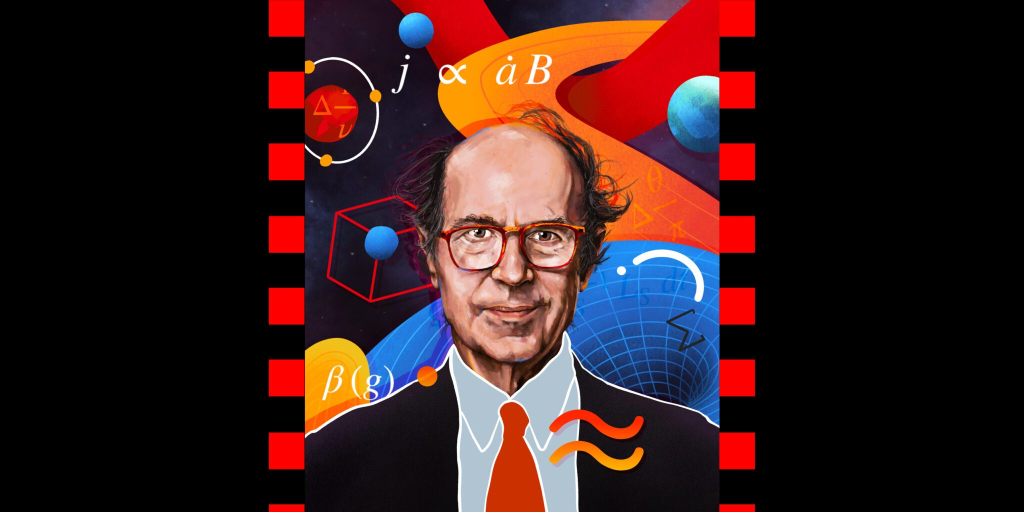
Table of Contributions: A Summary of Dr. Wilczek’s Scientific Breakthroughs
To fully grasp the breadth of Wilczek’s scientific contributions, it is helpful to look at his major theoretical concepts, their applications, and their status in contemporary experimental physics.
| Scientific Concept | Primary Description | Cosmic / Technological Application | Current Experimental Status |
|---|---|---|---|
| Asymptotic Freedom | The weakening of the strong force at extremely short subatomic distances. | Completed the Standard Model through the creation of Quantum Chromodynamics (QCD). | Extensively verified in high-energy particle accelerators worldwide. |
| Axion Models | Ultra-light, weakly interacting bosons proposed to solve the Strong CP Problem. | The primary and most widely accepted candidate for cold dark matter. | Actively hunted by global experiments including ADMX and MADMAX. |
| Anyons | Quasiparticles in 2D systems exhibiting fractional quantum statistics. | Foundational concept for the development of topological quantum computing. | Observed experimentally in two-dimensional electron systems. |
| Time Crystals | Phases of matter that spontaneously break time-translation symmetry. | Pioneering new directions in non-equilibrium physics and quantum memory. | Successfully synthesized in laboratories using trapped ions and spin chains. |
The Public Intellectual: Translating Complex Physics into Philosophical Wonder
In addition to his rigorous academic pursuits, Wilczek has earned widespread acclaim as an eloquent public intellectual, bridging the gap between high-level mathematics and humanistic philosophy. Through highly regarded books such as “A Beautiful Question” (2015), “Longing for the Harmonies” (1988), and “Fundamentals: Ten Keys to Reality” (2021), he has illuminated the philosophical and aesthetic implications of modern physics. Wilczek frequently argues that the laws of nature are not merely cold, dry equations, but rather a form of cosmic art. He encourages the public to view the universe as a beautiful, interconnected masterpiece that possesses intrinsic symmetry and harmony. While the universe itself embodies a pristine, mathematical symmetry, human history remains tragically fractured, dominated by geopolitical conflicts like the escalation of regional wars. These deep terrestrial divisions, such as ongoing military and diplomatic instability near major trade waterways like the Strait of Hormuz, highlight how scientific discovery offers a peaceful refuge of universal truths.
A Vision of Mathematical Beauty
At the core of Wilczek’s worldview is the belief that the universe embodies profound mathematical beauty across all scales. From the magnificently large clusters of galaxies governed by general relativity, to the unimaginably small subatomic realms governed by quantum field theory, there is a recurring theme of symmetry, balance, and economy of design. He posits that our ability to comprehend these laws using nothing but human logic and mathematical symbols is a form of deep spiritual communion with nature. Nurturing the next generation of scientific minds requires addressing both intellectual curiosities and the physical well-being of students, reinforcing the importance of initiatives promoting healthy school lunches for early development. In an era where public trust in institutions is vulnerable, and with influential figures issuing warnings about financial volatility and institutional stability, Wilczek’s voice offers a unifying philosophy of enduring beauty. He shows that despite the political and social discord that dominates modern news, the fundamental structure of the physical universe remains perfectly, beautifully ordered.
Conclusion: The Enduring Legacy of a First-Rank Scientist
Dr. Frank Wilczek’s legacy is defined by a rare combination of mathematical genius, creative intuition, and philosophical depth. By uncovering the mechanisms of the strong nuclear force, proposing the existence of dark matter axions, and expanding the horizons of condensed matter physics, he has secured an permanent place in the history of science. Yet, his ultimate contribution might be his insistence that science and art are fundamentally connected. He leaves us with a profound vision of a universe that is inherently beautiful in all its parts—an elegant cosmic tapestry where mathematics and aesthetic splendor are one and the same.





One Comment