President Donald Trump Reviews Iran’s Peace Offer, Deeply Skeptical
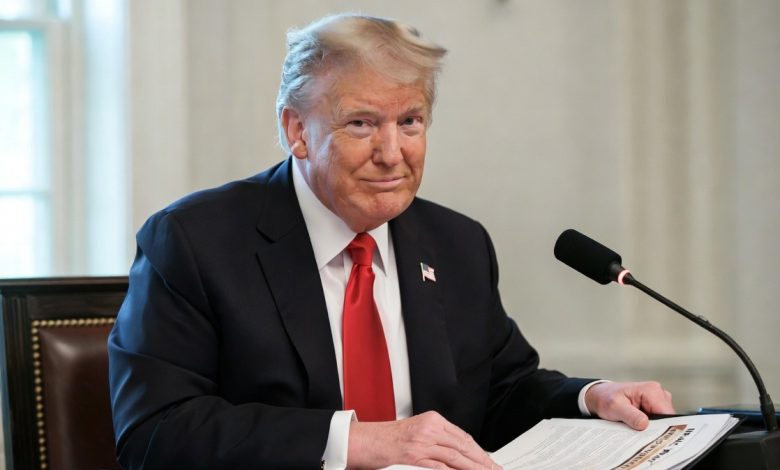
President Donald Trump announced Saturday that he is actively reviewing a fresh peace proposal from the Iranian regime, an offer aimed at de-escalating the long-standing tensions and potentially ending the protracted standoff between Washington and Tehran. Despite agreeing to examine the plan, the president articulated profound skepticism regarding its viability, emphasizing Iran’s perceived failure to adequately atone for its actions over the past 47 years. In a concise yet pointed post on Truth Social, Trump stated, “President Donald Trump will soon be reviewing the plan that Iran has just sent to us, but can’t imagine that it would be acceptable in that they have not yet paid a big enough price for what they have done to Humanity, and the World, over the last 47 years.” This statement encapsulates the deep-seated mistrust and historical grievances that form the backdrop of the current diplomatic dance, casting a long shadow over any immediate prospects for a breakthrough. The president’s comments came shortly after addressing reporters on the tarmac at Palm Beach International Airport, where he indicated his intention to promptly communicate his decision on the Iranian overture. This nuanced position – expressing skepticism while engaging with the offer – underscores the delicate balance the Trump administration is attempting to strike in a region fraught with complexities and high stakes.
The Intricacies of Iran’s Latest Proposal: Hormuz and Nuclear Deferral
The core components of Iran’s latest peace initiative, as revealed by President Trump, revolve around two critical, interconnected issues: the opening of the strategic Strait of Hormuz and the cessation of the perceived U.S. “blockade,” alongside a significant deferral of discussions concerning Iran’s contentious nuclear program. This package presents a unique set of concessions and demands, reflecting Tehran’s calculus in navigating its international isolation and economic pressures. Iran’s 14-point counter-plan was sent through a Pakistani intermediary, indicating a push for a broader settlement beyond a temporary ceasefire.
Opening the Strait of Hormuz: A Geopolitical Lifeline
At the heart of Iran’s proposal lies the offer to open shipping lanes in the Strait of Hormuz. This narrow waterway, connecting the Persian Gulf to the open ocean, is arguably the world’s most critical chokepoint for oil transit, through which approximately one-fifth of global oil consumption passes daily. The free flow of maritime traffic through Hormuz is paramount for global energy security and international commerce. Throughout recent decades, tensions in the Strait have frequently escalated, with Iran repeatedly threatening to close it in response to perceived threats or economic sanctions, and at times maintaining effective control over it. Such threats have, in the past, sent ripples of alarm through global markets and sparked fears of military confrontation. An Iranian commitment to ensure unrestricted passage, if genuinely implemented and verifiable, would represent a substantial de-escalation of a major flashpoint. For the international community, particularly major oil importers, this would be a significant development, potentially stabilizing energy markets and reducing the immediate risk of a naval confrontation. The implications extend beyond oil, encompassing all maritime trade, and a secure Hormuz is vital for the stability of global supply chains. Indeed, the vulnerability of critical infrastructure, such as undersea data cables in the Strait, further underscores the importance of this waterway to global connectivity and economic stability [cite: https://globaleprism.com/hormuz-cables-threat-cuts-risk-97-of-global-web-traffic/]. Iran has also previously mapped undersea cables in Hormuz, a move perceived as a severe threat [cite: https://globaleprism.com/undersea-cables-in-hormuz-mapped-by-iran-a-severe-threat/].
Ending the U.S. “Blockade”: Economic Relief or Strategic Concession?
Concurrently, Iran’s proposal calls for an end to the “U.S. blockade.” While the U.S. has not implemented a literal naval blockade of Iranian ports in the traditional sense, this term refers to the extensive and stringent economic sanctions imposed by the United States, which have severely crippled Iran’s economy. These sanctions target Iran’s oil exports, financial sector, and other critical industries, aiming to pressure Tehran into altering its regional behavior and nuclear ambitions. An end to these sanctions would provide immense economic relief to Iran, potentially allowing its oil to re-enter global markets freely and enabling greater access to international banking and trade. For Tehran, this is a central demand, reflecting the profound impact of the sanctions regime on its populace and government revenues. The U.S., however, views these sanctions as its primary leverage against Iran, a tool to force compliance without resorting to military action. Lifting them without significant concessions from Iran on other fronts would be a major strategic shift for Washington, raising questions about the efficacy of its “maximum pressure” campaign. The U.S. Treasury Department has continued to impose new sanctions, warning against paying any “toll” for passage through Hormuz, which could trigger further punitive measures.
Deferring Nuclear Talks: A Calculated Delay?
Perhaps the most contentious element of Iran’s offer is the proposition to push off talks on its nuclear programs for a later stage. The development of Iran’s nuclear capabilities has been a source of profound international concern for decades, leading to the 2015 Joint Comprehensive Plan of Action (JCPOA), which the Trump administration subsequently withdrew from. The U.S. and its allies insist on verifiable guarantees that Iran’s nuclear program is exclusively peaceful and cannot be weaponized. Deferring these critical discussions raises immediate red flags for Washington and its regional partners, particularly Israel, who view Iran’s nuclear ambitions as an existential threat. This aspect of the proposal suggests Iran might be seeking immediate economic relief and de-escalation without addressing what the international community considers the core security issue. It could be seen as a tactic to gain time, reduce immediate pressure, and rebuild its economic strength before confronting the more difficult demands regarding its nuclear activities. Secretary of State Marco Rubio, in an earlier interview, emphasized that “the nuclear question is the reason why we’re in this in the first place,” suggesting that separating nuclear talks from Hormuz would not be ideal.
Forty-Seven Years of Grievance: A Historical Context
President Trump’s reference to “47 years” of Iranian actions underscores a deep historical grievance that informs the current U.S. stance. The period of 47 years preceding the current date would broadly correspond to the era following the 1979 Islamic Revolution in Iran. This pivotal event, which overthrew the U.S.-backed Shah and established the Islamic Republic, fundamentally reshaped Iran’s relationship with the West and initiated a new chapter of regional and global geopolitics. The revolution’s enduring legacy has defined U.S.-Iranian relations as one of mutual hostility and persistent volatility.
Since 1979, the U.S. has accused Iran of a litany of destabilizing actions. These include, but are not limited to:
- The Hostage Crisis (1979-1981): The seizure of the U.S. Embassy in Tehran and the detention of 52 American diplomats and citizens for 444 days, a foundational event that cemented animosity between the two nations and led to initial U.S. sanctions.
- Support for Proxy Groups: Iran’s consistent backing of various non-state actors across the Middle East, including Hezbollah in Lebanon, Hamas in Palestine, and various Shiite militias in Iraq and Yemen. These groups are often designated as terrorist organizations by the U.S. and its allies, and their activities are seen as undermining regional stability and U.S. interests.
- Nuclear Proliferation Concerns: Despite its claims of a peaceful nuclear energy program, Iran’s clandestine nuclear activities, particularly before the JCPOA, fueled fears of its pursuit of nuclear weapons. These concerns have driven international sanctions and diplomatic efforts for decades.
- Ballistic Missile Program: Iran’s development of long-range ballistic missiles, which it asserts are for defensive purposes, is viewed by the U.S. and its allies as a threat to regional security and a potential delivery mechanism for future nuclear warheads.
- Human Rights Record: Criticisms of Iran’s human rights record, including suppression of dissent, restrictions on freedoms, and widespread executions, have further contributed to its international isolation.
- Attacks on Shipping: Allegations of Iranian involvement in attacks on commercial shipping in the Persian Gulf and the Gulf of Oman, often attributed to the Islamic Revolutionary Guard Corps (IRGC), have consistently raised tensions and threatened global trade.
This long catalogue of grievances highlights the immense chasm of trust that exists between Washington and Tehran. For President Trump, demanding that Iran “paid a big enough price” suggests a desire for significant punitive measures or reparations that address these historical perceived transgressions, a sentiment that likely resonates with a substantial portion of his political base and hawkish elements within the U.S. foreign policy establishment. The economic situation in Iran, often exacerbated by these long-standing sanctions, is a complex outcome of 47 years of revolution versus Gulf prosperity [cite: https://globaleprism.com/iran-economy-47-years-of-revolution-vs-gulf-prosperity/].
President Trump’s Deliberation: Skepticism to Review
President Trump’s public statements have painted a picture of careful, albeit reluctant, deliberation. On Friday, he expressed outright dissatisfaction with the proposal’s “concept,” indicating a fundamental disconnect with its initial framework, stating, “They’re asking for things I can’t agree to.” However, his Saturday statement marked a slight shift, promising to “examine its details further” once the “exact wording” was provided. This evolution from outright rejection of the concept to a willingness to review the specific text suggests a recognition of the diplomatic necessity to at least consider the overture, if only to demonstrate a posture of openness while maintaining firm resolve. It reflects the complex interplay of domestic political pressures, the counsel of national security advisors, and the evolving geopolitical landscape that informs such high-stakes decisions. The president’s administration has, in the past, often utilized a strategy of maximal pressure combined with a willingness to engage in direct, if often confrontational, diplomacy. The current scenario appears to be a continuation of this approach, testing the boundaries of what might be acceptable to both sides without appearing weak or overly eager. Trump has also often stated that “we have all the cards, they have none.”
Military Options on the Table: Escalation Risks Persist
The backdrop to these diplomatic maneuvers is the ever-present shadow of military confrontation. President Trump explicitly mentioned that military officials had briefed him on Thursday regarding various options for the Strait of Hormuz and potential actions “on the ground in Iran.” Furthermore, he reiterated the possibility of “resuming strikes,” a clear reference to past U.S. military actions in response to perceived Iranian provocations. This serves as a stark reminder that while diplomacy is being explored, the administration maintains a robust menu of coercive measures.
The military options could range from targeted cyberattacks and naval deployments to more overt kinetic strikes against specific Iranian assets or infrastructure, including key oil export hubs like Kharg Island. The deployment of U.S. jets to the UAE has previously served as a deterrent and a hedge against potential escalation during sensitive peace talks [cite: https://globaleprism.com/deployment-of-u-s-jets-to-uae-hedges-iran-peace-talks/]. Any decision to resume strikes would carry immense risks, potentially triggering a wider regional conflict with devastating consequences for global energy markets and international stability. The region remains a powder keg, and any miscalculation could swiftly spiral out of control. The consideration of military action underscores the gravity of the situation and the high stakes involved in accepting or rejecting Iran’s offer. The current U.S. munitions stockpile also factors into such calculations, as military planners must consider resource availability for sustained operations [cite: https://globaleprism.com/munitions-stockpile-us-empty-arsenal-leaves-trump-zero-options/]. Reports also suggest Iran is considering unconventional military options, such as using “killer dolphins” for underwater attacks.
Regional and International Implications of the Offer
The Iranian proposal, and the U.S. response, will inevitably reverberate across the Middle East and beyond. Regional rivals of Iran, such as Saudi Arabia, the United Arab Emirates, and Israel, will be watching closely. These nations have long advocated for a firm stance against Iran’s regional influence and nuclear program. Any deal that is perceived as too lenient on Tehran, particularly concerning its nuclear ambitions or regional proxies, could deepen their security anxieties and potentially prompt them to pursue their own assertive foreign policy agendas. Conversely, a genuine de-escalation could offer a pathway to broader regional stability, though trust-building would be a monumental challenge. Most Middle Eastern countries have criticized Iranian actions in the ongoing conflict.
Globally, major powers like China, Russia, and the European Union have a vested interest in the stability of the Persian Gulf and the future of Iran’s nuclear program. While they might welcome any reduction in tensions in Hormuz, the deferral of nuclear talks could be problematic for those who championed the original JCPOA. The international community largely desires a diplomatic resolution but often differs on the specifics of how to achieve it. The BRICS nations, for example, have maintained a nuanced stance on the Iran crisis, reflecting the complex geopolitical alignments [cite: https://globaleprism.com/brics-silence-on-iran-crisis-exposes-global-south-fractures/].
The Path Forward: Diplomacy, Coercion, and the Search for Resolution
The current juncture represents a critical test of diplomacy, coercive leverage, and the sheer will to find a peaceful resolution. President Trump faces a multifaceted challenge:
- Balancing Pressure and Engagement: Maintaining enough pressure on Iran to compel concessions while keeping open a credible channel for negotiation.
- Addressing Core Concerns: Finding a way to address the U.S.’s fundamental concerns about Iran’s nuclear program, ballistic missiles, and regional destabilization, even if nuclear talks are initially deferred.
- Managing Regional Allies: Reassuring allies in the Middle East that any deal will protect their security interests and not embolden Tehran.
- Domestic Political Considerations: Navigating the proposal’s implications within the U.S. political landscape, where views on Iran are deeply polarized.
Iran, for its part, is likely seeking an immediate lifting of sanctions to alleviate its dire economic situation, while strategically delaying discussions on its most sensitive programs. The current offer appears to be a gambit to test the U.S.’s willingness to prioritize economic relief and de-escalation over immediate and comprehensive nuclear disarmament talks. The success or failure of this review process will set the tone for U.S.-Iran relations for the foreseeable future.
Expert Perspectives on the Viability of the Iranian Proposal
Many foreign policy analysts and Middle East experts view Iran’s latest proposal with a mix of cautious optimism and profound skepticism, largely mirroring President Trump’s initial reaction. Dr. Eleanor Vance, a senior fellow at the Institute for Global Diplomacy, notes, “President Donald Trump’s deep skepticism is entirely warranted given the historical context and Iran’s consistent track record of calculated delays and strategic maneuvering. While opening Hormuz is a significant gesture, pushing off nuclear talks essentially sidesteps the core issue of international security.” She adds, “Tehran is undoubtedly feeling the crunch of sanctions and recognizes the immediate need for economic oxygen. This offer is a clear attempt to gain that relief without making fundamental concessions on its strategic programs.”
Conversely, some analysts suggest that even a partial offer represents a potential opening that should not be dismissed outright. Dr. Reza Khan, a Middle East policy consultant, argues, “Any channel for dialogue, especially one that addresses immediate flashpoints like Hormuz, should be explored. It’s a fragile first step, but a step nonetheless. The U.S. has an opportunity to test Iran’s sincerity, even if it requires a tiered approach to negotiations, separating immediate de-escalation from long-term nuclear discussions.” However, both experts agree that the deferral of nuclear talks remains a major hurdle, requiring robust mechanisms for verification and assurances from Iran, which are currently lacking in the public understanding of the proposal. The international community, including bodies like the IAEA, would likely insist on a clear pathway for addressing nuclear concerns. For more in-depth analysis on U.S. policy options regarding Iran, readers can consult resources like the Council on Foreign Relations.
The following table summarizes the key aspects of the Iranian proposal and potential U.S. considerations:
| Aspect of Proposal | Iranian Stated Intent/Benefit | Potential U.S. Interpretation/Concern |
|---|---|---|
| Open Strait of Hormuz | De-escalation of maritime tensions, boost to global energy security. | Positive but expected, given international law. Requires verifiable commitment. |
| End U.S. “Blockade” (Sanctions) | Economic relief, return to global trade, alleviate humanitarian concerns. | Loss of primary leverage. Must be tied to concrete behavioral changes. |
| Defer Nuclear Program Talks | Focus on immediate de-escalation, time to build trust for complex talks. | Sidesteps core security threat, allows nuclear progress, lack of transparency. |
| Overall Impact | Reduced regional tensions, economic recovery for Iran, potential for future dialogue. | Risk of legitimizing Iran without addressing core issues, potential for renewed nuclear proliferation. |
This analysis further solidifies the view that while the proposal offers points of engagement, the fundamental disagreements and deep-seated mistrust will make any meaningful breakthrough exceptionally challenging. The U.S. has always stressed that comprehensive negotiations must include all aspects of Iran’s destabilizing activities.
Conclusion
President Donald Trump’s decision to review Iran’s latest peace offer, despite his expressed lack of optimism and deep-seated skepticism, marks a critical moment in the ongoing, fraught relationship between the two nations. The proposal, centered on opening the Strait of Hormuz and ending U.S. sanctions while deferring nuclear talks, presents a complex diplomatic puzzle. The historical weight of “47 years” of grievances, coupled with the ever-present threat of military escalation, means that every nuance of this offer will be scrutinized with extreme prejudice. Whether this latest gambit by Tehran represents a genuine shift towards de-escalation and a comprehensive resolution, or merely a tactical maneuver to gain economic respite, remains to be seen. The coming days will be pivotal as the international community awaits President Trump’s definitive response, a decision that will undoubtedly shape the trajectory of Middle East stability and global energy security for years to come. The delicate dance between diplomacy and coercion continues, with the highest of stakes hanging in the balance.