Iran Economy: 47 Years of Revolution vs Gulf Prosperity
Iran stands today as a glaring economic anomaly within the Middle East, bearing the consequences of a monumental geopolitical divergence that began decades ago. Since 1979, the nation has navigated the worst economic trajectory of any major country in the region, plagued by systemic mismanagement, suffocating sanctions, and relentless proxy conflicts. The statistical realities are undeniably brutal. Over the last 47 years, the average annual Gross Domestic Product (GDP) growth rate has hovered around a mere 1.9%. The economy remains hyper-volatile, heavily battered by international financial blockades, repeatedly disrupted by militarized posturing, and stubbornly dependent on fluctuating crude oil revenues. When juxtaposed with the explosive prosperity of its direct neighbors across the Persian Gulf, the compounding effect of divergent national strategies becomes staggeringly clear. While the Gulf states aggressively integrated into the global financial architecture and modernized their infrastructures, the Islamic Revolution entrenched a doctrine of ideological isolationism that systematically eroded the nation’s vast economic potential.
Table of Contents
- The Staggering Cost of Isolation and Proxy Wars
- A Tale of Two Trajectories: Middle East Economic Data
- Geopolitical Ramifications in 2026 and Beyond
- Structural Flaws in the Iranian Economic Engine
- The GCC’s Global Integration Model
- Conclusion: The Unpaid Receipts of the Islamic Revolution
The Staggering Cost of Isolation and Proxy Wars
The immediate aftermath of the 1979 revolution triggered a massive wave of capital flight, brain drain, and industrial expropriation. The newly established theocratic government swiftly nationalized major banks, insurance companies, and heavy industries, placing them under the control of opaque parastatal foundations known as bonyads. This sudden centralization suffocated private enterprise and effectively repelled foreign direct investment (FDI). Furthermore, the devastating eight-year war with Iraq in the 1980s consumed an entire generation of human capital and destroyed critical petroleum infrastructure, setting the economy back by decades. Rather than pivoting toward post-war reconstruction and global diplomacy, the state institutionalized its adversarial stance against the West. The continuous funneling of national wealth into regional proxy militias—spanning Lebanon, Syria, Iraq, and Yemen—created a massive opportunity cost for domestic development. Expert assessments of these prolonged regional entanglements highlight staggering fiscal drains; in fact, a comprehensive trillion-dollar Iran war Harvard expert forecast outlines the astronomical economic toll that militant foreign policies have exacted on the nation’s treasury. By prioritizing regional hegemony over domestic prosperity, the leadership inadvertently engineered a permanent state of economic siege.
A Tale of Two Trajectories: Middle East Economic Data
To truly comprehend the depth of this economic stagnation, one must examine the comparative data of the Persian Gulf region over the same 47-year timeline. The Gulf Cooperation Council (GCC) states chose a fundamentally different path: they opened their markets, invited foreign expertise, and aggressively exported energy to fuel massive sovereign wealth funds.
| Country | Average GDP Growth (1979-2026) | Primary Economic Strategy | Global Integration Level |
|---|---|---|---|
| Iran | 1.9% | Isolationist, Sanction-Heavy, State-Controlled | Low |
| Qatar | 5.5%+ | LNG Export Dominance, Global Investments | Very High |
| UAE | 4.5% – 5.0% | Diversification, Finance, Tourism, Free Trade | Very High |
| Saudi Arabia | 4.0%+ | Energy Export Leadership, Mega-Projects | High |
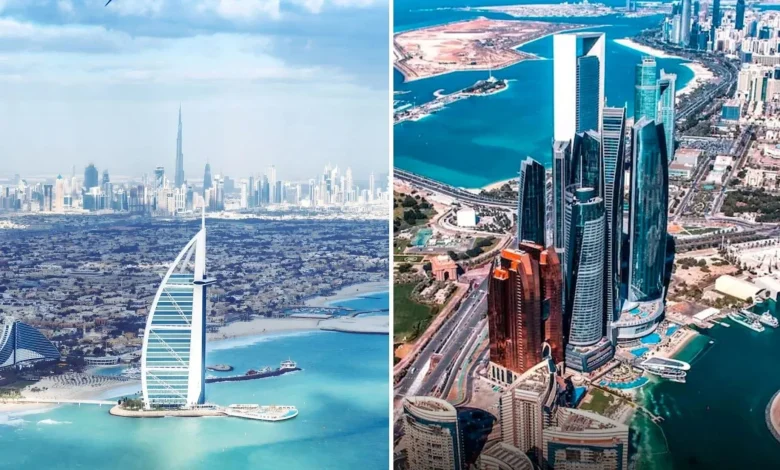
This data reveals a stark regional dichotomy. While the Gulf states utilized their hydrocarbon wealth to build futuristic metropolises, fund technological innovation, and establish powerful global sovereign wealth funds, the revolutionary government found itself constantly battling inflation, unemployment, and deteriorating infrastructure. The contrast is not merely statistical; it is physically evident in the soaring skylines of Doha, Dubai, and Riyadh, compared to the aging, smog-filled urban centers of Tehran.
Qatar’s Gas Boom vs. Iranian Stagnation
Perhaps the most painful comparative case study lies in the shared South Pars/North Dome gas field, the largest natural gas reserve in the world. Qatar, possessing the North Dome portion, partnered aggressively with Western energy giants like ExxonMobil and TotalEnergies. By embracing foreign technology and securing long-term capital, Qatar constructed state-of-the-art Liquefied Natural Gas (LNG) liquefaction trains. This strategic foresight transformed the tiny peninsula into an LNG superpower, resulting in one of the highest GDP per capita metrics globally. Conversely, the portion of the field under Tehran’s control, South Pars, has suffered from chronic underinvestment, lack of access to advanced drilling technology, and severe sanctions. While Qatar exports massive volumes of LNG globally, generating hundreds of billions of dollars, its neighbor frequently struggles with domestic winter gas shortages due to dilapidated extraction and distribution infrastructure.
The UAE’s Blueprint: Diversification, Trade, and Tourism
The United Arab Emirates provides another glaring contrast. Recognizing the eventual limits of crude oil dependency, the UAE embarked on a relentless diversification campaign starting in the late 20th century. Dubai transformed itself into a global logistics, aviation, and tourism hub, leveraging the Jebel Ali port and Emirates Airlines to connect East and West. Abu Dhabi utilized its immense oil wealth to fund the Abu Dhabi Investment Authority (ADIA), securing long-term financial stability. The UAE maintained a steady 4-5% annual growth rate by ensuring a stable, business-friendly environment that attracts millions of expatriate workers and billions in FDI. Across the Gulf waters, despite boasting a population of over 85 million highly educated citizens, a diverse climate, and immense natural resources, isolationist policies have prevented the emergence of a competitive private sector, leaving the economy chained to unpredictable oil smuggling revenues.
Geopolitical Ramifications in 2026 and Beyond
As the geopolitical landscape shifts into 2026, the economic consequences of these historical choices are reaching a critical boiling point. Decades of underperformance have not tempered the state’s regional ambitions; rather, they have forced the government into increasingly aggressive negotiation postures. Desperate to inject capital into a failing economy, state officials have recently made exorbitant financial demands on neighboring states, a move detailed in recent coverage of reparations demands from five Arab neighbors. These demands highlight a deeply entrenched victimhood narrative that seeks to externalize the blame for domestic economic failures. Furthermore, the broader regional instability continues to send shockwaves through global markets, emphasizing the interconnected nature of Middle Eastern geopolitics. Ongoing diplomatic efforts, including the recent comprehensive geopolitical impact of a regional ceasefire, demonstrate how the nation’s economic desperation is inherently tied to its militaristic foreign policy, creating a vicious cycle of sanctions, aggression, and further economic decline.
The Impact of Continued Sanctions and Strait Tensions
A primary mechanism of this economic isolation has been the heavy utilization of the Strait of Hormuz as a geopolitical bargaining chip. Whenever domestic economic pressures mount, the government frequently resorts to threatening the closure of this critical maritime chokepoint, through which a significant percentage of the world’s traded oil and LNG flows. However, this strategy is inherently self-destructive. Escalations in the Strait immediately trigger severe international backlash and tighter financial embargoes. The economic ripple effects of these threats are profound, as seen when Hormuz closure threats sparked an 11% surge in EU natural gas futures. While such spikes temporarily increase the value of smuggled crude, the resulting punitive sanctions permanently cripple the broader civilian economy, cutting off access to the SWIFT banking system, freezing billions in foreign reserves, and preventing the importation of essential medical and industrial goods.
Structural Flaws in the Iranian Economic Engine
Beyond the catastrophic impact of external sanctions, the domestic economy suffers from profound structural flaws engineered by the state. The Islamic Revolutionary Guard Corps (IRGC) has systematically expanded its reach beyond the military sphere, effectively capturing massive sectors of the civilian economy. Through engineering firms like Khatam al-Anbiya, the IRGC controls major construction, telecommunications, and energy projects, creating a monopolistic environment that stifles private entrepreneurship. This militarization of the economy deters both domestic and international investors, who refuse to compete against state-backed entities that do not operate under standard market principles. For comprehensive data tracking these structural deficiencies across the Middle East, economists frequently consult World Bank MENA Economic Updates, which consistently highlight the severe lag in non-oil private sector growth within the country compared to its GCC peers.
Currency Collapse and Persistent Inflation Pressures
The most visible symptom of this prolonged economic mismanagement is the utter collapse of the national currency, the rial. Prior to the revolution, the rial traded at approximately 70 to the US dollar. Today, decades of unchecked money printing to cover massive budget deficits, combined with severe currency controls and capital flight, have driven the black-market exchange rate into the hundreds of thousands of rials per dollar. This hyper-depreciation has decimated the purchasing power of the middle class, pushing millions into poverty. Inflation routinely hovers between 40% and 50%, eroding savings and making basic commodities unaffordable. The government’s attempts to implement dual exchange rates have only fueled rampant corruption and arbitrage, further hollowing out the productive sectors of the economy.
The GCC’s Global Integration Model
In stark contrast, Saudi Arabia, Bahrain, Oman, and Kuwait recognized that long-term survival required integrating into the global capitalist system. Saudi Arabia’s Vision 2030 is the most prominent contemporary example of this strategy. By liberalizing social laws to attract global talent, investing heavily in renewable energy, and launching mega-projects like NEOM, Riyadh is aggressively diversifying its portfolio. These nations utilized their hydrocarbon peak not to fund isolated ideological crusades, but to buy stakes in global technology companies, real estate, and financial institutions. By maintaining strategic defense and economic alliances with Western powers and emerging Asian economies alike, the GCC states guaranteed their security while maximizing their economic output. They picked the path of open trade and pragmatic diplomacy, reaping the compounding benefits of nearly five decades of compounding annual growth.
Conclusion: The Unpaid Receipts of the Islamic Revolution
The historical verdict on the economic strategy chosen in 1979 is written in the unyielding ledgers of global finance. A nation endowed with immense natural wealth, a strategic geographic position bridging Europe and Asia, and a highly educated, deeply resilient populace should have organically evolved into the undisputed economic powerhouse of the Middle East. Instead, it became a cautionary tale of ideological hubris. The Islamic Revolution promised its citizens absolute independence from foreign domination, and in a strictly political sense, it delivered exactly that. However, this autonomy came at an apocalyptic price. It delivered 47 years of grueling economic stagnation, isolated the nation from the technological revolutions of the late 20th and early 21st centuries, and impoverished generations of citizens. While neighboring states built glittering, cloud-piercing skylines and secured their financial futures, the revolutionary state remained trapped in a perpetual cycle of resistance and regression. Ultimately, the economic receipts of revolution, long delayed by the temporary band-aids of oil smuggling and internal repression, have finally come due, leaving the nation far behind in a rapidly advancing world.