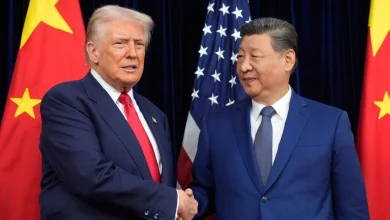
Deployment of U.S. Jets to UAE Hedges Iran Peace Talks
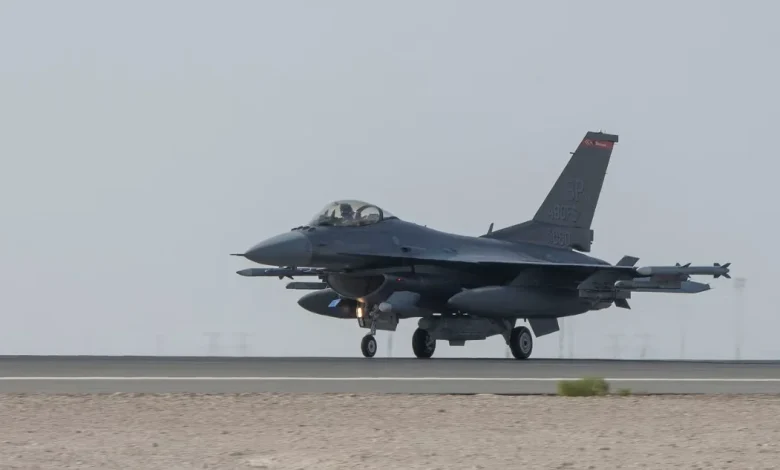
Deployment of American military might has dramatically escalated in the Middle East this weekend, signaling a massive geopolitical hedge. The United States has rapidly mobilized a formidable combat package, flying a dozen F/A-18 fighter jets, at least seven aerial refueling tankers, and a C-17 Globemaster III cargo aircraft directly into the strategically critical Al Dhafra Air Base in the United Arab Emirates. This sudden influx of high-tier aviation assets coincides precisely with an intensely delicate diplomatic mission led by former President Donald Trump in Pakistan, aiming to chart a viable path forward amid collapsing Iran ceasefire negotiations. The simultaneous execution of aggressive military posturing alongside high-stakes diplomatic maneuvering underscores a dual-track strategy designed to project unyielding strength while leaving the door open for a negotiated settlement. As the global community watches closely, the rapid insertion of offensive and defensive airpower into the UAE serves as a stark warning to Tehran: should the diplomatic track fail, the United States remains perfectly positioned to execute sustained, devastating air operations across the Persian Gulf.
Al Dhafra Base Receives Massive Combat Enhancement
Al Dhafra Air Base, situated just outside Abu Dhabi, has long served as a critical node for United States Central Command (CENTCOM) operations in the Middle East. The arrival of this latest detachment of aircraft transforms the facility into a formidable fortress of force projection. Historically, Al Dhafra has hosted a variety of reconnaissance and fighter squadrons, but the sudden concentration of F/A-18 jets represents a significant tactical escalation. The base’s proximity to the Iranian coastline—barely a few hundred miles away—makes it an ideal launching pad for rapid-response missions. This geographic advantage drastically reduces the time required for U.S. forces to intercept aerial threats or launch preemptive strikes against hostile naval or land-based targets. Furthermore, the integration of these newly arrived assets with existing UAE air defense networks creates a layered, virtually impenetrable shield over one of the world’s most critical economic corridors. The logistical feat of deploying these aircraft alongside the massive C-17 Globemaster III, which undoubtedly carried specialized munitions, ground support equipment, and highly trained maintenance crews, demonstrates the unparalleled expeditionary capabilities of the U.S. military. This is not merely a symbolic show of force; it is a fully operational combat deployment ready for immediate tasking.
The Tactical Role of F/A-18 Fighter Jets
The F/A-18 Hornet, and its more advanced Super Hornet variant, are the absolute backbone of American naval and allied tactical aviation. Known for their incredible versatility, these twin-engine, multirole combat jets are equally proficient in air-to-air dogfighting and precise air-to-ground strike missions. In the context of a potential conflict with Iran, the F/A-18s offer unparalleled utility. They are capable of carrying advanced beyond-visual-range air-to-air missiles (AMRAAMs) to neutralize Iranian interceptors or drones before they can pose a threat to allied airspace. Simultaneously, they can be loaded with Joint Direct Attack Munitions (JDAMs) or anti-ship missiles to target heavily fortified coastal defense batteries or fast-attack craft swarms operated by the Islamic Revolutionary Guard Corps (IRGC). The presence of a dozen of these advanced fighters at Al Dhafra ensures that U.S. commanders have immediate access to a flexible, lethal response option that can be tailored to a wide spectrum of emergent threats. Their advanced radar systems and electronic warfare capabilities further ensure that they can operate effectively even in highly contested, electronically jammed environments.
Aerial Refueling Tankers and Long-Range Strike Capabilities
Perhaps the most strategically significant element of this deployment is not the fighter jets themselves, but the inclusion of at least seven aerial refueling tankers. In modern air combat, reach and endurance are dictated entirely by the availability of airborne fuel. The deployment of KC-135 Stratotankers or KC-46 Pegasus aircraft exponentially increases the operational radius and loiter time of the F/A-18s. Seven tankers is a massively disproportionate number for just twelve fighters, heavily implying that these assets are intended to support sustained, round-the-clock combat air patrols or deep-strike missions far beyond the immediate vicinity of the Persian Gulf. This ratio suggests a tactical doctrine focused on continuous airborne alert, ensuring that fully armed fighters are already in the sky and awaiting targeting coordinates the moment hostilities commence. Additionally, these tankers can support other allied aircraft in the region, acting as a force multiplier for the entire coalition.
| Asset Type | Quantity Deployed | Primary Mission Role | Strategic Impact |
|---|---|---|---|
| F/A-18 Fighter Jets | 12 Aircraft | Multirole Strike / Air Superiority | Immediate interception and precision strike capability. |
| Aerial Refueling Tankers | 7 Aircraft | In-Flight Fuel Replenishment | Massive extension of operational range and combat loiter time. |
| C-17 Globemaster III | 1 Aircraft | Heavy Strategic Airlift / Logistics | Rapid insertion of munitions, ground crews, and radar arrays. |
Diplomatic Efforts in Pakistan Face Mounting Tensions
While the skies over the UAE roar with American jet engines, a very different kind of battle is being waged on the ground in Islamabad. Donald Trump’s diplomatic presence in Pakistan this weekend is a calculated maneuver aimed at leveraging regional proxies and intermediaries to force Tehran back to the negotiating table. Pakistan, sharing a volatile border with Iran and maintaining complex ties with the Taliban in Afghanistan, sits at the nexus of South Asian and Middle Eastern geopolitics. The diplomatic channels in Islamabad offer a back-door mechanism to communicate red lines and proposed concessions to the Iranian leadership without the immediate glare of direct, formal bilateral talks. However, these efforts are occurring under immense pressure, as Pakistan details failed U.S.-Iran deals that have previously collapsed, leaving behind a legacy of mistrust and heightened military readiness on all sides.
Trump’s Strategy: Maximum Pressure Meets Regional Diplomacy
The overarching strategy being deployed here is classic realpolitik: coupling severe military deterrence with aggressive diplomatic outreach. By massing strike capabilities at Al Dhafra, the U.S. is artificially lowering the threshold for military intervention, theoretically forcing Iran to take the diplomatic track more seriously. This “peace through strength” approach relies heavily on the credibility of the military threat. Trump’s team is reportedly utilizing the Pakistan summit to outline the exact economic and military consequences of a ceasefire collapse, presenting Tehran with a stark binary choice: de-escalation and potential sanctions relief, or facing a fully mobilized U.S. strike package already pre-positioned in their backyard. The success of this strategy hinges entirely on Iran’s internal political calculus and its assessment of American resolve.
Iran Ceasefire Fragility and Potential for Conflict Escalation
The current ceasefire framework between Iran and western-aligned proxies remains incredibly fragile. Minor skirmishes, proxy rocket attacks, and aggressive naval posturing in the Gulf of Oman continually threaten to ignite a broader conflict. Hardliners within the Iranian government view any concession as a capitulation to Western imperialism, while the IRGC actively seeks to project regional dominance through its network of allied militias across Lebanon, Syria, Iraq, and Yemen. In recent weeks, the rhetoric has reached a fever pitch, as Iran threatens new military blows against American infrastructure and allied shipping vessels. This constant brinkmanship requires the U.S. to maintain a high state of readiness, as the transition from a tense ceasefire to full-scale kinetic warfare could happen in a matter of hours, initiated by a single miscalculation or rogue proxy action.
Contingency Operations and Central Command’s Preparedness
In preparation for worst-case scenarios, the U.S. Department of Defense has clearly authorized CENTCOM to transition from a peacetime deterrence posture to an active contingency footing. The newly deployed aircraft are likely already executing familiarization flights, integrating with local air traffic control, and simulating strike packages against mocked-up Iranian air defense grids. Contingency plans almost certainly include the immediate suppression of enemy air defenses (SEAD), the targeted destruction of IRGC ballistic missile launch sites, and the protection of critical desalination and energy infrastructure across the Arabian Peninsula. The swift arrival of the C-17 aircraft ensures that the munitions dumps at Al Dhafra are fully stocked with precision-guided weaponry necessary for these high-intensity operations.
Middle Eastern Power Dynamics Shifting Amid Crisis
The arrival of U.S. reinforcements is sending ripples across the entire Middle Eastern political landscape. Saudi Arabia, Bahrain, and Qatar are closely monitoring the situation, recognizing that their own security is inextricably linked to the U.S. security umbrella. While these nations welcome the deterrence against Iranian aggression, there is a palpable anxiety regarding the collateral damage of a regional war. The Gulf Cooperation Council (GCC) finds itself caught between the desire to see Iran’s regional ambitions curtailed and the desperate need to maintain stability for their economic diversification initiatives. The overarching fear is that an unchecked escalation could lead to widespread destruction of energy infrastructure, plunging the region into an unprecedented economic and humanitarian crisis.
The Role of the UAE in Regional Stability
The United Arab Emirates occupies a particularly precarious position in this unfolding drama. As the host nation for these powerful U.S. assets, Abu Dhabi implicitly aligns itself with Washington’s aggressive posture. Yet, the UAE also maintains deep historical and economic ties with Iran, serving as a critical hub for Iranian trade and finance. This dual identity requires walking a geopolitical tightrope. The Emirates must demonstrate solidarity with its American security guarantors while attempting to placate a heavily armed, volatile neighbor. The economic pressures are immense, as seen when UAE dollar lifeline pressures have previously complicated Washington’s ability to seamlessly execute financial blockades against Tehran without inadvertently crashing Gulf economies.
Economic Repercussions of a Potential Strait of Hormuz Crisis
Beyond the immediate military and diplomatic concerns, the specter of a closed Strait of Hormuz hangs heavy over global financial markets. Nearly a third of the world’s seaborne oil passes through this narrow maritime chokepoint. Any kinetic conflict involving U.S. jets flying from the UAE and Iranian forces would almost certainly result in the immediate cessation of commercial shipping through the strait. The economic shockwaves would be instantaneous and catastrophic. We have already witnessed market panics in smaller-scale disruptions, such as when a partial surge in EU natural gas futures wreaked havoc on European energy planning. A full-scale blockade, triggered by a collapsed ceasefire, would drive oil prices to historic highs, inducing severe inflationary pressures globally and potentially triggering a synchronized global recession. The U.S. military deployment is therefore not just a defense of regional allies, but a critical intervention to protect the lifelines of the global macroeconomic system.
Future Implications for U.S. Military Doctrine in the Gulf
As this tense standoff continues, the rapid deployment of airpower to Al Dhafra provides a clear window into the future of American military doctrine in the Middle East. Moving away from massive, vulnerable ground troop deployments, the Pentagon is clearly prioritizing agile, highly lethal aviation and naval assets that can be surged into a theater at a moment’s notice. This “over-the-horizon” capability relies heavily on maintaining robust, pre-established logistics hubs like Al Dhafra, heavily stocked with munitions and supported by massive aerial refueling fleets. Whether Trump’s diplomatic gamble in Pakistan pays off or the region spirals into conflict, the current massing of F/A-18s and tankers guarantees that the United States will remain the decisive military power in the Persian Gulf for the foreseeable future, ready to dictate terms from the sky.