Undersea cables in Hormuz Mapped by Iran: A Severe Threat
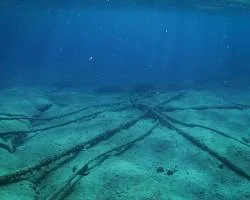
Undersea cables have become the latest focal point in Middle Eastern geopolitical tensions, as Iran has officially published a meticulously detailed map outlining the precise locations of submerged internet infrastructure running through the strategic Strait of Hormuz. This unprecedented move has sent shockwaves through the global telecommunications sector, international financial markets, and military intelligence communities. By explicitly pinpointing these critical digital arteries, Tehran has effectively signaled its capability to disrupt a maritime chokepoint that is just as vital for global data transmission as it is for global energy supplies. With the global economy increasingly dependent on seamless digital connectivity, the weaponization of internet infrastructure represents a dangerous escalation in modern asymmetric warfare. At least seven major underwater telecommunications lines pass through this narrow waterway, serving as the technological backbone for nations across the Middle East, Asia, and Europe. The release of this mapping data is not merely a theoretical exercise; it is accompanied by explicit warnings describing the strait as a highly vulnerable point for the digital economy of Gulf countries. Over 97 percent of all global internet traffic dedicated to e-commerce, cloud computing services, and secure international communications runs through these submerged fiber-optic networks. The stark reality is that the modern digital landscape remains inherently physical, tied to fragile glass threads resting on the ocean floor. As tensions escalate, many analysts are recalling recent maritime blockades. In fact, the Strait of Hormuz closed again amidst ongoing disputes, highlighting the physical and digital vulnerabilities of the region. This article provides an extensive, highly detailed analysis of the situation, the technical vulnerabilities of the cable network, the economic ramifications for the Gulf states, and the broader geopolitical consequences of Iran’s digital threat matrix.
Table of Contents
- The Strategic Mapping of Undersea Cables
- Identifying the Seven Major Undersea Cables
- Why 97% of Global Internet Traffic Relies on Maritime Choke Points
- The Backbone of E-Commerce and Cloud Services
- A Direct Threat to the Gulf Countries Digital Economy
- Assessing the Vulnerability of Regional Connectivity
- Precedents of Disruption: Red Sea Undersea Cables Incidents
- Geopolitical Ramifications and Potential Retaliation
- Military Responses and Defense Strategies
- Global Market Reaction to the Digital Blockade Threat
- Shifting Tides in International Relations
- Conclusion: Securing the Digital Frontier
The Strategic Mapping of Undersea Cables
The intentional mapping and public disclosure of submerged internet infrastructure by Iranian authorities mark a significant shift in strategic posturing. Historically, the exact coordinates of these fiber-optic networks were treated as closely guarded commercial secrets, shared only with maritime authorities to prevent accidental severing by ship anchors or deep-sea trawling nets. By publishing these coordinates with an accompanying narrative highlighting their extreme vulnerability, Iran is demonstrating its capacity to cripple regional communications without firing a single conventional weapon. The geographic reality of the Strait of Hormuz exacerbates this threat. At its narrowest point, the strait is just 21 miles wide, with shipping lanes measuring merely two miles across in each direction. Furthermore, the waters in this region are exceptionally shallow, often not exceeding 90 meters in depth. This shallow environment makes the cables highly accessible to a variety of disruptive methods, ranging from specialized diver operations and autonomous underwater vehicles (AUVs) to the simple, brute-force dragging of commercial ship anchors. Iran’s fleet of Ghadir-class midget submarines is uniquely suited for stealth operations in these shallow littorals, theoretically allowing them to deploy mechanical cutters or explosive charges directly onto the cables undetected. Military strategists point out that defending such an extensive and accessible network of cables is a logistical nightmare.
Identifying the Seven Major Undersea Cables
Telecommunications experts and intelligence agencies have verified that at least seven major international cables transit through the Strait of Hormuz. These cables are the literal lifelines connecting the hyper-connected economies of the United Arab Emirates, Saudi Arabia, Bahrain, Qatar, and Oman to the rest of the world. While specific cable names are subject to continuous upgrades and regional consortiums, some of the most prominent networks traditionally traversing this area include branches of the FALCON network, elements of the SEA-ME-WE consortium (South East Asia-Middle East-Western Europe), and various regional interconnects designed to provide redundancy. However, true redundancy in a geographical chokepoint is a paradox; if the chokepoint itself is compromised, multiple supposedly redundant cables can be severed simultaneously.
| Cable Infrastructure Focus | Geographic Routing | Primary Economic Function | Vulnerability Level |
|---|---|---|---|
| FALCON Network Extensions | Gulf to India and Egypt | Broadband & Cloud Enterprise | Critical |
| SEA-ME-WE Arteries | Europe to Asia via Gulf | E-commerce & Global Trade Routing | High |
| Regional Interconnects (e.g., TW1, GBICS equivalents) | Intra-Gulf Interconnectivity | Financial Sector Intranet & Banking | Critical |
| Emerging Trans-Arabian Links | Oman to UAE Corridors | Data Center Synchronization | Moderate |
The destruction or prolonged disruption of these cables would necessitate deploying highly specialized cable repair ships to an active conflict zone, a prospect most commercial marine companies would refuse without heavy naval escorts.
Why 97% of Global Internet Traffic Relies on Maritime Choke Points
It is a common misconception that the modern internet is heavily reliant on satellite technology. While systems like Starlink have revolutionized remote access, the undeniable reality of global telecommunications is that over 97 percent of all intercontinental data traffic is transmitted via submerged fiber-optic networks. Satellites simply do not possess the bandwidth capacity, low latency, or cost-effectiveness required to handle the exabytes of data generated daily by global financial markets, streaming services, and enterprise cloud operations. The Strait of Hormuz acts as a digital funnel. Data traveling between the thriving tech hubs of Asia, the massive consumer markets of Europe, and the financial centers of the Middle East must physically pass through this narrow waterway. When Iran highlighted this 97 percent metric in its policy reports, it was an explicit acknowledgement of the asymmetrical power embedded in controlling or threatening this chokepoint. According to data tracked by global telecommunications analysts at TeleGeography, the dense concentration of vital infrastructure in these narrow straits creates unparalleled risk profiles for the global economy.
The Backbone of E-Commerce and Cloud Services
The modern e-commerce ecosystem operates on incredibly tight margins of latency and connectivity. When a consumer in the UAE purchases an item from an Asian manufacturer, or when a European company accesses cloud-hosted data residing in a server farm in Bahrain, that data transaction is routed through the Strait of Hormuz. Any disruption to these physical lines results in immediate packet loss, degraded service, and potentially catastrophic failures for algorithmic trading platforms that rely on millisecond advantages. The digital disruptions could easily spill over into the energy and commodities sectors, much like how the Hormuz closure sparks 11% surge in EU natural gas futures during physical blockades. The intersection of physical energy routes and digital data routes makes the strait doubly critical.
A Direct Threat to the Gulf Countries Digital Economy
The narrative accompanying Iran’s newly published maps explicitly labels the strait as a vulnerable point for the digital economy of Gulf countries. Over the past decade, nations like the UAE, Saudi Arabia, and Qatar have invested hundreds of billions of dollars into transitioning their economies away from oil dependency. Initiatives like Saudi Vision 2030 and the UAE’s focus on artificial intelligence, blockchain technologies, and establishing hyper-scale data centers are entirely predicated on stable, unbroken connectivity to the global internet. Threatening these submerged data arteries is effectively threatening the economic future of these nations. A prolonged internet blackout or severe bandwidth throttling would freeze international banking transactions, halt smart-city operations in places like Dubai and Neom, and severely undermine investor confidence. These digital chokepoints are crucial for the financial survival of neighboring states, drawing parallels to the UAE dollar lifeline that stabilizes regional economies amidst broader geopolitical turbulence.
Assessing the Vulnerability of Regional Connectivity
Gulf nations have recognized this vulnerability and have attempted to build overland fiber-optic routes crossing the Arabian Peninsula to connect to the Red Sea or the Mediterranean. However, these terrestrial routes are incredibly expensive to maintain, face complex geopolitical hurdles traversing multiple sovereign borders, and simply cannot match the sheer data volume capacity of combined submarine cable bundles. The sea remains the ultimate medium for mass data transit. Iran’s publication of the map serves to remind its neighbors that despite their vast wealth and terrestrial infrastructure investments, their digital lifelines remain exposed in shared waters. Furthermore, the modern oil and gas sector relies on instantaneous data transfer to function smoothly. Automated loading terminals in ports like Ras Tanura, and the massive logistics networks orchestrating the flow of LNG from Qatar require unbroken connectivity. If the cables are severed, not only does e-commerce halt, but the physical delivery of energy could face immense logistical bottlenecks.
Precedents of Disruption: Red Sea Undersea Cables Incidents
To understand the gravity of Iran’s explicit threats regarding the Strait of Hormuz, one must look at recent historical precedents in adjacent waters. Similar submerged networks in the Red Sea have already experienced severe disruptions during regional conflicts. The Houthi militant group, which operates with significant backing from Tehran, has been implicated in incidents involving the severing or damage of several crucial lines connecting Europe to Asia via the Bab el-Mandeb strait. In those instances, global internet traffic experienced noticeable routing delays, and telecom consortiums scrambled to re-route bandwidth at enormous costs. The Red Sea incidents proved three critical points: first, non-state actors and regional powers possess both the intent and the capability to target deep-sea infrastructure; second, the international community lacks a robust, immediate response mechanism to protect these lines; and third, repairing damaged cables in a militarized zone can take months. If the playbook used in the Red Sea is applied to the Strait of Hormuz—a waterway far more vital to the digital operations of the Gulf’s economic powerhouses—the resulting internet degradation would be exponentially more devastating.
Geopolitical Ramifications and Potential Retaliation
The geopolitical ramifications of this cyber-physical threat cannot be overstated. By openly acknowledging the vulnerability of the internet backbone, Tehran is expanding its deterrent capabilities. Rhetoric from Tehran has been intensifying; recently, Iran threatens new military blows amid Hormuz crisis, and the inclusion of digital infrastructure in this matrix represents a terrifying evolution of the conflict. Traditional military doctrine in the region has focused heavily on protecting oil tankers, securing port facilities, and maintaining freedom of navigation for physical cargo. The realization that an adversary could cripple a nation’s economy by dropping depth charges on fiber-optic bundles forces a complete paradigm shift at the Pentagon and regional defense ministries.
Military Responses and Defense Strategies
In response to these developments, Western navies and Gulf state defense forces are likely to accelerate the deployment of underwater surveillance technologies. This includes sonar arrays, advanced sub-hunting P-8 Poseidon patrols focusing on shallow water anomalies, and the deployment of defensive uncrewed underwater vehicles (UUVs). However, international maritime law presents complex challenges. Submarine cables traverse international waters, Exclusive Economic Zones (EEZs), and territorial seas. Establishing a continuous defensive perimeter over thousands of miles of submerged glass is practically impossible, forcing strategists to rely heavily on deterrence rather than pure defensive fortification.
Global Market Reaction to the Digital Blockade Threat
Financial markets, historically hyper-sensitive to any disruption in the Strait of Hormuz regarding oil, are now grappling with the new risk premium associated with digital blockades. Technology stocks, cloud service providers, and major global banks with heavy Middle Eastern exposure have shown increased volatility following the publication of the cable maps. Investors are demanding to know the contingency plans of major data centers in the region. If a multinational corporation cannot access its regional headquarters’ servers because the primary and secondary fiber links in the Gulf have been severed, the financial losses accrue by the minute. Insurance premiums for maritime cable repair vessels are expected to skyrocket, and the cost of leasing bandwidth on supposedly safer terrestrial routes has already begun to command massive premiums.
Shifting Tides in International Relations
Diplomatically, this maneuver by Iran serves as a stark warning to the United States and its regional allies. It is a classic asymmetric strategy: finding the adversary’s most critical, yet least defensible, node and holding it at risk. The global internet was designed with routing redundancy, allowing data to find alternative paths if a node goes down. However, the physical reality of geography means that true redundancy bypasses the Middle East entirely, a solution that does not help the localized economies of the Gulf states. Governments must now engage in tense back-channel negotiations to establish norms of behavior regarding the protection of the digital seafloor.
Conclusion: Securing the Digital Frontier
Undersea cables are no longer just the domain of telecommunications engineers; they are prime targets on the modern geopolitical chessboard. Iran’s publication of detailed maps highlighting the extreme vulnerabilities within the Strait of Hormuz is a clear, unambiguous threat to the digital sovereignty and economic stability of the Gulf countries. With over 97 percent of critical global internet traffic—encompassing everything from consumer e-commerce to vast cloud computing architectures—flowing through these narrow and shallow waters, the potential for catastrophic disruption is immense. The international community, led by regional stakeholders and global tech giants, must urgently prioritize the development of more resilient terrestrial bypasses, advance maritime defense protocols for physical infrastructure, and establish clear deterrence policies against the weaponization of the internet’s physical layer. As the digital and physical worlds continue to merge, securing the submerged frontier of the global economy will undoubtedly be one of the defining security challenges of the decade.