US forces withdrawal from Iraq marks end of two-decade combat presence 2026
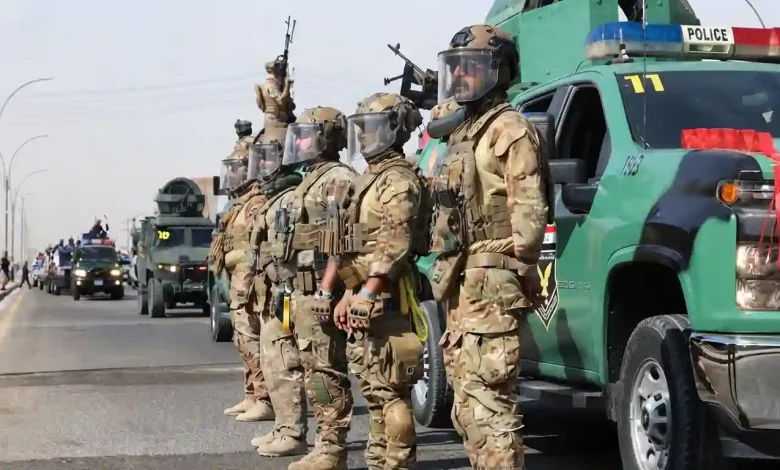
Table of Contents
US forces withdrawal from Iraq represents one of the most consequential strategic shifts in modern Middle Eastern military history. As American service members complete their departure from long-occupied garrisons across western and central Iraq, the geopolitical architecture established in the wake of the 2003 invasion reaches an unprecedented turning point. More than two decades after military operations unseated the regime in Baghdad, the reduction of conventional troop deployments concludes an era defined by counter-insurgency, security assistance, and shifting multilateral coalitions.
The conclusion of operational footprints at vital installations closes a dramatic historical chapter. Over twenty years of engagements resulted in the loss of approximately 4,500 American military personnel and hundreds of thousands of Iraqi citizens. While American planners view the relocation as the culmination of an evolving transition agreed upon through formal bilateral mechanisms, regional adversaries and political factions interpret the maneuver as a structural retreat that fundamentally realigns the sovereign balance of power in Mesopotamia.
Historical Context: Two Decades of Military Intervention
The timeline of foreign engagement in Iraq has witnessed severe fluctuations between expansive surge operations and calibrated redeployments. Following the formal conclusion of Operation Iraqi Freedom and the initial departure of combat contingents in late 2011, the swift rise of the Islamic State in 2014 prompted an international emergency intervention under the banner of Operation Inherent Resolve. That combined joint task force relied heavily on air superiority, intelligence sharing, and targeted ground advising to bolster Iraqi military, counter-terrorism, and federal police formations.
As the acute operational footprint recalibrates, the historical resonance of the conflict mirrors the wide-ranging economic and political instability seen in peripheral flashpoints. The ongoing friction surrounding iran strait of hormuz underscores how broader naval and asymmetric contingencies continuously affect terrestrial strategies across Iraq’s neighboring borders.
The Bilateral Framework: Transitioning from Operation Inherent Resolve
The operational roadmap for the troop departure originated through extended deliberations conducted by the US-Iraq Higher Military Commission. Initially framed under the administration of President Joe Biden in 2024, the timeline established strict phases for concluding the counter-IS coalition’s mission in federal Iraq, while preserving technical advisory channels in the autonomous Kurdistan region. The subsequent execution of this timeline under Donald Trump’s administration transpired against an intensely turbulent regional backdrop.
Despite intense external pressures and simultaneous regional crises, American defense officials maintained that the withdrawal adhered strictly to sovereign protocols. Iraqi military representatives confirmed that domestic forces have developed robust operational independence, having attained self-sufficiency in artillery coordination, logistical supply lines, and domestic perimeter protection.
The Strategic Vacuum: Regional Influence and Security Balance
The departure of coalition garrisons fundamentally alters the balance among political factions and armed elements operating within Iraq’s borders. Prominent political actors in Tehran have framed the pullout as a landmark victory, emphasizing that decades of armed resistance and parliamentary lobbying achieved what conventional military parity could not. Concurrently, regional observers monitor how the departure impacts fragile diplomatic channels, including efforts tied to an iran ceasefire proposal aimed at forestalling wide-scale theater escalation.
The removal of American bases removes an immediate conventional deterrent against localized proxy dominance. For years, integrated networks of Popular Mobilization Units (PMU)—many of which maintain deep doctrinal and institutional connections with foreign security establishments—operated in parallel with standard Iraqi army formations. Without direct Western physical presences to serve as friction points, these organizations are poised to secure unrestricted control over key cross-border corridors linking Baghdad, Damascus, and Beirut.
Comparative Assessment of Operational Mandates
The operational transition reshapes logistical realities, strategic responsibilities, and defense coordination frameworks across the country:
| Operational Dimension | Coalition Combat & Advisory Era | Post-Withdrawal Security Reality |
|---|---|---|
| Base Perimeter Control | Joint US-Iraqi military supervision | Exclusive Iraqi Armed Forces control |
| Airstrike Authorization | Combined Coalition Joint Task Force | Iraqi Ministry of Defense command |
| Intelligence Collection | Advanced ISR, Western signals architecture | Sovereign Iraqi platforms and regional pacts |
| Counter-IS Mandate | Direct combat advising and precision targeting | Autonomous Iraqi counter-terrorism ops |
| Regional Deterrence | Active US defense umbrella in central Iraq | Decentralized security balance |
The Threat of Asymmetric Extremism: Countering Islamic State Remnants
A primary concern voiced by independent defense analysts is the lingering capacity of Islamic State remnants to exploit emerging security deficits. Although the group lost its territorial caliphate years ago, clandestine cells remain embedded in the arid desert basins of Anbar and the rugged peaks of the Hamrin Mountains. Without coalition air support and constant signal reconnaissance, Iraqi forces face substantial hurdles in maintaining constant interdiction pressure against dispersed insurgent networks.
This persistent vulnerability mirrors other regional vacuums where non-state actors rapidly consolidated territory. The broader destabilization observed where houthi fighters advance in southern maritime straits demonstrates the velocity with which disciplined insurgent groups capitalize on geopolitical shifts and redirected security resources.
Baghdad’s Sovereign Dilemma: Alignments and Internal Tensions
The central government in Baghdad faces a difficult balancing act between national sovereignty, public sentiment, and geopolitical pressure. While sovereign pride demands the exit of foreign troops to satisfy domestic constituencies, security planners recognize the practical advantages previously provided by allied radar networks and logistics chains. Attempts to maintain equilibrium between external regional powers and global institutions mirror delicate multilateral talks, where negotiators pursue shuttle diplomacy hopes to preserve basic diplomatic norms.
Furthermore, this realignment occurs alongside escalating regional flashpoints. Sustained military maneuvers documented during ongoing us airstrikes against peripheral proxy assets reinforce the constant danger that Iraqi territory could be transformed into a battleground for external rivals attempting to settle wider regional conflicts.
Base Transitions: Ain al-Asad and Erbil Realignment
The formal handover of major air bases serves as the most visible indicator of operational change. Ain al-Asad Airbase, situated in the western desert of Anbar province, functioned as the premier Western logistical and air operations node for decades. It endured high-profile ballistic missile attacks during periods of acute regional tension and remained a symbol of foreign military footprint in the country. The complete transfer of the base to the Iraqi Air Force shifts total security ownership back to local authorities.
Simultaneously, tactical facilities near Erbil in the Iraqi Kurdistan region are undergoing structured reconfigurations. While Kurdish authorities historically favored sustained foreign troop deployments to balance federal overreach and external intimidation, the broader mandate transition dictates that foreign presences pivot to technical advisory assistance. As defense spending shifts toward modern assets, institutional priorities worldwide are transforming, reminiscent of how modern ukraine defense deal frameworks increasingly rely on technological modernization rather than permanent overseas troop deployments.
Broader Geopolitical Fallout Across the Middle East
The geopolitical consequences of the withdrawal reverberate far beyond Iraq’s physical borders. Across regional capitols, foreign policy strategists are recalibrating their long-term security expectations regarding American commitments. Sustained confrontations documented in historical logs such as iran war day 156 demonstrate that physical base closures do not necessarily translate to regional pacification, but rather shift kinetic battles toward naval, electronic, and proxy domains.
The departure also impacts global commerce, energy corridor security, and commodity markets. Regional instability regularly ripples through capital channels, influencing consumer sentiment much like volatile swings in inflation expectations impact broader macroeconomic investments. As Iraq assumes complete responsibility for its territorial integrity, Baghdad must prove it can foster domestic stability, safeguard critical infrastructure, and balance complex bilateral partnerships without relying on foreign armed intervention.