Shuttle Diplomacy Hopes Rise as Qatar Mediates US-Iran Crisis 2026
Table of Contents
Shuttle diplomacy remains the primary mechanism for preventing an all-out regional confrontation as Doha intensifies backchannel efforts between Washington and Tehran. Despite United States President Donald Trump firmly dismissing speculative media claims that his administration was preparing to lift sanctions or release frozen assets in exchange for nuclear concessions, Qatari authorities have affirmed their commitment to indirect talks. Qatari Foreign Ministry spokesperson Majed al-Ansari underscored that mediators are actively transmitting communiqués between both capitals, aiming to establish common ground that could spare the broader international community from catastrophic security and economic repercussions.
Shuttle :Qatar Mediation Efforts in the Gulf Crisis
Doha has long established itself as a neutral bridgehead for sensitive diplomatic exchanges across the Middle East. Over several volatile months, Qatari negotiators have operated discretely behind closed doors, attempting to reconcile deeply entrenched positions. The public remarks delivered by Majed al-Ansari emphasize that high-stakes diplomacy is not abandoned simply because executive rhetoric from Washington projects absolute rigidity. Mediators understand that posturing often masks active transactional inquiries behind the curtain.
The role of intermediate communication has become vital because direct bilateral contact between senior American and Iranian officials remains severely restricted. By transporting draft proposals, diplomatic notes, and conditional security frameworks back and forth, Doha seeks to avert inadvertent military miscalculations. Observers tracking how Qatar mediates intense backchannel negotiations note that the Gulf state has frequently navigated seemingly insurmountable stalemates by focusing first on de-escalatory parameters rather than immediate grand bargains.
Shuttle :Trump’s Denial and the Official White House Stance
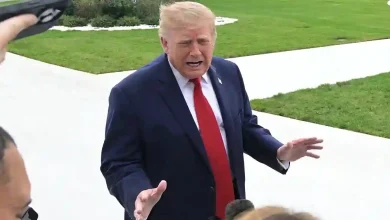
President Donald Trump pushed back forcefully against leaked reports suggesting the United States was evaluating financial incentives to entice Iranian diplomats back to the table. From the perspective of the Oval Office, offering preemptive sanctions relief or unfreezing billions of dollars in foreign bank reserves would weaken American deterrence. The administration maintains that maximum economic pressure remains the most effective instrument to compel Tehran into substantial, verifiable concessions regarding its nuclear infrastructure and ballistic missile inventory.
This public stance has created palpable tension with intermediate negotiators. While the administration projects an uncompromising line, diplomatic corridors suggest that specific technical understandings must eventually involve economic guarantees if Tehran is expected to curtail its enrichment activities. This diplomatic impasse closely mirrors broader strategic standoffs, including instances where Iran and United States officials engaged in intense rhetorical posturing before examining mutual terms of disengagement.
Shuttle :Public Rhetoric Versus Private Channels
Seasoned diplomats recognize a sharp divide between public pronouncements and private communications. While White House officials publicly disavow concessions to preserve leverage and mollify domestic political factions, working-level delegations often explore structured reciprocity. Such discussions typically examine sequential actions: a calibrated Iranian reduction in fissile material enrichment matched by targeted, reversible waivers on third-party commercial transactions.
Tehran, conversely, insists that no durable agreement can emerge without tangible relief from punitive banking and energy export sanctions. When Iranian officials observe conflicting signals from Washington, domestic hardliners push for expanded strategic deterrence, complicating the delicate balancing act being orchestrated in Doha.
Iranian Nuclear Demands and Economic Sanctions
At the epicenter of the dispute lies Iran’s steadily advancing uranium enrichment capacity. Tehran has consistently argued that its nuclear program is dedicated solely to peaceful civilian applications, including medical isotope production and sovereign power generation. Nevertheless, Western intelligence agencies and international watchdogs express acute alarm over uranium stockpiles enriched beyond civilian utility thresholds.
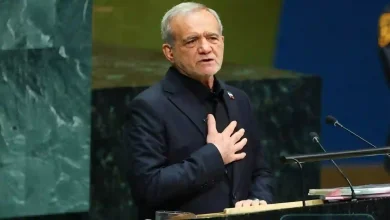
For Iran, economic normalization is non-negotiable. Severe fiscal sanctions have choked crude oil revenues, triggered domestic currency depreciation, and limited access to global financial clearinghouses. When Iranian leadership confronts heightened rhetoric, political figures frequently reaffirm that any future framework must address sovereignty, an approach highlighted when Masoud Pezeshkian says mutual respect must underpin comprehensive diplomatic exchanges.
Frozen Funds and Banking Hurdles
The status of Iranian foreign exchange reserves impounded across international jurisdictions remains an acute grievance. Tehran argues that humanitarian trade cannot function efficiently while its sovereign assets remain trapped in offshore escrow accounts. Washington contends that unlocking these reserves provides an economic lifeline to state-backed elements. Navigating this impasse requires inventive financial architectures, such as monitored humanitarian channels, which Qatari intermediaries have historically facilitated with varying degrees of success.
Geopolitical Stakes Across the Middle East
The geopolitical ramifications of a breakthrough—or a complete breakdown—extend far beyond the bilateral interests of Washington and Tehran. Neighboring Gulf states observe the fluctuating temperature of US-Iran relations with acute concern. Any sudden military escalation threatens critical infrastructure, maritime commercial transit corridors, and international energy markets. As tensions escalate, discussions surrounding an Iran diplomacy demand become integral to broader regional stability.
Regional capitals recognize that armed confrontation would inevitably embroil neighboring territories hosting Western defense facilities or operating adjacent oil export terminals. Preventing miscalculation along critical maritime chokepoints has therefore emerged as an imperative that unites diverse Middle Eastern governments, even those traditionally aligned against Tehran.
Comparative Framework: Gulf Diplomatic Initiatives
Understanding the current negotiation requires contrasting Doha’s shuttle mechanisms with previous and parallel regional mediation efforts that have shaped contemporary Gulf diplomacy.
| Mediation Framework | Primary Intermediary | Key Objectives | Primary Obstacles |
|---|---|---|---|
| Indirect Nuclear De-escalation | State of Qatar | Drafting sequenced nuclear freezes and humanitarian asset releases | Public White House denials and hardline Iranian pushback |
| Maritime Transit Stability | Sultanate of Oman | Securing free navigation along vital chokepoints | Militia drone deployments and regional naval skirmishes |
| Bilateral Diplomatic Rapprochement | People’s Republic of China | Re-establishing formal embassies and regional communication | Deep-seated proxy competitions across Yemen and Syria |
| Technical IAEA Inspections | European Envoys | Restoring monitoring cameras and fissile accounting | Denial of inspector visas and centrifuge expansion |
Maritime and Energy Security Concerns
A primary catalyst compelling Qatar to accelerate shuttle diplomacy is the vulnerability of global commercial shipping lanes. The waters surrounding the Arabian Peninsula serve as the conduit for a massive share of the world’s seaborne petroleum and liquefied natural gas. Threats to commercial shipping invariably prompt spikes in crude benchmarks, triggering ripple effects throughout international supply networks.
Historical precedents demonstrate that whenever diplomatic tracks fail, maritime frictions escalate precipitously. Past incidents near the Iran Strait of Hormuz transit corridors illustrate how electronic interference, vessel seizures, and drone encounters can threaten commercial transport within hours. Qatari mediators emphasize that an uncontained confrontation risks disrupting international energy supplies at a time when global consumer markets are intensely sensitive to inflationary shocks.
Furthermore, prolonged instability in nearby waterways like the Bab el-Mandeb, where Houthi fighters advance maritime denial operations, magnifies the urgency of securing a broad US-Iran diplomatic understanding. De-escalating tensions at the core of the regional network provides the clearest path toward stabilizing secondary maritime routes.
Regional Allies and Backchannel Dynamics
While Qatar spearheads the current shuttle format, other regional actors play supportive or watchful roles. Muscat maintains parallel conduits that periodically intercept or reinforce Qatari proposals. Meanwhile, traditional allies of the United States evaluate whether a negotiated settlement adequately neutralizes ballistic missile threats or merely provides short-term tactical reprieves.
The broader diplomatic architecture must also accommodate complex geopolitical realignments. In recent cycles, regional security discussions have had to account for multifaceted negotiations involving external powers. For instance, when analyzing regional balances, diplomatic delegations frequently assess how global pacts, such as the Ukraine defense deal or broader strategic reallocations, affect American military readiness and diplomatic bandwidth across the Middle East.
Multilateral Pressures and Treaty Mechanisms
International institutions, including the United Nations Security Council and the International Atomic Energy Agency, continue to urge Washington and Tehran to maintain open communication channels. Envoys emphasize that modern international law offers structured pathways for dispute settlement, but their efficacy depends on political will. As diplomatic staff ferry draft communiqués across Doha, the overarching priority remains constructing verifiable inspection mechanisms that satisfy Western oversight standards without triggering Iranian constitutional resistance.
The Road Ahead for De-escalation
The coming weeks will prove pivotal for the viability of Qatar’s shuttle diplomacy. If American representatives maintain an absolute refusal to discuss phased sanctions modifications, Iranian decision-makers may conclude that indirect negotiations have reached a dead end. Conversely, should intermediate messages produce an incremental de-escalation matrix—where uranium enrichment caps are matched by targeted trade authorizations—a workable compromise could emerge.
Diplomatic progress is inherently fragile. A single incident in the Persian Gulf, a hawkish executive statement, or an unexpected domestic political calculation could dismantle months of patient mediation. Yet, as Majed al-Ansari reminded reporters, establishing common ground is not merely an optional diplomatic ambition; it is an imperative necessity to protect international security, maintain critical global trade, and prevent an expansive military conflict that would impose devastating costs across the globe.