Iran Announcing New Restr icted Zone as Gulf Oil Prices Surge 2026
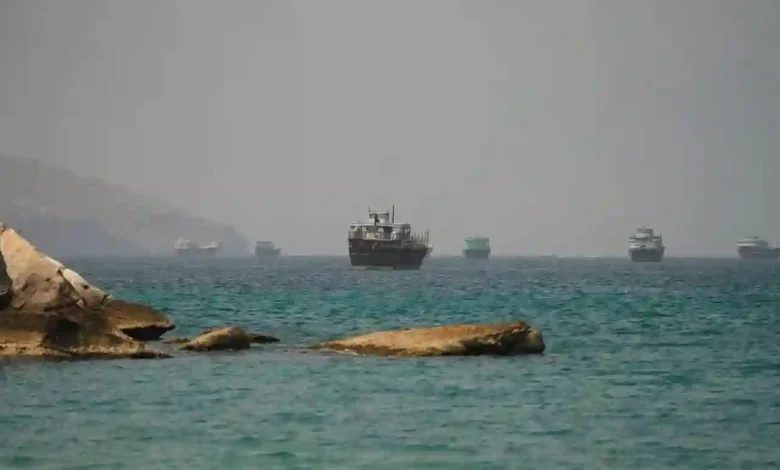
Table of Contents
Iran announced a new restricted zone in the Persian Gulf today, along with forthcoming maps for an entirely restructured international shipping corridor through the highly strategic Strait of Hormuz. This critical development follows a weekend marked by intense, reciprocal military strikes on commercial and state vessels, which immediately sent international oil benchmarks surging on Monday morning. According to state-run television, the newly designated restricted zone is set to begin from the exact line where the United States naval blockade of Iran initiates, extending deep into the surrounding waters of the Gulf.
The announcement, delivered by Mohsen Rezaei, the secretary of Iran’s Supreme National Security Council, has dramatically escalated geopolitical anxieties. Rezaei warned that any ship attempting to navigate through this newly restricted maritime territory without prior coordination with Tehran would face severe, immediate consequences, including being blacklisted on Iran’s sovereign sanctions registry. This strategic move directly challenges freedom of navigation norms in one of the world’s most vital energy transit choke points, worsening the already intensifying military posturing between U.S. and Iranian forces throughout the region.
The Announcement of the Restricted Maritime Zone
The declaration of this restricted zone marks a decisive turn in Tehran’s maritime strategy. Mohsen Rezaei, speaking on Sunday night in an extensive interview with Iranian state TV, made it clear that the zone was designed as an asymmetric response to the ongoing U.S. pressure. By anchoring the starting point of the restriction to the boundary of the American naval blockade, Iran is attempting to establish a legal and military counter-blockade. The operational details remain scarce, but the geopolitical signal is unmistakable: Iran is asserting supreme administrative and security jurisdiction over the waters of the Gulf.
Under international maritime frameworks, particularly the United Nations Convention on the Law of the Sea (UNCLOS), such unilateral declarations are highly controversial and likely to be contested by Western powers. However, with direct control of the northern shores of the Gulf and the Strait of Hormuz, Iran possesses the physical capability to enforce these zones through its naval assets. This escalating posturing comes amid lingering fears of an active Iran war stalemate, which has paralyzed conventional diplomatic routes and forced both sides to seek leverage through unconventional maritime maneuvers.
Redefining the Shipping Corridors in the Strait of Hormuz
In tandem with the restricted zone, Iran is introducing new navigation maps that could permanently alter global trade routes. According to Rezaei, these maps lay out a new international shipping corridor that runs directly through both Iranian and Omani sovereign waters. Significantly, Rezaei claimed that this corridor would fall under direct Iranian management and security oversight. Negotiations with Muscat are reportedly in their final stages, with the official maps expected to be signed and formally approved in the coming days.
Historically, Oman has maintained a delicate balancing act, acting as a neutral intermediary between Iran and Western nations. Partnering on a joint shipping corridor managed by Tehran suggests either growing Omani alignment with regional security realities or a pragmatic effort by Muscat to secure its own coastline from the threat of drifting conflicts. For global shippers, navigating this new corridor will require strict coordination with Iranian authorities. Failure to comply, as Rezaei stressed, will lead to a complete denial of transit privileges and immediate blacklisting, significantly raising the stakes for international merchant fleets operating in the Middle East.
| Key Maritime Security Metrics | Operational and Strategic Details | Projected Geopolitical & Economic Impact |
|---|---|---|
| Restricted Maritime Zone Boundary | Extends from the U.S. blockade line into key regions of the Gulf | Unilateral jurisdiction claimed; vessels added to sanctions list if uncoordinated |
| Joint Shipping Corridor | Under joint Iranian-Omani agreement; maps to be signed within days | Iran secures management of transit corridors; forces shippers to comply with Tehran |
| Weekend Kinetic Strikes | U.S. struck 3 Iranian tankers; IRGC targeted U.S. warships in the area | Escalated maritime risk premium, causing a sharp surge in global oil benchmarks |
| Transit Volumes (Strait of Hormuz) | Averaged 10 commodity vessels per day over the last ten days | Represents the lowest traffic level since May; forces diversion around Africa |
Escalating Strikes and Immediate Financial Fallout
The timing of Iran’s announcement is directly linked to a fresh wave of military strikes over the weekend. On Saturday, U.S. Central Command confirmed that American naval forces had launched targeted strikes against three Iranian oil tankers, including one anchored near Kharg Island, which serves as the primary export terminal for Iran’s crude shipments. The U.S. strikes were reportedly executed in retaliation for earlier drone and missile attacks launched by Iran’s Islamic Revolutionary Guard Corps (IRGC) against U.S. Navy warships patrolling the region.
The immediate economic fallout from this weekend exchange was felt across global energy markets as trading commenced on Monday. Given that the Strait of Hormuz is a critical artery through which approximately 20% of the world’s petroleum passes, any threat of restriction or physical damage to tankers triggers immediate panic buying. This has historically been a primary driver behind the historic volatility of Brent crude oil prices, which once again exhibited a sharp upward trajectory as trading screens lit up.
Rising Crude Prices and Economic Implications
International benchmark Brent crude futures jumped by more than 0.8% in early Monday trading, comfortably pushing past $97 per barrel, while West Texas Intermediate (WTI) futures saw a corresponding spike. Market analysts warn that if Iran begins actively intercepting or redirecting vessels under its new restricted zone policy, Brent could easily cross the $100 threshold, rekindling fears of a global energy crisis. This dramatic surge in crude is having a wider ripple effect on international financial markets, illustrating the fluctuating relationship between crude oil and bond yields, as soaring energy costs stoke inflation fears and put downward pressure on sovereign bonds.
Commodity Shipping Volume Drops to Record Lows
The physical volume of shipping through the Strait of Hormuz has already collapsed to historic lows. Data compiled by maritime analytics firm Kpler reveals that an average of only ten commodity vessels transited the Strait daily over the last ten days. This represents the lowest shipping density recorded since May, signaling that commercial operators are actively avoiding the area due to prohibitive insurance premiums and the high risk of kinetic engagement. War-risk insurance surcharges have skyrocketed, forcing some shipping lines to consider the far longer and more expensive route around the Cape of Good Hope.
The Broader Geopolitical Stalemate
This latest maritime escalation occurs within a broader, highly volatile geopolitical environment. It has been six months since the initial U.S. and Israeli airstrikes on Iranian infrastructure ignited the current active phase of the conflict. Since then, the theater of war has expanded from land-based strikes to a persistent maritime campaign. The brief diplomatic window that opened in June, which briefly raised hopes of a permanent ceasefire, has entirely collapsed as both Washington and Tehran accuse each other of violating the preliminary agreements.
The regional conflict is characterized by asymmetric warfare, with Iran utilizing its extensive proxy network and advanced missile capabilities to disrupt trade, while the U.S. and its allies rely on economic blockades and targeted naval strikes. This deadlock has resulted in a highly unstable status quo, where brief periods of calm are rapidly shattered by highly disruptive military operations on both sides.
From June’s Ceasefire Failure to Resumed Hostilities
The unraveling of the June ceasefire agreement set the stage for the current maritime crisis. After a temporary lull in heavy combat during much of August, the resumption of tit-for-tat strikes indicates that both sides have abandoned diplomatic negotiations in favor of military leverage. To fully grasp the rapid deterioration of regional security, one must examine the progression of the conflict over the preceding weeks, including the critical escalations detailed in the Iran war day 166 report, which documented the breakdown of maritime safe zones. This followed the preceding clashes on Iran war day 165 and the earlier flare-ups around Iran war day 163, all of which progressively chipped away at the fragile security framework of the Persian Gulf.
Sanctions and Enforcement Mechanisms for Non-Compliant Ships
Tehran’s newly announced maritime policy is not merely a symbolic declaration; it is backed by a structured enforcement mechanism designed to inflict economic pain. Mohsen Rezaei stated that any vessel entering the restricted zone without explicit Iranian authorization would be added to a national sanctions list. This designation would legally bar the vessel from ever transiting Iranian-controlled waters in the future and would complicate its ability to secure maritime insurance, as international underwriters are highly sensitive to sovereign sanctions risks.
This aggressive use of regulatory and economic tools by Iran mirrors the historical context of the Trump-era war against Iran policies, during which the United States heavily relied on secondary sanctions to cripple Iran’s energy exports. By implementing its own maritime sanctions regime, Tehran is attempting to turn the tables on Western shipping, leveraging its geographical dominance over the Strait of Hormuz to impose real economic costs on countries and corporations that support the U.S.-led blockade.
Technical and Strategic Dimensions of the Blockade Response
Beyond legal and diplomatic posturing, Iran has demonstrated the military capability to back up its maritime threats. In his Sunday interview, Rezaei revealed that Iranian forces had successfully test-fired a newly developed, highly advanced anti-destroyer missile directly over a U.S. aircraft carrier operating in the region approximately 48 hours prior to the announcement. He described the test as a “hellish warning” that forced U.S. naval assets to temporarily withdraw from their blockade positions.
While independent military analysts have yet to verify the specific details of the missile test, the psychological impact of such announcements is significant. Iran’s arsenal of anti-ship ballistic missiles, low-altitude cruise missiles, and swarm-drones presents a formidable threat to conventional naval forces in the confined waters of the Persian Gulf. By establishing the restricted zone, Iran is effectively declaring that any military or commercial vessel operating within those boundaries does so under the constant threat of targeted missile strikes, dramatically raising the cost of any U.S. attempts to enforce its own blockade.
Outlook for Global Energy Security
The creation of a restricted zone and a managed shipping corridor through the Strait of Hormuz represents a profound challenge to the global energy supply chain. If the joint corridor with Oman becomes the sole viable passage for oil tankers, global energy security will be held hostage to the state of political relations between Tehran and the West. This localized management of a global chokepoint could set a dangerous precedent, encouraging other regional powers to assert sovereign control over international straits.
For international oil markets, the era of stable, predictable transit through the Persian Gulf appears to have drawn to a close. As long as the broader geopolitical conflict remains unresolved, global consumers must prepare for sustained energy price volatility. The economic impacts of higher fuel costs will likely reverberate through global supply chains, affecting everything from manufacturing costs to consumer inflation, and keeping the threat of a wider economic slowdown firmly on the horizon.



One Comment