Iran war Day 163: Geopolitical Realignment & Energy Crisis
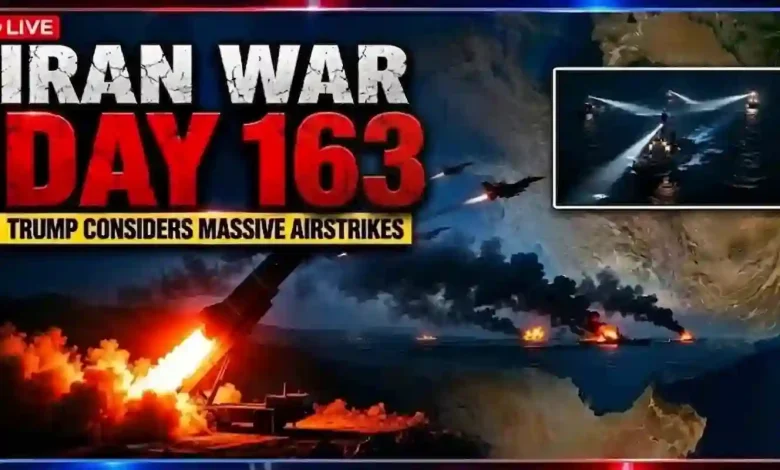
Table of Contents
Iran war operations have now entered approximately their 163rd day, marking a grueling and highly volatile chapter in modern Middle Eastern history. Since hostilities erupted on February 28, 2026, after initial strikes that completely altered the balance of power in the Persian Gulf, the international community has watched with growing alarm. What started as targeted maneuvers has devolved into a multi-faceted regional conflict involving heavy artillery, ballistic missiles, and drone-based asymmetric warfare. The ongoing U.S. war with Iran has reshaped alliance structures, deeply threatened maritime trade, and forced global energy markets to adjust to unprecedented supply disruptions.
As military operations enter their sixth month, there is no definitive sign of a permanent resolution. Daily skirmishes continue to affect military facilities, missile defense grids, and vital transport routes. Both sides maintain a high level of operational readiness, warning that any further escalation will be met with immediate and proportional force. In this comprehensive geopolitical analysis, we break down the tactical progress of the war on its 163rd day, examine the diplomatic maneuvers behind closed doors, and analyze the profound macroeconomic shockwaves emanating from the Strait of Hormuz.
1. Introduction to Day 163 of the Conflict
The situation on Day 163 of the conflict remains highly precarious. Armed forces on both sides of the Persian Gulf are locked in a state of high readiness, with frontline reports indicating that strike-and-counterstrike operations have become routine. Drone deployment, electronic warfare, and long-range ballistic missile systems are at the center of this modern tactical environment. Unlike traditional wars of attrition, this confrontation utilizes a highly complex mixture of conventional and unconventional capabilities, with military intelligence networks continually updating their targeted list of strategic assets.
Over the last week, both Western coalitions and Iranian forces have claimed significant achievements in neutralizing hostile assets. However, independent military analysts suggest that neither side has managed to establish total superiority. Instead, the conflict has settled into a tactical equilibrium that remains highly vulnerable to unexpected events, accidental escalations, or sudden shift in diplomatic posture.
2. Timeline and Milestones: How We Reached Day 163
To understand the current state of affairs, one must trace the timeline back to the initial sparks that flew in late February 2026. Following years of deteriorating diplomatic relationships and regional proxy conflicts, direct confrontation broke out with a series of intensive Iran airstrikes and counter-strikes targeting command hubs, communications networks, and strategic installations. The early phase of the conflict was characterized by rapid offensive actions designed to cripple command capabilities.
Over the next 150 days, the conflict transitioned from an aerial campaign to a deeply entrenched siege. The Middle Eastern crisis, significantly exacerbated by historical friction points, saw the mobilization of various regional actors. Non-state groups and allied nations have chosen sides, creating a highly complex grid of combatants. Despite occasional operational pauses and brief humanitarian windows, the tempo of the war has remained incredibly high, leading up to the current daily reports of tactical exchanges.
3. Military Clashes and Key Tactical Operations
On Day 163, the military landscape is defined by decentralized, highly distributed combat operations. Drone warfare and precision guided missiles have replaced massive ground movements as the primary tools of attrition. Iranian forces, relying on deeply fortified subterranean networks and mobile launch systems, have successfully maintained defensive and retaliatory capabilities. This strategic layout is crucial for executing a comprehensive Iran retaliation plan, which involves coordinated responses from regional groups targeting allied bases and air defense networks.
Conversely, opposing military coalitions have targeted Iranian supply lines, ballistic missile silos, and research installations. Precision strikes have repeatedly pounded key logistical pathways in an effort to contain Iran’s regional influence. These operations have been accompanied by intensive cyber campaigns aiming to disrupt civilian and military communications across major metropolitan areas.
4. Strategic Air and Missile Infrastructure Strikes
Air assets have played a decisive role, with advanced fighter aircraft and unmanned aerial vehicles conducting daily reconnaissance and offensive operations. Security analysts report that the focus of recent aerial attacks has shifted toward neutralizing manufacturing plants and depots used for producing advanced loitering munitions. Airfields in western and southern Iran have been subject to continuous surveillance and surgical strikes, aiming to prevent the deployment of anti-ship assets and long-range ballistic units.
Despite these heavy strikes, Iran’s decentralized command structures continue to show resilience. Unmanned aerial vehicles launched from hidden launchpads continue to test the limits of Western-led air defense networks, maintaining a constant level of pressure on neighboring installations and maritime patrols.
5. The Strait of Hormuz: The Ultimate Geopolitical Chokepoint
Perhaps the most critical aspect of this conflict is the ongoing maritime blockade in the Persian Gulf. The Strait of Hormuz disruptions have escalated to a point where traditional commercial shipping has virtually ground to a halt. As one of the world’s most critical oil transit chokepoints, the Strait normally handles upwards of 20 million barrels of crude oil and petroleum liquids per day—roughly one-fifth of global oil consumption.
According to current estimations published by the U.S. Energy Information Administration (EIA), daily oil transits through the Strait have plummeted from pre-war averages of 21.6 million barrels per day down to just 4.9 million barrels per day. With international shipping lines refusing to risk their vessels in contested waters, more than 700 tankers are reportedly anchored outside the mouth of the Gulf, waiting for security guarantees that have yet to materialize. Although regional nations have attempted to bypass the Strait using inland pipelines—such as Saudi Arabia’s East-West pipeline and the United Arab Emirates’ Abu Dhabi pipeline—their collective capacity is insufficient to replace the massive volume that normally flows through the waterway.
6. Diplomatic Negotiations: The Six Demands of Tehran
Behind the scenes, diplomatic channels mediated by Oman remain highly active, though a final peace deal remains elusive. The United States has expressed a willingness to extend temporary ceasefires indefinitely, provided that traffic resumes in the Strait of Hormuz and Iran’s nuclear capabilities are strictly monitored. However, the Iranian leadership has adopted a firm stance, refusing to make concessions without concrete actions from the West.
Tehran’s conditions for reopening the vital shipping lanes have been clearly outlined by the Secretary of Iran’s Supreme National Security Council, Mohammad Bagher Zolghadr. The administration in Washington must confront a severe U.S. blockade on Iran as part of these complex negotiations. According to official diplomatic statements, the six non-negotiable Iranian demands are:
- Ceasing all military and geopolitical threats against the territory and core values of the Islamic Republic of Iran.
- A permanent end to all military hostilities in Iran, Lebanon, Palestine, Yemen, and Iraq.
- The complete withdrawal of all U.S. naval and air forces from the immediate Persian Gulf and Middle East region.
- The immediate termination of the blockade restricting access to Iranian ports and waterways.
- The complete lifting of all primary and secondary economic sanctions imposed on Iranian entities and assets.
- The payment of comprehensive war reparations to cover the massive damage inflicted upon Iranian civilian and military infrastructure.
Iranian Foreign Minister Abbas Araghchi has reiterated that while messages are being exchanged through diplomatic intermediaries in Muscat, formal negotiations will not restart until these conditions are addressed.
7. Economic Shockwaves and Global Energy Market Pressure
The economic ramifications of this extended conflict are being felt globally. The economic war with Iran costs have surpassed initial estimates, straining the defense budgets of the participating nations and driving up global commodities prices. Global oil prices have seen considerable volatility, with Brent crude frequently testing the $90 per barrel mark. This has renewed fears of persistent stagflation in major consumer economies.
Furthermore, the maritime gridlock has affected other critical industries. Natural gas, agricultural fertilizers, and international aviation routes have all suffered significant disruption. Cargo flights between Europe and Asia have been rerouted to avoid contested airspace over Iran and Iraq, resulting in higher fuel consumption and prolonged shipping schedules.
| Indicator / Dimension | Pre-War Metrics (Late 2025) | Day 163 Estimates (August 2026) | Geopolitical & Economic Implications |
|---|---|---|---|
| Strait of Hormuz Oil Flow | 21.6 million barrels per day (b/d) | 4.9 million barrels per day (b/d) | Over 700 vessels anchored; massive decline in global maritime oil supply. |
| Global Oil Price (Brent) | ~$72 – $75 per barrel | ~$89 – $95 per barrel | Sustained price premium due to severe transit constraints and military risk. |
| US Running Military Costs | Baseline peacetime operations | ~$28 billion (Direct) / $113 billion total | Record military budgets requested; domestic political friction over war funding. |
| Regional Transit Bypass Capability | Nominal bypass capacity ~2.6M b/d | Partially utilized (KSA East-West line) | Insufficient to offset the 16.7M b/d transit deficit from the blocked strait. |
8. Geopolitical Realignments and Regional Responses
The ongoing war has forced neighboring countries to make difficult strategic decisions. Gulf countries such as Saudi Arabia, Kuwait, and the United Arab Emirates have increased their security measures, particularly in light of recent drone attacks on oil infrastructure, such as the Houthi-led strike on the Aramco refinery in Jizan. These countries are caught in a delicate balance: while they depend on international security guarantees, they are also highly vulnerable to retaliatory strikes.
Diplomatically, there is a clear division in the international response. Western nations have largely consolidated their positions, emphasizing the importance of securing international shipping routes and containing regional escalation. Meanwhile, regional powers like Turkey and Pakistan have called for immediate de-escalation. Because Iran rejects peace talks that do not guarantee its security and financial sovereignty, the diplomatic impasse continues to challenge the mediation efforts of the United Nations and regional neutral parties.
9. Future Outlook: Ceasefire Prospects vs. Endless War
As we look beyond Day 163, the conflict stands at a critical juncture. The possibility of a prolonged war of attrition remains high, with both sides possessing sufficient military reserves and strategic depth to sustain operations for the foreseeable future. The development of Iran’s surprise attack capabilities, including advanced drone technology and asymmetric maritime warfare tactics, means that any direct attempt to reopen the Strait of Hormuz by force could result in severe losses.
The international community continues to push for a sustainable “off-ramp”. Whether the current diplomatic backchannels in Oman can produce a viable framework for a lasting ceasefire remains to be seen. What is clear, however, is that the stability of the global economy and the security of the Middle East depend on a peaceful resolution to this deep-seated conflict.