Ali Nikzad on Strait of Hormuz: No Military Solution Found 2026
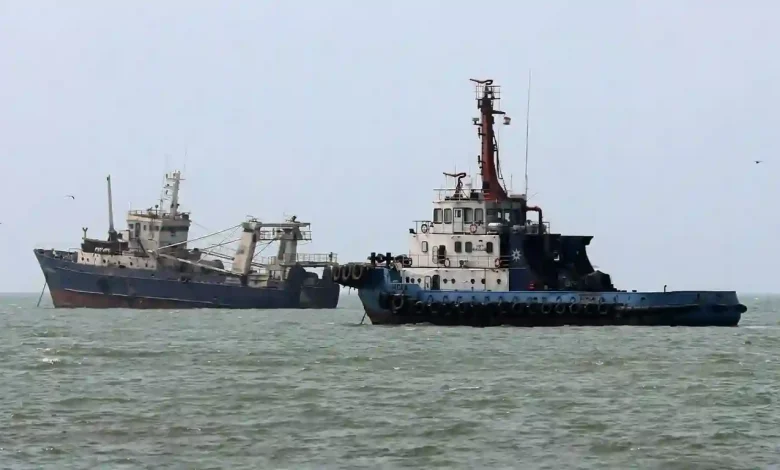
Table of Contents
Ali Nikzad Challenges US Strategy in the Strait of Hormuz
Ali Nikzad delivered a blunt assessment of the ongoing maritime crisis during an address to the Iranian parliament, pointing out that the strategic realities of the Persian Gulf have permanently shifted in Tehran’s favor. Nikzad noted that despite months of high-profile naval deployments and aggressive messaging from Washington, the standoff in the Strait of Hormuz has demonstrated the limitations of Western military power. According to reports from the ISNA news agency, Nikzad claimed that the United States has “practically realized” that attempting to forcibly reopen the waterway is a military impossibility. The deputy speaker argued that any unilateral attempt to clear the shipping lanes would trigger an uncontrollable regional conflagration, a reality that has forced Western planners to seek non-military alternatives.
The rhetoric emerging from the Islamic Consultative Assembly reflects a growing confidence among Iranian officials. Over the past decade, Iran has invested heavily in asymmetrical defensive systems, including sophisticated anti-ship cruise missiles, stealthy fast-attack craft, and advanced sea mine technology. This defensive network is designed specifically to counter the conventional superiority of the US Navy. In his speech, Nikzad emphasized that the days of unchecked Western dominance in Gulf waters are over. The Iranian armed forces have established designated routes through the strait, which they maintain are the only legal channels for international shipping. This stance challenges the traditional definition of transit passage under international maritime law, signaling a direct confrontation over global shipping norms.
The Declaration of a New Regional Order
The assertions made by Nikzad are not merely defensive posturing; they are intended to announce a “new regional order” under which Iran exercises direct oversight over maritime traffic. According to Iranian lawmakers, the Strait of Hormuz will not return to pre-war conditions, and any future stability in the region is contingent upon the United States and Israel accepting Tehran’s security framework. This strategy is tightly integrated with Tehran’s complex Iran retaliation plan, which leverages proxy networks across the Middle East to deter Western intervention. By coordinating with regional allies, Iran has built a multi-layered security umbrella that can threaten maritime shipping not only in the Persian Gulf but also in the Red Sea and the Gulf of Aden.
This assertive stance has placed neighboring Gulf states in a difficult position. Countries like Saudi Arabia, the United Arab Emirates, and Qatar rely heavily on the unhindered flow of energy through the strait to sustain their economies. While these nations have historically looked to the United States as a security guarantor, the apparent limits of Western military options have forced them to adopt a highly cautious diplomatic approach. Tehran is actively exploiting these anxieties, urging regional neighbors to reject Western military alliances in favor of a localized security pact led by Iran. This diplomatic offensive is designed to isolate the United States and establish a permanent sphere of influence over the world’s most lucrative trade routes.
Reopening of the Strait: Military vs. Diplomatic Realities
Military analysts have long agreed that a physical operation to reopen the Strait of Hormuz would be one of the most complex and hazardous naval undertakings in modern history. The geographical layout of the strait is inherently advantageous to defensive forces. At its narrowest point, the shipping lanes are only two miles wide, bounded by shallow waters that limit the maneuverability of large warships. Strategists highlight that the critical choke points, extending from the main shipping channels to the Sardar Mohebi Strait, are fully within range of land-based Iranian artillery and mobile missile launchers. Under these conditions, attempting to conduct mine-sweeping operations or escort merchant vessels would expose allied forces to sustained, high-density attacks from multiple directions.
The operational difficulties of a military solution are further compounded by the massive financial costs involved. As the conflict drags on, the broader economic consequences of shipping disruptions continue to escalate. Insurance companies have responded to the heightened risk by dramatically increasing premiums for vessels operating in the region, leading to a situation where the overall iran war cost rises exponentially for the global commercial sector. These mounting expenses have placed significant pressure on Western governments to avoid any actions that could lead to a permanent closure of the strait. Consequently, the high probability of commercial devastation has successfully deterred the United States from launching a full-scale clearing operation, validating the Iranian assertion that a military solution is currently off the table.
Donald Trump’s Semi-Negotiating Tactics and Economic Warfare
In response to Tehran’s firm stance, US President Donald Trump has adopted a policy of strategic patience, prioritizing economic strangulation over immediate military action. In a recent interview with Axios, Trump described the current US approach as “low-keying it,” stating that Washington is only “semi-negotiating” with Tehran. This “semi-negotiated” state indicates that while the administration is keeping diplomatic channels open through intermediaries, it is in no rush to reach a comprehensive agreement. Instead, the White House is content to wait for the cumulative impact of economic sanctions to weaken the Iranian regime’s bargaining position, betting that internal financial collapse will eventually force concessions that military pressure could not achieve.
Trump’s transactional approach to foreign policy is clearly reflected in this strategy. Rather than committing the United States to a costly and unpredictable military campaign, the President is leveraging America’s financial hegemony to wage a war of economic attrition. The administration’s focus is on cutting off Iran’s remaining avenues of trade, enforcing strict secondary sanctions on countries that continue to purchase Iranian oil, and restricting the flow of hard currency into the country. By allowing the economic pressure to build over time, Trump aims to achieve the administration’s strategic objectives without risking the political and military complications of a direct conflict.
Low-Keying It: The Shift from Strikes to Sanctions
The decision to “low-key” the conflict represents a significant shift from the highly charged rhetoric of previous weeks, when military action seemed imminent. White House advisers reportedly argued that a direct kinetic attack would spike global oil prices and disrupt the domestic US economy. While certain factions within the Pentagon had pushed for targeted preventative strikes against Iran to degrade its coastal defense capabilities and break the blockade, Trump opted to avoid an escalation that could lead to a wider war. By choosing economic isolation over a direct war with Iran, the administration aims to maintain international support while systematically draining Tehran’s financial reserves.
Soaring Inflation and the Financial Strain on Tehran
The domestic consequences of this economic campaign are becoming increasingly apparent within Iran. The combination of comprehensive U.S. sanctions and the naval blockade in the Strait of Hormuz has severely restricted the country’s export capabilities. The resulting shortage of foreign currency has triggered hyperinflation, causing the value of the national currency to plummet and driving up the cost of essential food and medical supplies. This severe economic distress has created a challenging situation for Iranian planners. In his parliamentary address, Nikzad acknowledged these difficulties, stating that addressing the country’s economic challenges remains the parliament’s top priority. The regime faces a difficult dilemma: how to fund its extensive regional defense commitments while managing growing public frustration over deteriorating living standards.
The Strategic Role of the Strait of Hormuz in Global Commerce
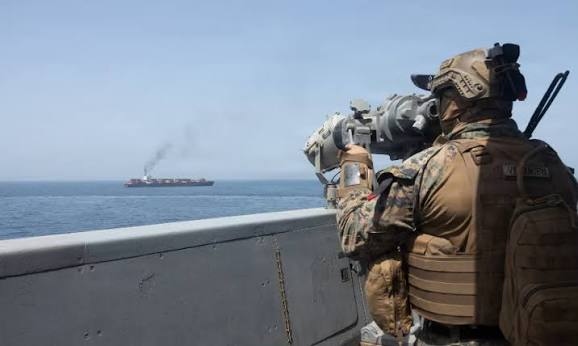
The global economic significance of the Strait of Hormuz cannot be overstated. As a narrow waterway connecting the Persian Gulf with the Gulf of Oman and the Arabian Sea, it serves as the primary gateway for oil and liquefied natural gas (LNG) exported by the world’s largest producers. Approximately 20% of the world’s petroleum supply passes through this choke point daily, making the global economy highly sensitive to any disruptions. The ongoing geopolitical tension has forced shipping companies to reroute vessels around the Cape of Good Hope, a costly alternative that adds weeks to transit times and significantly increases transport costs. This disruption highlights the vulnerability of global supply chains to localized security crises.
Navigational Rules and the Role of Oman
Faced with a prolonged deadlock, regional actors have stepped in to prevent a complete collapse of maritime transit. The Sultanate of Oman, historically a mediator in Middle Eastern conflicts, has been actively working with both sides to establish a workable framework for shipping. Technical teams from Muscat and Tehran have engaged in intense negotiations to draft a temporary navigation map. Under these proposals, a limited volume of commercial traffic would be allowed to transit the strait under strict conditions. Iranian officials have made it clear that any ships passing through must adhere strictly to the routes designated by Iran’s armed forces. This arrangement highlights a pragmatic attempt to manage the crisis, but it also formalizes Iran’s de facto control over the waterway, a development that Washington views with deep concern.
Compensation Demands and the Price of War Damage
A primary obstacle to any diplomatic breakthrough remains Iran’s demand for war reparations. Iranian negotiators have insisted that before any permanent reopening of the strait can occur, the United States must agree to compensate Tehran for the extensive economic and infrastructural damage caused by the sanctions regime and military blockades. This demand is a central component of Donald Trump’s war against Iran, where both economic and political issues are deeply intertwined. The U.S. administration has dismissed these demands as completely unacceptable, viewing them as a rhetorical tool used by Tehran to delay negotiations. This fundamental disagreement suggests that despite localized diplomatic efforts, a comprehensive resolution is unlikely in the near future.
Comparative Analysis of US and Iranian Positions
The strategic impasse between Washington and Tehran is characterized by fundamentally opposing objectives and tactical methodologies. The table below outlines the core differences in their respective positions:
| Strategic Dimension | Iranian Position (Ali Nikzad) | United States Position (Donald Trump) |
|---|---|---|
| Waterway Control | Strait will not return to pre-war status; transit must follow routes set by Iran and Oman. | Demands open, unrestricted international passage; maintains naval presence to enforce freedom of navigation. |
| Military Solution | Asserts that the US and Israel have realized military intervention to open the strait is impossible. | Pivots away from immediate kinetic strikes, but maintains military deterrence and blockade capabilities. |
| Diplomatic Strategy | Requires compensation for war damages and recognition of a new regional maritime order. | Adopts a “semi-negotiating” posture; refuses to offer early concessions or reparations. |
| Economic Outlook | Admits economic distress is a top priority, but insists military posture will not be compromised. | Leverages maximum economic pressure, relying on Iran’s high inflation and lack of funds to force compliance. |
The Future of Global Energy and Geopolitical Implications
The ongoing standoff over the Strait of Hormuz represents a defining moment for contemporary international relations and global economic stability. By attempting to establish a “new order” in the Persian Gulf, Iran is actively challenging the US-led security framework that has governed international waters for decades. The United States, by relying on economic attrition and strategic patience, is testing whether its financial power can still force a determined adversary to capitulate without resorting to military force. With both sides dug into their respective positions, the risk of miscalculation remains high. The coming months will determine whether regional diplomacy, mediated by actors like Oman, can forge a path toward de-escalation, or if the current “semi-negotiated” state will deteriorate into renewed conflict.