Iran war Day 160: Strait of Hormuz Crises, Peace Talks, and Military Standoffs
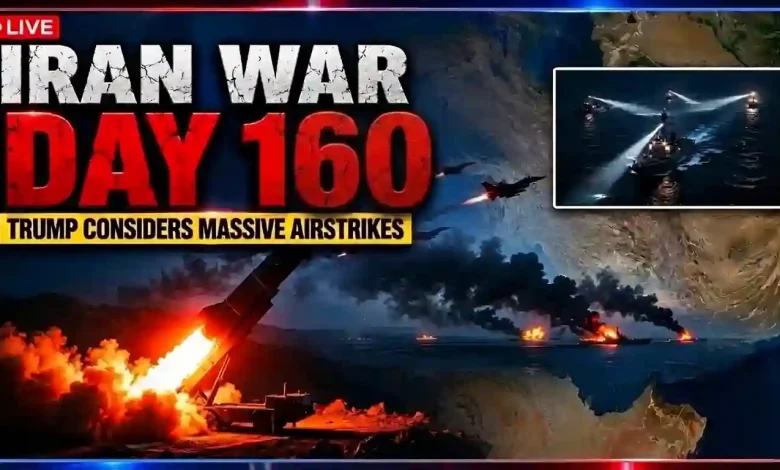
Table of Contents
Iran war dynamics have undergone a profound evolution as the extensive military and diplomatic confrontation officially approaches its 160th day. What began in late February 2026 as localized strikes has expanded into a complex geopolitical crisis with far-reaching consequences for global energy security, maritime trade, and international diplomacy. Over the past five months, the conflict has witnessed multiple shifts, fluctuating between intensive aerial bombardment campaigns and fragile operational pauses. As highlighted in our latest coverage of the Iran war on Day 159, the situation remains highly volatile, with both coalition forces and regional actors continuously reassessing their strategic positions.
Iran :Introduction to the 160-Day Conflict
The conflict’s longevity has surprised many military analysts who initially predicted a brief campaign. Instead, the strategic confrontation has drawn in multiple regional powers and fundamentally reshaped security architectures in the Middle East. A key development in this regard has been the joint defense treaty signed by regional heavyweights like Saudi Arabia, Turkey, and Pakistan, which aims to create a coordinated front against spillover threats. As tensions remain elevated, military operations are increasingly targeted, with both sides executing calibrated maneuvers designed to maximize diplomatic leverage while preventing a full-scale regional conflagration.
Iran :Military Escalation and Key Infrastructure Targets
In recent weeks, military activities have focused heavily on neutralizing strategic assets. Coalition forces, led by the United States and Israel, have intensified their targeting of key logistics chains, ammunition depots, and assembly sites. There has been an acute emphasis on dismantling the complex drone manufacturing and launch networks that form the backbone of Iranian asymmetrical capabilities. The fighting between the United States and Iran has resulted in significant damage to military facilities near major urban centers, including Isfahan, Shiraz, and Tabriz. Although Iranian officials maintain that their operational readiness remains largely unaffected, independent satellite imagery suggests substantial disruptions to subterranean production facilities.
Air Strikes, Missile Defense, and Drone Infrastructure
Air operations have formed the primary mechanism of coalition pressure. Advanced stealth platforms have repeatedly penetrated disputed airspaces, testing the resilience of domestic air defense arrays. These operations have not been without challenges. In the initial phases of the war, observers documented the intensity of airstrikes against Iran entering their ninth day, setting a precedent of sustained aerial campaigns that have significantly depleted tactical reserves on both sides. Reports of ammunition shortages inside coalition stockpiles have also surfaced, triggering intense domestic debates within the Pentagon regarding long-term logistics sustainability. Defense Secretary Pete Hegseth faced intense questioning over the exhaustion of precision-guided munitions, which has forced coalition forces to adopt more calibrated striking schedules to avoid critical depletion.
IRGC and Coalition Retaliation Strategies
In response to sustained aerial pressure, the Islamic Revolutionary Guard Corps (IRGC) has deployed a diverse array of retaliatory tactics. Rather than engaging in direct conventional battles, the IRGC has utilized its highly mobile missile regiments to target regional coalition bases. In several documented instances, the IRGC targets US base facilities with coordinated drone swarms and precision ballistic missiles, forcing coalition forces to continuously upgrade their active defense measures and air defense posture across Iraq, Syria, and Jordan. These asymmetric responses are designed to extract a heavy political cost from the coalition by showing that despite intense bombardment, Iran’s retaliatory reach remains robust and highly lethal.
The Strait of Hormuz Chokepoint and Maritime Security
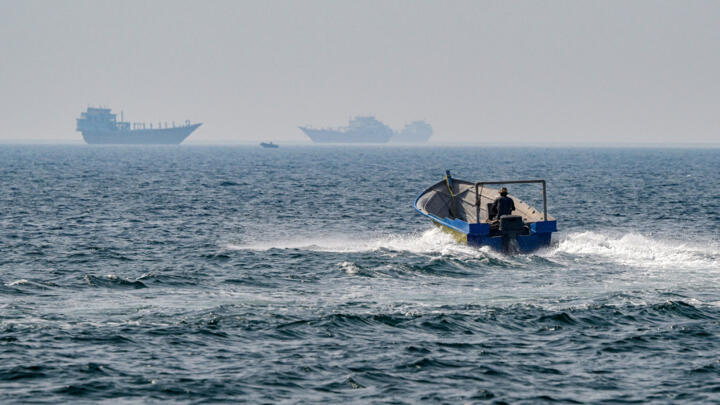
The primary focal point of global concern remains the critical Strait of Hormuz, a narrow waterway through which approximately 20% of the world’s liquefied natural gas (LNG) and a quarter of seaborne oil trade transit. Following the outbreak of hostilities in late February, the waterway was effectively closed to commercial shipping due to extensive mine-laying operations and direct interdictions by the IRGC Navy. This blockade has triggered a massive global fuel crisis, stranding thousands of mariners and forcing commercial fleets to seek expensive alternative routes around the African continent. Shipping companies have had to redesign their routes, resulting in significant delays and an increase in global carbon emissions as container ships make the long voyage around the Cape of Good Hope.
Shipping Disruptions and Global Economic Fallout
The closure of this vital maritime artery has sent shockwaves through global supply chains. Insurance companies have dramatically increased war-risk premiums, rendering transit through the Persian Gulf financially prohibitive for standard commercial vessels. While some operators have attempted to bypass restrictions by operating under dark transponders, the risk of kinetic interception remains extremely high. Major transshipment hubs like Jebel Ali and Fujairah experienced unprecedented congestion during the spring months, though port operations have slowly normalized as global logistics patterns adapt to the ongoing blockade. Central banks worldwide are closely watching the inflationary pressures resulting from these energy disruptions, fearing that a prolonged conflict could tip vulnerable economies into recession.
Data Analysis: The Economic Impact of the Conflict
To understand the sheer magnitude of this maritime crisis, we can look at key operational metrics before and during the conflict. The following table highlights the severe contraction in maritime traffic and the corresponding surge in energy and logistics costs:
| Metric | Pre-Crisis Baseline | Peak Crisis (April-May 2026) | Current Status (August 2026) |
|---|---|---|---|
| Daily Vessel Transits | 88 – 130 vessels | Near Zero | ~10 – 15 vessels (Escorted) |
| Brent Crude Price | $75 – $80 / bbl | $95 – $105 / bbl | $85 – $92 / bbl |
| War-Risk Insurance Premium | Standard rates | 10x – 15x increase | 8x – 10x elevated rates |
| Stranded Mariners in Gulf | Minimal | ~20,000 mariners | ~6,000 (Evacuations paused) |
Diplomatic Efforts and the Path to a Ceasefire
Despite the persistent military standoffs, diplomatic channels have not been completely severed. Behind-the-scenes mediation is actively occurring, with neutral regional intermediaries working to find common ground. Recent intelligence suggests that we may be witnessing a critical Iran-Hormuz deal advance, which could establish a joint maritime authority to manage transit coordinates and gradually restore safe passage for commercial energy exports. The international community has expressed cautious optimism, though diplomats warn that any eventual agreement must address the underlying security concerns of all regional stakeholders.
Oman-Mediated Talks and the Potential Hormuz Authority
The Sultanate of Oman has emerged as the primary diplomatic bridge between the warring factions. Omani diplomats have hosted intense technical sessions in Muscat, aiming to finalize specific geographic coordinates for safe shipping corridors. As Iran negotiates Hormuz transit protocols, the key hurdle remains balancing Tehran’s insistence on sovereign administrative oversight with the international coalition’s demand for unhindered, non-discriminatory access to global waters. The proposed agreement under negotiation would involve a multi-nation monitoring team to oversee ship inspections, ensuring that merchant vessels are not carrying military contraband while permitting legitimate commercial flows.
Domestic Pressures and the Posture of Regional Players
Domestic political considerations continue to heavily influence the decision-making processes in both Washington and Tehran. In the United States, public opinion remains highly sensitive to rising energy prices and the prospect of extended military deployments. This political reality has led to tactical shifts in the White House, with instances where Trump cancels Iran strike orders to give diplomatic backchannels more breathing room. Nonetheless, coalition officials have reiterated that these diplomatic avenues are not open-ended, positioning the current talks as Iran’s last chance under Trump to secure an orderly resolution before a massive escalation of conventional strikes is authorized. Should the Muscat talks collapse, military planning is already underway for a comprehensive air campaign targeting Iran’s remaining heavy industrial and power infrastructure.
The Outlook: Uncertainty and the Geopolitical Horizon
As the conflict crosses the 160-day threshold, the path forward remains highly complex and uncertain. A successful agreement on the Strait of Hormuz could serve as a powerful building block for a broader ceasefire, but deep-seated mistrust, domestic political pressures, and active skirmishes on the ground could easily derail these delicate negotiations. The international community continues to monitor the region with high anxiety, knowing that the fine line between regional diplomatic breakthrough and catastrophic escalation remains incredibly thin.