Pakistan, Turkey, and Saudi Arabia’s defence pact: Mecca Alliance 2026
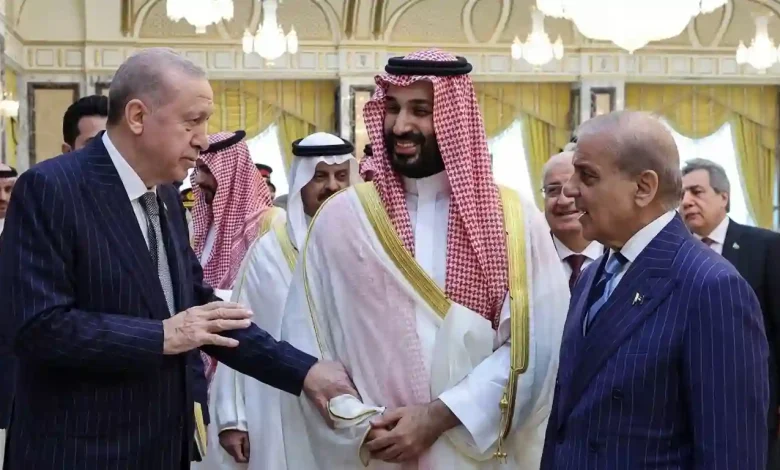
Table of Contents
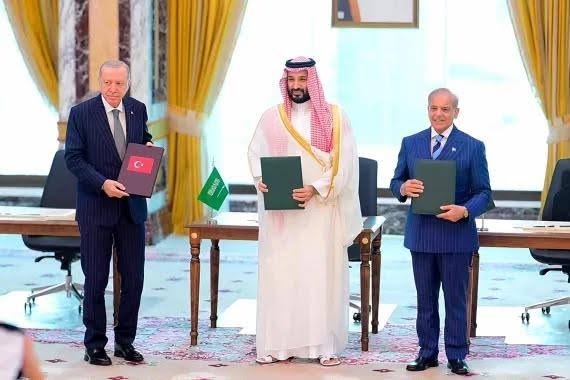
Pakistan, Turkey, and Saudi Arabia’s defence pact, formally known as the Mecca Joint Defense Agreement, has sent shockwaves across the Middle East and South Asia after being signed at the high-profile Makkah Al-Mukarramah Summit for Joint Defence on August 7, 2026. This landmark security pact, signed by Saudi Crown Prince Mohammed bin Salman, Turkish President Recep Tayyip Erdoğan, and Pakistani Prime Minister Shehbaz Sharif, along with their respective defence ministers, represents one of the most substantial shifts in regional alignment in decades. Connecting three of the most influential and powerful Muslim-majority countries under a single mutual defence umbrella, the agreement establishes an Article 5-style collective defense mechanism. Under this framework, any military assault or aggression against one signatory will be treated as an attack on all three, completely redefining regional geopolitics amidst the backdrop of the ongoing 2026 Iran war.
Introduction to the Mecca Joint Defense Agreement
The announcement of this security agreement marks a historical watershed moment for Sunni-majority regional powers. By formalizing their military bonds, Saudi Arabia, Turkey, and Pakistan are establishing a formidable collective security structure that bypassed traditional Western mediation. For years, regional security in the Gulf was heavily dependent on the bilateral defense guarantees provided by the United States. However, recent developments and asymmetric threats have forced Gulf states to reassess their strategic dependencies. This newly established pact is the culmination of nearly a year of intensive trilateral negotiations, reflecting a shared consensus that the region must take responsibility for its own defensive framework. Leaders at the Mecca summit emphasized that the pact is rooted in historical brotherhood, mutual trust, and shared geopolitical aspirations, aimed at preserving long-term peace and stability.
The Core Tenets of the Mecca Joint Defense Agreement
The primary objective of the newly minted treaty is to forge an absolute and credible deterrent against any form of external aggression. According to the joint statement released by the three nations, the pact is guided by historical ties, strategic alignment, and the enduring bonds of Islamic solidarity. The cornerstone of the agreement is its mutual defense clause, which directly mirrors NATO’s Article 5. It explicitly states that “any armed attack carried out against any one of the three states shall be considered an attack against all of them.” Additionally, the agreement encompasses a wide-ranging blueprint for defense cooperation, including intelligence sharing, joint military exercises, technology transfer, and coordinated maritime security operations. While officials from Ankara have emphasized that the treaty is defensive in nature and is not directed at any specific sovereign nation, its signing coincides with escalating regional crises that threaten the core security of all three participants.
The Key Players and Their Strategic Motivations
To fully comprehend the magnitude of this tripartite pact, one must examine the distinct yet complementary capabilities that each of the three powers brings to the table. This is a coalition of a nuclear-armed state, a major NATO member with a massive standing army, and the world’s leading oil exporter.
Pakistan: The Nuclear Deterrent
For Islamabad, the treaty is both a financial lifeline and a projection of its strategic military capabilities. As the only nuclear-armed state in the Muslim world, Pakistan possesses an unmatched strategic deterrence capability. By embedding itself into Saudi Arabia’s security architecture, Pakistan solidifies its role as the primary guarantor of the Gulf’s physical security. This agreement builds upon previous bilateral defense understandings, under which thousands of Pakistani troops and advanced air-defense systems have already been stationed in the kingdom to guard critical infrastructure.
Turkey: The NATO Heavyweight and Tech Powerhouse
Turkey, possessing NATO’s second-largest standing army and a rapidly expanding domestic defense manufacturing sector, brings unparalleled conventional military prowess. Ankara’s sophisticated drone technology, naval assets, and air defense frameworks are vital for Riyadh’s defensive needs. President Erdoğan has championed the pact as a means to foster regional self-reliance and stability, reducing dependence on Western security umbrellas while expanding Turkey’s geopolitical influence across the Middle East.
Saudi Arabia: The Custodian of the Holy Sites and Oil Giant
Saudi Arabia, the wealthy host of Islam’s holiest sites and a leading global energy provider, sits at the heart of this alliance. Faced with persistent security challenges and a shifting global order, Riyadh has sought to construct a web of regional partnerships. The agreement allows Saudi Arabia to leverage Turkey’s conventional technology and Pakistan’s strategic nuclear deterrence to counter threats without relying solely on a volatile Washington.
Regional Catalysts: Houthi Attacks and the Iran War
The timing of the Mecca Joint Defense Agreement is directly tied to the deteriorating regional security landscape. Since the outbreak of conflict earlier this year, Iran-aligned Houthi forces have ramped up their operations, imposing a highly disruptive Houthi blockade on Saudi maritime trade in the Red Sea. These attacks have not been confined to the seas; critical infrastructure deep within Saudi territory has been targeted. Just days before the summit, devastating Houthi strikes on critical Saudi targets resulted in significant military casualties and damage to energy installations. These strikes highlight the severe limitations of Saudi Arabia’s existing defense systems and have forced the kingdom to seek rapid, reliable military support from its closest regional allies.
Iran’s Response: Criticism, Mockery, and Warnings
While the treaty has been framed by its signatories as a purely defensive instrument, Iranian officials have reacted with intense skepticism and stern warnings. Tehran views the emergence of this trilateral coalition as a direct attempt to contain its regional influence and counter Tehran’s strategic calculus. Mahmoud Nabavian, a radical member of the Iranian parliament’s National Security and Foreign Policy Commission, expressed sharp criticism on social media, warning that clinging to “America’s lackeys” would not guarantee Saudi Arabia’s security. Other Iranian lawmakers, such as Ebrahim Rezaei, mocked the deal as a “paper agreement” that would fail to offer real protection, drawing parallels to Saudi Arabia’s historical, yet ultimately disappointing, reliance on American military support. Rezaei urged Saudi rulers to change their regional policies rather than “beg for security” from external actors. This public posturing underscores the deep-seated ideological and strategic rivalries that continue to define the Persian Gulf corridor.
Comparison of Military Capabilities of the Tripartite Alliance
The collective strength of the tripartite pact is formidable, combining economic power, vast manpower, and advanced military technology. Below is a comprehensive comparison of the three nations’ defense profiles:
| Metric | Saudi Arabia | Turkey | Pakistan |
|---|---|---|---|
| Primary Role | Financial Power & Host of Holy Sites | Conventional Heavyweight & NATO Member | Strategic Deterrence & Manpower |
| Active Military Personnel | ~250,000 | ~425,000 | ~650,000 |
| Key Military Strength | Advanced Western Armaments & Air Power | Indigenous Drone & Defense Tech | Nuclear Capabilities & Strategic Depth |
| Nuclear Weapons | No | No | Yes (Estimated 170+ warheads) |
| Strategic Vulnerability | Energy Infrastructure & Red Sea Access | Black Sea & Mediterranean Commitments | Economic Instability & Border Tensions |
The Geopolitical Implications: A New Sunni NATO?
The formation of this alliance has led many international analysts to describe the pact as the nucleus of a new “Sunni NATO.” By binding three major Sunni-led powers together, the agreement alters the rules of peripheral regional conflicts. One major consequence is the potential stabilization of the global energy market. The persistent risk of oil price spikes caused by regional shipping disruptions could be mitigated if Turkey and Pakistan actively deploy naval and air assets to secure critical maritime corridors, including the Red Sea and the Gulf of Aden. This collective shield provides a buffer against the escalating regional conflict that has threatened to engulf the wider Middle East. The pooling of resources also allows these nations to share intelligence at an unprecedented scale, significantly improving their early-warning systems against ballistic missile and drone attacks.
US-Iran Escalation and the Declining Reliability of Western Deterrence
A key driving force behind the Mecca Joint Defense Agreement is a growing skepticism in Riyadh, Ankara, and Islamabad regarding the long-term reliability of the United States as a security guarantor. Amidst the ongoing tensions, Donald Trump’s regional containment strategy has faced significant challenges, leaving regional allies feeling increasingly vulnerable to asymmetric threats. Rather than relying on external Western intervention, the signatories of the Mecca pact have decided to take their security architecture into their own hands. The agreement represents a significant step toward regional multipolarity, where Middle Eastern and South Asian powers cooperate directly to manage regional threats, bypassing traditional Western channels. This shift away from unilateral reliance on Western forces marks a permanent transition in global defense diplomacy.
The Path Forward: Will the Agreement Deter Aggression?
Whether the Mecca Joint Defense Agreement will successfully deter future attacks remains an open question. While some Iranian officials have engaged in public posturing and warning, others in Tehran have shown a willingness to maintain diplomatic overtures to prevent a total breakdown of relations. The true test of the alliance will lie in its operational execution. If Houthi forces continue to target Saudi infrastructure, the world will watch closely to see if Turkey and Pakistan fulfill their treaty obligations by mobilizing military support. If they do, the Mecca pact could successfully establish a new, self-reliant security order in the region. If they hesitate, it may indeed be remembered as nothing more than a paper agreement, as its critics in Tehran suggest. Regardless of the immediate outcome, the geopolitical landscape of the Middle East has been permanently altered by the signing of this historic defense agreement.